


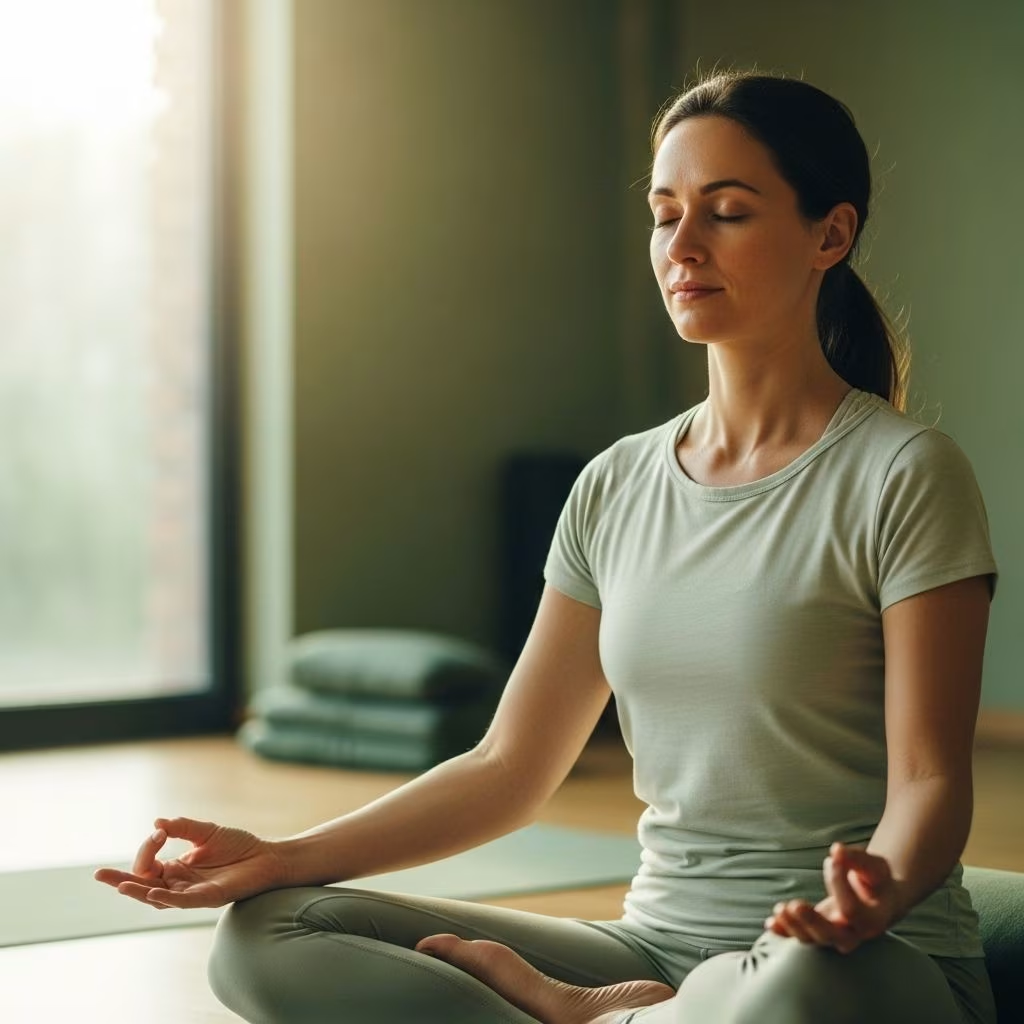
Introduction to Three-Part Breath (Dirga)
Breath is the essence of life, a bridge connecting body and mind, and a foundational tool in many wellness traditions. Among the numerous breathwork techniques in yoga, Three-Part Breath, known as Dirga Pranayama in Sanskrit, stands out for its profound simplicity and deep connection to full lung capacity. This practice teaches disciplined awareness and conscious control over the breath, unlocking both physiological and psychological benefits that ripple across daily living.
What is Dirga Pranayama?
Dirga Pranayama is a cornerstone of yogic breathing. Sometimes called “Full Yogic Breath” or “Three-Part Breath,” this grounding and restorative practice divides the inhalation and exhalation into three distinct phases, sequentially filling and emptying the lungs—from the low belly, through the ribs, up to the upper chest and collarbones. It is often performed at the start of yoga sessions to anchor awareness and foster a calm, attentive mind.
- Dirga means “long” or “complete” in Sanskrit.
- Pranayama refers to breath or life force control.
- The practice is accessible to all, requiring no counting or forced pacing, but instead encourages natural depth and expansion of the breath.
Anatomy of Breathing: Understanding Lung Capacity
The lungs are housed in the thoracic cavity, protected by the rib cage and supported by the diaphragm. While the process of respiration is automatic, conscious breathing, as taught in Dirga Pranayama, allows practitioners to maximize lung expansion, increase oxygen intake, and promote efficient exchange of gases. Full lung capacity is rarely accessed in daily life, but this practice guides one to experience the entire range of breathing potential.
| Breathe Phase | Anatomical Region | Effect |
|---|---|---|
| Belly | Abdomen, Pelvic Bowl | Activates diaphragm; initial lung expansion |
| Ribs | Lower Ribs, Sides, Lower Chest | Expands rib cage, increases thoracic flexibility |
| Chest | Upper Chest, Clavicular Area | Maximal lung filling; collarbones rise |
The Three Parts Explained
In Dirga Pranayama, the torso is conceptualized as having three breathing zones. This segmentation fosters precise, mindful expansion and relaxation in each stage.
- Lower Torso – Belly/Basin
Inhale draws air into the belly, gently expanding the abdomen, softening pelvic tissues. This engages the diaphragm, the primary muscle of breathing. - Middle Torso – Ribs/Sides
Breathe continues into the ribcage, widening the lower ribs and the sides of the chest, enhancing three-dimensional breathing (front, back, and sides). - Upper Torso – Chest/Collarbones
Final phase of inhalation brings air to the upper chest and collarbones. The chest rises and expands, allowing for ‘full’ lung capacity.
The exhalation is performed in reverse, starting from the collarbones and upper chest, followed by the ribs, then the belly returning gently inward.
Preparation for Three-Part Breath
Preparation ensures both safety and effectiveness:
- Choose a comfortable position: lying on your back (Savanna/Corpse Pose), seated cross-legged, or seated on heels.
- Ensure an open airway: practice with mouth closed, breathing in and out through the nose.
- Remove tight clothing, especially around the waist and chest.
- Optionally, use props—hands or a blanket—to increase tactile awareness of breath regions.
- Begin with normal breathing, then gradually lengthen and deepen the breath.
Tuning into the natural flow and becoming aware of tension in the belly, rib area, or chest helps prepare for the full practice.
Step-by-Step Instructions
Follow this detailed guide to practice the Three-Part Breath:
- Lower Belly Breathing
Place hands on the belly. Inhale gently, allowing the abdomen to expand like a balloon. Exhale, letting the belly fall inward. - Rib Cage Breathing
Move hands to the sides of your lower ribs. Inhale and feel the ribs expand outward and to the sides; exhale as they contract. - Upper Chest Breathing
Release hands to rest just below your collarbones. Inhale, lifting the upper chest and collarbones slightly. Exhale, letting the chest fall back into place. - Combined Full Breath
Link all three phases into a single, smooth inhale—belly, ribs, chest—and a single exhale—chest, ribs, belly. Repeat for 5–10 cycles or as comfortable.
There is no set ratio. Beginners may count to six for a full inhale (two counts per phase) and six for a full exhale, but the priority is ease over precision.
Benefits of Three-Part Breath
This practice yields wide-ranging benefits for the body and mind:
- Calms the Mind
Conscious, deep breathing calms the nervous system by activating the parasympathetic response. - Reduces Anxiety and Stress
Rhythmic inhales and exhales help lower circulating stress hormones and decrease blood pressure. - Enhances Lung Function
By practicing full lung expansion, practitioners improve pulmonary efficiency and strength. - Grounds and Centers
Focus on sensation and movement brings inward awareness, anchoring attention in the present. - Prepares for Yoga Practice
Dirga Pranayama establishes breath control and mindfulness, laying the foundation for deeper pranayama or asana work.
Studies show that controlled, slow breathing can improve oxygen saturation, support cardiovascular health, and have a positive effect on emotional regulation.
Contraindications and Considerations
- Respiratory Conditions: Those with severe asthma, COPD, or acute respiratory issues should consult a healthcare provider before intensive breathwork.
- Recent Surgery: Avoid deep breathing practices soon after abdominal or thoracic surgery.
- Pregnancy: Pregnant practitioners should avoid forced inhales or exhales and adapt the technique for comfort.
- Always discontinue practice if dizziness, anxiety, or physical discomfort occurs.
Frequently Asked Questions
Q: Can anyone practice Dirga Pranayama?
A: Yes, it is safe and accessible for most people. However, those with respiratory or cardiovascular conditions should seek professional guidance.
Q: How often should I practice Three-Part Breath?
A: Daily practice (5–10 minutes) is recommended. It can be performed at the start or end of yoga sessions, or whenever grounding and relaxation are needed.
Q: Should I force the breath into each segment?
A: No. The breath should be gentle and natural, expanding only as much as feels comfortable. Never push or strain.
Q: Is Three-Part Breath suitable for children?
A: Yes. Children can benefit from breath awareness, though instructions should be simplified and made playful.
Three-Part Breath in Yoga and Meditation
Dirga Pranayama is not just a preparatory technique—it can be a stand-alone meditation or incorporated into asana practice. Many yoga teachers begin classes with Three-Part Breath to synchronize movement with mindful breathing. This not only grounds the group but also establishes breath as the hub of conscious practice.
- Integrates seamlessly into restorative poses (such as Corpse Pose or Reclined Bound Angle Pose).
- Can be combined with visualization, mantra, or gentle movement for deeper relaxation.
- Helps foster body awareness, emotional regulation, and readiness for advanced pranayama.
Integration and Progression in Practice
Once comfortable with the basic Three-Part Breath, practitioners can deepen their practice through:
- Extended Breath Ratios: Lengthening inhales and exhales for greater relaxation or focus, using ratios (e.g., inhales for 6, exhales for 8 counts).
- Retention: Briefly holding the breath at the top or bottom for enhanced awareness (only with experience and proper guidance).
- Integration with Movement: Coordinating breath with yoga asana flows (e.g., linking expansion with upward reaches, contraction with bends).
- Mindful Observation: Using breath tracking for meditation, journaling sensations of fullness and release.
Advancing in Dirga Pranayama develops both the subtle and physical aspects of breath, enabling practitioners to utilize its grounding effects in daily stress, anxiety, or preparatory routines for mental clarity.
Frequently Asked Questions (FAQs)
Q: How does Dirga Pranayama differ from other breathwork techniques?
A: Unlike techniques focused solely on belly or chest, Dirga Pranayama incorporates the entire torso in three stages for full lung capacity and holistic benefits.
Q: Can I practice Three-Part Breath if I have anxiety?
A: Yes. The technique is specifically effective in reducing anxiety by slowing the breath and activating relaxation pathways.
Q: Does it matter if I practice sitting or lying down?
A: Both positions are suitable, but lying down may make awareness of the belly and ribs easier for beginners.
Q: Are there specific times when Three-Part Breath is most beneficial?
A: Morning sessions set a calm tone for the day, while evening practice can help unwind and prepare for restful sleep.
Q: Is special equipment needed?
A: No, only a comfortable place to sit or lie down. Soft props may enhance awareness, but are optional.
In conclusion, Three-Part Breath (Dirga Pranayama) is a versatile, foundational practice offering access to full lung capacity, mental tranquility, and physical resilience. Mastering this breath unlocks the gateway to deeper yogic practices and day-to-day balance, making it an indispensable tool in any holistic health regimen.
References
- https://nourishyogatraining.com/how-to-three-part-pranayama/
- https://liforme.com/blogs/blog/three-part-breath-dirga-pranayama
- https://www.youtube.com/watch?v=Un-6J2rI9aU
- https://elliesmithyoga.com/breath-awareness-part-3-3-part-breath/
- https://www.youtube.com/watch?v=eBpKjyDgfnc
- https://kripalu.org/living-kripalu/how-do-three-part-breath-dirgha-pranayama


