


Introduction
The global food system discards enormous amounts of perfectly edible fruits and vegetables each year simply because they don’t meet the visual standards preferred by retailers and consumers. At the intersection of sustainability and smart budgeting, ugly produce boxes are revolutionizing the way frugal meal planners source groceries. These boxes feature fresh produce with minor cosmetic imperfections—wonky carrots, slightly scarred apples, smaller-than-average nectarines—that otherwise would never reach store shelves. By embracing ugly produce, not only can households drastically reduce grocery costs, but they also help curb a mounting environmental crisis: food waste.
What Are Ugly Produce Boxes?
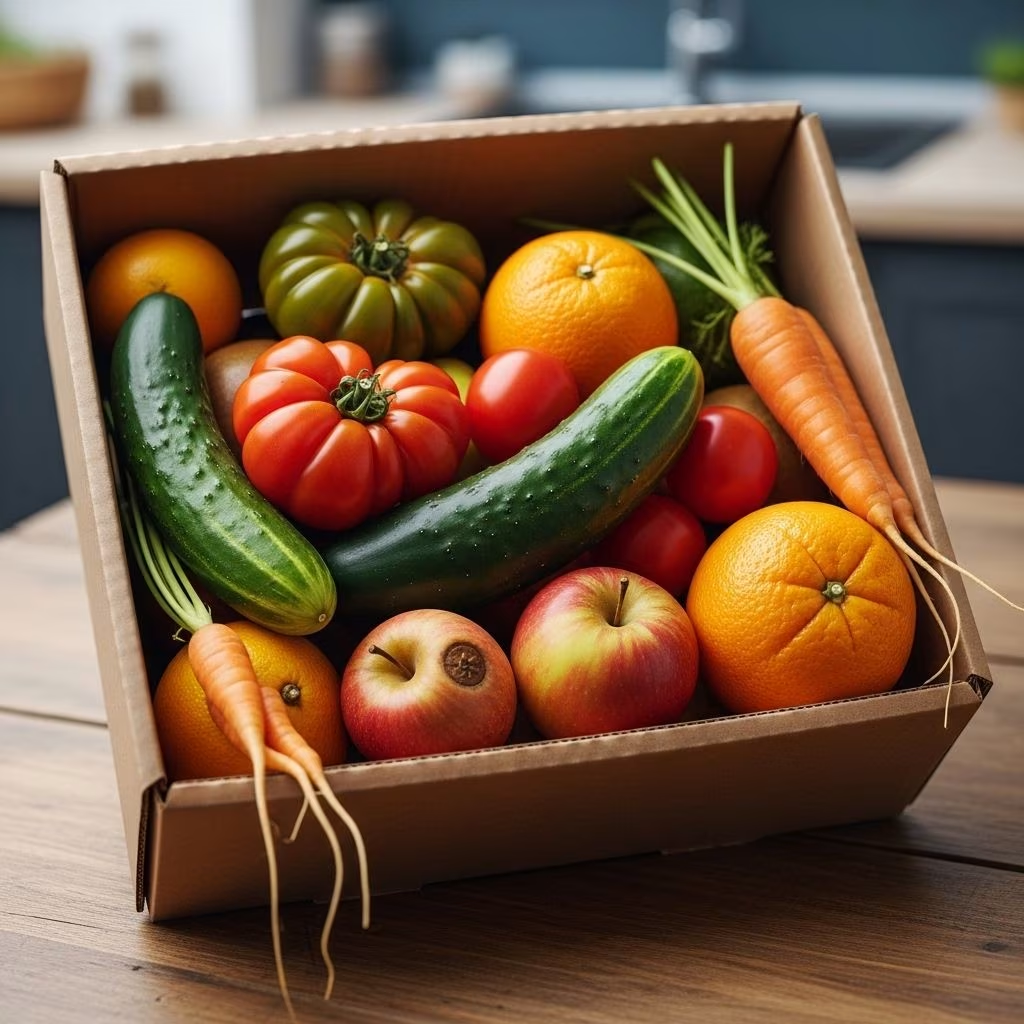
Ugly produce boxes are subscription-based deliveries containing fruits and vegetables that don’t conform to standard supermarket beauty norms. These items may be misshapen, oddly sized, slightly discolored, or carry superficial blemishes, but remain just as safe, tasty, and nutritious as their picture-perfect counterparts.
Key attributes:
- Consist of ‘imperfect’ produce rejected by retail stores for cosmetic reasons
- Delivered directly to homes through online order or subscription
- Typically offered at a discount compared to traditional groceries
- Promoted by companies such as Imperfect Foods, Misfits Market, Hungry Harvest
The Rise of the Ugly Produce Movement
The ugly produce movement exploded over the last decade after alarming statistics on global food waste came to light—experts estimate up to one-third of food produced worldwide goes uneaten. Driven by environmental activists and practical-minded meal planners, consumer efforts have shifted toward rescuing edible produce destined for disposal.
- The movement is both a sustainability initiative and an economic opportunity.
- Farmers suffering losses from unsellable crops gained new markets for their harvests.
- Subscription box companies purchase these crops directly from farms at reduced prices, passing savings to consumers while helping divert tons of food from landfill.
Well-known companies include:
- Imperfect Foods
- Misfits Market
- Hungry Harvest
- Full Harvest (selling to businesses)
How Ugly Produce Boxes Work
Produce box services source their products directly from farms, distributors, or packing houses. Factors that exclude food from shelves include:
- Cosmetic imperfections: minor blemishes, bruises, odd shapes or sizes
- Overproduction: surplus harvests that exceed market demand
- Packaging errors: labeling mistakes or damaged outer packing
The boxes are packed and shipped weekly, bi-weekly, or on customizable schedules. Customers typically select box size, basic preferences (e.g., fruits, veggies, mixed), and frequency. The unpredictable selection encourages creativity and flexible meal planning.
Why Frugal Meal Planners Love Ugly Produce
For budget-conscious buyers, ugly produce boxes offer tangible benefits:
- Lower Prices: Experts find that even factoring in delivery fees, ugly produce services undercut grocery store prices on average.
- Bulk Savings: Subscription packages supply larger quantities for less, helping stretch food budgets.
- Meal Variety: Boxes often include seasonal or unusual produce, allowing cooks to experiment and diversify at home.
- Reduced Shopping Trips: Home delivery saves time and travel costs, especially for busy families.
Dr. Beth Mitcham notes that smaller or greener fruits can be just as good—lighter limes reportedly contained more juice than perfect-looking store limes.
Environmental Impact of Using Ugly Produce
Food waste is intimately linked with climate change, resource depletion, and landfill overflow. By purchasing ugly produce:
- You directly divert food from the waste stream, lowering greenhouse gas emissions from decomposition.
- Supporting these boxes helps create economic incentives for farms to market otherwise unsalable crops, potentially making agriculture more sustainable.
- Some companies claim their boxes save up to 15 million pounds of produce from waste each year.
Nutritional Value and Quality
Ugly produce is NOT inferior nutritionally. Cosmetic flaws do not impact taste or nutritional profile, according to food scientists. In fact, expert testers found almost no difference in taste or juiciness between ugly and conventional produce.
- Small, oddly shaped fruits are often just as tasty and nutritious as their larger, market-ready counterparts.
- Superficial bruising or discoloration typically does not penetrate the fruit flesh or alter its value.
Optimizing Meal Plans with Ugly Produce Boxes
Meal planning with ugly produce boxes encourages flexibility and creative cooking. Because the exact contents can vary, successful planners:
- Adapt standard recipes to accommodate what’s available
- Batch cook or prep meals ahead, minimizing spoilage risk
- Utilize preservation methods—freezing, pickling, or canning odd or surplus produce
- Plan meals by category (e.g., stir fry, stew, salad) that can integrate unexpected veggies or fruits
This model can help break monotony and encourage healthier, home-cooked dishes featuring diverse ingredients.
Cost Savings Comparison
| Source | Typical Cost (Per Week) | Produce Quantity (lbs) | Notes |
|---|---|---|---|
| Ugly Produce Boxes | $22–$35 | 10–15 | With delivery, lower average than store |
| Supermarket Shopping | $28–$50 | 10–13 | Prices vary by region and store |
| Farmers’ Markets | $25–$45 | 8–12 | Seasonal variation; no delivery |
Ugly produce delivery often comes up 20–40% cheaper than conventional grocery shopping, with the added benefit of home delivery and environmental impact.
Challenges and Controversies
While the movement has merit, critics raise several concerns:
- Supply chain impact: Some experts argue most cosmetically imperfect food was already redirected to processed products or sold discounted in lower-income areas.
- Labor shortages: Far greater quantities of crops go to waste due to lack of workers, not simply beauty standards; restrictive immigration policies and poor business models are factors.
- Monetization critique: The rising popularity of ugly produce has transformed a sustainability cause into big business, benefiting startups more than farmers in some cases.
- False marketing: Some nonprofits allege that produce rescued by box services would not have automatically ended up in landfills; instead, it was used in other food products all along.
It’s important for consumers to research the impact and operations of their chosen box service and understand the larger context of food waste.
How to Choose the Best Ugly Produce Service
Evaluating and choosing a service involves several factors:
- Box customization: Does the company allow you to select items or exclude certain foods?
- Delivery area: Is your region covered?
- Pricing structure: Flat fee, price per pound, or minimum order?
- Frequency options: Weekly, bi-weekly, monthly?
- Transparency: Is the company clear about sourcing and their impact on waste reduction?
- Customer reviews: Check for feedback on product quality and customer service.
Tips for Maximizing Value and Minimizing Waste
- Inspect and sort immediately: Some items may have a shorter shelf life; use those first.
- Meal prep and batch cooking: Prepare meals in advance using perishable or plentiful items.
- Preserve excess: Freeze, pickle, or dehydrate surplus produce.
- Get creative: Use less-than-perfect ingredients for soups, stews, smoothies, and baked goods.
- Compost waste: For scraps or unusable parts, composting remains an eco-friendly solution.
Frequently Asked Questions (FAQ)
Q: Is ugly produce safe to eat?
A: Yes. Cosmetic flaws usually do not affect safety or taste. Only avoid items with signs of spoilage such as mold or soft spots.
Q: How much can I save on groceries with ugly produce boxes?
A: Most households report savings of 20–40% compared to grocery stores, depending on box size and region.
Q: Will I always know what produce is in my box?
A: Most boxes are seasonally driven and may vary week to week. Some services offer partial customization or item exclusion.
Q: Do ugly produce boxes actually help reduce food waste?
A: These services help divert some food from disposal, but critics note most rejected produce is often redirected to other markets or processed foods. Still, increased demand can help shift sourcing practices over time.
Q: What if there’s too much produce to use in time?
A: Preserve extras by freezing, pickling, or dehydrating. Share surplus with neighbors or integrate leftovers into creative recipes.
Conclusion
Ugly produce boxes provide a pragmatic avenue for frugal meal planners to enjoy nutritious, fresh fruits and vegetables at lower costs while contributing to the fight against food waste. The movement is not without challenges, and its impact depends on consumer choices, supply chain realities, and transparency in operations. Nevertheless, by embracing produce beyond the superficial, everyday shoppers can save money, eat well, and play a tangible role in building a more sustainable future for food.
References
- https://groundedgrub.com/articles/ugly-produce
- https://health.ucdavis.edu/blog/good-food/why-ugly-produce-may-be-a-good-option-for-you/2019/11
- https://www.scmp.com/lifestyle/food-drink/article/3077277/why-we-should-eat-ugly-food-it-helps-reduce-shocking-global
- https://newrepublic.com/article/152596/hungry-harvest-box-ugly-produce-help-planet-or-hurt-it
- https://econreview.studentorg.berkeley.edu/the-good-the-bad-and-the-ugly-produce-movement/
- https://sustain.org.au/the-benefits-of-eating-ugly-produce/
- https://thefioneers.com/ugly-produce/
- https://climatedrift.substack.com/p/is-ugly-produce-a-solution-to-food


