


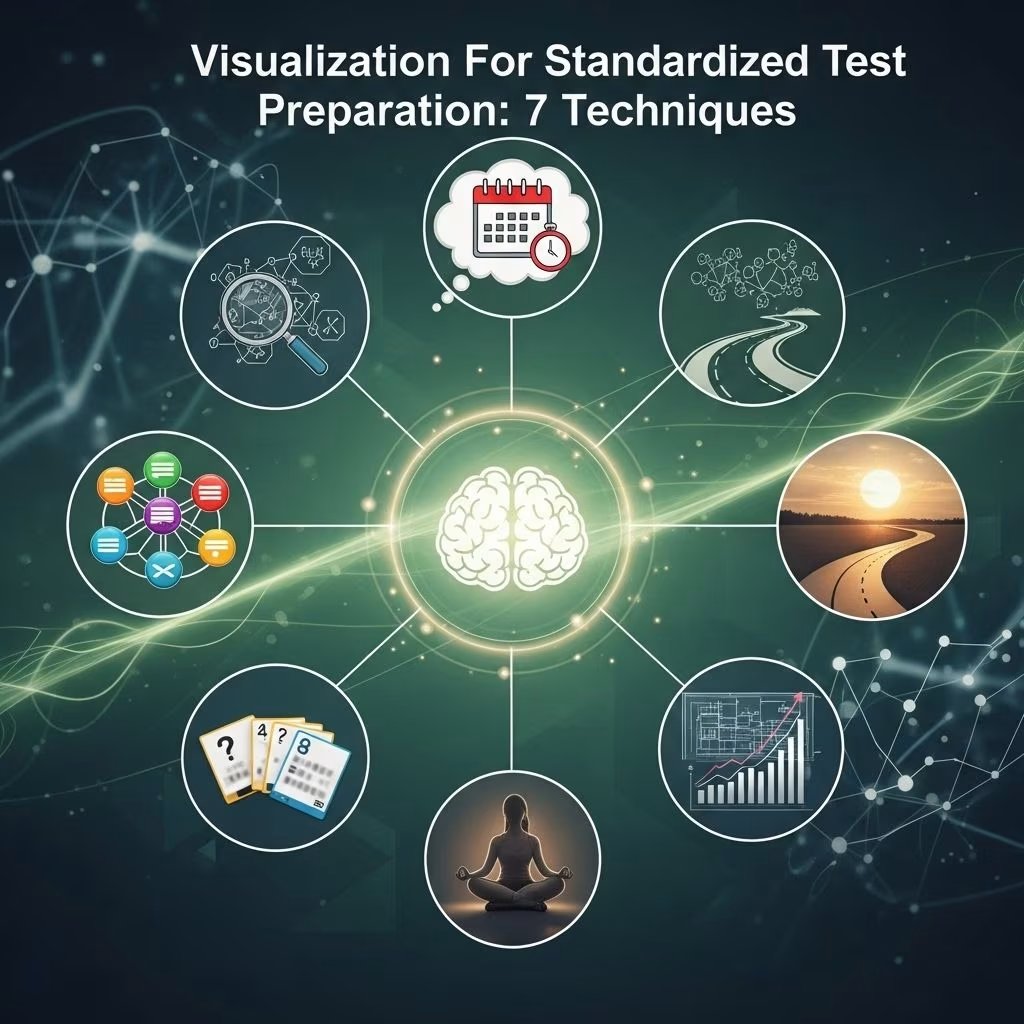
Standardized tests are a rite of passage for millions of students worldwide, influencing academic admissions, scholarships, and career opportunities. As academic competition intensifies, effective test preparation methods are essential for gaining an edge. Among these methods, visualization techniques stand out as powerful tools for boosting memory, alleviating anxiety, and enhancing standardized test performance.
Introduction: The Power of Visualization in Test Prep
Visualization, or mental imagery, is the process of creating vivid mental pictures to simulate desired outcomes. In the context of standardized test preparation, visualization not only boosts cognitive recall but also prepares students to perform optimally under pressure . Students who incorporate structured visual strategies into their preparation report higher confidence, improved focus, and less anxiety, translating into better test scores.
Why Visualization Matters: Research-Backed Benefits
- Faster Information Processing: Visuals like charts, flowcharts, and concept maps allow students to grasp relationships between ideas more quickly than with text alone .
- Memory Enhancement: Visualization activates neural pathways responsible for memory, strengthening recall during high-stakes exams .
- Pattern Recognition: Turning complex concepts into visual formats highlights connections and trends that may not be obvious in written notes .
- Anxiety Reduction: Visualizing successful outcomes helps calm nerves before and during tests .
- Motivation & Engagement: Interactive visuals make studying less tedious, keeping students engaged longer .
Key Visualization Techniques for Standardized Test Preparation
There are a variety of visualization strategies you can integrate into your study plan. Each technique offers distinct benefits depending on the subject area and type of standardized test.
1. Diagrams & Annotated Figures
Useful for science and math-heavy exams, diagrams make it easier to internalize systems like the circulatory cycle, chemical reactions, or geometric relationships . Annotate figures with key terms to reinforce understanding.
2. Mind Maps and Concept Maps
Mind maps organize topics around a central idea, branching into subtopics and relationships. This aids in synthesizing information for exams with broad knowledge requirements, such as the SAT or GRE .
3. Flowcharts
Flowcharts break down multi-step processes or decision trees, clarifying the sequence of actions or logic required for complex questions.
4. Color Coding and Highlighting
Color-coding notes by concept, importance, or subject helps your brain categorize and recall information more efficiently while studying or during the test .
5. Timelines & Study Planners
Timelines visually map your preparation schedule, including practice test days, milestone targets, and content to cover. Keeping this visible helps maintain motivation and manage time .
6. Visualization Mental Rehearsal
Mental rehearsal involves picturing yourself calmly and successfully answering questions, completing sections within time limits, and confidently managing test-day stress .
7. Vocabulary Flashcards with Images
For verbal and language exams, use flashcards that pair new words with images or symbols, reinforcing memory beyond rote memorization .
Tailoring Visualization Tools to Major Exam Types
Different standardized tests benefit from specific visualization strategies. Here’s how to match techniques to major exam types:
| Test | Effective Visualization Techniques |
|---|---|
| SAT | Mind maps for reading, annotated math diagrams, test simulation mental rehearsal, vocabulary flashcards with pictures. |
| GRE | Flowcharts for logic sections, color-coded quant notes, detailed science diagrams, day-by-day study timelines. |
| TOEFL/IELTS | Visual vocabulary flashcards, grammar refinement through flowcharts, practice visualizing oral responses, timeline for section pacing. |
| SSAT/High School Entrance Exams | Color-coded notes, picture-based flashcards, review mind maps, simple annotated figures for science/math sections. |
Visualization for Mindset: Confidence and Anxiety Reduction
Beyond content mastery, visualization is a critical tool for shaping mindset. The stress of high-stakes exams often leads to underperformance. By mentally rehearsing a calm demeanor and successful outcomes, students reduce anxiety and set the foundation for peak performance.
- Visualize entering the exam room confidently, organizing your materials, and calmly addressing each section .
- Imagine overcoming challenging questions, calmly skipping and returning if necessary.
- Mental rehearsal has been shown to activate neural pathways tied to actual performance, making it likelier you’ll follow through under pressure .
Combining Visualization with Other Study Strategies
Visualization is most effective when integrated with proven study techniques:
- Spaced Repetition: Use visual flashcards and mind maps with spaced intervals for deeper retention .
- Active Recall: Test yourself using blank diagrams or mind maps, filling them in without notes for powerful memory consolidation.
- Practice Testing: Combine frequent full-length and section practice tests with mental imagery, simulating real exam conditions.
Blending these methods ensures that test-day performance draws from well-organized, retrievable knowledge—not just passive review.
Step-by-Step: How to Practice Visualization Effectively
- Set a Clear Goal: Identify specific objectives for each visualization session. Are you focused on mastering a chapter, calming nerves, or refining time management?
- Prepare the Environment: Find a quiet, comfortable space free from distractions. Close your eyes, take a few deep breaths, and get into a relaxed state .
- Visualize in Vivid Detail: Picture yourself studying, absorbing material, or taking the test. Notice sights, sounds, and even emotions—make the mental scene as realistic as possible .
- Engage Emotions: Feel the confidence, relief, and satisfaction associated with successful study or test-taking. This emotional engagement strengthens neural connections .
- Repeat and Adjust: Practice regularly, adjusting scenarios to cover new material and potential test-day challenges.
Integrating these sessions into your weekly routine creates positive habits that pay dividends on test day.
Recommended Tools and Resources
- Digital Mind Mapping Apps: XMind, MindMeister, and Coggle for quick, organized mind maps.
- Flashcard Platforms: Anki and Quizlet for image-embedded vocabulary tools.
- Study Planning Tools: Google Calendar and Trello for timeline and goal tracking.
- Paper-Based Tools: Colored pens, highlighters, and large sketchpads for tactile learners.
Many structured test prep courses also integrate visualization tools into their curriculums, offering templates, expert guidance, and peer support .
Frequently Asked Questions (FAQs)
Q: Can visualization alone guarantee higher standardized test scores?
A: Visualization dramatically improves preparation quality but is most effective when combined with practice tests, content review, and strategic learning techniques .
Q: How much time should I dedicate to visualization during test prep?
A: Begin with 5–10 minutes per session, several times a week, adjusting as you become more comfortable with mental imagery practices .
Q: Which exams benefit most from visualization?
A: All major standardized tests benefit—SAT, GRE, TOEFL, SSAT—but the specific visualization approach should be tailored to each exam’s format and subject emphasis .
Q: How do I know if visualization is helping?
A: Track your progress using practice tests and observe changes in stress, confidence, and information recall. Many students notice improved focus and performance within weeks of consistent visualization.
Q: Are physical visual aids as effective as digital ones?
A: Both can be highly effective. Choose whichever method you find most engaging and easy to update as you study.
Conclusion
Visualization for standardized test preparation transforms abstract information into organized, memorable formats while promoting mental resilience. Integrating these techniques leads to better recall, less anxiety, and stronger test-day performance—building a skillset that endures in academic and professional pursuits.
References
- https://testprepistanbul.com/mba/visual-study-methods-for-standardized-test-success/
- https://www.liveexamhelper.com/blog/power-of-visualization-techniques-in-exam-success.html
- https://www.revisiondojo.com/blog/using-visualization-techniques-to-improve-sat-performance-10-proven-strategies-for-success
- https://www.creighton.edu/sites/default/files/Guided-Imagery-Script-for-Taking-Exams-202270.pdf
- https://enrichmenttherapies.com/visualize-success-test-taking-101/
- https://criticalpass.com/blogs/news/the-simple-visualization-technique-that-helped-me-pass-the-bar-exam
- https://jdadvising.com/how-to-use-visualization-to-succeed-on-the-bar-exam/
- https://www.unco.edu/tutoring/pdf/study-skills-resources/Understanding_Anxiety.pdf
- https://summer.harvard.edu/blog/14-tips-for-test-taking-success/
- https://www.edutopia.org/article/interactive-test-prep-strategies/


