


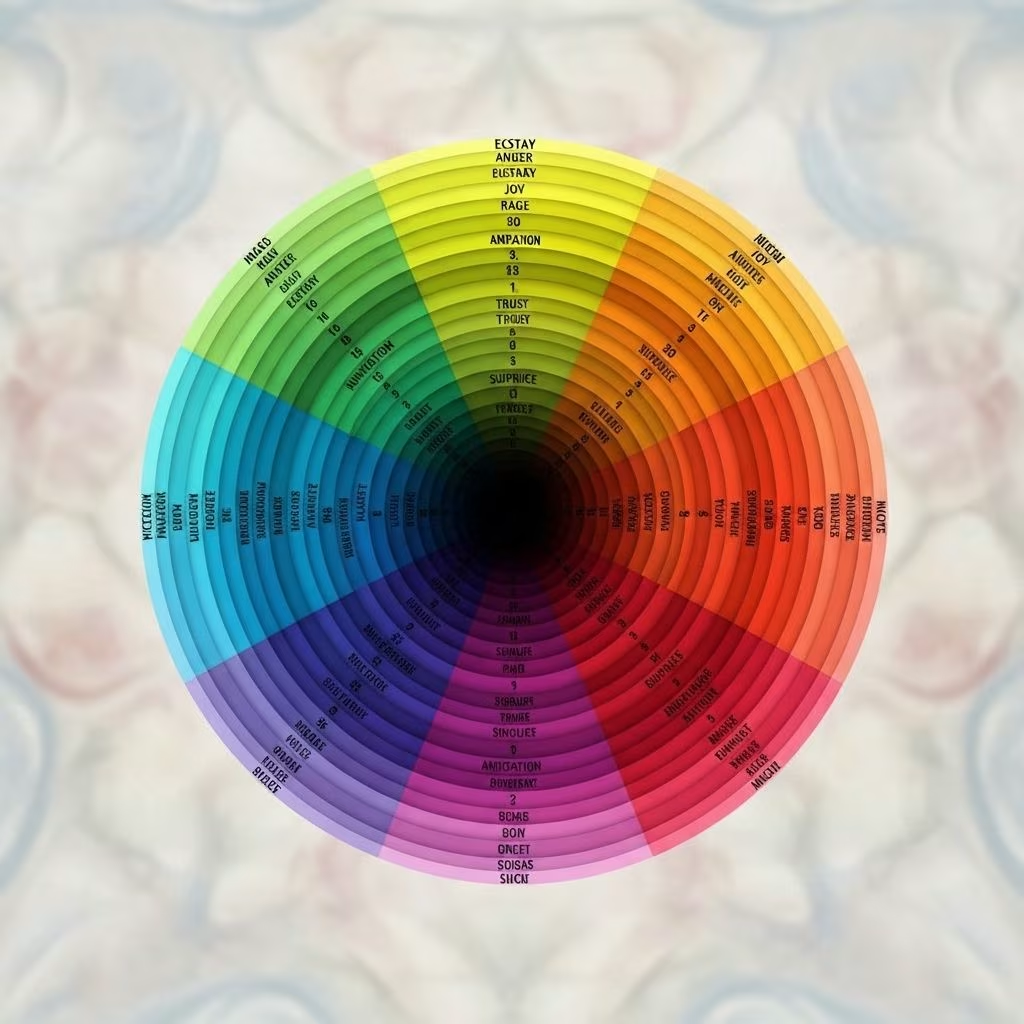
What is the Wheel of Emotions?
The Wheel of Emotions is a visual model that organizes and illustrates the complexity of human emotional experiences into a structured, colorful diagram—often resembling a flower or a color wheel. Developed by psychologist Robert Plutchik in 1980, the wheel maps out eight primary emotions, their opposites, and the combinations that form more complex feelings. The model serves as both a theoretical framework and a practical tool, helping individuals, therapists, and designers understand and communicate emotions more effectively.
History and Development
Robert Plutchik, a pioneering psychologist in the field of emotion research, synthesized decades of work across biology, psychology, and philosophy to create the Wheel of Emotions in the late 20th century. Plutchik argued that emotions are biologically based and serve an evolutionary purpose, aiding in survival by prompting adaptive responses to environmental stimuli. His wheel was designed to reflect both the complexity and the interconnectedness of emotions, providing a universal language for emotional experiences.
Structure of the Wheel
The Plutchik Wheel is divided into concentric circles, each representing a different layer of emotional experience. At the core are the primary emotions, while the outer rings break down these basics into ever-more-nuanced secondary and tertiary emotions. The wheel is also arranged so that opposite emotions are positioned directly across from each other, and adjacent emotions can be combined to form new, complex feelings.
- Primary Emotions: The innermost circle, featuring eight basic emotions.
- Secondary Emotions: The next layer, consisting of emotions derived from combinations of two primary emotions.
- Tertiary Emotions: The outermost layer, representing the most specific and nuanced emotional states.
Primary Emotions
According to Plutchik, there are eight fundamental, universally experienced emotions:
- Joy: A sense of happiness or contentment
- Trust: Confidence in someone or something
- Fear: Apprehension about potential danger
- Surprise: A sudden, unexpected event or emotion
- Sadness: Feelings of loss or disappointment
- Disgust: Revulsion or strong dislike
- Anger: Frustration or hostility
- Anticipation: Looking forward to something positively
These emotions are considered primary because they are thought to be the building blocks from which all other emotions are formed.
Secondary and Tertiary Emotions
Secondary emotions emerge when two primary emotions combine. For example, combining joy and trust yields love, while fear and surprise produce awe. Tertiary emotions are even more nuanced, capturing subtle distinctions such as impatience under frustration or agitation under annoyance.
| Primary Emotion | Example Secondary Emotion | Example Tertiary Emotion |
|---|---|---|
| Anger | Frustration | Impatience, Exasperation |
| Fear | Anxiety | Worry, Dread |
| Joy | Elation | Excited, Pleased |
This layered structure allows individuals to move from broad feelings (e.g., anger) to more specific experiences (e.g., irritation, agitation), enhancing emotional self-awareness and communication.
Emotional Dyads (Combined Emotions)
Plutchik further categorized the combinations of primary emotions as dyads. These dyads represent more complex feelings created when two primary emotions blend together, depending on their proximity on the wheel:
- Primary dyads: Combinations of adjacent primary emotions, such as joy + trust = love, or fear + surprise = awe.
- Secondary dyads: Combinations of emotions once removed on the wheel, such as joy + fear = guilt, or trust + surprise = curiosity.
- Tertiary dyads: Combinations of emotions twice removed on the wheel, such as joy + surprise = delight, or fear + disgust = shame.
These blended emotions provide a richer vocabulary for describing nuanced emotional states, reflecting the complexity of real-life feelings.
Opposite Emotions
A key feature of Plutchik’s model is the pairing of opposite emotions, reflecting physiological and psychological contrasts:
| Emotion | Opposite Emotion |
|---|---|
| Joy | Sadness |
| Trust | Disgust |
| Fear | Anger |
| Surprise | Anticipation |
These opposites help explain why certain emotions rarely coexist—you cannot feel joy and sadness, or trust and disgust, at the same time.
Intensity and Variations
The Wheel of Emotions also illustrates differences in emotional intensity. Moving from the center outward, the intensity of each emotion decreases: for example, at the center, anger is depicted as rage, while toward the edge, it becomes annoyance or irritation. This helps users distinguish between mild and strong emotional reactions, which is valuable for both self-understanding and therapeutic interventions.
Other models, such as the Junto Wheel, simplify the wheel to six basic emotions—joy, love, fear, anger, sadness, and surprise—and arrange them in concentric circles that increase in specificity and nuance.
Color Symbolism
Each primary emotion on the wheel is assigned a color that corresponds to common cultural associations:
- Anger: Red (symbolizing intensity and passion)
- Fear: Black or dark gray (signifying darkness and uncertainty)
- Sadness: Blue (as in “feeling blue”)
- Joy: Yellow (symbolizing brightness and positivity)
- Trust: Green (often associated with stability and growth)
- Surprise: Orange or light pink (reflecting suddenness or novelty)
- Disgust: Brown or dull green (evoking physical revulsion)
- Anticipation: Light blue or turquoise (representing expectation and curiosity)
These colors are not arbitrary; they are intended to evoke instinctive associations with the emotions they represent, enhancing the model’s accessibility and memorability.
Applications in Psychology and Therapy
The Wheel of Emotions is widely used in psychology, counseling, and emotional intelligence training.
- Self-awareness: Helps individuals identify, label, and understand their feelings, which is a core skill in emotional intelligence.
- Therapy: Therapists use the wheel to help clients articulate complex or mixed emotions, facilitating deeper insight and communication.
- Design and UX: Designers apply the model to create emotionally resonant experiences, considering how visual elements evoke different feelings.
- Education: Educators use the wheel to teach children and adults about emotional literacy, empathy, and conflict resolution.
The model’s visual and categorical structure makes it easier to discuss emotions, reducing ambiguity and encouraging emotional openness.
Using the Wheel in Everyday Life
The Wheel of Emotions is not just for professionals—it is a practical tool for personal growth and relationship management.
- Identifying feelings: When unsure about your emotional state, start at the center (primary emotion) and move outward to pinpoint what you’re truly feeling.
- Improving communication: Use specific emotion words from the wheel to express yourself more clearly to others.
- Building empathy: Recognize and validate the emotions of friends, family, and colleagues by referencing the wheel.
- Conflict resolution: Understanding the underlying emotions in a disagreement can help de-escalate tensions and find common ground.
By regularly referencing the wheel, individuals can become more emotionally literate, improving both self-understanding and interpersonal relationships.
Limitations and Criticisms
While the Wheel of Emotions is a valuable tool, it is not without its limitations:
- Cultural
References
- https://www.interaction-design.org/literature/topics/wheel-of-emotions
- https://www.calm.com/blog/the-feelings-wheel
- https://study.com/academy/lesson/robert-plutchiks-wheel-of-emotions-lesson-quiz.html
- https://www.6seconds.org/2025/02/06/plutchik-wheel-emotions/
- https://positivepsychology.com/emotion-wheel/
- https://psychcentral.com/health/emotion-wheel
- https://www.berkeleywellbeing.com/emotion-wheel.html
- https://www.youtube.com/watch?v=aCrJmij_ZDE
- https://www.coachhub.com/blog/emotion-wheel


