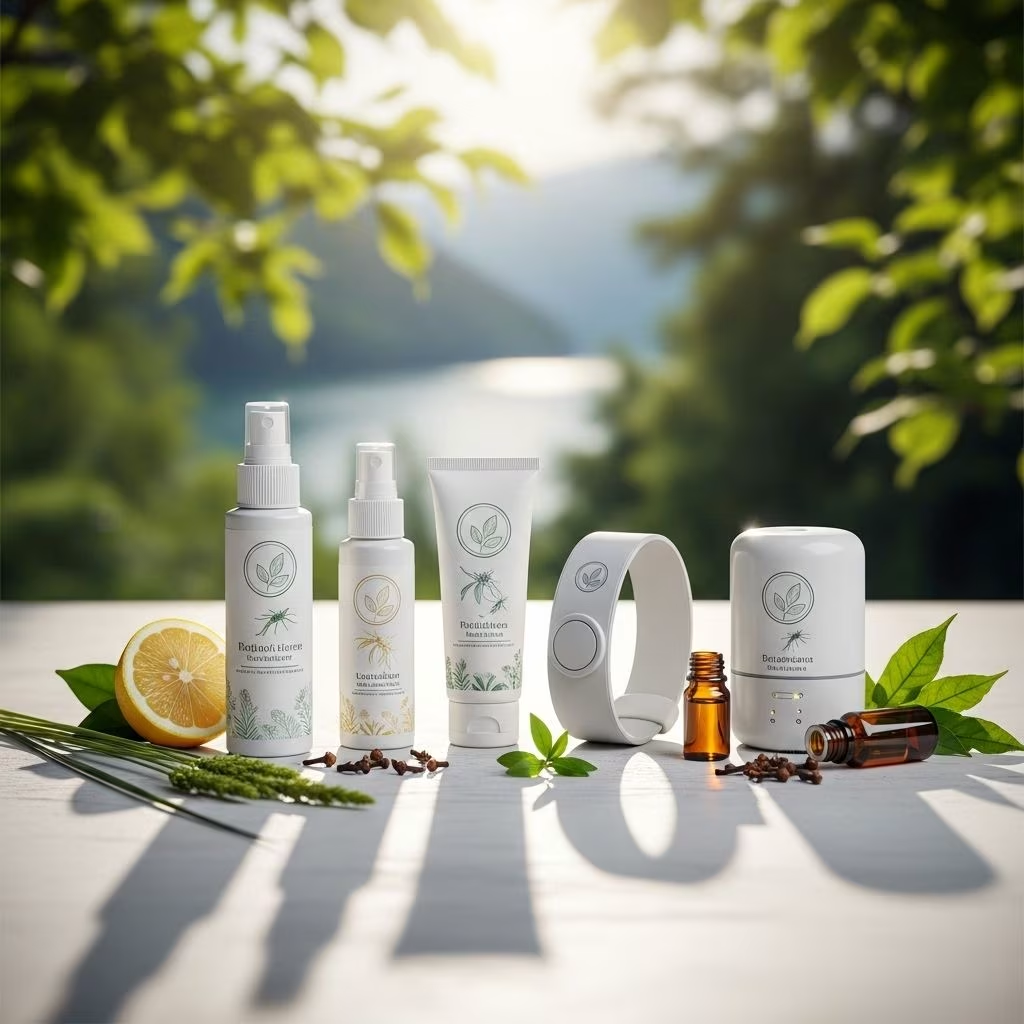
The Best Insect Repellents for Every Situation: Expert Guide 2025
As outdoor enthusiasts, parents, and travelers know all too well, finding the right insect repellent can make the difference between an enjoyable adventure and an itchy nightmare. In recent years, the range and effectiveness of repellents have evolved, incorporating both chemical and plant-based ingredients. This guide draws on the latest independent testing and authoritative research to present the best options for staying bite-free, no matter where life takes you in 2025.
Why Use Insect Repellent?
Insect repellents offer more than just relief from annoyance: they play a vital role in protecting against diseases transmitted by mosquitoes and ticks—such as West Nile virus, Zika, and Lyme disease. Choosing an effective product is essential, especially in high-risk areas or during peak bug season.
Choosing the Right Insect Repellent: Key Criteria
With dozens of products on the market, it’s important to compare repellents by:
- Type and concentration of active ingredient
- Formulation (spray, lotion, wipe, etc.)
- Skin sensitivity and age safety
- Odor and application experience
- Duration of protection
Recent lab testing, including rigorous “real world” trials, shows that active ingredient and its percentage matter far more than brand or packaging. Products with 25%–30% DEET consistently outperform alternatives, while some non-DEET options approach—but rarely surpass—this level of protection.
Understanding Active Ingredients in Insect Repellents
Each repellent’s effectiveness is defined by its active ingredient. Here’s what you need to know about the most common and effective ones:
DEET (N,N-Diethyl-meta-toluamide)
- Introduced in 1957, remains the gold standard for broad-spectrum repellent efficacy.
- Available in concentrations from 5% to 100%—but 25% to 30% is optimal for most users.
- Tested extensively for safety by the EPA. When used as directed, even moderate concentrations are safe for adults and children over 2 months old (children should not use more than 30% DEET).
- Effective against both mosquitoes and ticks.
- Some users may experience mild skin irritation, especially at higher concentrations or with repeated use.
Picaridin (KBR 3023)
- Developed as an alternative to DEET, available since the late 1990s.
- Nearly odorless, non-greasy, less likely to irritate skin, and won’t damage plastic or synthetic fabrics.
- Products with 20% picaridin offer protection comparable to 10% DEET, though DEET usually outperforms in direct comparisons.
- Available in sprays, wipes, and lotions. Efficacy may vary with product form.
Oil of Lemon Eucalyptus (OLE) / PMD
- Contains para-menthane-3,8-diol (PMD)—a synthesized version of a natural extract.
- 30% OLE is considered effective, though not as consistently as DEET-based products.
- Not for use in children under 3 years old. Always read the label for age guidance.
- Has a distinct lemony scent, which may appeal to those wanting a less chemical fragrance.
IR-3535
- Widely used in Europe, IR-3535 provides long-lasting protection against mosquitoes, ticks, and flies, suitable as a non-DEET alternative.
- Generally considered safe, with low rates of skin irritation.
Permethrin (For Clothing Only)
- Permethrin is a synthetic chemical used to treat clothing, shoes, and camping gear—not for direct skin application.
- Provides robust protection and remains effective for weeks—even after several washes.
- Combining permethrin-treated clothing with a topical repellent offers high-level defense in tick or mosquito-prone areas.
Natural and Essential Oil Repellents
- Many products feature citronella, peppermint, or soybean oil.
- Testing consistently finds these “natural” solutions underperform. For truly bite-prone situations, experts recommend skipping these in favor of DEET, picaridin, or OLE.
Top-Rated Insect Repellents of 2025
The following products have performed exceptionally well in rigorous testing—providing reliable protection across a variety of environments and activities.
- Ben’s Tick & Insect Repellent Wipes (25–30% DEET)
Ideal for on-the-go use, these wipes deliver consistent, long-lasting defense for both mosquitoes and ticks. Their convenient packaging is perfect for travel or hiking packs. - Wilderness Formula Pump (25–30% DEET)
A pump spray delivering potent, sustained protection suitable for extended outdoor stays. - Repel Lemon Eucalyptus Insect Repellent (30% OLE)
The best-performing DEET-free option. Great for those avoiding chemicals yet seeking robust effectiveness. - Sawyer Products Premium Insect Repellent (20% Picaridin)
Odorless and gentle on the skin and gear. Offers high-level protection and a user-friendly feel.
Comparison Table: Top Ingredients at a Glance
| Active Ingredient | Effective Concentration | Protection Time | Suitable For | Main Advantages |
|---|---|---|---|---|
| DEET | 25-30% | 4–8 hours | Most adults/older children | Wide-spectrum, proven efficacy |
| Picaridin | 20% | Up to 8 hours | Adults, children | Low odor, gentle on skin/gear |
| OLE (PMD) | 30% | 6 hours | Adults, children over 3 | Plant-based, strong protection |
| IR-3535 | 20% | 4–8 hours | All ages | Mild, used in Europe |
| Permethrin (clothing only) | 0.5% | 2+ weeks per application | N/A (not for skin) | Very long-lasting |
How to Apply Insect Repellent Effectively
Proper application is just as important as the product choice for optimal protection:
- Apply repellent after sunscreen, not before.
- Use a thin, even layer on all exposed skin. Do not apply under clothing.
- It’s safe to spray over clothes—but test first if worried about fabric.
- Adults should apply repellent to children—avoid hands, eyes, and mouth.
- Wash off repellent after returning indoors.
Key Safety Tips
- Read all labels and follow application instructions strictly.
- Never apply to broken or irritated skin.
- Do not use OLE or PMD products on children under three.
- Spray in well-ventilated areas.
- Store away from food and pets.
Special Considerations: Repellents for Kids & Sensitive Users
Children and those with sensitive skin require extra caution:
- Children under 3 years: Avoid OLE/PMD products; opt for DEET (up to 10-30%) or picaridin in low concentrations.
- Avoid “all-natural” repellents for children, as these offer unreliable protection compared to regulated ingredients.
- Sensitive skin? Choose picaridin or IR-3535, both of which are generally well-tolerated.
Consult with a pediatrician for infants or if your child has known skin allergies.
Insect Repellent Forms: Sprays, Wipes, and Lotions Compared
The form of repellent can impact comfort and coverage:
- Sprays: Most versatile and easy for even coverage. Be cautious near eyes and mouth.
- Lotions: Offer more controlled application and can be less messy for kids.
- Wipes: Convenient for travel and precise application—ideal for face and neck.
- Aerosol vs. Pump: Aerosols provide a fine mist; pumps allow targeted placement.
- Permethrin sprays: Always use on clothing or gear, not skin.
What Doesn’t Work? Avoid These Mistakes
- Don’t substitute essential oils for EPA-approved active ingredients. They fail in controlled tests.
- Higher concentrations aren’t always better. More than 30% DEET isn’t necessary for effective protection, and may increase side effects.
- Reapplying too infrequently. Always follow label guidance for timing.
Frequently Asked Questions (FAQ)
Q: Are “natural” repellents as effective as DEET-based products?
A: No. Plant oil-based formulas, including citronella and peppermint, perform poorly in laboratory and field studies. For reliable protection, use DEET, picaridin, or OLE-based repellents.
Q: Is DEET safe for daily use?
A: Yes, when used according to label instructions and at recommended concentrations (10–30%), DEET is safe for regular seasonal use, including on children over two months old. Always wash off after outdoor activities.
Q: Can I use insect repellent and sunscreen together?
A: Yes. Apply sunscreen first, allow it to absorb, then apply insect repellent. Reapply both as needed according to directions.
Q: Does permethrin work on skin?
A: No. Permethrin is only for treating fabrics like clothing, tents, and nets. Never apply directly to your skin.
Q: How do I protect babies from insect bites?
A: Use protective clothing and mosquito nets whenever possible. Repellents with less than 10% DEET or picaridin can be used on babies older than two months, avoiding hands and face. Do not use OLE on infants under 3 years.
Q: What should I do if I have a reaction to a repellent?
A: Wash the affected area with soap and water, discontinue use, and consult a healthcare provider if symptoms persist.
Conclusion
Choosing the right insect repellent ensures you and your family can enjoy the outdoors with peace of mind. The most effective repellents almost always contain DEET, picaridin, or OLE in tested concentrations. For those with sensitive skin or seeking alternatives, products like IR-3535 or permethrin-treated gear can offer viable options. Remember: always follow product directions for the safest, most effective protection from bothersome—and potentially dangerous—insect bites.
References
- https://www.epa.gov/insect-repellents/find-repellent-right-you
- https://www.consumerreports.org/health/insect-repellent/best-insect-repellents-for-you-and-your-family-a4042114470/
- https://msdh.ms.gov/page/14,957,93.html
- https://www.babygearlab.com/topics/health-safety/best-insect-repellent
- https://www.youtube.com/watch?v=v8xEsTDSV9U