The Best Portable Generators for 2025: Comprehensive Buyer’s Guide
Portable generators have transformed backup power, emergency preparedness, and outdoor convenience. With unpredictable power outages and increasing demand for off-grid energy, owning a reliable portable generator is more important than ever. This guide breaks down the best models for 2025, compares key features, and offers practical advice for choosing the ideal generator for your scenario—from quiet camping trips to whole-home power during blackouts.
Why Invest in a Portable Generator?
- Emergency power: Ensure essentials like refrigerators, lighting, and medical equipment stay on during outages.
- Outdoor activities: Power tools, appliances, and gadgets for camping, tailgating, and RVing.
- Home improvement: Safely run equipment at job sites where grid power is unavailable.
Choosing the right generator is not just about wattage—consider fuel type, portability, runtime, noise levels, and extra conveniences to match your specific use case.
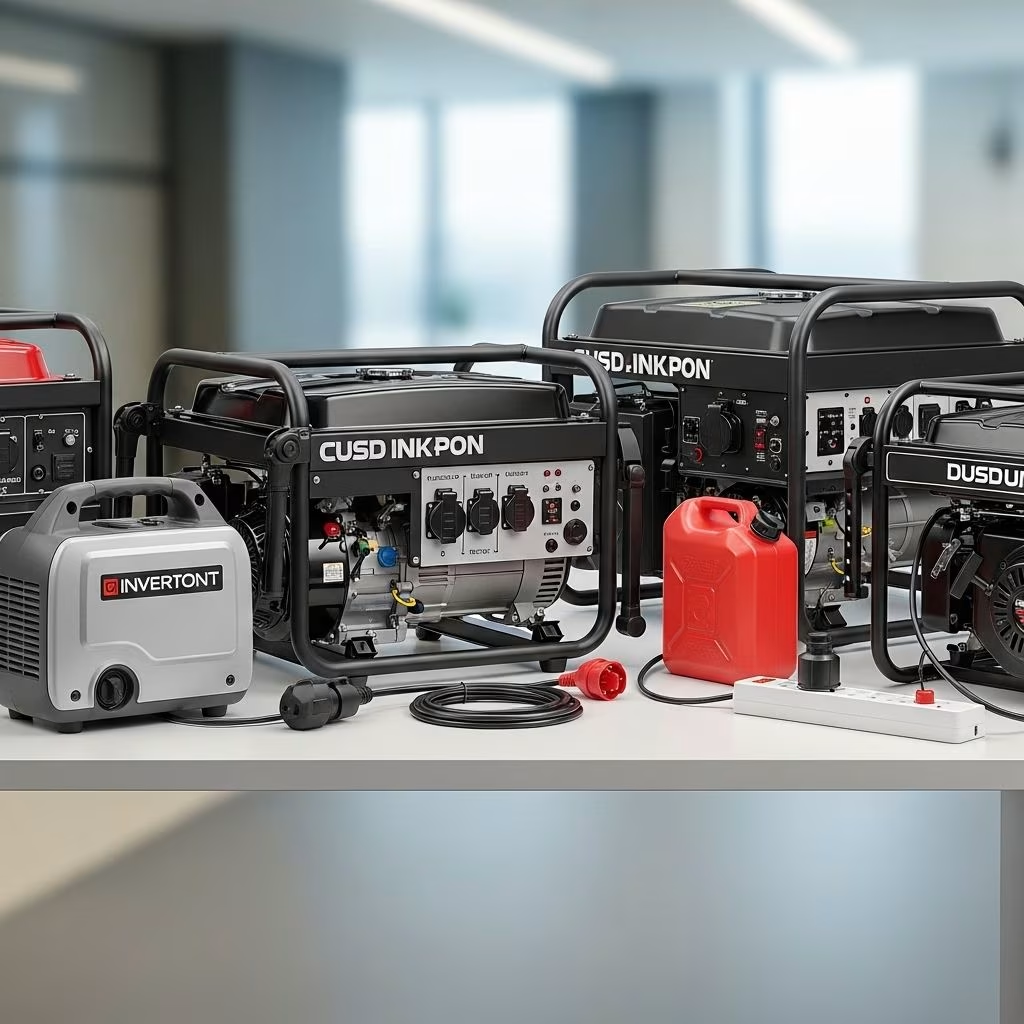
Types of Portable Generators
All portable generators fall into one of four main categories, each with unique strengths and trade-offs:
- Inverter Generators: Offer clean, stable power ideal for sensitive electronics and quiet operation.
- Conventional Portable Generators: Deliver robust power for larger appliances and whole-home solutions, often at a lower cost per watt.
- Dual-Fuel and Tri-Fuel Models: Increase versatility by letting you switch between gasoline, propane, and sometimes natural gas.
- Solar and Battery Generators: Provide silent, emission-free backup for small electronics and camping (covered only briefly here).
Understanding Wattage: Sizing Your Generator
The most important factor in choosing a generator is matching its output to your actual power needs:
| Type | Wattage (Rated/Peak) | Best For | Pros | Cons |
|---|---|---|---|---|
| Small Inverter | Up to 2,000W | Camping, tailgating, charging small electronics | Lightweight, quiet, fuel efficient | Limited capacity, cannot hardwire to house |
| Midsized Inverter | 2,000–3,500W | Running fridge, lights, a few appliances | Efficient, quiet | Only powers 110V devices, not HVAC/wells |
| Large Portable | 5,000–8,500W | Whole-home, high-demand appliances | Value, high output, can hardwire | Noisy, heavy, uses more fuel |
| Standby Generator | Up to 20,000W | Full house, automatic power | Set-and-forget, unlimited runtime | High cost, complex installation |
Calculate your wattage needs by listing the devices you want to power and their starting/running watts. Always include a safety margin for appliances with high startup surges.
Top Portable Generator Picks for 2025
Below are some of the best portable generator models, each chosen for reliability, versatility, and value. Whether you need RV-ready, dual-fuel, or inverter technology, these are leading options for modern backup solutions.
Westinghouse iGen8200TFc
- Rated Watts: 6,600W
- Peak Watts: 8,200W
- Fuel: Tri-Fuel (Gas, Propane, Natural Gas)
- Runtime: 17 hours @ 25% load
- Noise: 60 dBA
- Starting: Recoil, Electric, Remote
- Outlets: 4 AC outlets (RV ready)
- Weight: 134.5 lbs
An excellent pick for homeowners who want fuel flexibility and extended runtime. Ideal for emergencies and off-grid power.
Noted for ease of use and balanced features for its class.
WEN DF680iX
- Rated Watts: 5,100W
- Peak Watts: 6,800W
- Fuel: Dual Fuel (Gasoline, Propane)
- Runtime: 6.1 hours @ 50% load
- Noise: 64 dBA
- Starting: Recoil, Electric
- Outlets: 4 AC outlets
- Weight: 94.8 lbs
Compact and practical for mid-sized loads, with the convenience of dual-fuel operation. Strong value for workshops and RV users.
Champion 201176
- Rated Watts: 7,250W
- Peak Watts: 9,000W
- Fuel: Tri-Fuel
- Runtime: 14 hours @ 25% load
- Noise: 72 dBA
- Starting: Recoil, Electric
- Outlets: 6 AC outlets
- Weight: 156.6 lbs
Great for powering multiple large appliances simultaneously, especially in prolonged outages. Highly versatile and robust.
Westinghouse WGen11500TFc
- Rated Watts: 11,500W
- Peak Watts: 14,500W
- Fuel: Tri-Fuel
- Runtime: 19 hours @ 25% load
- Noise: 74 dBA
- Starting: Recoil, Electric, Remote
- Outlets: 6 AC outlets
- Weight: 230 lbs
One of the most powerful portable generators, ideal for whole-house backup. Features long runtime, massive output, and flexible fuel sourcing.
Honda EU2200i
- Rated Watts: 1,800W
- Peak Watts: 2,200W
- Fuel: Gasoline
- Runtime: 8.1 hours @ 25% load
- Noise: 48 dBA
- Starting: Recoil
- Outlets: 2 AC outlets
- Weight: 47.4 lbs
World-renowned for reliability and near-silent operation, this is a top pick for camping, tailgating, and small appliance backup. Highly portable.
Westinghouse iGen5000DF
- Rated Watts: 3,900W
- Peak Watts: 5,000W
- Fuel: Dual Fuel
- Runtime: 18 hours @ 25% load
- Noise: 52 dBA
- Starting: Recoil, Electric, Remote
- Outlets: 3 AC outlets
- Weight: 104.7 lbs
Balanced for midsize emergency backup. Excellent runtime with dual-fuel support; notably quiet.
Are Home Standby Generators Portable?
Some portable generators rival small home standby units in power output but sacrifice permanent installation, automatic switchover, and unlimited runtime features. If your priority is mobility and multi-use (travel, job site, occasional backup), a high-output portable is often preferable.
Standby models require professional installation and plumbing, making them less flexible for most users.
Factors to Consider When Buying a Portable Generator
Before purchasing, weigh these critical considerations:
- Power output: Match generator total wattage (rated plus surge) to your actual needs.
- Fuel type: Prefer dual- or tri-fuel for flexibility and emergency adaptability.
- Noise levels: Quieter (inverter) models are better for campgrounds, neighborhoods, or indoor proximity.
- Portability: Weight, wheel kits, carrying handles—consider how often you’ll need to move the unit.
- Runtime: Longer runtime equals less refueling, key for overnight or extended outages.
- Starting mechanism: Electric and remote starting are easier, especially for heavy units.
- Outlet configuration: RV outlets, 120/240V switching, USB ports, and transfer switch compatibility.
Other convenience features include CO sensors, smartphone apps, and indicator lights for fuel and maintenance.
Expert Tips: How to Use and Maintain Your Generator Safely
- Never use indoors: Generators produce deadly carbon monoxide gas; always run outdoors, away from open windows.
- Check local regulations: Some neighborhoods restrict generator noise or require permits for use.
- Store fuel safely: Keep extra gasoline or propane in approved containers, and label clearly.
- Maintenance: Regularly check oil, filters, and spark plugs; run your generator monthly, even when not in use.
- Invest in a transfer switch: Safest way to connect to your home circuits, preventing backfeed accidents.
Frequently Asked Questions (FAQs)
Q: What size portable generator do I need for my home?
A: For essential circuits (fridge, some lights, sump pump), a generator with 3,000–5,000 rated watts is sufficient. Whole-home backup needs at least 8,000–11,500 watts, and HVAC may demand even more.
Q: Is an inverter generator better than a conventional generator?
A: Inverter generators are quieter, more fuel efficient, and safer for sensitive electronics. For large loads or whole-house use, conventional models typically offer higher output at lower cost, but at the expense of noise and efficiency.
Q: What does dual-fuel or tri-fuel mean?
A: Dual-fuel generators run on either gasoline or propane. Tri-fuel models add the option for natural gas. This flexibility makes them ideal for emergencies where one fuel type may be unavailable.
Q: Can I run a portable generator in the rain?
A: No, unless it is protected under a well-ventilated shelter. Water can damage the generator or create safety hazards. Use a pop-up tent or cover designed for generators if needed.
Q: How often should I service my generator?
A: Change oil every 25–50 hours of runtime, check air filters monthly, and store with fuel stabilizer. Periodically test all functions to ensure readiness for emergencies.
Portable Generator Comparison Table
| Model | Rated Watts | Fuel Type | Noise (dBA) | Runtime | Weight | Starting | Outlets | Best For |
|---|---|---|---|---|---|---|---|---|
| Westinghouse iGen8200TFc | 6,600W | Tri-Fuel | 60 | 17h | 134.5 lbs | Recoil/Electric/Remote | 4 | Whole-home, RV, emergencies |
| WEN DF680iX | 5,100W | Dual Fuel | 64 | 6.1h | 94.8 lbs | Recoil/Electric | 4 | Workshops, RVs |
| Honda EU2200i | 1,800W | Gasoline | 48 | 8.1h | 47.4 lbs | Recoil | 2 | Camping, small appliances |
| Champion 201176 | 7,250W | Tri-Fuel | 72 | 14h | 156.6 lbs | Recoil/Electric | 6 | Large appliances, outage backup |
| Westinghouse WGen11500TFc | 11,500W | Tri-Fuel | 74 | 19h | 230 lbs | Recoil/Electric/Remote | 6 | Whole-house, job site power |
Conclusion: Which Portable Generator Is Right for You?
Choosing the best portable generator depends on your power demands, budget, and preferences for versatility, noise, and ease of use. For low-demand scenarios, lightweight inverter models like the Honda EU2200i are unbeatable. For serious backup or whole-home power, tri-fuel beasts like the Westinghouse WGen11500TFc deliver reliability and flexibility. Always follow safety guidelines, match generator specs with actual requirements, and invest in quality over sheer wattage for true peace of mind.
Portable Generators Glossary
- Rated Watts: Continuous output the generator can supply.
- Peak/Surge Watts: Maximum power for brief startup spikes.
- Inverter: Technology producing clean power safe for electronics.
- Dual Fuel/Tri-Fuel: Ability to use two or three fuel types for flexibility.
- Transfer Switch: Device allowing safe connection to home circuits.
- CO Sensor: Shuts off generator to prevent carbon monoxide poisoning.
References
- https://generatorbible.com/generators/
- https://www.consumerreports.org/home-garden/generators/how-to-choose-the-right-size-generator-a4942266454/
- https://www.youtube.com/watch?v=yymGPgBxReQ
- https://www.consumerreports.org/home-garden/generators/buying-guide/
- https://www.electricgeneratorsdirect.com/stories/306-How-to-Pick-the-Perfect-Portable-Generator.html
- https://www.harborfreight.com/generator-buying-guide
- https://www.lowes.com/n/buying-guide/portable-generator-buying-guide
- https://guide.pge.com/products/portable_generators