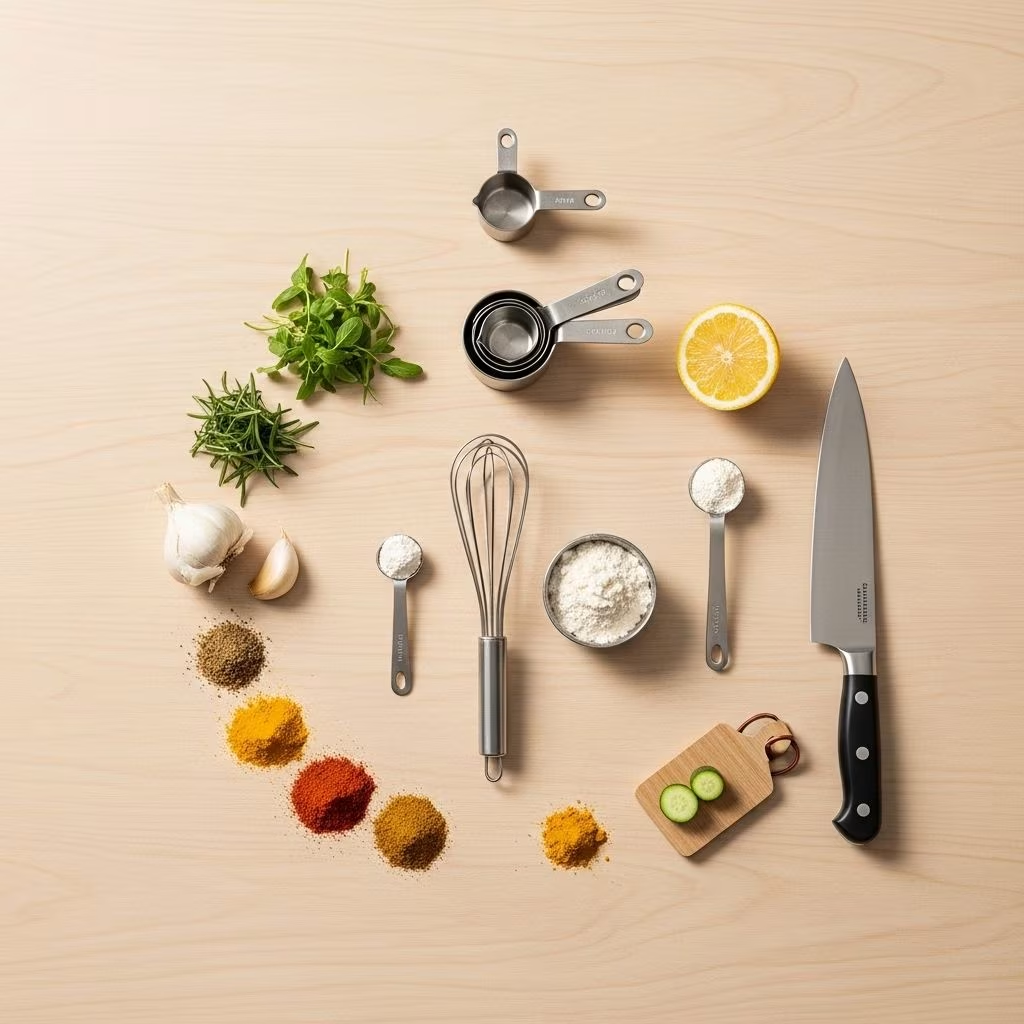
Whether you’re cooking for one, downsizing your household, or simply want to avoid excessive leftovers, knowing how to cut down a recipe is an invaluable kitchen skill. While it might seem as simple as dividing every ingredient in half, recipe scaling involves understanding proportions, cooking times, and how different ingredients behave when reduced. This comprehensive guide will walk you through everything you need to know about cutting down recipes successfully, from basic conversions to expert tips that ensure perfect results every time.
The ability to scale recipes down has become increasingly important as more people cook for smaller households or seek to minimize food waste. Understanding the principles behind recipe reduction not only saves you money but also allows you to enjoy a wider variety of dishes without being overwhelmed by quantities. Let’s explore the essential techniques and considerations that will make you confident in adapting any recipe to your needs.
Understanding Recipe Ratios and Proportions
Before diving into specific measurements, it’s crucial to understand that recipes are built on ratios. When you cut down a recipe, you’re maintaining these ratios while reducing the total volume. The most common reduction is halving a recipe, which means dividing all ingredients by two. However, you can also reduce recipes to one-third, one-quarter, or any fraction that suits your needs.
The key principle is maintaining consistency across all ingredients. If you’re halving a recipe that calls for 2 cups of flour, you’ll use 1 cup. If it requires 4 eggs, you’ll need 2 eggs. This proportional reduction ensures that the chemical reactions in baking and the flavor balance in cooking remain intact. Think of it as creating a smaller version of the same dish rather than changing the recipe itself.
However, not all recipe components scale linearly. Certain elements like spices, leavening agents, and cooking times may require special consideration. A recipe halved doesn’t always mean exactly half the cooking time, and strong spices might need slightly more or less than half to achieve the desired flavor intensity. These nuances are what separate adequate results from exceptional ones.
Essential Conversion Charts for Scaling Down
Having a reliable conversion chart at your fingertips makes recipe reduction significantly easier. When halving recipes, some measurements become awkward—what exactly is half of 3 tablespoons or one-third of a cup? Understanding these conversions prevents kitchen frustration and ensures accuracy.
Common halving conversions include:
1 cup becomes 1/2 cup, 3/4 cup becomes 6 tablespoons (or 3/8 cup), 2/3 cup becomes 1/3 cup, 1/2 cup becomes 1/4 cup, and 1/3 cup becomes 2 tablespoons plus 2 teaspoons. For tablespoon measurements, 1 tablespoon halves to 1-1/2 teaspoons, while 1 teaspoon becomes 1/2 teaspoon. These conversions form the foundation of your scaling toolkit.
When dealing with more complex fractions, remember that 3 tablespoons equals 1/4 cup plus 1 tablespoon, and 5 tablespoons equals 1/4 cup plus 1 tablespoon. Having a set of quality measuring spoons and cups in various sizes, including those with odd measurements like 2/3 cup or 3/4 teaspoon, makes the process much smoother. Digital kitchen scales can also be invaluable, especially when dealing with ingredients measured by weight rather than volume.
Mastering Ingredient-Specific Reductions
While most ingredients scale straightforwardly, certain components require special attention when cutting down recipes. Understanding these exceptions ensures your reduced recipe tastes just as good as the original.
Working With Eggs
Eggs present one of the most common challenges when halving recipes. When a recipe calls for an odd number of eggs and you’re halving it, you’ll need to divide an egg. To halve an egg, crack it into a small bowl and beat it lightly with a fork until the yolk and white are combined. Measure the total volume (one large egg is approximately 3 tablespoons or 1/4 cup), then use half of that measurement. You can save the remaining half in the refrigerator for up to two days, or add it to scrambled eggs or an omelet.
For recipes requiring multiple eggs, consider how they function in the dish. Eggs provide structure, moisture, and leavening. In baking, if a recipe calls for 3 eggs and you’re halving it, using 1-1/2 eggs (one whole egg plus half of another) maintains the proper structure. Some bakers round down to 1 egg for simplicity, but this may slightly affect texture in delicate baked goods like cakes or custards.
Adjusting Leavening Agents
Baking powder, baking soda, and yeast generally scale proportionally, but precision matters more with these ingredients than with many others. A small variation in flour might not drastically affect your cookies, but too much or too little leavening agent can result in flat, dense, or overly puffed baked goods. When halving a recipe that calls for 1 teaspoon of baking powder, use exactly 1/2 teaspoon. Invest in a set of measuring spoons that includes 1/2 teaspoon, 1/4 teaspoon, and even 1/8 teaspoon measurements for accuracy.
Scaling Spices and Seasonings
Spices and seasonings don’t always follow strict mathematical scaling. When you halve a recipe, start by halving the seasonings, but taste and adjust as you cook. Strong spices like cayenne pepper, cloves, or cinnamon might need slightly less than half to avoid overwhelming a smaller batch, while milder herbs might need the full half or even slightly more. This is because flavor perception can change with volume, and smaller batches sometimes require proportionally more seasoning to achieve the same impact.
Salt deserves special mention—always start with less than the halved amount and add more to taste. It’s much easier to add salt than to fix an over-salted dish. When working with fresh herbs versus dried herbs, remember that dried herbs are more concentrated. If substituting, use one-third the amount of dried herbs compared to fresh.
Selecting Appropriate Cookware for Smaller Batches
The size of your cooking vessel significantly impacts how your reduced recipe turns out. Using a pan that’s too large for a smaller batch can cause food to cook too quickly, dry out, or burn. Conversely, overcrowding a too-small pan can lead to steaming instead of browning.
For baking, pan size is particularly critical. If you’re halving a cake recipe that originally used a 9×13-inch pan, you can’t simply use half of that same pan. Instead, use an 8×8-inch or 9×9-inch square pan, or two 6-inch round pans. The depth of batter should remain similar to the original recipe to ensure proper baking. A good rule of thumb is that the halved recipe should fill your chosen pan to approximately the same level as the original recipe filled its larger pan.
For stovetop cooking, choose a pan that allows ingredients to spread in a single layer with minimal crowding. When sautéing vegetables for a halved recipe, use a smaller skillet that still provides enough surface area for proper browning. If you’re reducing a soup or stew recipe, select a pot that will be at least half full when all ingredients are added—this helps maintain proper cooking temperatures and prevents rapid evaporation.
Adapting Cooking Times and Temperatures
One of the biggest misconceptions about cutting down recipes is that cooking time should be halved along with the ingredients. In reality, temperature typically stays the same, but timing requires adjustment and vigilance.
For baked goods, keep your oven at the same temperature specified in the original recipe. However, smaller items will generally bake faster. A full-sized cake might take 35-40 minutes, while a halved version in a smaller pan might be done in 25-30 minutes. Start checking for doneness about 10-15 minutes earlier than the original recipe suggests. Use visual cues (golden brown color, pulling away from pan edges) and physical tests (toothpick inserted in center comes out clean, gentle pressure leaves no indent) to determine doneness.
Stovetop cooking times often remain similar when reducing recipes, particularly for techniques like sautéing or searing where you’re cooking until ingredients reach a certain state rather than for a specific duration. However, liquid-based dishes like soups and sauces may reach the desired consistency more quickly with less volume. Monitor these carefully and reduce heat if necessary to prevent over-reduction or scorching.
Slow Cooker and Instant Pot Considerations
Slow cookers and pressure cookers present unique challenges when scaling down recipes because they work most efficiently when filled to certain levels.
For slow cookers, the appliance should be between half and three-quarters full for optimal performance. If you’re halving a recipe designed for a 6-quart slow cooker, consider using a 3-quart or smaller slow cooker instead. If you don’t have a smaller slow cooker, you can place an oven-safe bowl inside your larger one to create a smaller cooking space, though this isn’t ideal for all recipes. Cooking times in slow cookers typically remain the same regardless of batch size, as the appliance maintains consistent temperature and the time is more about tenderizing ingredients than heating through volume.
Pressure cookers like the Instant Pot require minimum liquid levels to build pressure properly. Even when halving a recipe, check your manufacturer’s guidelines for minimum liquid requirements. Most Instant Pots need at least 1 cup of liquid to function correctly. Cooking times under pressure often remain similar when reducing recipes, as pressure cooking is about reaching and maintaining specific temperatures rather than heating through mass.
Common Mistakes to Avoid When Scaling Down
Even experienced cooks can stumble when reducing recipes. Being aware of common pitfalls helps you avoid them.
Not accounting for evaporation is a frequent error in stovetop cooking. When you halve a soup recipe, the liquid evaporates at roughly the same rate as the full recipe, but you’re starting with less. This means your reduced recipe might become too thick. Combat this by using a slightly smaller pan to reduce surface area or by checking consistency more frequently and adding small amounts of liquid if needed.
Another mistake is failing to adjust pan sizes appropriately, which we’ve touched on but bears repeating. Spreading a small amount of batter in a large pan or overcrowding a tiny pan both lead to disappointing results. Take time to select the right vessel for your scaled-down quantity.
Many home cooks also forget to taste and adjust seasonings in their reduced recipes. Mathematical precision gets you close, but your palate provides the final verdict. Always taste before serving and adjust salt, acid, or spices as needed. This is especially important in savory dishes where balance is key.
Advanced Scaling Techniques
Once you’ve mastered basic halving, you might want to scale recipes to other fractions or even increase them. The same principles apply, but calculations become more complex.
To scale to one-third, divide each ingredient by three. To scale to three-quarters, multiply each ingredient by 0.75. These calculations are easier with a calculator handy or by using weight measurements and a digital scale. When working with particularly complex scaling, consider converting volume measurements to weight, performing your calculations, then converting back if needed.
Baker’s percentages provide another advanced approach, particularly useful for bread baking. In this system, flour is always 100%, and other ingredients are expressed as percentages of the flour weight. Once you establish these percentages from your original recipe, you can scale to any size by choosing your flour amount first, then calculating other ingredients from there.
Special Considerations for Different Recipe Types
Different categories of recipes present unique challenges when scaling down.
Baking Recipes
Baking is chemistry, making precision particularly important when reducing baking recipes. Structure-building ingredients like flour and eggs, moisture providers like milk and butter, and chemical leaveners must maintain their precise ratios. Small variations in baking have larger consequences than in cooking. Always measure carefully, ideally by weight for best results, and remember that humidity and altitude can affect outcomes regardless of batch size.
Soups and Stews
Liquid-based recipes are generally forgiving when scaled down. The main consideration is the evaporation factor mentioned earlier. Start with slightly more liquid than your calculations suggest, knowing you can always simmer to reduce if needed. Flavor concentration can actually improve in smaller batches of soups and stews, as ingredients meld together efficiently in reduced volumes.
Casseroles and Baked Dishes
Layer proportions matter in casseroles. If your original recipe has distinct layers (like lasagna), ensure your scaled-down version maintains those layers in similar ratios. You might need to adjust assembly technique slightly for smaller dishes. Consider that edges cook faster than centers, and smaller casseroles have proportionally more edge area, potentially affecting cooking time and texture.
Tools That Make Scaling Easier
Investing in the right kitchen tools simplifies the recipe reduction process considerably. A complete set of measuring cups and spoons, including unusual sizes like 2/3 cup, 3/4 teaspoon, and 1/8 teaspoon, eliminates most conversion challenges. Adjustable measuring cups that allow you to set any measurement between their minimum and maximum are also helpful.
A digital kitchen scale is perhaps the most valuable tool for scaling recipes. Measuring by weight is inherently more accurate than by volume and makes mathematical calculations straightforward. If a recipe calls for 500 grams of flour and you want to make half, you simply weigh out 250 grams—no conversion charts needed.
Recipe scaling calculators and apps can handle the mathematics for you. Many free online tools allow you to input the original recipe yield and your desired yield, then automatically calculate adjusted ingredient amounts. Some even account for cooking time adjustments, though these should still be verified through observation.
Storing and Using Leftover Ingredients
When cutting down recipes, you’ll often have partial amounts of ingredients left over. Proper storage extends their usability. That half can of tomato paste can be frozen in tablespoon-sized portions on a parchment-lined tray, then transferred to a freezer bag for future use. Partial eggs, as mentioned earlier, keep refrigerated for up to two days.
Opened packages of ingredients like bacon, cream cheese, or fresh herbs can be portioned and frozen. Herbs can be chopped and frozen in oil in ice cube trays, providing perfectly portioned additions for future recipes. Grated cheese freezes well and can be used directly from frozen in cooked dishes. Being strategic about ingredient storage means that cutting down recipes doesn’t result in waste elsewhere in your kitchen.
Frequently Asked Questions About Cutting Down Recipes
Q: Can I cut down any recipe, or are some better left at full size?
A: Most recipes can be successfully scaled down, but some work better than others. Baked goods generally scale well when you adjust pan sizes appropriately. Soups, stews, and casseroles are very forgiving. However, recipes that rely on specific techniques or temperatures, like deep frying or candy making, may be trickier to scale because they depend on maintaining certain volumes or depths. Yeast breads can also be challenging in very small batches because minimal dough quantities affect kneading and rising dynamics.
Q: Do I need to change my oven temperature when making a smaller batch?
A: No, keep your oven temperature the same as the original recipe specifies. The temperature needed to properly cook or bake food doesn’t change based on quantity. However, cooking time will likely decrease for smaller batches, so begin checking for doneness earlier than the original recipe suggests, typically 10-15 minutes before the stated time for baked goods.
Q: What’s the easiest way to halve an egg?
A: Crack the egg into a small bowl and whisk it until the yolk and white are completely combined. One large egg typically measures about 3 tablespoons. Measure the total volume, then use half of that measurement in your recipe. Alternatively, you can eyeball it—use about 1-1/2 tablespoons of beaten egg for half of a large egg. Store any leftover beaten egg in the refrigerator in a sealed container for up to two days.
Q: How do I adjust cooking time when I cut a recipe in half?
A: Cooking time adjustments depend on what you’re making. For baked goods in smaller pans, reduce checking time by about 25-30% from the original. If a full-sized cake bakes for 40 minutes, start checking your halved version at 25-30 minutes. For stovetop dishes like sautés or stir-fries, the time often stays similar because you’re cooking until ingredients reach a certain state. For braised dishes or soups, reduction may happen faster with less volume, so monitor more closely.
Q: Should I halve the spices and seasonings exactly, or adjust them differently?
A: Start by halving spices and seasonings, but be prepared to adjust by taste. Some strong spices like cayenne pepper or cloves might need slightly less than half to avoid overpowering a smaller batch. Conversely, herbs and mild spices might need the full half or occasionally slightly more. Always taste as you cook and adjust seasonings at the end. Salt especially should be added conservatively—start with less than half the original amount and add more to taste.
Q: What pan size should I use for a halved baking recipe?
A: Pan size depends on the original recipe’s dimensions. If halving a recipe from a 9×13-inch pan, use an 8×8-inch or 9×9-inch square pan. For round cake pans, halving a recipe for two 9-inch rounds might work in one 9-inch round or two 6-inch rounds, depending on desired thickness. The goal is to maintain similar batter depth to the original recipe. As a general rule, calculate the area of your original pan and choose a new pan with approximately half that area.
Q: Can I successfully reduce slow cooker recipes?
A: Yes, but slow cookers work best when filled between half and three-quarters full. If halving a slow cooker recipe, use a smaller slow cooker if available (a 3-quart for recipes originally designed for 6-quart, for example). If you only have a large slow cooker, you can place an oven-safe bowl inside to create a smaller cooking space. Cooking times generally remain the same for slow cooker recipes regardless of batch size.
Q: Is it better to measure by weight or volume when scaling down?
A: Measuring by weight using a digital scale is more accurate and makes calculations simpler when scaling recipes. If a recipe calls for 400 grams of flour and you’re making half, you simply weigh out 200 grams. Volume measurements can vary based on how ingredients are packed into measuring cups. However, if you don’t have a scale, volume measurements work fine as long as you’re consistent in your measuring technique and use the proper measuring cups for dry versus liquid ingredients.
Mastering the art of cutting down recipes opens up a world of culinary possibilities for those cooking for smaller households or simply wanting to reduce waste. By understanding the principles of proportional scaling, making appropriate adjustments for specific ingredients, and choosing the right equipment for your reduced batch size, you can successfully adapt virtually any recipe to meet your needs. The key is approaching recipe scaling with both mathematical precision and culinary intuition—let the numbers guide you, but trust your senses and taste buds to make final adjustments. With practice, scaling recipes will become second nature, allowing you to enjoy diverse home-cooked meals perfectly portioned for your situation.