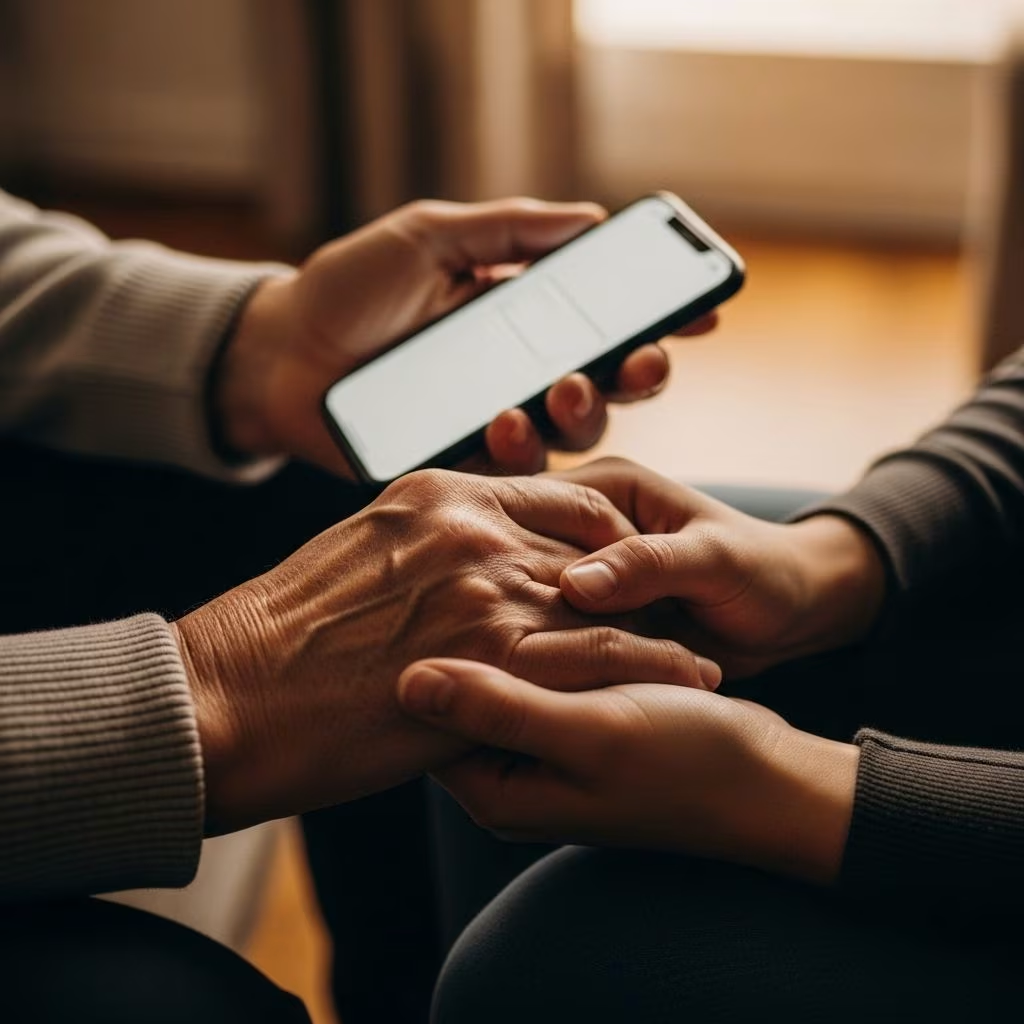
There’s something profoundly beautiful about the phrase ‘text me when you get home.’ On the surface, it seems like a simple request—a practical exchange ensuring someone’s safe arrival. But beneath those six words lies an entire universe of care, connection, and the fundamental human need to know that the people we love are okay. This small gesture represents one of the most powerful expressions of modern friendship and love, a digital-age manifestation of our deepest desire to protect and be protected by those who matter most.
In a world where we’re more connected than ever through technology yet often feel more isolated, these simple words bridge the gap between physical distance and emotional closeness. They remind us that someone is thinking about us, someone cares about our wellbeing, and someone will sleep better knowing we’ve made it home safely. This phrase has become a cultural touchstone, particularly in female friendships, symbolizing a level of care that extends beyond mere politeness into the realm of genuine, deep connection.
The Unspoken Language of Care
When someone asks you to text them when you get home, they’re saying so much more than the words themselves convey. They’re telling you that your safety matters to them. They’re saying that the time between saying goodbye and knowing you’re secure is time they’ll spend thinking about you, perhaps even worrying slightly. This request is an acknowledgment that we live in a world where bad things can happen, but it’s also a declaration that we don’t have to face that reality alone.
This simple phrase creates a protective web around us, woven from the care of friends, family, and loved ones who want to ensure our wellbeing. It’s a modern ritual that has replaced the old practice of watching someone until they’re out of sight or walking them all the way to their door. In our fast-paced, geographically dispersed lives, we can’t always be physically present for each other’s journeys, but we can extend our care through this small digital touchpoint.
The beauty of this gesture lies in its universality and its intimacy simultaneously. It’s something we might say to a close friend after a late-night dinner, to a family member leaving after a holiday visit, or to a romantic partner heading home after a date. Each time, it carries the weight of our concern, our affection, and our desire to maintain connection even as physical distance grows between us.
Building Trust Through Small Gestures
Trust isn’t built through grand gestures alone—it’s constructed through countless small moments of reliability, care, and follow-through. When someone asks you to text them and you do, you’re participating in a tiny but significant exchange of trust. You’re showing them that their concern matters to you, that you value their care enough to take thirty seconds to send a message. And when they respond with relief or a simple emoji, they’re acknowledging that your safety brings them peace.
These micro-interactions create a foundation of dependability in relationships. Over time, they accumulate into something substantial: the knowledge that this person will be there when it counts, that they notice your absence, that your presence in their life is valued. This is particularly important in friendships, where we don’t always have the formal structures and commitments that come with familial or romantic relationships to reinforce our bonds.
The reciprocal nature of this gesture also strengthens relationships. When we alternate between being the asker and the texter, we create a balanced dynamic of mutual care. Neither person is always the protector or always the protected—instead, we take turns looking out for each other, which is the hallmark of healthy, equitable relationships. This balance ensures that care flows both ways, preventing the resentment that can build when one person always does the emotional labor.
The Evolution of Connection in the Digital Age
Our grandparents didn’t text when they got home—they simply arrived, or they called on a landline tethered to the wall. The evolution of how we express care reflects broader changes in how we communicate and maintain relationships. The ubiquity of smartphones has made it possible to stay connected in ways that previous generations couldn’t imagine, but it’s also created new expectations and norms around communication.
The text message, once considered a casual or even impersonal form of communication, has become a powerful tool for maintaining emotional connections. A simple ‘home safe’ message might seem minimal, but it serves multiple purposes: it provides information, it demonstrates consideration, and it keeps the line of communication open. In this way, technology hasn’t diminished our ability to care for each other—it’s simply given us new channels through which to express that care.
However, this digital evolution also comes with challenges. We might feel overwhelmed by constant connectivity, or frustrated when someone doesn’t respond as quickly as we’d like. The expectation to be always available can create stress, and the anxiety of not receiving a text when expected can be intense. Navigating these digital dynamics requires us to communicate clearly about our needs and boundaries while still making space for the care and concern that gestures like ‘text me when you get home’ represent.
Why This Matters More Than Ever
In an era marked by increasing isolation, political division, and social fragmentation, small acts of kindness and connection take on outsized importance. When we ask someone to text us when they get home, we’re pushing back against the narrative that we’re all alone in this world. We’re asserting that people matter to each other, that we’re woven together in a social fabric that, while sometimes frayed, still holds.
Research consistently shows that strong social connections are crucial for mental health, physical wellbeing, and longevity. People with robust support networks experience less stress, recover from illness more quickly, and report higher levels of life satisfaction. These connections don’t require grand gestures—they’re built through exactly the kind of small, consistent acts of care that ‘text me when you get home’ represents.
Moreover, in a world that often feels dangerous or unpredictable, knowing that someone is looking out for us provides a sense of security that’s deeply comforting. While a text message can’t prevent bad things from happening, it creates a safety net of awareness. If something does go wrong, someone will notice. Someone will come looking. Someone cares enough to wonder where we are.
The Gendered Nature of Care
While anyone can ask for or send a safety text, this particular expression of care has become especially associated with female friendships. Women navigating a world where they face unique safety concerns have developed intricate systems of looking out for each other. The request to text when home safe is just one element of a broader culture of care that includes sharing locations, checking in during dates, and staying on the phone with each other during late-night walks.
This gendered aspect of the phrase reflects broader social realities about who faces what kinds of dangers and who has traditionally been responsible for emotional labor in relationships. Women have long been the keepers of social bonds, the ones who remember birthdays, check in on others, and maintain the connective tissue of communities. ‘Text me when you get home’ fits squarely within this tradition, representing both the burden and the beauty of this role.
However, there’s growing recognition that everyone benefits when we expand our definitions of care beyond gender stereotypes. Men deserve to both give and receive this kind of attention and concern. By normalizing expressions of care across all types of relationships, we create a more supportive society for everyone. The phrase becomes not just about women protecting other women, but about humans looking out for each other regardless of gender.
Creating a Culture of Care
If we want to build a world where people feel more connected, supported, and valued, we need to start with the small things. We need to notice when someone matters to us and tell them. We need to follow through on our expressions of concern. We need to create environments where asking for care doesn’t feel like a burden and where offering it doesn’t feel like an obligation.
This means being intentional about the little gestures that communicate care. It means not just asking someone to text when they’re home but actually waiting for that text and acknowledging it when it comes. It means reciprocating when others express concern for us, even if we’re used to being the caretaker. It means recognizing that these small acts are actually big deals—they’re the foundation upon which strong, resilient relationships are built.
Creating a culture of care also requires us to extend grace to ourselves and others. We won’t always remember to ask for the text. We won’t always send it promptly. We’ll get distracted or overwhelmed or simply forget. The goal isn’t perfection but rather a general orientation toward care and connection. When we mess up, we apologize and try again. When others mess up, we extend understanding. The point is to keep trying, to keep showing up, to keep weaving the web of connection that holds us all.
Beyond the Text: Other Ways We Show We Care
While ‘text me when you get home’ has become iconic, it’s just one of many ways we demonstrate care in our relationships. We check in when someone’s been quiet for a while. We remember the details of their lives and ask follow-up questions. We show up when they need us, or we send a message when we can’t. We listen without trying to fix everything. We celebrate their wins and sit with them in their losses.
Each of these gestures, like the safety text, communicates something essential: you matter to me. Your life matters. Your experiences matter. I’m paying attention. I care about what happens to you. In a world that can feel overwhelming and impersonal, these messages of mattering are lifelines. They remind us that we’re not alone, that our existence makes a difference to someone, that we’re part of something larger than ourselves.
The key is finding what feels authentic in your relationships. For some people, the safety text is natural and comfortable. For others, it might feel forced or unnecessary. That’s okay—what matters is finding ways to express care that feel genuine to you and meaningful to the people in your life. Maybe it’s voice memos, maybe it’s memes, maybe it’s old-fashioned phone calls. The medium matters less than the message: I care about you.
When Technology Fails Us
Of course, relying on technology for connection has its pitfalls. Phones die. Service cuts out. We get busy and forget. And sometimes, the absence of a text creates anxiety that wouldn’t have existed if we hadn’t created the expectation in the first place. It’s important to recognize that these tools, while valuable, are imperfect, and we need to build resilience into our systems of care.
This might mean having backup plans for when technology fails. It might mean being clear about our expectations and communicating when we can’t meet them. It definitely means not catastrophizing when someone doesn’t text immediately—giving them the benefit of the doubt and assuming good intent rather than immediately fearing the worst. The goal is to use technology to enhance our connections, not to create new sources of anxiety.
It also means recognizing when we need to put the phone down and connect in other ways. While digital communication is valuable, it can never fully replace face-to-face interaction, physical presence, and the kind of connection that happens when we’re fully present with each other. The best approach is one that balances digital touchpoints with deeper, in-person connection whenever possible.
The Ripple Effect of Small Kindnesses
When we participate in these small acts of care, we don’t just strengthen individual relationships—we contribute to a broader culture of kindness and connection. Each time we text someone we’re home safe, we reinforce the idea that people look out for each other. We model care for others who might adopt similar practices. We create a world where concern for others is normalized and valued.
These ripples extend further than we might imagine. The person who receives your safety text might feel more connected and supported, which might make them more likely to reach out to someone else. They might be more patient with a difficult coworker or more generous with a stranger. Small acts of kindness and care have a way of multiplying, creating positive feedback loops that make communities stronger and more resilient.
This is especially important for younger generations who are growing up in a world that can feel fractured and hostile. When they see adults in their lives practicing care and connection, when they experience being valued and looked after, they learn that this is how humans should treat each other. They internalize the message that their safety and wellbeing matter, and they learn to extend that same care to others.
Frequently Asked Questions
Q: Is it clingy to ask someone to text when they get home?
A: Not at all. Asking someone to text when they get home is a normal expression of care and concern. It shows that you value their safety and want to ensure their wellbeing. Most people appreciate this gesture and see it as thoughtful rather than clingy. However, if you’re asking this of someone you’ve just met or don’t know well, it’s worth considering the context and your relationship.
Q: What if someone forgets to text me when they get home?
A: Try not to panic immediately. People forget sometimes, especially if they’re tired or distracted. Give them a reasonable amount of time, then send a gentle check-in message like ‘Hey, just making sure you got home okay!’ This gives them a chance to respond without making them feel guilty about forgetting.
Q: Should I text when I get home even if someone doesn’t ask?
A: If you know someone tends to worry or if you’ve been out late or in a potentially concerning situation, it’s thoughtful to send a quick text even without being asked. This proactive care can mean a lot to people who love you, even if they don’t explicitly request it.
Q: Is this phrase only for romantic relationships?
A: Absolutely not. While it can certainly be used in romantic relationships, ‘text me when you get home’ is equally common and important in friendships, family relationships, and any situation where people care about each other’s safety. It’s particularly common among close friends.
Q: How can I make someone feel comfortable asking me to check in?
A: Be proactive about offering. Say things like ‘text me when you’re home’ or ‘let me know you made it okay.’ When people do check in with you, respond positively and warmly. This creates an environment where care and concern are welcomed and reciprocated.
References
- https://tinybuddha.com/fun-and-inspiring/text-me-when-you-get-home/
- https://tinybuddha.com/blog/where-are-you-right-now-the-importance-of-living-in-the-present/
- https://wou.edu/westernhowl/review-text-get-home/
- https://tinybuddha.com/blog/3-powerful-insights-about-finding-yourself-and-creating-change/
- https://tinybuddha.com/blog-posts/
- https://tinybuddha.com/blog/when-you-feel-like-youre-going-nowhere-and-life-has-no-point/