


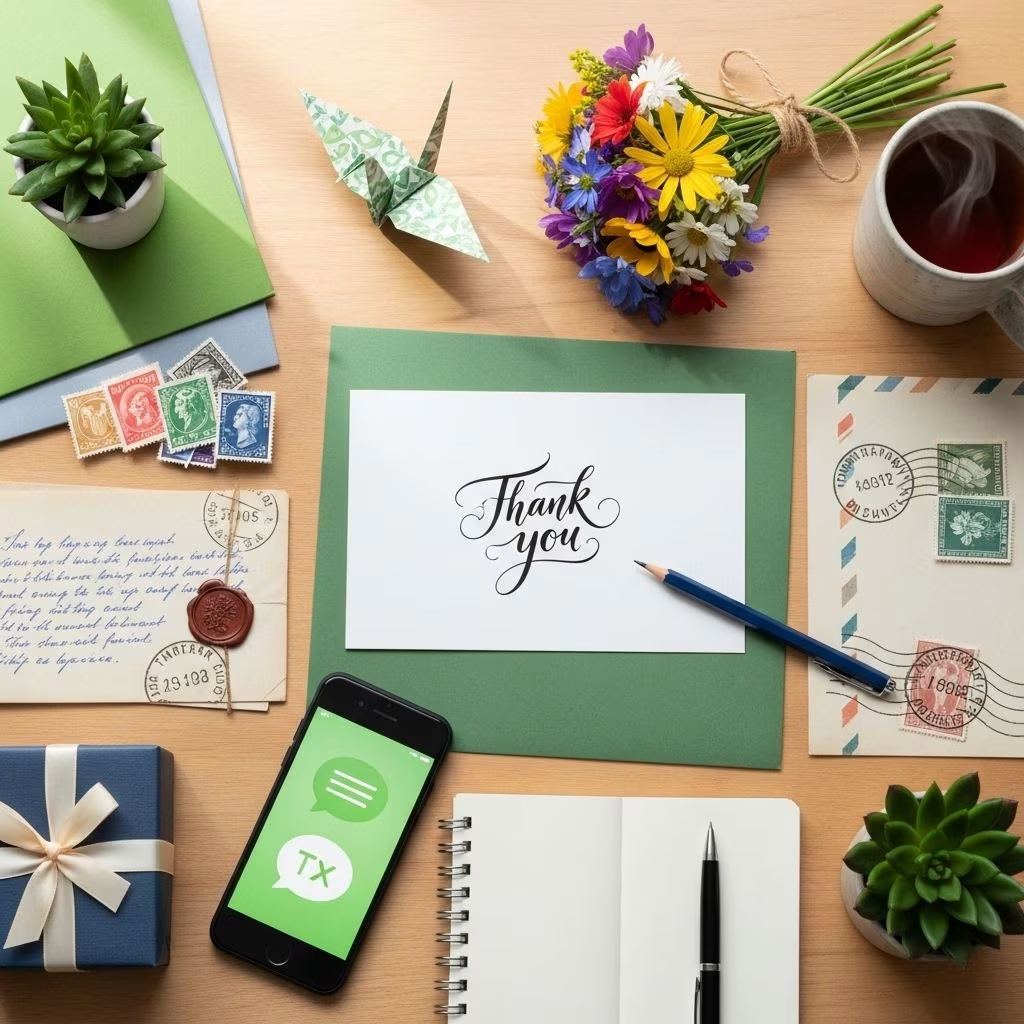
50+ Ways to Say Thank You: Creative Expressions for Every Situation
Expressing gratitude is one of the most powerful ways to build relationships, make others feel appreciated, and bring kindness into both personal and professional interactions. While “thank you” is universally recognized and always welcome, there are countless ways to say it that can add a personal touch, greater sincerity, and even a spark of creativity. This guide covers more than fifty unique ways to say thank you, elaborates on when and how to use alternative phrases, provides personalization tips, and outlines etiquette for various contexts, ensuring your expressions of gratitude truly resonate.
Why Expressing Gratitude Matters
Sharing appreciation strengthens social bonds and improves mental well-being, both for the giver and the receiver. People who feel valued are more likely to help again, and studies show expressing gratitude can lower stress, increase happiness, and foster trust in relationships. As language is central to communication, learning diverse ways to say thank you empowers you to tailor your message for every circumstance—from quick chats to milestone events.
Ways to Say Thank You: Beyond the Basics
- Thank you: The tried-and-true classic.
- Thanks: Simple, casual, and direct.
- Thank you so much: Adds extra warmth and emphasis.
- Thank you very much: More formal and heartfelt.
- Many thanks: Slightly formal, with a touch of British politeness.
- Thanks a ton: Playful and expressive, ideal for friends and family.
- Thanks a bunch: Friendly and informal; great for everyday gestures.
- Thanks a million: Emphasizes major gratitude.
- Kudos: Casual, often work-related, and congratulatory.
- Cheers: Informal and upbeat, common in British English.
- You are a lifesaver!: For critical help or sudden assistance.
- You made my day!: When someone’s kindness brightens your mood.
- You’re the best!: Direct praise and appreciation.
- I couldn’t have done it without you: Recognizes their pivotal role.
- I’m grateful for…: More formal, focuses on sincerity.
- I appreciate your…: Highlights a specific action or quality.
- I owe you!: Implies reciprocity and deep appreciation.
- Big thanks: Short and enthusiastic.
- My warmest thanks: Very heartfelt, suitable for cards or notes.
- Thank you kindly: Old-fashioned charm, polite and gracious.
Personalizing Your Expressions
Personalization strengthens your message and makes gratitude feel more genuine. Instead of just saying “thanks,” specify the action or the impact:
- Thank you for listening so patiently, Anna. I really appreciate your understanding.
- Thank you, Mrs. Lee, for staying late to finish the report. You’re a lifesaver!
- Thanks for always making time to help me when I’m overwhelmed, Tom.
Mentioning the person’s name and the reason amplifies the effect. In professional settings, referencing the specific favor helps acknowledge effort:
- I appreciate your expertise in guiding us through the transition—it made all the difference.
- Your thoughtful feedback helped me improve my presentation. Thank you!
Formal Ways to Say Thank You
In the workplace, academia, or official correspondence, gratitude should be respectful and polished. Formal alternatives also help in situations where professionalism or etiquette is paramount.
- I sincerely appreciate your assistance.
- My sincerest thanks for your support.
- I am very grateful for your consideration.
- I am deeply appreciative of your efforts.
- It was very kind of you to intervene on my behalf.
- Thank you for your time and attention.
- Your generosity is greatly appreciated.
- Thank you for your prompt response.
- We are truly grateful for your invaluable input.
- Your professionalism and support have been outstanding. Thank you.
Informal & Friendly Ways to Say Thanks
When interacting with friends, family, or close colleagues, a lighter tone is appropriate. Try phrases that match your relationship and the level of help received:
- You rock!
- Awesome, thanks!
- Tons of thanks!
- Couldn’t have done it without you!
- Wow, you saved my day!
- I really appreciate it!
- Hats off to you!
- You’re amazing, thank you!
- What would I do without you?
- You’re a legend!
- Ta very much! (British slang)
- You’re a star!
Expressing Thanks in Writing
Cards, emails, and text messages are great channels for sharing appreciation. Written thanks last longer and can be referred back to, making them more meaningful. Some ideas for written gratitude include:
- Thank you for your thoughtful gift. It means a lot.
- Your support during a difficult time was a true comfort.
- I am touched by your kindness and generosity.
- Thank you for welcoming me into your home.
- I want you to know how much I value your friendship and encouragement.
Consider writing more detailed notes for major favors or when thanking mentors, employers, or people who made a significant impact.
Thank-You Phrases for Different Occasions
| Situation | Example Thank You Phrase |
|---|---|
| Receiving a gift | Thank you for the wonderful present! It made my day. |
| Birthday wishes | I appreciate your kind birthday wishes. Thank you so much! |
| Acts of support | Thank you for always being there when I need help. |
| Professional advice | I am grateful for your insightful advice. |
| Invitations/events | Thank you for including me—it was a pleasure! |
| Job interviews | Thank you for considering my application and interviewing me. |
| Hospitality | Thank you for your hospitality during my visit. |
Thank You Etiquette: Do’s and Don’ts
- Do personalize your message when possible.
- Do mention specific actions or qualities you’re grateful for.
- Do consider the relationship and choose formal or informal phrasing accordingly.
- Do use written notes for significant gestures or in professional contexts.
- Don’t sound insincere or rushed—take a moment to deliver your thanks thoughtfully.
- Don’t overuse the same phrase repeatedly in ongoing correspondence; vary your language.
- Don’t wait too long to express gratitude—the sooner, the better.
Thank You Around the World
Gratitude is universal, but the way it’s expressed can differ by culture and context. Here are a few international ways to say thank you:
- Gracias (Spanish)
- Merci (French)
- Danke (German)
- Grazie (Italian)
- Arigato (Japanese)
- Shukran (Arabic)
- Dhanyavad (Hindi)
When communicating with people from different backgrounds, consider learning the thank you phrase in their language or using a tone and message that fits their culture.
Frequently Asked Questions (FAQs) About Saying Thank You
How can I make my thank you more meaningful?
Be specific: mention the action or support you’re grateful for, personalize the note by using the person’s name, and share the impact their help had on you.
Is it necessary to send a thank-you note?
While face-to-face thanks are appreciated for smaller everyday favors, written notes are powerful for larger favors, formal occasions, or professional settings. They show foresight and greater appreciation.
What’s the best way to say thank you in a work setting?
Opt for more formal expressions like “I sincerely appreciate your assistance,” “Thank you for your support,” or “Your help was invaluable to the team.” Personalize your thanks to highlight the specific effort or outcome.
How do I express thanks for something ongoing?
Use phrases such as “Thanks for everything you do,” “I’m grateful for your constant support,” or “Your ongoing help means a lot to me.” Regular acknowledgment builds goodwill and motivation.
Can I use humor or slang in my thank you?
Yes, but only if you know the recipient will appreciate it and it fits your relationship. Phrases like “You rock!” or “You’re a lifesaver!” work well for friends but may be inappropriate in formal or new professional relationships.
10 Thank You Phrases to Avoid
- “Whatever.” (Lacks sincerity and can sound dismissive.)
- “I guess I owe you.” (Casual, but may sound reluctant if not said warmly.)
- “If you say so.” (Can seem disbelieving or ungrateful.)
- “No problem.” (Shifts focus to you; try “Happy to help!” instead.)
- “You shouldn’t have.” (Can underplay the person’s good gesture.)
- “Cool.” (Not appropriate for larger favors or gifts.)
- “It was nothing.” (Minimizes the recipient’s effort.)
- “You better not forget this.” (Sounds demanding, not grateful.)
- “About time!” (Sarcasm undercuts gratitude.)
- “Meh.” (Lacks warmth and respect.)
Final Tips for Mastering Thank You in Every Situation
- Match your thank you style to the recipient and occasion.
- Be genuine—people know when appreciation is given thoughtfully.
- Regularly look for moments to express gratitude, even in small interactions.
- Try new ways to say thank you and watch how your relationships improve.
- Follow up big thank yous with reciprocal support or gestures when appropriate.
- Remember, gratitude is a gift both for those who give and receive it.


