


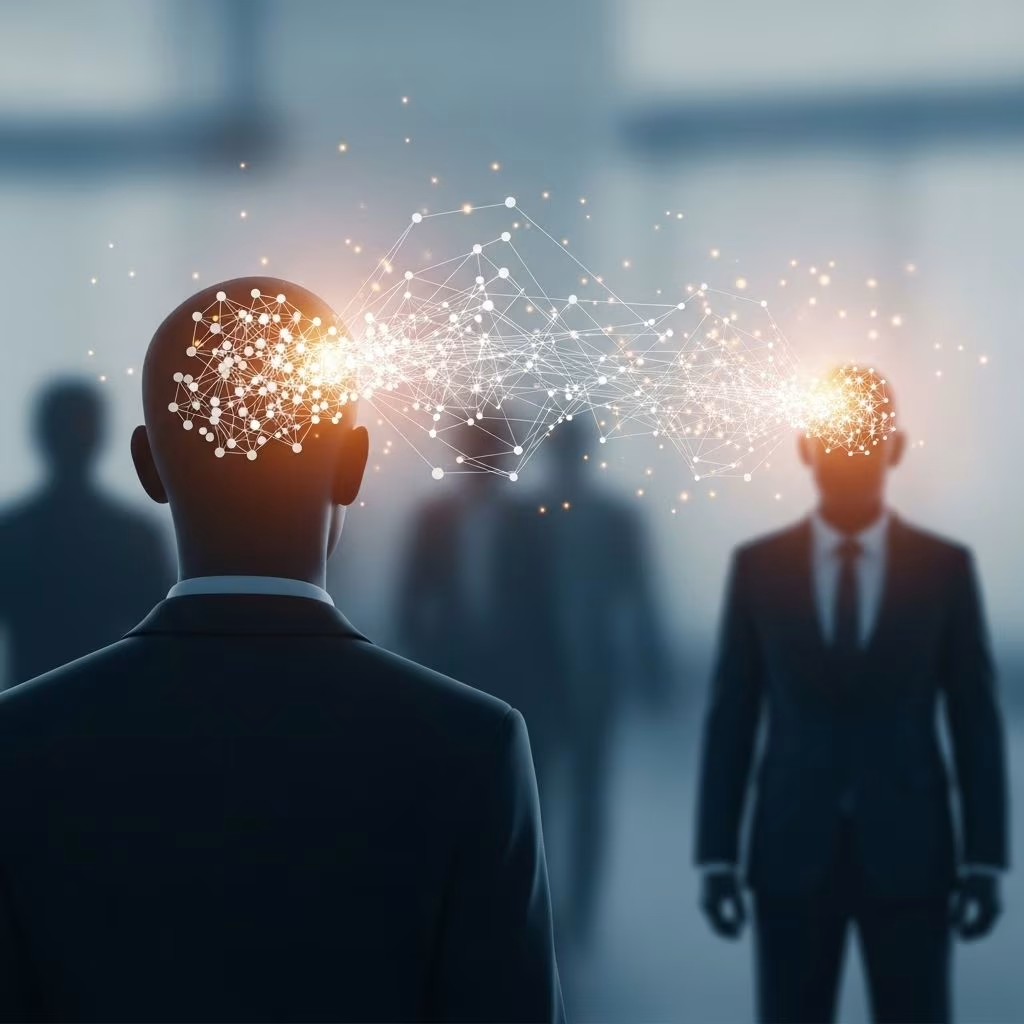
What Is Actor-Observer Bias?
Actor-observer bias is a foundational concept in social psychology describing how people explain their own actions differently from how they explain the actions of others. When you judge your own behavior, you’re likely to attribute it to external circumstances—like stress or bad luck. In contrast, when you judge someone else’s behavior, you’re prone to attribute it to their unique characteristics or personality traits.
This tendency can distort our understanding of others, create misunderstandings, and affect relationships in everyday life. Actor-observer bias reflects deeper cognitive processes and is a crucial part of attribution theory, which explores how people assign causes to actions and events.
Actor-Observer Bias and Attribution Theory
Actor-observer bias is an example of a wider group of attribution biases—errors in how we interpret the causes of behaviors. Attribution theory posits that when evaluating behavior, people rely on two main categories:
- Internal (dispositional) attribution: Linking behavior to personal traits, such as laziness, intelligence, or mood.
- External (situational) attribution: Linking behavior to situational or environmental factors, such as time pressure, illness, or chance.
When you’re the actor—the person engaging in the behavior—you know much more about the circumstances affecting your actions. As an observer, you view others with limited insight into their backgrounds and context, leading you to focus on character traits instead.
Classic Examples of Actor-Observer Bias
- If you’re late to work, you may explain it by saying you hit traffic or were overwhelmed with tasks.
- If a colleague is late, you might judge them as disorganized or irresponsible.
- If you fail a test, you may blame poor teaching or a bad day.
- If someone else fails, you might think they didn’t study enough.
- If you snap at someone, you might attribute it to stress from work.
- If someone else snaps at you, you may see them as rude or short-tempered.
These illustrate the bias: we excuse our own faults using situational details but see others’ faults as a reflection of their character.
Actor-Observer Bias vs. Fundamental Attribution Error
| Concept | Description | Who Does It Affect? |
|---|---|---|
| Actor-Observer Bias | Tendency to attribute own actions to situation and others’ actions to personality. | Everybody (actor and observer roles) |
| Fundamental Attribution Error | Inclination to explain others’ behavior by internal traits, not considering external causes. | Observers (how we see others) |
Although closely related, actor-observer bias involves two perspectives: how one explains one’s own behavior versus others’ behavior. The fundamental attribution error is a component where observers over-emphasize dispositional explanations for others.
Why Does Actor-Observer Bias Happen?
Research highlights several intertwined factors fueling this bias:
- Attentional Differences: As actors, our attention is focused outward, noticing the environment more than our actions. As observers, we focus directly on others’ behaviors without full environmental context.
- Access to Information: We know our own circumstances and motives, but have limited insight into others. This lack of context for others causes us to make snap judgments based on what we can see.
- Cognitive Processes: Our minds prefer quick, simplified explanations, often attributing behavior to traits rather than investigating hidden circumstances.
- Cultural and Social Influences: Cultures emphasizing individual responsibility (such as many Western societies) encourage dispositional attributions for behavior. Cultures centered on group harmony may be less prone to this bias.
- Salience: The most noticeable element—our environment as actors, or another person’s traits as an observer—guides how we explain behavior.
Psychological Roots and Research
This bias was first formalized by psychologists Edward E. Jones and Richard E. Nisbett in 1971, who noted how people have different interpretations of identical actions depending on their role. Since then, it has been repeatedly supported by studies in psychology and social cognition.
Research also notes that actor-observer bias may vary across situations and cultures, and is less pronounced when observers have more contextual information about the actor.
Consequences in Everyday Life
Actor-observer bias has a wide-ranging impact:
- Misunderstandings: People misjudge intentions and abilities, leading to conflict or unfair blame.
- Relationship Strain: Friends, colleagues, or family members may feel judged or misunderstood.
- Errors in the Workplace: Managers may blame workers’ personalities for mistakes, overlooking workload or poor communication.
- Social Conflict: Assumptions based on bias can reinforce prejudice and stereotyping.
- Self-Serving Explanations: Individuals excuse their own bad behavior with external excuses more readily than others.
How to Recognize Actor-Observer Bias
Common signs include:
- Making excuses for yourself but blaming others for the same mistakes.
- Frequently judging others by their supposed character flaws rather than considering their circumstances.
- Noticing repeated misunderstandings in your relationships based on how you and others explain actions.
Recognizing your own tendency towards this bias is the first step toward fairer, more empathetic judgments.
Can We Avoid Actor-Observer Bias?
Although deeply ingrained, several strategies can help reduce actor-observer bias:
- Perspective-Taking: Remind yourself that others’ actions might be driven by circumstances you don’t know about.
- Seek Context: Ask questions and gather background before making judgments.
- Reflect on Your Own Judgments: Examine situations where you’ve blamed others for things you’d excuse in yourself.
- Educate Yourself: Awareness of the bias itself is a protective factor.
- Practice Empathy: Consider how you would want your own actions explained—by context or by trait?
Actor-Observer Bias Across Cultures
Culture shapes the way people attribute causes to behavior. Western cultures, often emphasizing individualism, are more prone to dispositional (personality-based) judgments. More collectivist societies (e.g., many Asian cultures) may be more attuned to situational factors, reducing the actor-observer bias. Even within cultures, subgroups and situational norms can modify how attribution occurs.
Frequently Asked Questions (FAQs)
Q: Is actor-observer bias the same as observer bias?
A: No. Observer bias refers to the tendency of an observer to see what they expect to see, while actor-observer bias specifically describes attribution differences between how we explain our own actions (as actors) versus others’ actions (as observers).
Q: What is the difference between actor-observer bias and self-serving bias?
A: Actor-observer bias is about explaining behavior (situational for self, dispositional for others); self-serving bias is about attributing successes to oneself and failures to external factors, usually to maintain self-esteem.
Q: Can actor-observer bias affect scientific research?
A: Yes. Researcher bias and participant bias are both related attribution errors that can color how data is collected, interpreted, and reported.
Q: How do I reduce actor-observer bias in decision-making?
A: Take time to consider all possible causes for behavior, get input from multiple perspectives, and try to separate what you know from what you assume.
Key Takeaways
- Actor-observer bias leads us to attribute our own actions to situational factors, but others’ actions to their traits.
- It shapes our judgments, relationships, and even scientific understanding.
- Awareness and conscious reflection can help counteract its negative effects.
References
- Actor-observer bias | Research Starters (EBSCO)
- Actor–observer asymmetry (Wikipedia)
- What Is Actor-Observer Bias? | Definition & Examples (Scribbr)
- Actor-observer bias: signs, causes, and how to avoid it (Calm)
- Actor-Observer Bias: Definition, Examples, and More (Psych Central)
- The Actor–Observer Asymmetry in Attribution (Brown University)
- Observer Bias: Definition, Examples & Prevention (Simply Psychology)
References
- https://www.ebsco.com/research-starters/psychology/actor-observer-bias
- https://en.wikipedia.org/wiki/Actor%E2%80%93observer_asymmetry
- https://www.scribbr.com/research-bias/actor-observer-bias/
- https://www.calm.com/blog/actor-observer-bias
- https://psychcentral.com/health/actor-observer-bias
- https://research.clps.brown.edu/SocCogSci/Publications/Pubs/Malle_(2006)_ActObs_meta.pdf
- https://www.simplypsychology.org/observer-bias-definition-examples-prevention.html


