


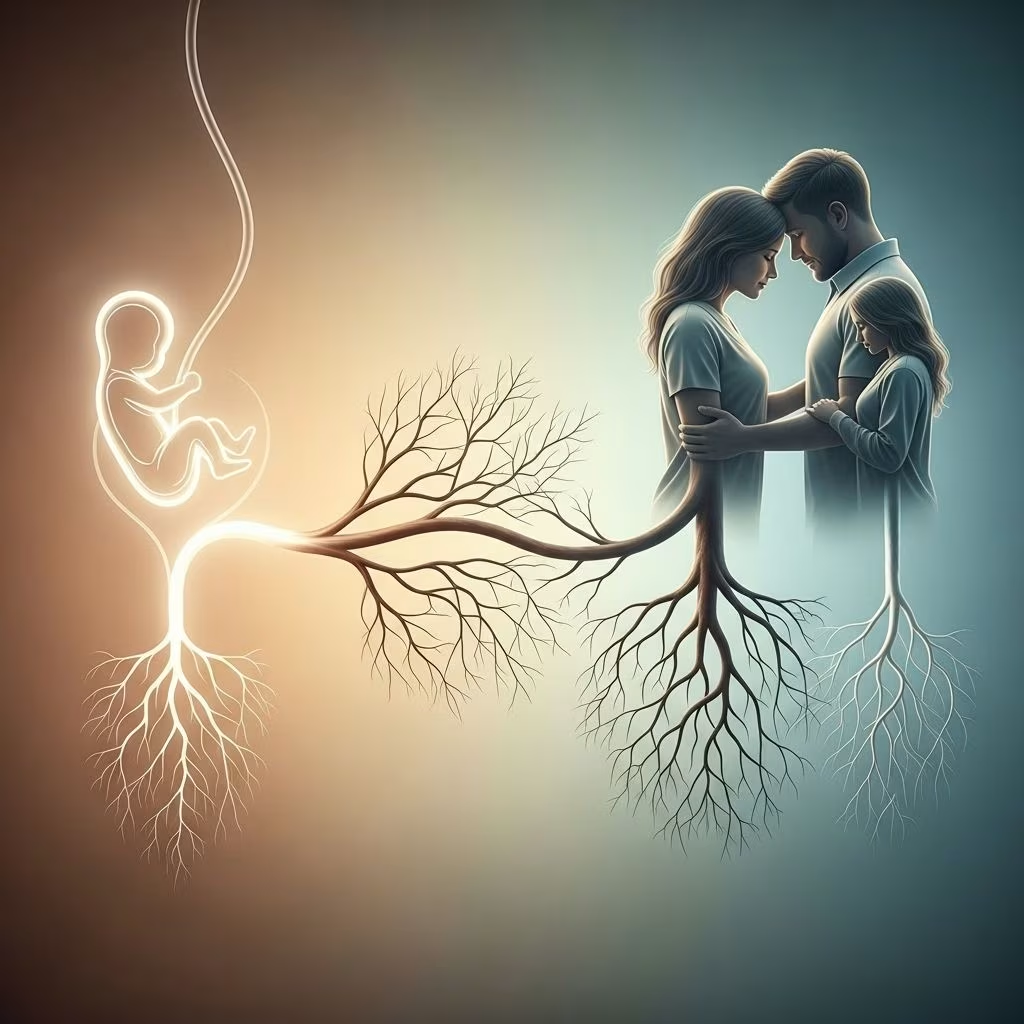
Understanding Attachment Styles: How Early Bonds Shape Adult Relationships
Attachment styles describe the patterns in which individuals bond, trust, and respond emotionally within their relationships. Rooted in early childhood experiences, these styles continue to affect people’s intimacy, communication, and how they handle relationship challenges throughout adulthood. Grasping these concepts can help you better understand not only yourself, but also your interactions with partners, friends, and family.
What Are Attachment Styles?
Originally developed by British psychologist John Bowlby and expanded by Mary Ainsworth in the 1950s and 1960s, attachment theory explains how our earliest relationships with caregivers lay the foundation for our future emotional and social development. Based on the responses of our primary caregivers, we develop internal working models about ourselves and others, which guide our approach to relationships for the rest of our lives.
- Internal working models: Mental blueprints of “Am I worthy of love?” and “Can I depend on others?”
- Four major styles: Secure, anxious (preoccupied), avoidant (dismissive), and disorganized (fearful).
Attachment Theory: The Foundation
Attachment theory asserts that children are biologically predisposed to form strong emotional bonds with caregivers as a means of survival. The nature of these early bonds profoundly influences our emotional regulation, social skills, and relationship expectations in adulthood.
- Consistent, sensitive caregiving tends to produce a secure attachment.
- Inconsistent or neglectful caregiving is associated with insecure attachment styles: anxious, avoidant, or disorganized.
- Children learn to trust, seek comfort, or distance themselves based on how their needs are met.
Dimensions of Attachment
Attachment styles are often mapped along two key dimensions:
- Anxiety: Degree to which a person worries about rejection or abandonment.
- Avoidance: Degree to which a person resists intimacy and psychological closeness.
These dimensions help explain the differences and overlap among the styles.
The Four Main Attachment Styles
| Attachment Style | Key Traits | Influence on Relationships |
|---|---|---|
| Secure | Comfortable with intimacy; balanced independence and dependence; trusting | Healthy, stable relationships; clear boundaries; strong social support |
| Anxious (Preoccupied) | Yearns for closeness; high anxiety about separation; fear of abandonment | Clingy behavior; seeks reassurance; sensitive to partner’s cues |
| Avoidant (Dismissive) | Values independence; discomfort with closeness; emotionally distant | Avoids dependency; may appear detached or uninterested in emotional intimacy |
| Disorganized (Fearful) | Conflicted desire for intimacy; both approaches and avoids relationships; unpredictable | Struggles with trust and emotional regulation; cycles of closeness and withdrawal |
Secure Attachment
Individuals with a secure attachment style developed trust and emotional safety as children due to consistent, responsive parenting. They tend to feel comfortable with emotional closeness, can rely on others, and also allow others to depend on them. Securely attached adults enjoy healthy boundaries and are able to openly communicate their needs and feelings.
- Comfortable with intimacy and independence
- Able to regulate emotions and support others
- Sustain long-term, mutually beneficial relationships
- Tolerate conflict and resolve issues constructively
Anxious (Preoccupied) Attachment
The anxious attachment style (also called preoccupied) arises from inconsistent caregiving—when a child’s needs are sometimes met and sometimes overlooked. These individuals often grow up feeling unsure whether others will be reliable. As adults, they tend to crave closeness and reassurance, yet struggle with chronic worry over potential rejection or abandonment.
- Clinginess and strong need for validation
- Frequent attempts to seek reassurance from partners
- Highly sensitive to separation or cues of rejection
- May experience intense fear when relationships feel threatened
Despite their yearning, anxious-preoccupied individuals may behave in ways that inadvertently push others away, such as being overly demanding or possessive.
Avoidant (Dismissive) Attachment
People with an avoidant attachment style (sometimes called “dismissive”) grew up with caregivers who met physical needs but were emotionally distant or unresponsive. As a result, these individuals felt safest relying only on themselves, and may have developed a strong desire for autonomy and self-sufficiency, often at the cost of emotional connection.
- Avoids emotional closeness or vulnerability
- Prefers independence and self-reliance
- Finds intimacy uncomfortable or stressful
- May suppress emotions, seem aloof, or disengaged
In relationships, avoidant individuals might prioritize careers, hobbies, or other interests above intimate partnerships, and may hesitate or resist commitment or deep bonding.
Disorganized (Fearful) Attachment
Disorganized attachment (also called fearful-avoidant or anxious-avoidant) often originates from trauma, neglect, or inconsistent caregiving, where a caregiver is both a source of comfort and fear. Children in these environments lack a clear strategy for dealing with emotional needs, and as adults, they may vacillate between craving intimacy and dreading it.
- Ambivalence to closeness: wants emotional connection, but is afraid of vulnerability
- Unpredictable or erratic behavior in relationships
- Struggles with trust and fear of being hurt
- May experience cycles of intense attachment and withdrawal
Adults with disorganized attachment frequently feel conflicted, mistrustful, and may have difficulty forming stable or lasting relationships.
How Attachment Styles Develop
Attachment styles are shaped most powerfully during infancy and early childhood, but they can evolve with significant life experience or introspective work in adulthood. The early interactions between children and their caregivers set up templates for how we relate to others:
- Consistent caregiving: Fosters security, confidence, and healthy relationships.
- Inconsistent caregiving: Creates anxiety, uncertainty, and fear of abandonment.
- Neglect or emotional unavailability: Encourages avoidance and self-reliance at the cost of intimacy.
- Caregiver as source of fear and comfort: Leads to disorganized, unpredictable attachment strategies.
While attachment is established early, it is not immutable. Therapy, self-awareness, and positive relationships can help shift attachment patterns over time.
Attachment Styles in Adult Relationships
The patterns learned in childhood extend into adulthood, influencing romantic partnerships, friendships, and even workplace dynamics. Secure attachment generally promotes trust, openness, and resilience within relationships, while insecure styles can give rise to communication breakdowns, misunderstandings, and chronic relationship stress.
- Secure attachment: Fosters stability, emotional availability, and constructive conflict resolution.
- Anxious attachment: May lead to jealousy, dependency, or intense fears of abandonment.
- Avoidant attachment: Often results in emotional distance, reluctance to commit, or difficulty relying on others.
- Disorganized attachment: Can cause ambivalent, unpredictable, or explosive relationship dynamics.
Recognizing these styles enables individuals to communicate needs better, set appropriate boundaries, and seek appropriate support when necessary.
Identifying Your Attachment Style
Understanding your predominant attachment style can be illuminating and empowering. Reflecting on your relationship history, your approach to intimacy and conflict, and your emotional responses to separation can reveal useful insights. Many mental health professionals use questionnaires or interviews to help clients identify their core style, which can be a springboard for personal growth.
- Ask yourself: “Do I trust my loved ones? Do I feel anxious about being left? Do I avoid intimate conversations? Do I crave connection but withdraw when it gets too close?”
- Consider seeking professional support for deeper understanding if your attachment patterns interfere with happiness or healthy relationships.
Can Your Attachment Style Change?
Attachment styles are adaptable. While early childhood sets a foundation, life experiences, significant relationships, and intentional therapeutic work can all influence attachment patterns. People with insecure styles can become more secure through healing, understanding, and development of trust in safe relationships.
- Therapy (especially approaches that address attachment issues)
- Self-reflection and mindfulness regarding relationship triggers
- Forming supportive and trustworthy connections
Attachment Styles and Mental Health
Attachment styles don’t just affect relationships—they have ripple effects on mental health, resilience, and general emotional wellbeing. Insecure styles have been linked to greater vulnerability to anxiety disorders, depression, and difficulties managing emotions, while secure attachment provides a buffer against stress and enhances self-esteem.
- Secure attachment: Protective against mental health issues, boosts coping and self-worth.
- Insecure attachment: Increases risk for anxiety, depression, interpersonal struggles.
Quick Overview: Attachment Styles Table
| Style | Model of Self | Model of Others | Adult Relationship Traits |
|---|---|---|---|
| Secure | Positive | Positive | Trusting, open, stable |
| Anxious (Preoccupied) | Negative | Positive | Clingy, sensitive, fears rejection |
| Avoidant (Dismissive) | Positive | Negative | Distant, values independence |
| Disorganized (Fearful) | Negative | Negative | Conflicted, unpredictable |
Tips for Improving Attachment Security
- Practice open communication and emotional honesty in relationships
- Seek professional help if you notice persistent patterns that cause distress
- Build relationships with supportive, trustworthy people
- Engage in self-reflection: journal, meditate, and recognize your triggers
- Learn about healthy boundaries and mutual respect
Frequently Asked Questions (FAQs) About Attachment Styles
What is attachment theory?
Attachment theory describes how early relationships with caregivers shape our expectations for intimacy, trust, and emotional safety in adulthood. It identifies four main styles: secure, anxious, avoidant, and disorganized.
Can my attachment style affect my mental health?
Yes. Secure attachment can protect against anxiety and depression, while insecure attachment styles can increase vulnerability to mental health challenges.
Is it possible to change my attachment style?
With self-awareness, therapy, and healthy relationships, people can often shift from insecure to more secure attachment patterns.
How can I find out my attachment style?
Reflecting on your relationship patterns or seeking professional assessment through a psychologist or counselor can help identify your attachment style.
What role do attachment styles play in romantic relationships?
Attachment styles greatly influence trust, intimacy, communication, and conflict resolution in romantic relationships, shaping levels of satisfaction and stability.
Additional Resources & Support
- Books: “Attached” by Amir Levine and Rachel Heller, “The Attachment Theory Workbook” by Annie Chen
- Online assessments: Professional sites and mental health organizations offer self-report quizzes
- Therapy: Consider seeking attachment-focused therapy for tailored support
References
- https://www.simplypsychology.org/attachment-styles.html
- https://www.betterhelp.com/advice/attachment/what-are-the-four-attachment-styles/
- https://www.relationalpsych.group/articles/understanding-the-4-attachment-styles
- https://my.clevelandclinic.org/health/articles/25170-attachment-styles
- https://www.attachmentproject.com/blog/four-attachment-styles/
- https://www.helpguide.org/relationships/social-connection/attachment-and-adult-relationships
- https://psychcentral.com/health/4-attachment-styles-in-relationships


