


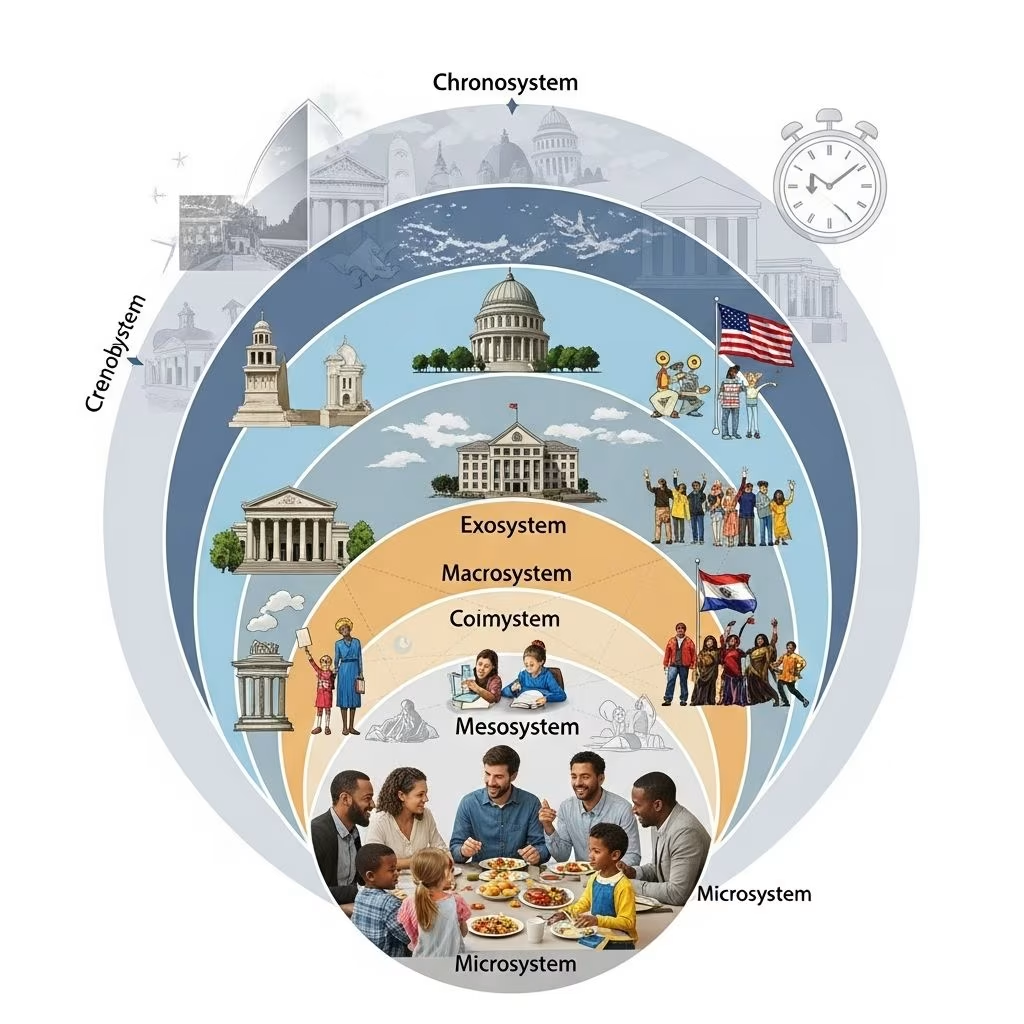
Introduction to Bronfenbrenner’s Ecological Model
Urie Bronfenbrenner’s ecological systems theory is a comprehensive framework for understanding human development. This model emphasizes the interplay between individuals and their environments, from immediate family settings to broader societal influences. Originally conceived as a series of ecological systems, the theory has evolved into the bioecological model, which highlights the dynamic interactions between individuals and their environments.
The Original Ecological Systems Theory
The original ecological systems theory, developed by Bronfenbrenner, identifies five interconnected systems that influence human development:
– Microsystem: This includes the immediate environment around an individual, involving direct interactions with family members, peers, teachers, and others. Personal characteristics such as temperament, cognitive abilities, and physical attributes significantly impact development within this system. – Mesosystem: This level involves the interactions between different microsystems. For example, how interactions between family and school influence an individual’s development.- Exosystem: This system encompasses external environments that affect an individual indirectly, such as a parent’s workplace or community resources.- Macrosystem: This is the broadest level, consisting of cultural, economic, and political structures that shape the environment in which development occurs.- Chronosystem: Introduced later, this system considers the impact of time on development, including historical events and significant life transitions.
The Evolution to the Bioecological Model
Bronfenbrenner later expanded his theory into the bioecological model, emphasizing the role of biological processes and proximal processes—ongoing interactions between an individual and their environment. This model is more dynamic, focusing on the person-process-context-time (PPCT) model:
– Process: The core proximal processes driving development.- Person: Individual characteristics influencing these processes.- Context: The environmental systems in which development occurs.- Time: The temporal aspect of development, including life course and historical time.
Key Takeaways of the Bioecological Model
The bioecological model highlights the importance of understanding development as a result of complex interactions between individuals and their environments. It emphasizes that development is not just about individual traits but how people interact with their surroundings.
Practical Applications of the Ecological Model
Bronfenbrenner’s model has numerous practical applications in various fields such as education, social work, and community development. It provides a framework for understanding how different environmental factors can be leveraged to support or hinder development.
Modern Developments and Relevance
Today, researchers are considering the impact of new environmental factors such as technology and social media on development. The concept of virtual microsystems has been proposed to address these changes, acknowledging how online interactions influence an individual’s development within the broader ecological framework.
Frequently Asked Questions (FAQs)
Q: What are the five systems in Bronfenbrenner’s Ecological Model?
A: The five systems are the microsystem, mesosystem, exosystem, macrosystem, and chronosystem.
Q: What is the difference between the original Ecological Systems Theory and the Bioecological Model?
A: The Bioecological Model focuses more on the dynamic interactions between individuals and their environments, highlighting proximal processes and biological factors, whereas the original model emphasized environmental systems.
Q: How does Bronfenbrenner’s model apply to modern society?
A: The model remains highly relevant, especially with the rise of technology and social media, which introduce new environmental influences on human development.
Conclusion
Bronfenbrenner’s ecological model provides a rich framework for understanding human development. Its evolution into the bioecological model highlights the complex interplay between individuals and their environments, offering valuable insights into how we can support and foster healthy development across different contexts.
References
- https://www.simplypsychology.org/bronfenbrenner.html
- https://www.structural-learning.com/post/bronfenbrenners-ecological-model
- https://pmc.ncbi.nlm.nih.gov/articles/PMC10801006/
- https://dropoutprevention.org/wp-content/uploads/2015/07/paquetteryanwebquest_20091110.pdf
- https://www.youtube.com/watch?v=g6pUQ4EDHeQ
- https://www.youtube.com/watch?v=HV4E05BnoI8
- https://en.wikipedia.org/wiki/Ecological_systems_theory


