


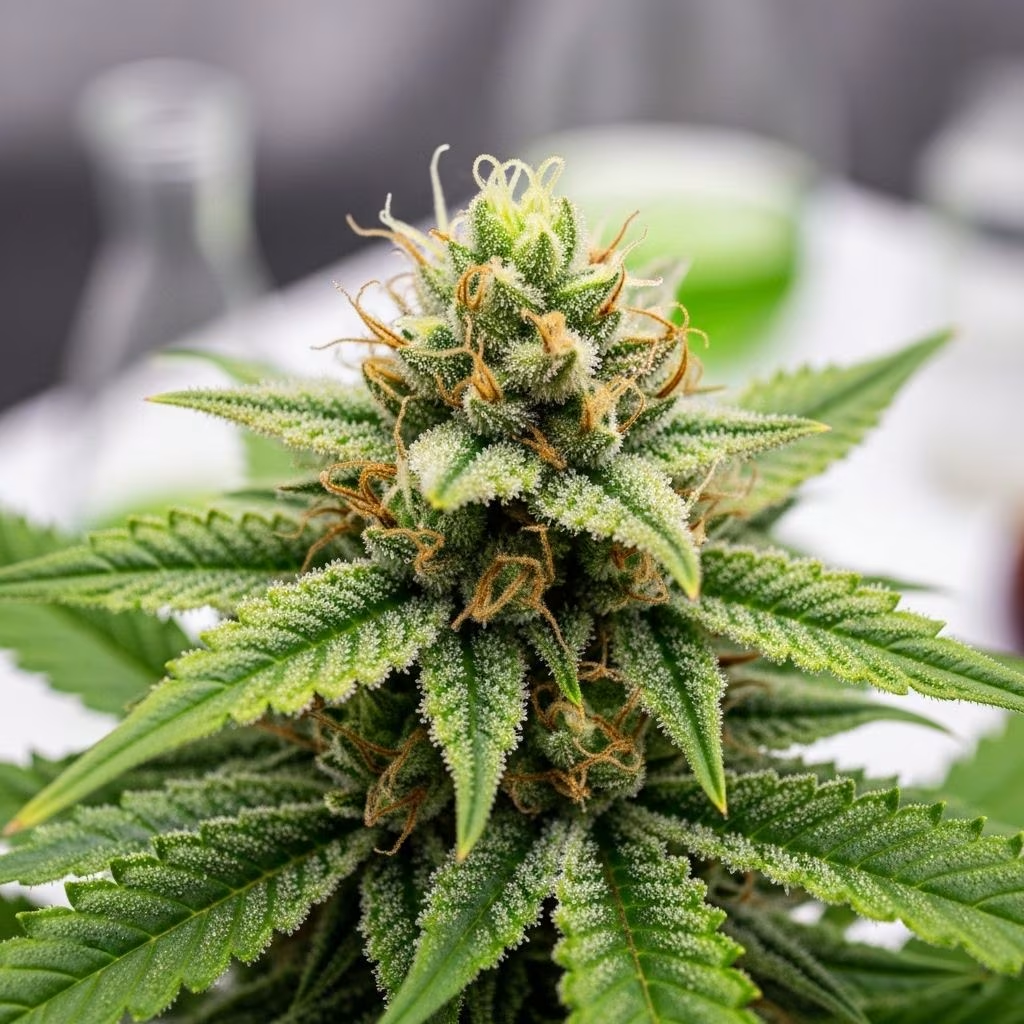
Cannabigerol (CBG): A Comprehensive Guide to Benefits and Uses
Cannabigerol, known as CBG, is attracting growing interest in the health and wellness industry, prompting researchers and consumers alike to explore its properties, potential uses, and safety profile. Though CBG has often taken a back seat to more widely recognized cannabinoids like CBD and THC, this non-psychoactive compound is showing promise for a range of therapeutic benefits from anxiety reduction to neuroprotection. Read on for an in-depth look at CBG: its chemical nature, how it works in the body, and what the latest research suggests about its health effects.
What Is Cannabigerol (CBG)?
CBG is a minor cannabinoid found in the Cannabis sativa plant. Although present in small amounts compared to CBD or THC, CBG is called the “mother of cannabinoids” because it acts as a precursor from which other cannabinoids are synthesized in the cannabis plant’s metabolic pathway.
CBG is typically extracted from young plants when its concentration is highest, and most commercial extracts use specialized breeding or isolation techniques to obtain meaningful quantities.
Key features of CBG:
- Non-psychoactive: CBG does not produce the intoxicating “high” associated with THC.
- Acts as a precursor: Most major cannabinoids (CBD, THC, CBC) start as cannabigerolic acid (CBGA), the acid form of CBG, in the plant.
- Increasing research focus: Interest in CBG has accelerated as early studies document potentially unique health benefits.
How CBG Works: The Endocannabinoid System
CBG, like other cannabinoids, interacts with the human endocannabinoid system (ECS)—a collection of cell receptors and biochemical pathways regulating mood, pain, inflammation, appetite, sleep, and other physiological processes. The ECS includes two main receptor types: CB1 (mostly in the brain and nervous system) and CB2 (mainly in peripheral tissues and immune cells).
CBG binds both these receptors, although with different affinities than CBD or THC, meaning it may produce distinct effects. Beyond direct receptor activation, CBG has been shown to:
- Increase levels of anandamide, known as the “bliss molecule” for its mood-enhancing effects.
- Boost GABA activity, a calming neurotransmitter involved in muscle relaxation and anxiety reduction.
- Modulate immune and inflammatory pathways.
Comparison Table: CBG vs CBD vs THC
| Cannabinoid | Psychoactive? | Main Effects | Receptor Affinity |
|---|---|---|---|
| CBG | No | Anti-inflammatory, anxiolytic, neuroprotective, muscle relaxation | CB1 (weak), CB2 (moderate) |
| CBD | No | Anxiolytic, anti-seizure, anti-inflammatory | Indirect; modulates ECS |
| THC | Yes | Psychoactive, analgesic, anti-nausea | CB1 (strong), CB2 (moderate) |
Potential Health Benefits of CBG
Research into CBG’s therapeutic value is still preliminary, but several areas of interest are emerging:
1. Anti-Inflammatory Effects
Multiple studies highlight CBG’s strong anti-inflammatory potential, showing promise for conditions including:
- Irritable Bowel Syndrome (IBS) and Inflammatory Bowel Disease (IBD): CBG may reduce gut inflammation and improve digestive comfort.
- Arthritis and autoimmune disorders: Early evidence suggests potential for pain relief and inflammation control.
- Muscle recovery: CBG’s GABA-boosting mechanism might help relax muscles and support athletic recovery.
Most current data come from animal models or cell studies, so large-scale, controlled clinical trials are needed before recommending CBG for these uses.
2. Neuroprotective Properties
Research reveals possible neuroprotection from CBG via its actions on the nervous system:
- Reduces neuroinflammation: CBG may help with diseases marked by neuronal damage, such as Alzheimer’s, Parkinson’s, and multiple sclerosis.
- Improves motor function: In mouse models of Huntington’s disease, CBG improved movement and modulated disease-related genes.
- Defends against oxidative stress: Laboratory tests have found CBG reduces free-radical damage in brain cells.
- Protects against amyloid beta toxicity: A marker of Alzheimer’s-related cell death.
3. Anxiety and Mood Regulation
CBG’s ability to boost GABA neurotransmitter levels may help promote a sense of calm and support mental health:
- Reduces anxiety: CBG has proven “anxiolytic” (anxiety-reducing) effects in preclinical studies and early human surveys.
- Supports relaxation: Users report feeling more at ease and less stressed.
- May buffer THC’s psychoactivity: CBG can mitigate negative effects like paranoia and overstimulation induced by THC, making it useful in combination products.
4. Appetite and Energy Effects
CBG is known for its unique influence on energy levels and appetite:
- Stimulates appetite: Unlike CBD, which tends to calm and relax, CBG is linked to an uplift in mood and drive.
- May improve focus: Anecdotal and preliminary research suggest CBG could support mental clarity and alertness.
5. Pain Management
CBG is being studied as a potential analgesic (pain-relieving agent):
- Alleviates chronic pain: User surveys report significant improvement in pain symptoms with regular CBG use.
- Acts through CB receptors: CBG activates both CB1 and CB2 cannabinoid receptors, important for pain signaling.
CBG vs. CBD: What’s the Difference?
Both CBG and CBD are non-intoxicating cannabinoids with overlapping but distinct properties and mechanisms. Key differences include:
- Source: CBG is present in smaller amounts in mature cannabis plants but higher in young plants; CBD is typically more abundant.
- Effects: CBD is mainly calming, anti-anxiety, and anti-seizure; CBG may be more energizing and uplifting, with marked anti-inflammatory and neuroprotective benefits.
- Clinical Focus: CBD has more established uses in epilepsy and anxiety, while CBG is being studied for digestive health, neuroprotection, and muscle relaxation.
| Feature | CBG | CBD |
|---|---|---|
| Main Effect | Anti-inflammatory, energizing, neuroprotective | Calming, anti-seizure, anti-anxiety |
| Precursor? | Yes (mother of cannabinoids) | No |
| Appetite | May increase | May decrease or neutral |
| Clinical Evidence | Preliminary, mostly animal/lab | More robust (e.g. FDA-approved for epilepsy) |
Uses and Products: How Is CBG Consumed?
CBG is available in standalone extracts, tinctures, oils, and combined formulations with CBD, THC, or other cannabinoids. Dosing varies by product and desired effect. Common methods include:
- Oils or tinctures: Sublingual drops for fast absorption.
- Capsules: For consistent dosing and ease of use.
- Topicals: Creams or balms for localized pain, inflammation, or skin issues.
- Flower and vape: CBG-rich hemp flower or vape formulations.
Dosing and safety recommendations are still being established, so consultation with a knowledgeable healthcare provider is advised.
Safety, Side Effects, and Legal Considerations
Research indicates that CBG is non-psychoactive and generally well tolerated. Reported side effects are mild but may include:
- Dry mouth
- Low blood pressure (in rare cases)
- Potential interactions with medications metabolized in the liver
CBG derived from hemp is federally legal in the United States, though state laws may vary. Because CBG products are often unregulated, quality and purity can differ widely; always choose trusted suppliers with third-party lab testing.
What Does the Research Say?
The majority of scientific research on CBG is still at the pre-clinical or early clinical stage. Promising findings include:
- Anti-inflammatory and analgesic effects: Documented in animal models and laboratory studies.
- Neuroprotective potential: Animal studies show CBG may slow neurodegeneration.
- Anxiety reduction: Human surveys and preclinical trials report improvements in anxiety and mood.
- Digestive health: Studies suggest CBG may benefit IBD/IBS through anti-inflammatory action.
- Anti-tumoral and antioxidant activities: CBG exhibits potential in reducing tumor cell proliferation in lab tests.
Despite encouraging signs, clinical trials in large human populations are still needed to establish safety, efficacy, dosing, and best practices.
Frequently Asked Questions (FAQs)
Is CBG psychoactive?
No. CBG does not alter perception or cause the “high” associated with THC. It is considered non-psychoactive, making it suitable for most users.
Can CBG help with anxiety or depression?
Research and user surveys indicate CBG may reduce anxiety and improve mood, likely through boosting GABA and anandamide activity. However, more human studies are needed.
Does CBG show up on drug tests?
Standard drug tests screen for THC, not CBG. Pure CBG extracts should not lead to failed drug tests, but contamination or mixed products could be problematic.
Is CBG safe?
Early evidence suggests CBG is safe and well tolerated, with minor side effects in rare cases. Choose products tested for purity and avoid excessive doses.
How is CBG different from CBD?
CBG and CBD share anti-inflammatory and non-intoxicating properties, but CBG may be more uplifting and neuroprotective, while CBD favors calming and anti-seizure effects.
Takeaways: The Future of CBG
CBG is an intriguing cannabinoid that may offer unique advantages for inflammation, neurodegeneration, anxiety, pain, and digestive health. As awareness grows and scientific research develops, CBG could become an important therapeutic alternative or complement to CBD and other cannabinoids. Until more robust clinical data arrive, consumers should approach CBG with curiosity, caution, and careful attention to product quality.
References
- https://cannovia.com/blogs/discover/what-is-cbg-uses-benefits
- https://pmc.ncbi.nlm.nih.gov/articles/PMC11597810/
- https://texasoriginal.com/blog/what-is-cbg-what-you-need-to-know
- https://www.medicalnewstoday.com/articles/cgb-vs-cbd
- https://www.nature.com/articles/s41598-024-66879-0
- https://pmc.ncbi.nlm.nih.gov/articles/PMC9666035/


