


What Is Compliance in Psychology?
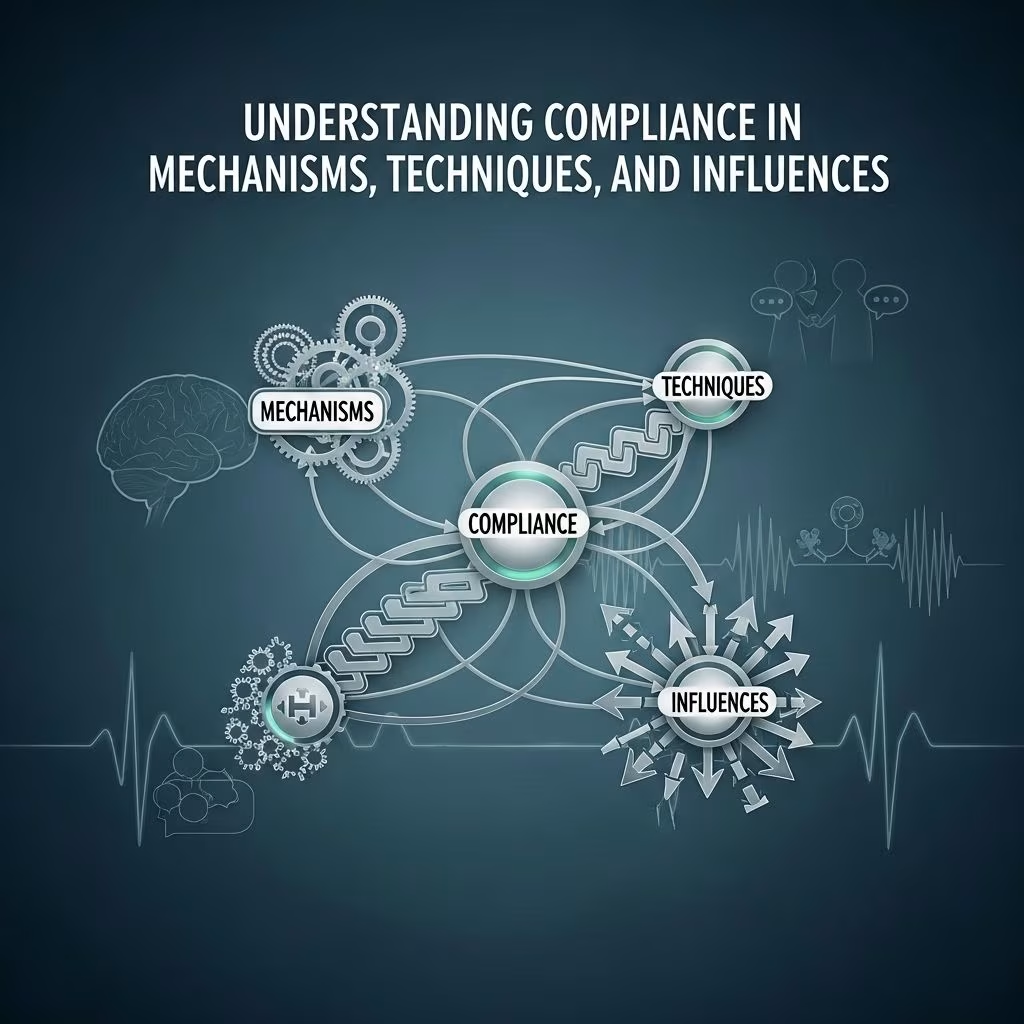
Compliance in psychology refers to the act of changing one’s behavior in response to a direct request from another individual or group. Unlike obedience, which involves following explicit orders from an authority figure, or conformity, which is about aligning with group norms, compliance is characterized by a voluntary—though often socially influenced—agreement to alter one’s actions, attitudes, or beliefs in the face of pressure or a specific ask. This phenomenon permeates daily life, appearing in scenarios ranging from marketing and sales tactics to interpersonal relationships, health campaigns, group activities, and more.
Key Features of Compliance
- Direct request: The change occurs because of an explicit request, not just subtle group pressure or orders.
- Voluntary: The change is generally voluntary, even if there is social pressure.
- Social dynamics: Compliance exists in varied relationships—between peers, subordinates and superiors, friends, or strangers.
How Does Compliance Work?
Compliance is a product of social influence. It is not merely about acquiescence—instead, it’s a nuanced process shaped by context, relationships, the requester’s characteristics, and individual psychological factors. When someone asks us to perform an action, donate, change an opinion, or try a product, several mechanisms and situational cues determine whether and how we comply.
Situations Where Compliance Occurs
- Accepting to fill out a survey for a stranger.
- Agreeing to a friend’s favor request despite inconvenience.
- Changing opinions during group discussions due to persuasive arguments.
- Donating to charity following a compelling request.
- Adhering to new health protocols during public health crises.
Compliance in Context: Group Dynamics
In groups, compliance is shaped by the importance of belonging, affinity with group members, immediacy (physical or psychological closeness), and group size. Larger groups and those with a high degree of similarity or cohesion can exert stronger social pressure, increasing the likelihood of compliance.
Factors That Influence Compliance
- Authority of the Requester: People tend to comply more when requests come from those with perceived authority or expertise.
- Group Affiliation: Shared identity and loyalty to a group can heighten compliance, especially when requests align with group values.
- Immediacy: The closer in time or space a request is presented, the stronger its impact.
- Group Size: Larger groups wield more social power and can more effectively elicit compliance.
- Similarity and Liking: Requests are more successful when made by people perceived as similar or likable.
- Reciprocity: Feeling indebted to the requester often boosts compliance.
- Social Proof: Observing others’ compliance can nudge individuals to follow suit.
- Consistency: Prior commitments increase the likelihood of subsequent compliance (making people feel compelled to be consistent with past statements or actions).
- Emotional State: Emotions such as fear, guilt, or the desire to avoid conflict play a significant role.
Compliance vs. Obedience vs. Conformity
| Quality | Compliance | Obedience | Conformity |
|---|---|---|---|
| Description | Changing behavior due to a direct request | Following explicit orders from an authority figure | Altering behavior to match group norms |
| Source of Influence | Anyone (not necessarily authority) | Authority figure | Group majority |
| Voluntariness | Usually voluntary, with some social pressure | Less voluntary, may involve explicit consequences | Voluntary or unconscious |
Types of Compliance Techniques
Researchers have identified several key strategies or techniques that people use to induce compliance. These methods are widely applied in marketing, negotiation, sales, social campaigns, and even in daily life.
Foot-in-the-Door Technique
This approach starts with a small, easily agreed-to request. After compliance, a larger, more substantial request is made. People are more likely to agree to the second, bigger ask because saying yes initially prompts a desire to be consistent.
- Example: Agreeing to sign a minor petition, followed by being asked to make a donation.
Door-in-the-Face Technique
This strategy involves making an initial, large request which is likely to be refused. After the rejection, a smaller, more reasonable request follows. Compliance with the second, less demanding request is more likely due to the principle of reciprocity (the requester seems to compromise, so the responder does too).
- Example: Asking someone for a significant monetary contribution, then, after refusal, suggesting a much smaller amount.
Low-Ball Technique
This method relies on securing agreement to a request before revealing hidden costs or additional requirements. Once a commitment is made, people often feel pressure to honor it, even if the terms change unfavorably.
- Example: Agreeing to buy a product at a low price, only to discover fees afterward but still following through on the purchase.
Other Persuasive Techniques
- Ingratiation: Using flattery or creating goodwill before making a request.
- Playing on Emotions: Appeals to fear, guilt, or sympathy can motivate compliance.
- Social Validation: Highlighting how others are already complying increases likelihood of agreement.
- Scarcity Principle: Implying limited availability of an opportunity creates urgency—e.g., “while supplies last.”
Famous Experiments Demonstrating Compliance
Psychologists have long studied compliance through classic lab and real-world experiments. These studies have shed light on the subtleties of human behavior and group influence.
Solomon Asch’s Conformity Experiments
While focused on conformity, these experiments illustrated how social pressure from a majority group can lead individuals to go along with group judgments—even when those judgments are clearly incorrect. This research set the stage for understanding compliance in group contexts.
Stanley Milgram’s Obedience Studies
In these landmark experiments, participants were instructed to administer what they believed were painful electric shocks to others. Despite moral discomfort, a high proportion complied with the authority figure’s directives. While technically about obedience, Milgram’s work demonstrates how powerful direct requests (especially from authority) are in shaping behavior.
Compliance in Public Health: The COVID-19 Example
Recent global events have provided further insights into compliance behaviors. During the COVID-19 pandemic, compliance with health guidelines such as mask-wearing and social distancing often depended on factors like perceived threat, trust in authorities, social pressure, and even the influence of misinformation or conspiracy beliefs.
Compliance in Everyday Life and Society
Compliance is omnipresent—impacting everything from consumer decisions and workplace interactions to education and public health. Companies use compliance tactics to influence purchases, advocacy groups promote causes, and individuals navigate relationship dynamics through requests and negotiations.
Examples of Compliance in Action
- Sales and Marketing: Special offers (“buy one get one free”), limited-time deals, and free samples are designed to evoke compliance.
- Health and Safety: Following new protocols or guidelines at work or public places after authoritative communication and reminders.
- Education: Students comply with teachers’ requests to complete assignments, particularly when peers are also complying.
Ethical Considerations and Psychological Risks
While compliance can facilitate social harmony, cooperation, and safety, it also holds ethical risks. Techniques that manipulate, deceive, or unduly pressure individuals can cross moral lines, leading to regret, resentment, or even harm. Responsible use of compliance strategies, transparent communication, and the power to say no are crucial for individual wellbeing and group integrity.
Tips for Healthy Compliance
- Evaluate the motives behind requests before agreeing.
- Practice assertive communication and boundary setting when needed.
- Encourage transparency and respect in situations where compliance is expected.
Key Points to Remember
- Compliance is an essential, natural form of social influence involving voluntary behavioral change in response to explicit requests.
- Techniques like foot-in-the-door, door-in-the-face, and low-ball are common strategies used to enhance compliance.
- The likelihood of compliance is shaped by authority, group dynamics, emotional state, affinity, and situational context.
- Recognizing these influences protects against unwanted pressure and enables more intentional decision-making.
Frequently Asked Questions About Compliance
What is the main difference between compliance and obedience?
Compliance involves changing behavior due to a direct request, which is usually voluntary and can come from any individual, not necessarily one with authority. Obedience, on the other hand, refers to following explicit orders from a recognized authority figure and often involves less voluntary agreement.
How is conformity different from compliance?
Conformity is about matching behaviors or beliefs to group norms or expectations, often without a direct request. Compliance specifically results from a direct request for a change in behavior, not just group pressure.
What are examples of compliance techniques in marketing?
Marketers commonly use the foot-in-the-door (small asks followed by bigger ones), door-in-the-face (large ask followed by a smaller one), scarcity, and social proof techniques to increase product engagement and sales.
Can compliance have negative consequences?
Yes. When people comply with unethical, manipulative, or harmful requests—especially under pressure—negative personal, social, or ethical consequences may result. Cultivating awareness and assertiveness helps mitigate such risks.
Why do people sometimes find it hard to say no?
Desire to avoid conflict, maintain relationships, or satisfy group belonging often makes saying no to requests challenging. Social pressure and learned habits may also contribute, but practicing assertive communication can help build boundary-setting skills.
References
- https://www.ebsco.com/research-starters/psychology/compliance-psychology
- https://positivepsychology.com/how-to-say-no/
- https://pmc.ncbi.nlm.nih.gov/articles/PMC9676338/
- https://teachkloud.com/psychology/10-major-child-development-theorists-and-their-theories-summarised/
- https://hr.umich.edu/benefits-wellness/health-well-being/mental-emotional-health/learn-more-about-mental-emotional-health/stress-management-resources/stress-management-tools-resources
- https://www.sfusd.edu/sped/inclusion-resources/inclusive-schools-week


