


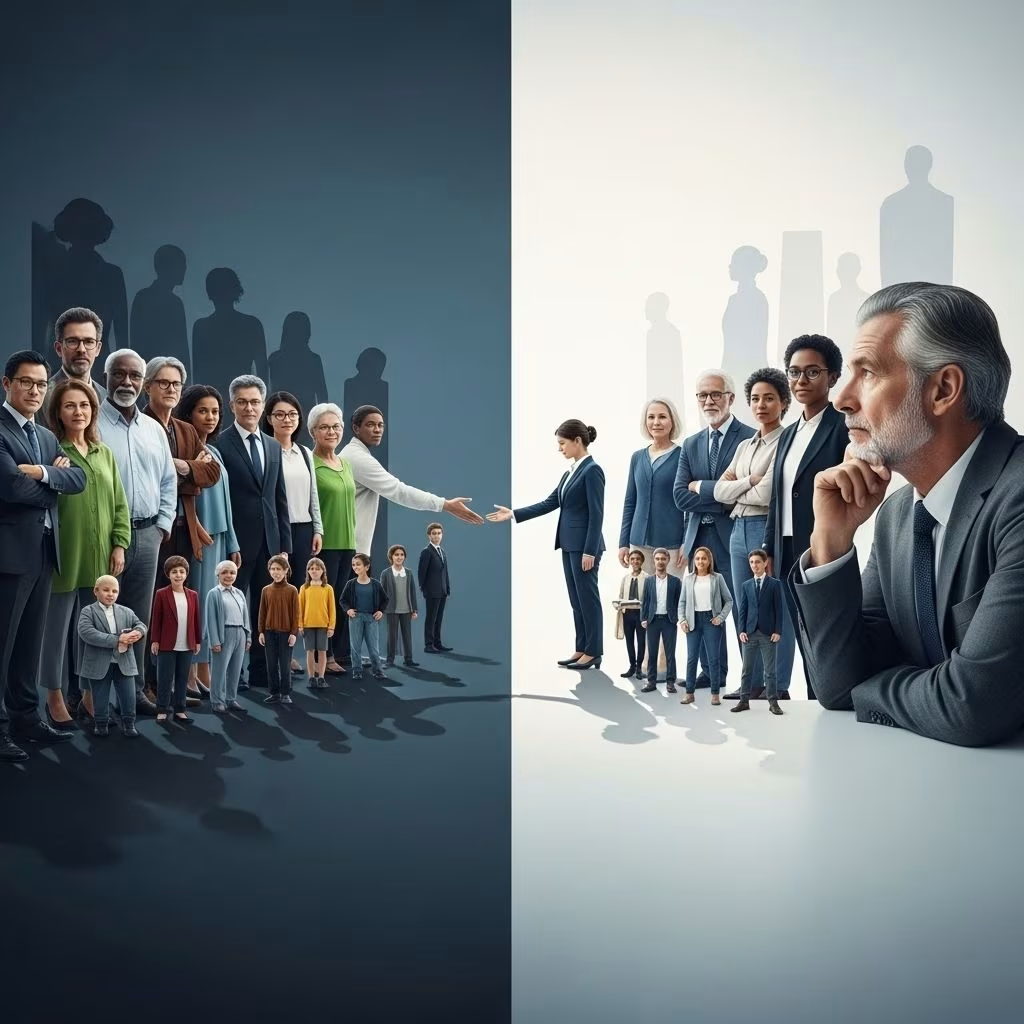
Discrimination—whether subtle or overt—remains a persistent challenge in societies worldwide. It undermines the principle of equality and affects the well-being of countless individuals. This article delves deep into the nature of discrimination, exploring its different types, psychological and social consequences, real-world examples, and actions individuals can take to recognize and combat it. Gaining a thorough understanding of discrimination is crucial for promoting a more just and inclusive society.
What Is Discrimination?
Discrimination refers to the unequal or unfair treatment of individuals or groups based on characteristics such as race, gender, age, religion, sexual orientation, disability, or other personal attributes. Discriminatory behaviors can be both intentional and unintentional, ranging from overt acts of exclusion to subtle policies or practices that disadvantage certain people.
- Prejudice: Negative attitudes or beliefs towards individuals based on their group identity, which can lead to discrimination.
- Stereotypes: Oversimplified generalizations about groups of people.
- Bias: Tendency to favor one group over another, often unconsciously.
It’s important to distinguish between discrimination (an act or behavior), prejudice (an attitude or belief), and stereotypes (generalized ideas about a group), even though they often interact and reinforce one another.
Types of Discrimination
Discrimination manifests in various forms, impacting individuals and communities differently depending on context. Here are the most common types:
- Direct Discrimination: When an individual is treated less favorably precisely because of a specific characteristic (e.g., being denied a job because of ethnicity).
- Indirect Discrimination: When a policy or practice applies to everyone but disadvantages a particular group more than others.
- Institutional Discrimination: Systemic or organizational policies, practices, and norms that perpetuate inequality (e.g., unequal access to education or healthcare).
- Structural Discrimination: Societal-level processes that create and maintain disadvantage for certain groups (e.g., residential segregation).
- Harassment: Aggressive or hostile behavior targeting someone because of their identity or group membership.
Discrimination Based on Protected Characteristics
- Race and Ethnicity
- Gender and Sex
- Age
- Religion
- Sexual Orientation and Gender Identity
- Disability
Individuals may face discrimination based on one or several of these characteristics at once, a phenomenon known as intersectionality.
Examples of Discrimination in Everyday Life
- Employment: A qualified candidate is passed over for a job due to their age, gender, race, or disability.
- Housing: Landlords refuse to rent an apartment to someone based on their religion or ethnicity.
- Healthcare: A patient receives inadequate care due to assumptions about their socioeconomic status or cultural background.
- Education: Students from underrepresented groups face lower expectations, less support, or harsher discipline from teachers.
- Public Services: Certain groups are disproportionately targeted or neglected by law enforcement or social safety nets.
These examples demonstrate that discrimination does not only occur in isolated incidents but can permeate multiple aspects of daily life—often going unnoticed by those not affected.
The Psychology of Discrimination
Discrimination is rooted in psychological processes, including how humans recognize, categorize, and respond to differences. Understanding these mechanisms helps explain why discriminatory behaviors persist even among well-intentioned individuals.
Prejudice and Stereotypes
Prejudice is a preconceived negative judgment or feeling toward an individual based on their membership in a particular group. These attitudes can be explicit (consciously held) or implicit (unconsciously held) and often arise from societal stereotypes—broad, generalized beliefs about groups of people.
- For example, assuming someone is untrustworthy based solely on their race is both stereotypical and prejudiced.
- Stereotypes simplify social information processing but can lead to inaccurate and harmful judgments.
Implicit vs. Explicit Bias
| Type of Bias | Description | Example |
|---|---|---|
| Explicit Bias | Conscious, intentional prejudice or discrimination | An employer refusing to hire women for leadership roles |
| Implicit Bias | Unconscious associations and attitudes that influence perception and behavior | Assuming a candidate is less capable based on their accent without being aware of the judgment |
Psychologists use tools like the Implicit Association Test (IAT) to reveal underlying biases that people may not be aware of. While everyone holds implicit biases to some extent, becoming aware of them is the first step to minimizing their influence.
Causes of Discrimination
Discrimination arises from multiple, often interrelated sources:
- Socialization: Norms, values, and expectations learned from family, media, peers, and society can normalize prejudice.
- In-group/Out-group Dynamics: The tendency to favor those perceived as similar to oneself, leading to exclusion or devaluation of outsiders.
- Cognitive Processing: The human brain is wired to simplify complex information through categorization, which can lead to oversimplified and inaccurate group judgments.
- Historical and Structural Factors: Long-standing inequalities, power disparities, and systemic barriers reinforce patterns of discrimination.
- Personal Experiences: Individual encounters, both positive and negative, shape one’s beliefs and reactions to different groups.
The Effects of Discrimination
Discrimination has far-reaching effects, both for the individuals targeted and for society as a whole:
- Mental Health: Victims of discrimination are more likely to experience depression, anxiety, low self-esteem, and psychological distress.
- Physical Health: Chronic exposure to discrimination is associated with higher rates of hypertension, cardiovascular disease, and other health risks.
- Social Outcomes: Discrimination can limit access to quality education, employment opportunities, and safe housing.
- Economic Impact: Marginalized groups may face persistent barriers to advancement, which perpetuate cycles of poverty and disadvantage.
- Societal Cohesion: High levels of discrimination fuel division, mistrust, and conflict within communities and across societies.
Implicit Discrimination: Recognizing Subtle Forms of Bias
Sometimes, discrimination is subtle or even unintentional. Implicit discrimination happens when policies or everyday behaviors disadvantage certain groups without overt intent. For example, neutral-sounding policies may disproportionately affect minorities, women, or people with disabilities. Microaggressions—brief, commonplace interactions that convey prejudice—also contribute to an unwelcoming environment.
Why Does Discrimination Persist?
- Cognitive Biases: Patterns of thinking, like confirmation bias and availability heuristic, reinforce stereotypes and prejudice.
- Social and Cultural Norms: Societies may perpetuate discriminatory beliefs through tradition or resistance to change.
- Power Structures: Dominant groups often maintain social, economic, or political control by marginalizing others.
- Lack of Awareness: Many people do not recognize their own biases, particularly when they benefit from existing systems.
Discrimination in Specific Contexts
Workplace
In the workplace, discrimination can be seen in hiring, pay disparity, promotion opportunities, and hostile environments. Evidence shows that resumes with ethnic-sounding names are less likely to receive callbacks, even when qualifications are identical. Women, minorities, and people with disabilities may face glass ceilings and microaggressions.
Education
Biases in schools can shape educational experiences and future prospects. For example, Black students, especially boys, are more likely to be disciplined or expelled for similar behavior as their White peers. These early disadvantages can have long-term impacts on academic achievement and self-concept.
Criminal Justice
Disparities in law enforcement and sentencing are well documented. Black defendants are less likely to receive plea bargains and more likely to receive longer sentences compared to White defendants charged with similar crimes. These disparities perpetuate social and economic inequalities.
How to Challenge and Reduce Discrimination
Individuals and organizations can take concrete steps to combat discrimination:
- Increase Self-Awareness: Reflect on your own attitudes and behaviors. Take tools such as the Implicit Association Test to uncover hidden biases.
- Educate Yourself: Learn about different cultures, histories, and perspectives to build empathy and understanding.
- See Individuals, Not Stereotypes: Focus on personalized interactions rather than making assumptions based on group identity.
- Challenge Stereotypes: Consciously question and reframe negative assumptions when they arise.
- Increase Diverse Exposure: Seek out opportunities to interact with people from different backgrounds, whether socially or professionally.
- Practice Mindfulness: Techniques such as meditation and focused reflection can increase self-awareness and regulate automatic responses.
- Support Inclusive Policies: Advocate for laws, workplace policies, and institutional practices that promote fairness and equal opportunity.
Signs That You May Be Experiencing Discrimination
Experiencing discrimination can be deeply distressing. While some signs are obvious, others may be more subtle:
- Feeling excluded, ignored, or isolated based on your identity
- Being subject to unfair treatment or double standards
- Receiving insults or derogatory comments
- Being passed over for opportunities despite equal or better qualifications
- Consistently facing stricter rules or harsher punishments than others
Recognizing these patterns is essential for seeking support or addressing the issue directly.
What to Do If You Experience Discrimination
If you believe you are being discriminated against:
- Document the Incident: Keep a record of what happened, including dates, times, and witnesses if applicable.
- Seek Support: Talk to trusted friends, family, or mental health professionals. Sharing your experience can provide validation and guidance.
- Know Your Rights: Learn about local, regional, or national laws that protect against discrimination.
- Report the Behavior: File a complaint with relevant authorities (e.g., workplace HR, government agencies, educational institutions).
- Practice Self-Care: Managing stress through healthy outlets is crucial for emotional well-being.
Frequently Asked Questions (FAQs)
Q: What is the difference between prejudice and discrimination?
A: Prejudice refers to negative attitudes or beliefs about a group, while discrimination is the action based on those beliefs. For example, assuming someone is untrustworthy (prejudice) versus refusing to hire them (discrimination).
Q: Can discrimination occur without intent?
A: Yes, implicit bias can lead to unintentional discrimination, where people act on subconscious associations rather than deliberate beliefs.
Q: Is there a way to measure my own biases?
A: Tools like the Implicit Association Test (IAT) can help uncover unconscious attitudes. Self-reflection and feedback from others can also bring hidden biases to light.
Q: How does discrimination affect mental health?
A: Experiencing discrimination increases the risk for depression, anxiety, and chronic stress. Support and resources can mitigate negative effects when available.
Q: What can I do to support someone facing discrimination?
A: Listen without judgment, offer emotional support, and help them seek resources or report the incident if appropriate. Encourage self-care and validate their feelings.
Final Thoughts
Discrimination is a complex problem with deep historical, social, and psychological roots. Combating it requires both awareness and action—from individual reflection to systemic reform. By educating ourselves, questioning assumptions, and standing up for others, we can all play a part in building a fairer and more compassionate society.
References
- https://ocfcpacourts.us/wp-content/uploads/2022/02/1.-How-Does-Implicit-Bias-Influence-Behavior.-Explanations-and-Impacts-of-Unconscious-Bias.-new.pdf
- https://www.ebsco.com/research-starters/ethnic-and-cultural-studies/psychology-racism
- https://thedecisionlab.com/reference-guide/psychology/prejudice
- https://www.embarkbh.com/treatment/mental-health/bipoc/racism/


