


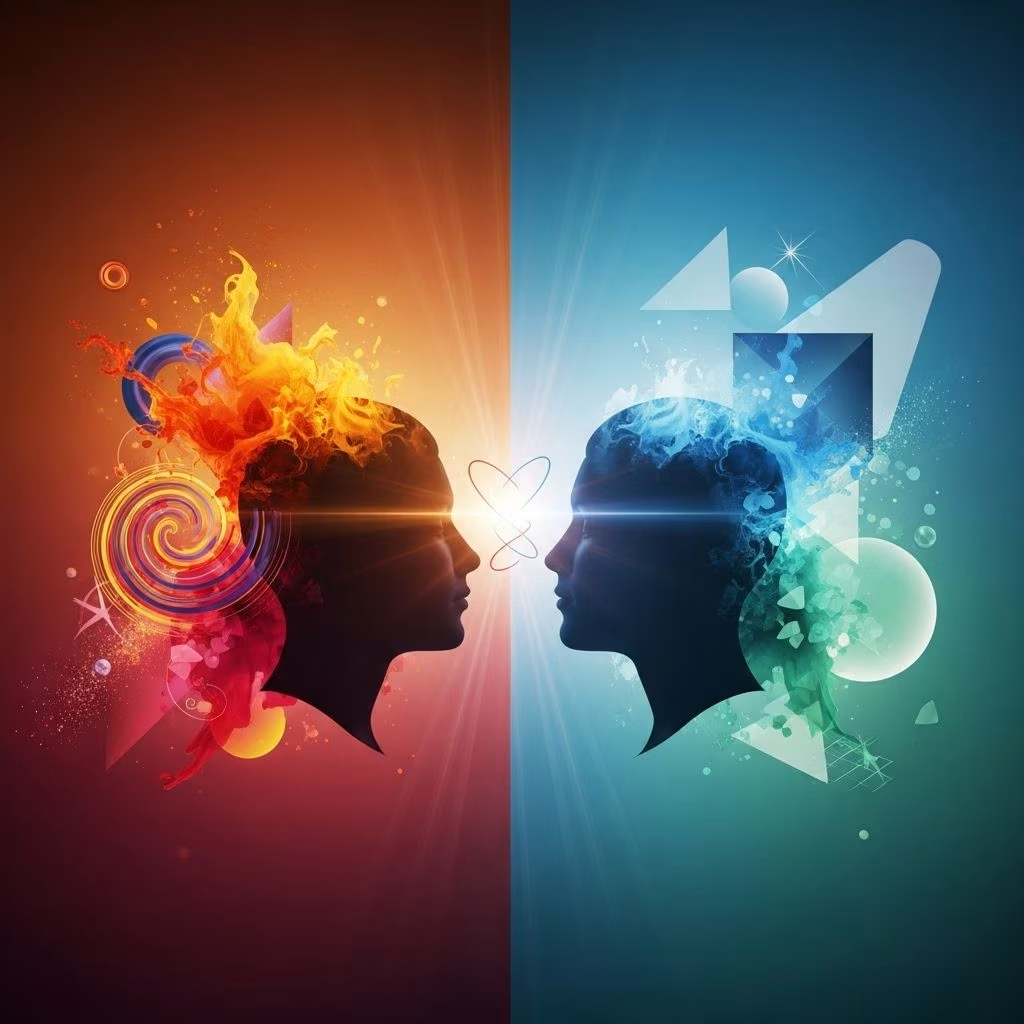
Is It True That Opposites Attract in Relationships?
The phrase ‘opposites attract’ is widely known—often used to suggest that differences in personality, interests, or values can be the spark that draws people together in a romantic relationship. But does science actually support the idea that couples with opposite traits are more successful, or is it just an enduring myth? Here, we delve into research findings and expert perspectives to reveal what really matters when it comes to relationship compatibility.
Understanding the ‘Opposites Attract’ Theory
At its core, the ‘opposites attract’ theory posits that people are drawn to partners who possess qualities, interests, or temperaments unlike their own. The notion has been popularized through culture, stories, and personal anecdotes, suggesting that differences can balance each other and create excitement in partnerships. This perspective imagines a dynamic where introverts might be paired with extroverts, spontaneous individuals with planners, or risk-takers with cautious types, making for relationships full of growth, challenge, and complementary strengths.
- Common examples: Reserved individuals dating outgoing partners; practical thinkers with dreamers; type A personalities with laid-back counterparts.
- Potential benefits: Broadened horizons, personal growth, exposure to new perspectives or habits.
- Challenges: Differences in values, communication styles, and lifestyle preferences can create friction over time.
What Does the Latest Research Show?
Modern psychological studies and large-scale relationship surveys consistently debunk the adage that opposites are most likely to be attracted and thrive in lasting relationships. Instead, research overwhelmingly demonstrates that similarity—not difference—is the foundation for most romantic connections.
- A sweeping analysis by the University of Colorado Boulder, covering more than 130 traits and millions of couples over a century, found that opposites rarely attract. For 82%–89% of traits, partners were more likely than not to be similar.
- This similarity spanned traits like political attitudes, education levels, substance use habits, and religious views. For example, political values had a high correlation (0.58) between couples.
- Physical traits (e.g., height, weight) and personality factors (such as neuroticism) showed much lower correlations, but still positive—not negative.
- For some traits, such as extroversion, there was little correlation—indicating neither a preference for similarity nor difference.
- Only a handful of traits (such as chronotype and tendency to worry) displayed minor negative correlations, but these exceptions did not overturn the general rule.
Why Are We Attracted to Similar People?
The concept that ‘birds of a feather flock together’ has strong support among relationship scientists. But what drives this tendency towards personal similarity?
- Shared values and beliefs: Partners often find stability and satisfaction in having aligned life goals and moral views, which reduces conflict over major decisions.
- Comfort and understanding: Similar personalities facilitate easier communication, fewer misunderstandings, and more predictable reactions.
- Social and cultural backgrounds: People growing up in similar communities or with shared experiences are more likely to encounter and be drawn to each other.
- Facial similarity and appearance: Recent studies show that individuals are often attracted to partners who look similar to themselves, even down to facial features and ethnicity.
- Long-term relationship potential: Experts suggest that lasting partnerships are often built on strong commonalities rather than surface-level differences.
Similarity in Attitudes and Interests
Research from Stanford and other psychology departments highlights that attitudinal similarity—shared beliefs, hobbies, political views—are more predictive of relationship success than differences. Couples who enjoy the same activities, value similar things, and pursue aligned goals find it easier to navigate both daily life and major transitions together.
Physical and Facial Similarity
Experiments have found that facial likeness between partners increases the perception of attractiveness and kindness. PhD research by Amy Zhao at the University of Queensland found that speed-dating participants rated partners who looked similar to themselves as more attractive.
| Similarity Aspect | Impact on Relationships |
|---|---|
| Values/Beliefs | Strong predictor of long-term satisfaction and commitment |
| Interests/Hobbies | Facilitates shared activities and bonding |
| Appearance/Facial Features | Associated with perceived attractiveness and trust |
| Socioeconomic Status | Reduces friction on major lifestyle decisions |
But Don’t Opposites Ever Attract?
While the general trend favors similarity, there are contexts where difference can play a role, especially in initial attraction or short-term dating.
- Novelty effect: Differences in background or perspective might generate initial intrigue or excitement as partners learn from each other.
- Personality balance: Some experts argue that traits like introversion and extroversion, or risk tolerance, can sometimes complement if partners are committed to understanding and adapting.
- Joint decision-making: Boston College’s research on altruism and selfishness found that pairs with contrasting interpersonal styles could still reach decisions that satisfied both, as long as each partner adapted their approach.
Nevertheless, these cases are the exception rather than the rule. Long-term success typically requires compromise, mutual respect, and shared values rather than relying on the excitement of opposites.
Challenges Faced by Opposite Partners
Relationships between highly dissimilar partners may encounter increased conflict, misunderstanding, and pressure to change core traits. While some couples enjoy growth from their differences, many experience challenges such as:
- Difficulty in communication: Disparate approaches to conflict, emotion, or decision-making.
- Values clashes: Different priorities regarding finances, family, religion, or lifestyle choices.
- Less social reinforcement: Friends and family might perceive the relationship as mismatched, leading to a lack of support.
- Pressure to compromise: Over time, one or both partners may feel pressured to adapt or change essential aspects of themselves, which can lead to resentment.
Expert Insights on Relationship Compatibility
Psychologists warn that pursuing partners with wildly different values or dispositions can be an uphill battle. Instead, focusing on similarity—especially of core beliefs—sets the groundwork for meaningful connection. According to relationship experts and studies:
- Long-term compatibility relies on shared goals and lifestyles.
- The myth of opposites attracting is often rooted in anecdote, not data.
- Authenticity matters: Trying to appear different from who you really are, in hopes of attracting a partner, is unlikely to create lasting happiness.
As Knapton (2016) points out, “It suggests that strangers hoping to hit it off would do better to play to their similarities rather than trying to impress the other person with attributes that make them unique.”
How Relationship Similarity Shapes Society
The tendency for individuals to partner with those similar to themselves has broader consequences:
- Socioeconomic stratification: People increasingly couple with similar educational or financial backgrounds, potentially widening social divides.
- Genetic impacts: When similar traits are selected in partners—for example, height or medical predisposition—these can influence the genetic makeup of future generations.
- Cultural maintenance: Shared traditions and values are perpetuated through similarity-driven relationships.
Tips for Building a Successful Relationship
Whether looking for a new partner or nurturing a current relationship, these tips reflect research-backed strategies for creating connection and happiness:
- Focus on shared interests and values. These form the basis for mutual understanding and long-term satisfaction.
- Communicate honestly about your beliefs and goals. Authentic conversations will reveal true compatibility.
- Embrace surface differences—but prioritize core similarities. Diversity in hobbies or habits can be enriching as long as your fundamental values align.
- Prioritize emotional connection and empathy. Responding to each other’s needs fosters a supportive partnership.
Frequently Asked Questions (FAQs)
Q: Is it possible for opposites to attract and maintain a long-term relationship?
A: While initial attraction can occur between opposites, scientific evidence shows that similarity in important traits—such as values and communication style—is a far better predictor of long-term relationship success.
Q: What traits are most important for compatibility?
A: Core values, beliefs, lifestyle preferences, and communication approaches are most crucial for sustaining relationships. Physical attributes and hobbies matter less than shared life goals.
Q: Can differences be a source of growth and learning in relationships?
A: Yes, some couples find that their differences encourage personal growth, new experiences, or perspectives. However, these benefits must be balanced with sufficient similarity to avoid persistent conflict.
Q: Does personality matter more than interests?
A: Both matter, but personality compatibility—especially in approach to conflict and emotional needs—often has a stronger impact on relationship longevity than matching hobbies or tastes.
Q: What should I look for in a partner?
A: Look for someone whose values, goals, lifestyle preferences, and communication style match yours. Enjoying some differing hobbies can add variety, but long-term happiness is rooted in shared understanding and respect.
Key Takeaways
- ‘Opposites attract’ is mostly a myth. Most couples are drawn together by similarities in values, interests, and temperament.
- Shared beliefs and communication styles foster deeper connection and more sustainable partnerships.
- Surface differences may create initial excitement, but long-term compatibility depends on core similarities.
- Relationship success is built on authenticity, mutual respect, and shared life vision.
References
- Horwitz, T., University of Colorado Boulder research (Nature Human Behaviour), 2023
- Knapton, S., The Daily Telegraph, 2016
- Zhao, A., University of Queensland, 2024
- Nikolova, H., Boston College, Journal of Consumer Psychology
- Stanford GSB Insights, 2023
References
- https://www.sciencedaily.com/releases/2023/09/230905124922.htm
- https://sites.psu.edu/aspsy/2022/11/16/do-opposites-attract-2/
- https://news.uq.edu.au/2024-06-13-do-opposites-really-attract-heres-how-uq-research-concluded-otherwise
- https://www.bc.edu/bc-web/bcnews/nation-world-society/business-and-management/opposites-attract.html
- https://www.ncbi.nlm.nih.gov/search/research-news/3654/
- https://www.gsb.stanford.edu/insights/turns-out-opposites-dont-attract-after-all


