


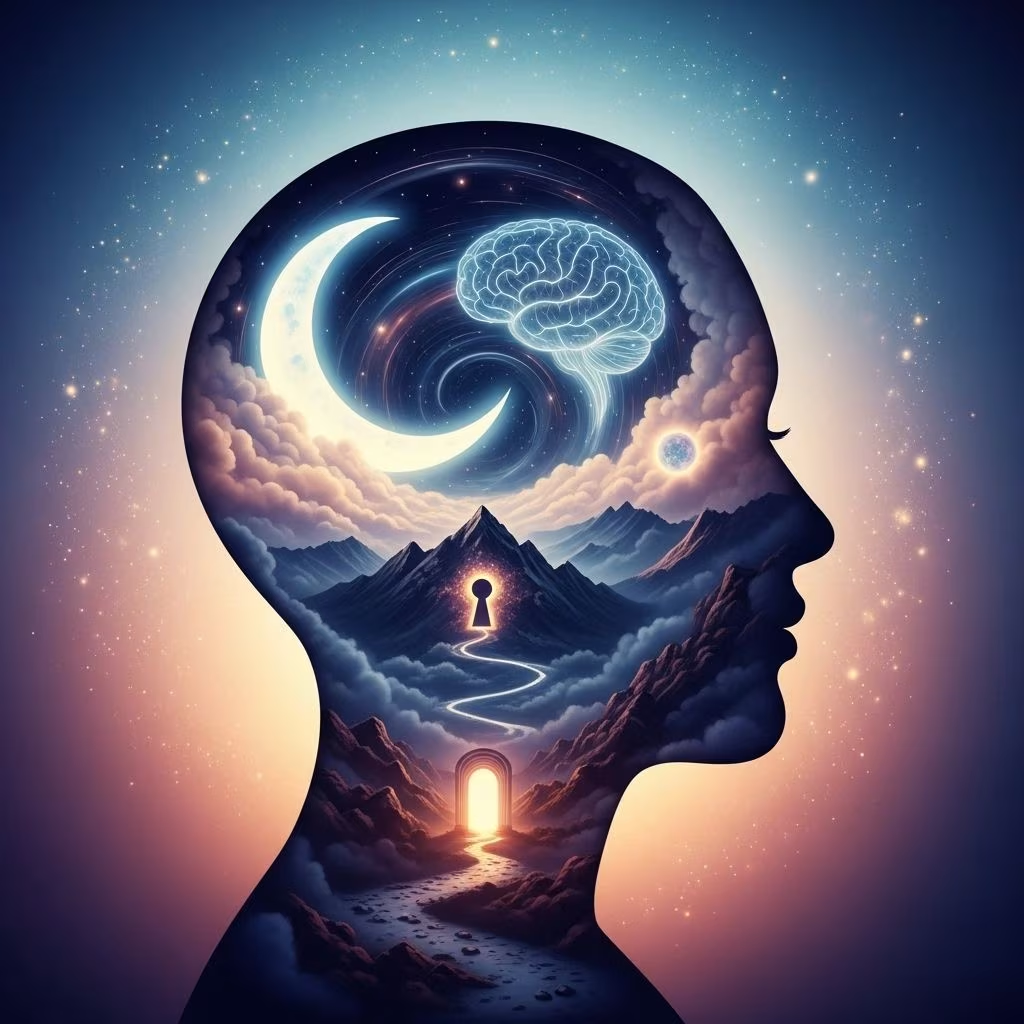
Dreams have captivated human curiosity for centuries, from being interpreted as mystical messages in ancient cultures to forming a core focus in modern psychological research. While dreams are a common part of the human experience, the science of understanding and interpreting them remains a complex, evolving field. This article takes a comprehensive look at what dreams are, why we dream, the most influential theories explaining dreams, and practical ways you can explore and interpret your own dream life.
What Are Dreams?
Dreams are a series of thoughts, images, sensations, or emotions occurring during sleep—especially throughout the rapid eye movement (REM) stage. They are deeply personal, sometimes vivid or abstract, and can involve narrative or fragmentary content. Every person dreams, even if they don’t always remember their dreams upon waking. The intricacy and meaning of dreams are subjects of ongoing debate among scientists and psychologists.
Why Do We Dream?
This fundamental question has puzzled humanity for ages. Despite significant advances in neuroscience and psychology, there is no single answer. Researchers have proposed a number of hypotheses about the function and purpose of dreaming, including:
- Emotional processing: Dreams may aid in processing emotions, helping us deal with anxieties, fears, and unresolved feelings.
- Memory consolidation: Many scientists believe that dreaming helps organize and integrate memories, moving important information from short-term to long-term storage.
- Problem-solving: Some psychologists propose that dreams provide a safe space to work through challenges and complex problems, sometimes leading to creative solutions.
- Random brain activity: Certain neurobiologists argue that dreams are simply the byproduct of random neural firing during REM sleep, with our minds constructing narratives from this activity.
Different perspectives highlight the multifaceted nature of dreams and underscore the ongoing search for definitive explanations.
Major Theories of Dreaming
Throughout history, thinkers have offered various models to explain why we dream and what dreams mean. Here are the most influential theories:
1. Psychoanalytic Theory (Sigmund Freud)
Freud described dreams as the “royal road to the unconscious.” According to his theory, dreams are a means for our minds to fulfill repressed wishes and desires. Dream interpretation, Freud argued, revolves around distinguishing the manifest content (what happens in the dream) from the latent content (the hidden psychological meaning behind dream events). In Freud’s view, the bizarre nature of dreams is due to the mind disguising threatening content through symbols and metaphors.
2. Analytical Psychology (Carl Jung)
Carl Jung, Freud’s one-time collaborator, contended that dreams are messages from the unconscious and serve functions of self-integration and healing. Jung introduced the concepts of the collective unconscious and archetypes—universal symbols and themes shared across humanity. He believed dream interpretation could help individuals understand their path toward personal growth and greater wholeness.
3. Activation-Synthesis Hypothesis
This neurobiological model, formulated by Allan Hobson and Robert McCarley, suggests the brain generates electrical signals during REM sleep, which create random memories and images. The brain then synthesizes these fragments into a coherent story. This theory emphasizes the role of brain physiology over psychological processes in dreaming.
4. Information-Processing Theories
Many sleep researchers propose that dreams are involved in consolidating and organizing memories. While we sleep, the brain sorts through the day’s experiences, integrates new information, and discards irrelevant details.
5. Problem-Solving and Emotional Regulation Theories
Some psychologists believe dreams help manage emotions, offering a virtual space to process distress, cope with difficult situations, or practice resolving interpersonal and practical dilemmas. Dreams may allow us to “test out” solutions free from real-life consequences.
| Theory | Main Proposition | Key Proponents |
|---|---|---|
| Psychoanalytic | Dreams reveal unconscious wishes; symbolic content requires interpretation. | Sigmund Freud |
| Analytical Psychology | Dreams facilitate personal growth through archetypes and symbols. | Carl Jung |
| Activation-Synthesis | Dreams are the result of random brain activity, synthesized into stories. | Hobson & McCarley |
| Information-Processing | Dreams help sort, store, and dispose of daily information. | Multiple neuroscientists |
| Problem-Solving & Emotional Regulation | Dreams help manage emotions and rehearse solutions to real-world problems. | Various modern psychologists |
Common Types and Themes in Dreams
The contents of dreams vary considerably but certain themes frequently crop up in people’s dream reports. Psychologists have identified several recurring dream categories, including:
- Being chased or attacked
- Falling or flying
- Being unprepared for an exam or important event
- Losing teeth
- Appearing in public unclothed
- Encountering loved ones, strangers, or deceased individuals
- Experiencing embarrassment or making mistakes
While such themes may have universal qualities, their symbolic meaning often depends on the dreamer’s personal associations, life experiences, and emotions.
Dream Interpretation: Approaches and Tools
Given the layered complexity of dreams, numerous methods for dream interpretation exist, ranging from clinical analysis to personal reflection. Here are some commonly used approaches:
Freudian Method
Focuses on uncovering hidden wishes, anxieties, or conflicts through analysis of symbols and metaphors. Freud believed interpreting both manifest and latent content could help resolve inner psychological struggles.
Jungian Approach
Encourages examining dreams for archetypal images (such as the hero, the shadow, the wise old man), and links personal associations to universal themes. Jungians often explore how dreams relate to the dreamer’s inner journey and individuation (personal growth and integration).
Modern Cognitive-Experiential Techniques
- Identifying the central emotion or mood in the dream, as emotions can be an effective gateway to meaning.
- Looking for connections to recent waking experiences, stresses, or current life challenges.
- Using dream journaling to track patterns, recurring symbols, or meaningful changes in dream content.
The Role of Context in Dream Interpretation
The key to uncovering the meaning of your dreams often lies in your own context—what’s on your mind, what you’re experiencing in your personal and professional life, and your emotional state. For effective dream exploration, consider:
- Reflecting on waking emotions and events—Dreams frequently mirror thoughts, worries, and feelings experienced during the day.
- Exploring personal symbolism—What does a particular person, place, or object mean to you?
- Considering your developmental stage—Certain dreams may be more prevalent during transitions or periods of stress.
- Being mindful of stereotypes in dream dictionaries—While some symbols have broad cultural meaning, individual associations are crucial.
How to Improve Dream Recall and Interpretation
Remembering your dreams is often the first step toward deeper self-understanding. Here are some proven tips to enhance dream recall and make sense of what you remember:
- Keep a dream journal—Record dreams immediately upon waking before memories fade.
- Establish a regular sleep routine—Sufficient and consistent sleep, particularly REM sleep, improves dream recall.
- Use prompts—Ask yourself questions upon waking, such as “What was I feeling?” or “Who appeared in my dream?”
- Talk about your dreams—Discussing dreams with friends, loved ones, or a therapist can reveal new insights.
Differing Perspectives: Are Dreams Meaningful?
The question of whether dreams hold significance is still hotly debated. Some researchers argue that dreams serve important psychological and emotional functions. Others contend that dreams are random byproducts of brain activity. Key points from different schools of thought include:
- Psychoanalysts and Jungians—see consistent, meaningful content in dreams that reflect inner dynamics and can be used for healing or insight.
- Neuroscientists—tend to focus on the biological mechanisms behind dreaming and caution against over-interpreting symbolic content.
- Contemporary psychologists—often take a middle path, acknowledging both psychological functions like memory processing and emotional regulation, and the influence of random neural activation.
When to Seek Help for Disturbing Dreams
Most dreams, even unsettling ones, are a normal part of sleep. However, if recurring nightmares, night terrors, or dreams linked with trauma cause distress or disrupt daily functioning, it may be helpful to consult a psychological or medical professional. Persistent nightmares can sometimes signal underlying issues like anxiety, PTSD, or sleep disorders.
Frequently Asked Questions (FAQs) About Dreams
Q: Why do we often forget our dreams?
A: Memories formed during REM sleep may not always transfer to long-term memory, especially if we wake suddenly or are distracted. Keeping a journal and focusing on recall immediately upon waking can improve memory of dreams.
Q: Are dream symbols universal?
A: While certain symbols—such as flying or falling—appear across cultures, the deeper meaning of dream images is highly personal, shaped by individual experience and associations.
Q: Can dreams predict the future?
A: There is currently no scientific evidence that dreams possess the ability to predict future events. However, dreams can reflect hopes, fears, and unconscious thoughts about possible situations.
Q: Why do people have recurring dreams?
A: Recurring dreams often indicate unresolved conflicts, ongoing stress, or repeated life themes. They can also signal the mind’s persistent effort to address a specific issue.
Q: Do animals dream?
A: Scientific studies suggest many mammals experience REM sleep—an indicator of dreaming—though the nature and content of animal dreams likely differ from human experiences.
Key Takeaways for Understanding and Interpreting Dreams
- Dreaming is universal, and everyone dreams—even those who do not remember their dreams.
- There is no single, definitive way to interpret dreams. Combining personal reflection with knowledge of prominent theories can lead to deeper insight.
- Dreams can provide valuable clues about emotions, memories, and creative solutions—but beware of rigid interpretations from dream dictionaries.
- Dream analysis can be a useful therapeutic tool for personal growth or psychological healing but should supplement, rather than replace, evidence-based mental health practices when dealing with distressing symptoms.
Further Resources
- Read books and articles by Sigmund Freud, Carl Jung, and leaders in modern neuroscience for more in-depth perspectives.
- Consider maintaining a regular dream journal and discussing recurring themes with a mental health professional if needed.
- Stay updated with recent research to expand your understanding of the fascinating, evolving science of dreams.
References
- https://journals.ub.uni-heidelberg.de/index.php/IJoDR/article/view/67600
- https://www.frontiersin.org/journals/psychology/articles/10.3389/fpsyg.2018.01553/full
- https://pmc.ncbi.nlm.nih.gov/articles/PMC3330663/
- https://scholarsarchive.byu.edu/cgi/viewcontent.cgi?article=1154&context=intuition
- https://pmc.ncbi.nlm.nih.gov/articles/PMC2814941/
- https://www.brescia.edu/2016/09/psychology-of-dreams/
- https://imindmental.com/article/psychology-of-dreams-what-they-tell-you-about-your-mental-health/
- https://en.wikipedia.org/wiki/Dreams_in_analytical_psychology
- https://iaap.org/wp-content/uploads/2020/01/Roesler-SDA-Dreaming.pdf


