


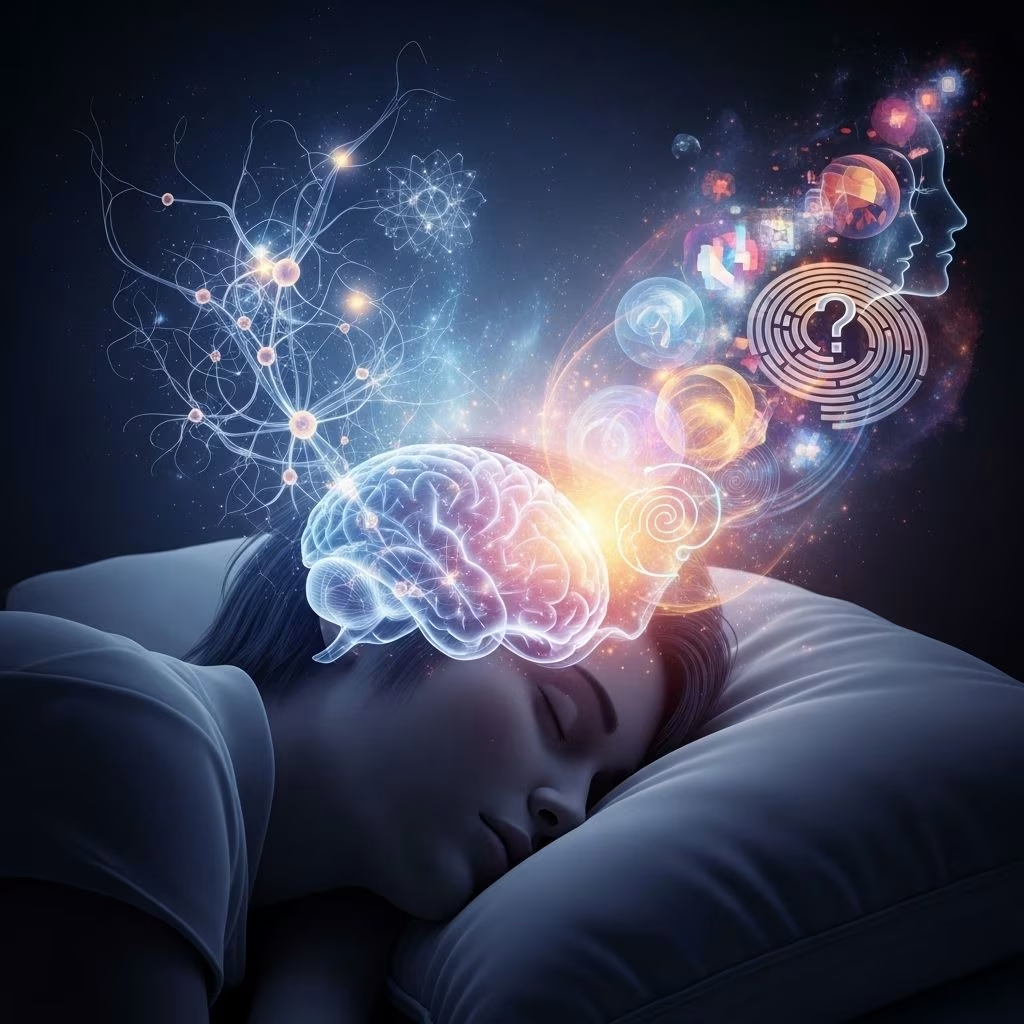
Facts About Dreams: Science, Psychology, and Mysteries of the Sleeping Mind
Dreams are among the most fascinating and mysterious phenomena of the human mind. Every night, billions of people drift into sleep and enter enigmatic worlds created by their subconscious—worlds that can be vivid, puzzling, terrifying, or delightful. Scientists, psychologists, and philosophers have long wondered: Why do we dream? What do our dreams mean? This article explores critical facts, theories, and intriguing findings about dreams, synthesizing research and expert insights to shed light on the sleeping mind.
What Are Dreams?
Dreams are mental experiences composed of images, thoughts, emotions, and sensations that occur during sleep. Most dreams feel like real experiences while you’re dreaming, but upon waking, they may seem strange or unconnected to reality. People can dream in both REM (Rapid Eye Movement) and non-REM stages of sleep, though dreams during REM are usually more vivid and narrative.
- Dreams can be visual, auditory, or even include other senses like touch and smell.
- Sometimes, dreams are realistic; other times, they’re surreal, bizarre, or illogical.
- Both humans and many animals appear to dream.
Why Do We Dream?
The purpose of dreams remains one of psychology’s greatest puzzles. Over the centuries, dozens of theories emerged:
- Processing Emotions and Stress: Experts believe dreams help us cope with emotions, process stress, and work through unresolved feelings. Dreams may act as the mind’s way to process difficult experiences or prepare us emotionally for upcoming situations.
- Memory Consolidation: Research supports that dreaming during sleep, especially during REM, is linked to reinforcing useful memories and weakening less helpful ones.
- Cognitive Development and Creativity: Some psychologists suggest dreaming boosts problem-solving and creative thought by synthesizing new mental connections.
- Theories of the Unconscious: Sigmund Freud posited that dreams are the ‘royal road to the unconscious,’ giving access to our deepest wishes and anxieties.
- Brains at Play: The activation-synthesis theory asserts that dreams are the brain’s attempt to make sense of random neural activity during sleep.
Modern science has yet to reach consensus on a single reason for dreaming, suggesting the phenomenon likely serves multiple psychological, emotional, and biological functions.
How Much Do People Dream?
Everyone dreams, although people often forget most of their dreams upon waking. On average:
- Adults spend about two hours dreaming each night, distributed across multiple dreams.
- By some estimates, the average person will spend a cumulative six years of their life dreaming.
- Dreams may last from a few seconds up to 20–30 minutes per occurrence.
When Do Dreams Occur?
Dreams can happen during any stage of sleep, but they’re most common and intense during REM sleep. REM sleep is recognized by rapid movements of the eyes, elevated brain activity, and muscle paralysis.
- REM Sleep: Occurs in cycles throughout the night; vivid, visual, story-like dreams are most likely in this stage.
- Non-REM Sleep: Dreaming still occurs, but dreams are typically less fantastical, shorter, and more ‘thoughtlike’ or realistic.
| Sleep Stage | Dream Frequency | Nature of Dreams |
|---|---|---|
| REM | Most common | Vivid, visual, narrative |
| Non-REM | Less frequent | Shorter, more realistic, “thoughtlike” |
How Many Dreams Do We Remember?
Although almost everyone dreams nightly, the ability to recall dreams varies greatly:
- It is estimated that people forget 90–95% of their dreams within minutes of waking.
- Some people rarely remember dreams, while others recall several per night.
- Dream recall is highest when awakened during or just after REM sleep.
Factors affecting dream recall include sleep stage at awakening, attention paid to dreams, and natural individual variation.
Types of Dreams
Not all dreams are alike. Here are several types of dreams commonly described:
- Lucid Dreams: In lucid dreams, the dreamer is aware they are dreaming and may be able to control the dream. Lucid dreaming is a skill that some people can practice and cultivate, generally occurring during REM sleep.
- Recurring Dreams: Some individuals experience the same dream repeatedly, often about unresolved conflicts or ongoing anxieties.
- Nightmares: Terrifying dreams that may provoke fear, anxiety, or distress, sometimes leading to awakening.
- Prophetic Dreams: Throughout history, dreams have been seen by some cultures as messages about the future, a concept known as ‘oneiromancy’.
- Healing/Problem-Solving Dreams: Occasionally, dreams are credited with revealing solutions to problems or inspiring creative breakthroughs.
Common Themes in Dreams
Despite their seeming randomness, specific themes recur across cultures and individuals. Frequent motifs include:
- Being chased
- Falling
- Taking an important exam
- Flying
- Losing teeth
- Unable to speak or move
- Appearing naked or unprepared in public
- Meeting with a deceased loved one
These themes often relate to underlying anxieties, aspirations, or unresolved emotions.
Important Theories and Research About Dreams
The scientific exploration of dreams encompasses psychological, neurological, and philosophical perspectives. Here are several leading theories about dreams:
- Activation-Synthesis Theory: Proposed by Hobson and McCarley, this theory suggests dreams are the result of the brain’s effort to synthesize random neural activity, particularly in emotionally-driven regions like the amygdala and hippocampus. The prefrontal cortex constructs a story from these signals, resulting in the fantastical, patchwork nature of dreams.
- Continuity Hypothesis: Dreams reflect real-life experiences, emotions, and memories, but incorporate them in a fragmented and altered form as the mind assimilates new information into long-term memory.
- Self-Organization Theory: Dreams arise from the brain’s memory consolidation process, strengthening useful memories and allowing less relevant information to fade.
- Psychoanalytic Theory: Freud and Jung suggested that dream content reveals hidden desires and archetypes—repressed or symbolic content from the personal or collective unconscious.
Modern dream research uses brain imaging, sleep laboratory observations, and subjective dream reports to derive insights, but no single theory has fully explained all aspects of dreaming.
Strange and Fun Facts About Dreams
- Most people forget 90–95% of their dreams within minutes of waking up.
- Commonly, dreams are visual but can occasionally be experienced in black and white or with muted colors.
- Animals, including dogs and cats, show signs—like twitching limbs—suggesting they dream as well.
- Negative emotions, such as anxiety and fear, tend to be more prevalent in dreams than positive feelings.
- Blind individuals dream with their other senses (sound, touch, smell), creating sensory-rich dream worlds.
- Recurring dreams often highlight stressful scenarios or unresolved conflicts.
- Some historical figures, scientists, and artists (such as Paul McCartney or Dmitri Mendeleev) have claimed inspiration for their works came to them in dreams.
Frequently Asked Questions (FAQs)
Are dreams meaningful?
Dreams may contain elements from your waking life—memories, symbols, anxieties, and aspirations. While some experts emphasize their potential for self-reflection or insight, others see dreams as mostly random brain activity. The significance you assign to your dreams often depends on your personal beliefs and psychological outlook.
Can dreams predict the future?
There is no scientific evidence that ordinary dreams are predictive. Yet, cultures throughout history have attributed prophetic qualities to dreams, and some individuals report experiencing déjà vu after a dream. These experiences are most likely coincidental or stem from the mind’s pattern-matching tendencies.
Why do some people have nightmares?
Nightmares are usually associated with stress, trauma, illness, or certain medications. They occur more often during REM sleep. Occasional nightmares are normal, but frequent, distressing nightmares may signal underlying emotional or health issues.
Is it possible to control dreams?
Lucid dreaming—the awareness that you are dreaming and the ability to control dream events—is real and scientifically documented. Some people cultivate lucid dreaming through mental exercises, reality checks, or keeping a dream journal.
Can animals dream?
Most researchers believe that mammals and birds experience REM sleep, suggesting the likelihood of dreaming. Behavioral signs include twitching paws or eyelids during sleep. Nevertheless, the exact content of animal dreams remains unknown.
Do all humans dream every night?
Yes. If you think you don’t dream, it’s likely you simply don’t remember your dreams. Every healthy adult cycles through REM sleep periods nightly, which almost always produce dreams.
Final Thoughts
Dreams remain one of the most enigmatic yet universal experiences. Their content reflects a blend of personal memory, emotional states, and the innate creativity of the human brain. Whether interpreted as random neural activity, portals to the unconscious, or playgrounds for processing life’s events, dreams offer a glimpse into the mysteries of the mind—and our ongoing efforts to understand ourselves.
References
- https://ijip.in/wp-content/uploads/2024/08/18.01.093.20241203.pdf
- https://www.britannica.com/topic/dream-sleep-experience
- https://www.ebsco.com/research-starters/health-and-medicine/dreams
- https://www.trillmag.com/lifestyle/health-wellbeing/inside-the-dream-world-what-really-happens-when-we-sleep/
- https://beliveinpsychology.com/fun-facts-about-dreams/
- https://positivepsychology.com/self-concept/
- https://www.youtube.com/watch?v=XK4yjmApcHo


