


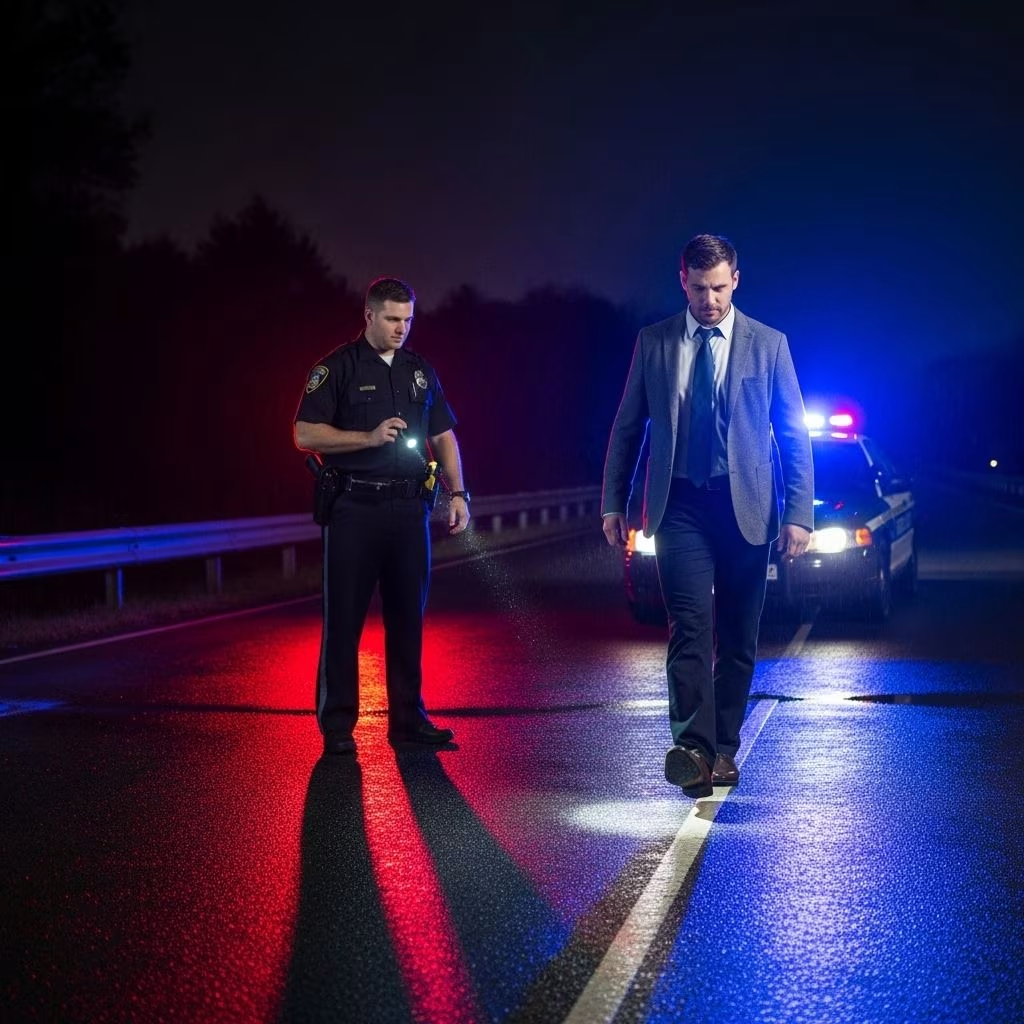
Field sobriety tests are a cornerstone of roadside DUI (driving under the influence) enforcement in the United States. Understanding what these tests entail, how they are administered, and their limitations is essential for anyone who drives. This article explores the different types of field sobriety tests, their scientific validity, and the legal considerations that drivers should keep in mind during such encounters with law enforcement.
What Are Field Sobriety Tests?
Field sobriety tests (FSTs) are a group of physical and cognitive assessments conducted by law enforcement officers to determine possible impairment by alcohol or drugs. These tests are usually performed during roadside traffic stops when officers suspect a driver might be under the influence.
- Primary purpose: To help officers establish probable cause for arrest.
- Standardization: The U.S. National Highway Traffic Safety Administration (NHTSA) has validated and standardized several tests for this purpose.
- Application: Used across all 50 states, forming part of the foundation of DUI enforcement programs.
Standardized Field Sobriety Tests (SFSTs)
The NHTSA recognizes and validates three primary tests, collectively known as the Standardized Field Sobriety Tests (SFSTs). These are:
- Horizontal Gaze Nystagmus (HGN) Test
- Walk-and-Turn (WAT) Test
- One-Leg Stand (OLS) Test
These tests must be administered in a highly standardized manner, with specific instructions, scoring criteria, and clues that officers must follow for the results to be considered valid and admissible in court. Altering any element can compromise the validity of the test findings.
Horizontal Gaze Nystagmus (HGN) Test
This test evaluates involuntary, jerking eye movements (nystagmus) that become pronounced when a person is impaired by alcohol or certain drugs.
- The officer holds a stimulus (usually a pen or small flashlight) about 12-15 inches from the suspect’s face and asks them to follow it with their eyes only.
- The officer watches for several indicators, including inability to track the object smoothly, distinct eye jerking at certain angles, and the onset of nystagmus before the eyes reach a 45-degree angle.
Walk-and-Turn (WAT) Test
Designed to test both physical coordination and the ability to follow directions, the walk-and-turn requires the subject to:
- Take nine heel-to-toe steps along a straight line.
- Turn in a prescribed way (usually by pivoting on one foot).
- Return nine steps in the same heel-to-toe manner.
- Keep arms at the sides and not stop until the task is complete.
Officers look for errors such as stepping off the line, incorrect number of steps, balance loss, or failure to follow instructions precisely.
One-Leg Stand (OLS) Test
This assessment focuses on balance and attention, requiring the subject to:
- Stand straight with one foot about six inches off the ground.
- Keep both arms at the sides.
- Count out loud for about 30 seconds (“one-one thousand, two-one thousand,” etc.).
Signs of impairment include putting the foot down, swaying, hopping to regain balance, or using arms for stability.
How Field Sobriety Tests Are Administered
Officers are trained to follow a specific sequence when administering SFSTs:
- Provide clear, standardized instructions for each test.
- Demonstrate the expected movement(s).
- Observe the subject’s ability to understand instructions, physical control, and overall demeanor.
- Record and later report any clues or mistakes based on established criteria.
Officers may conduct additional non-standardized tests such as reciting the alphabet, counting backwards, or touching finger to nose; however, these are not part of the validated NHTSA battery and may be subject to further scrutiny.
Scientific Accuracy and Reliability of Field Sobriety Tests
While SFSTs are widely used, their accuracy is not absolute. Studies sponsored by the NHTSA have found the following accuracy rates:
| Test Type | Accuracy Rate |
|---|---|
| Horizontal Gaze Nystagmus (HGN) | 77% |
| Walk-and-Turn (WAT) | 68% |
| One-Leg Stand (OLS) | 65% |
Note: These percentages reflect the proportion of correctly identified subjects at or above the legal limit of blood alcohol content (BAC). Performance errors can occur for many reasons unrelated to intoxication.
Factors Affecting Field Sobriety Test Performance
Not all individuals are able to perform field sobriety tests effectively, even when sober. Factors that can influence results include:
- Age: Older adults may have balance or coordination issues unrelated to impairment.
- Medical Conditions: Physical disabilities, injuries, or neurological disorders can affect performance.
- Medications: Prescription or over-the-counter medications may mimic some signs of impairment.
- Fatigue or Anxiety: Nervousness during a police stop can lead to mistakes.
- Obesity: Being overweight can impact balance and movement.
- Environmental factors: Uneven pavement, poor lighting, and inclement weather conditions can hinder a fair test.
It is vital for officers to consider these factors and document any circumstances that could impair test accuracy. Challenging test validity is a common legal defense in DUI cases.
The Three Phases of DUI Detection
According to standardized police procedures, DUI detection unfolds in three major phases:
- Vehicle in motion: Officer observes the driving behavior for signs of impairment or unusual activity.
- Personal contact: Officer engages the driver, notes speech, smell, and physical cues.
- Pre-arrest screening: Officer requests and conducts field sobriety tests, potentially followed by a preliminary breath test (PBT).
When impairment is suspected based on these observations and test results, the officer may proceed with an arrest and require chemical testing (e.g., breath, blood, or urine analysis).
Non-Standardized Field Sobriety Tests
Although the three tests validated by NHTSA form the core of FSTs, officers sometimes use other assessments:
- Finger-to-nose test
- Reciting the alphabet (often from a specific letter to another)
- Counting backwards
- Rhomberg balance test (standing still with eyes closed)
These tests are less reliable and more prone to subjective interpretation, so their legal weight varies from case to case.
Legal Rights and Considerations During a Sobriety Stop
If a law enforcement officer initiates a traffic stop and requests field sobriety testing, individuals have certain rights and options:
- Participation in FSTs is not legally required in all states, though refusal may carry consequences such as license suspension in some jurisdictions.
- Refusal to participate may be used as evidence of impairment in court.
- Individuals have a right to avoid self-incrimination and may politely decline to answer questions beyond basic identification.
- If arrested, it is advisable to request legal counsel before making further statements.
Consulting with an attorney experienced in DUI law is essential if you have been subject to field sobriety testing or face arrest.
Common Defenses in Field Sobriety Test Cases
Several common legal challenges may be raised over FSTs in court:
- Improper Test Administration: Deviations from standardized protocol can render test results unreliable or inadmissible.
- Health or Disability Factors: Medical history or physical limitations may explain poor performance.
- Environmental Conditions: Slippery or uneven surfaces, poor lighting, and weather can affect outcomes.
- Officer Bias or Misinterpretation: Subjective assessment of “clues” may lead to error.
After the Field Sobriety Test: What Happens Next?
If the officer determines probable cause based on FST results and other evidence, you may be arrested and subjected to further chemical testing. Blood, breath, or urine analysis offers more objective measurement of blood alcohol concentration—the primary standard used in legal proceedings. A failed field sobriety test alone is rarely sufficient to convict but provides grounds for further investigation.
Summary Table: Standardized Field Sobriety Tests
| Test Name | Purpose | Major Indicators of Impairment |
|---|---|---|
| Horizontal Gaze Nystagmus | Detect involuntary eye movements | Lack of smooth pursuit, distinct nystagmus, early onset of jerking |
| Walk-and-Turn | Divided attention, coordination, instruction following | Stepping off line, improper turn, incorrect steps, loss of balance |
| One-Leg Stand | Balance and sustained attention | Swaying, hopping, putting foot down, using arms for balance |
Frequently Asked Questions
Q: Are field sobriety tests mandatory?
A: In most states, you are not legally required to participate in field sobriety tests. However, refusal may lead to license suspension under implied consent laws or be used as evidence of impairment in court.
Q: Can a sober person fail a field sobriety test?
A: Yes, many sober individuals fail or perform poorly on these tests due to medical conditions, anxiety, fatigue, or environmental factors.
Q: What should I do if I’m asked to take a field sobriety test?
A: Remain calm, be polite, and remember you are entitled to ask about your rights and consult a lawyer if arrested. Weigh the risks of refusal in your state, as there may be administrative penalties.
Q: Are field sobriety tests admissible as evidence?
A: Yes, but their weight depends on how closely the tests were administered to standardized procedures and the presence of objective evidence like chemical test results.
Q: Can field sobriety tests be challenged in court?
A: Absolutely. Defense attorneys frequently contest the accuracy, validity, and administration of field sobriety tests in DUI cases, often focusing on poor conditions, health issues, or officer error.
Key Takeaways
- Field sobriety tests are used nationwide by law enforcement to identify possible driver impairment.
- The three NHTSA-validated SFSTs are the HGN, walk-and-turn, and one-leg stand tests.
- Test accuracy is moderate, and many external factors can influence performance and outcomes.
- Understanding your rights and the legal process is crucial if you are subject to sobriety testing or arrested for DUI.
- Consultation with a qualified attorney is essential for protecting your rights and mounting a defense.
References
- https://pconwaylaw.com/blog/field-sobriety-tests-101/
- https://www.drugdetection.net/PDF%20documents/SFST%20Instructions%202006%20and%20DRE%20components.pdf
- https://gbafirm.com/dwi-and-dui-field-sobriety-test-procedures/
- https://www.nhtsa.gov/sites/nhtsa.dot.gov/files/documents/sfst_ig_refresher_manual.pdf
- https://en.wikipedia.org/wiki/Field_sobriety_testing
- https://rathburnlaw.com/field-sobriety-tests-show-sobriety/
- https://www.nj.gov/lps/hts/downloads/SFST_Procedures.pdf


