


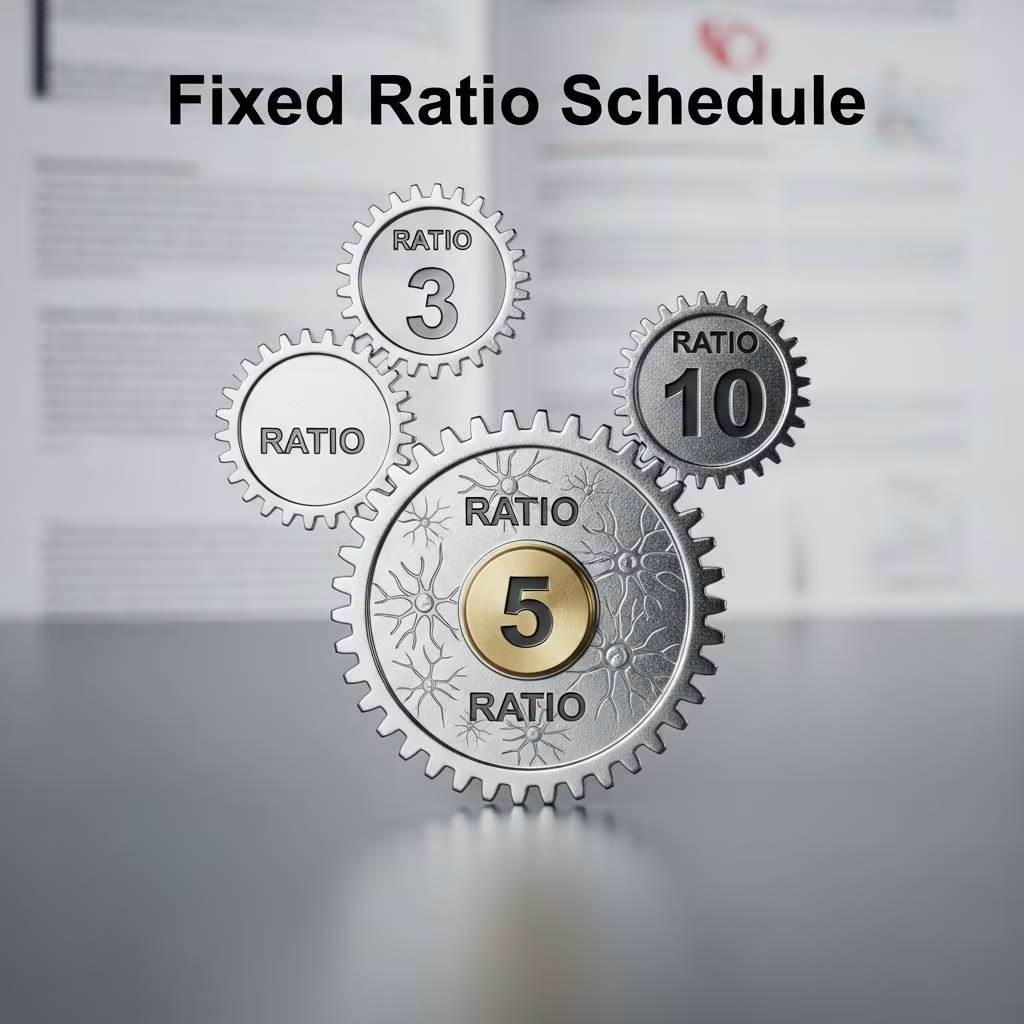
In the realm of behavioral psychology, schedules of reinforcement play a crucial role in shaping actions and learning processes. Among these, the fixed ratio schedule is a foundational concept. By examining how rewards are delivered after a set number of responses, psychologists can better understand, predict, and modify behavior in various settings, including education, animal training, and the workplace. This article explores what fixed ratio schedules are, how they function, real-world examples, behavioral effects, and key comparisons with other reinforcement schedules.
Definition of Fixed Ratio Schedule
A fixed ratio schedule is a type of reinforcement schedule used in operant conditioning, which involves delivering reinforcement after a specified and consistent number of correct responses or behaviors. For example, in a fixed ratio (FR-5) schedule, a reward is provided every fifth time the target behavior is exhibited. The critical concept here is that reinforcement occurs based solely on the number of responses, not the passage of time.
- Fixed: The number of required responses for reinforcement remains constant.
- Ratio: Refers to the number of behaviors performed before reinforcement.
- Schedule: The specific rule determining when reinforcement will occur.
Operant conditioning, developed by B. F. Skinner, forms the theoretical basis for fixed ratio schedules, focusing on associative learning driven by consequences.
How Fixed Ratio Schedules Work
Under a fixed ratio schedule, the subject (human or animal) must perform a specific behavior a predetermined number of times to receive a reward. The reinforcement remains predictable. If the schedule is FR-3, this means every third correct response triggers reinforcement.
- Behavior is reinforced after a set number of responses.
- The interval between rewards is always the same.
- Response rate is typically high as subjects work toward the next expected reward.
This scheduling mechanism leads to several behavioral patterns, including rapid acquisition of the target behavior and a brief pause following reinforcement, often called a ‘post-reward pause.’
Examples of Fixed Ratio Schedules
Fixed ratio schedules are prevalent in everyday life, both in laboratory settings and real-world environments. Some notable examples include:
- Factory work: A worker is paid for every five items they produce.
- Sales commissions: A salesperson receives a bonus for every ten sales completed.
- Animal training: A dog gets a treat every third time it sits on command.
- Video games: Players earn a reward after defeating a set number of enemies.
- Dressmaker: Being paid after every ten dresses made.
These examples demonstrate how fixed ratio schedules are used to motivate and reinforce desired behaviors, both for learning new skills and maintaining productivity.
Fixed Ratio vs Other Reinforcement Schedules
To appreciate the unique properties of fixed ratio schedules, it is essential to understand how they compare to other reinforcement schedules in operant conditioning.
| Schedule Type | Definition | Example | Behavioral Pattern |
|---|---|---|---|
| Fixed Ratio (FR) | Reinforcement after a set number of responses | Dog gets treat every third sit | High, steady response; post-reward pause |
| Variable Ratio (VR) | Reinforcement after varying number of responses | Slot machines pay after random number of pulls | Highest, persistent response; little pause |
| Fixed Interval (FI) | Reinforcement after a set amount of time | Monthly salary paycheck | Responses cluster near reinforcement time |
| Variable Interval (VI) | Reinforcement after varying intervals of time | Random checks for quality assurance | Moderate, steady response |
Key distinctions:
- Fixed ratio: Predictable and easily understood, effective for rapid acquisition of behavior.
- Variable ratio: Less predictable, often produces higher resistance to extinction and strongest response rates.
- Interval schedules: Reinforcement is linked to time elapsed rather than number of behaviors.
Behavioral Effects of Fixed Ratio Schedules
The fixed ratio schedule leads to several distinct behavioral outcomes:
- High Response Rate: Subjects tend to perform the desired behavior quickly to achieve the reward.
- Post-Reinforcement Pause: Immediately after earning the reward, subjects tend to pause before resuming activity.
- Rapid Acquisition: Behaviors reinforced in this way are quickly learned.
- Quick Extinction: If reinforcement stops, learned behaviors under fixed ratio schedules are likely to extinguish quickly since subjects realize the rewards have ceased.
- Risk of Burnout: Particularly in workplace settings, if the ratio is high or the task is demanding, subjects may experience fatigue or exhaustion.
Advantages and Disadvantages
Understanding the pros and cons of fixed ratio schedules reveals their practical utility and limitations.
- Advantages:
- Simple and easy to implement
- Fosters high output and rapid learning
- Clear expectations for when rewards will occur
- Useful in skill acquisition and productivity-driven environments
- Disadvantages:
- Breaks or pauses tend to happen after reinforcement
- Behavior extinguishes rapidly if rewards stop
- May lead to physical or mental fatigue if demands are high
- Potentially less suited for long-term behavioral maintenance compared to variable schedules
Applications in Real-Life Settings
Fixed ratio schedules are not confined to psychology laboratories; they shape behavior across various domains:
- Education: – Teachers offer stickers or points after a set number of completed assignments, encouraging students to persist in their work.
- Business & Sales: – Employees receive a commission for every set number of products sold, driving motivation and productivity.
- Animal Training: – Trainers reinforce tricks or commands only after the animal completes the behavior several times, promoting consistent learning.
- Sports: – Athletes may receive rewards or recognition after reaching specific performance milestones.
Important Concepts: Operant Conditioning & Reinforcement
At the heart of fixed ratio schedules lies operant conditioning. This principle refers to learning through consequences—where voluntary behaviors are increased or decreased based on their outcomes.
- Positive reinforcement: Adding a reward to encourage repetition of behavior (e.g., treats for tricks).
- Negative reinforcement: Removing an unpleasant stimulus in response to desired behavior (e.g., stopping loud noise after task completion).
Reinforcement schedules define the precise rules for how and when these rewards or consequences are delivered.
Types of Reinforcement Schedules
- Continuous reinforcement: Every correct behavior receives reinforcement; effective for initial learning.
- Partial (intermittent) reinforcement: Only some correct behaviors are reinforced; includes fixed ratio schedules and often leads to longer-lasting behavior patterns.
Fixed Ratio Schedules: Frequently Asked Questions (FAQs)
Q: What is a fixed ratio schedule in psychology?
A fixed ratio schedule is a rule in operant conditioning where reinforcement is given after a set, constant number of correct responses or behaviors.
Q: How does a fixed ratio schedule differ from a variable ratio schedule?
Fixed ratio schedules deliver reinforcement after a set number of responses, while variable ratio schedules provide reinforcement after a changing, unpredictable number of responses.
Q: What are common examples of fixed ratio schedules?
Examples include being paid for every five products made, receiving a bonus after ten sales, giving a dog a treat after three sits, and earning points in games after set achievements.
Q: What behavioral patterns are associated with fixed ratio schedules?
Subjects display a high rate of response until reinforcement, followed by a short pause right after rewards are given.
Q: Are fixed ratio schedules better for rapid learning or long-term behavior?
Fixed ratio schedules work well for rapid learning and motivating high output, but behaviors learned this way can extinguish quickly if reinforcement ends. For longer-lasting change, variable reinforcement schedules may be more resistant to extinction.
Key Takeaways
- Fixed ratio schedules reinforce behavior after a predictable, set number of responses.
- They drive high rates of behavioral performance and rapid acquisition of skills.
- Post-reward pauses and rapid extinction are typical patterns.
- They are widely used in studies of operant conditioning and practical settings such as education, animal training, and the workplace.
- Choosing the most effective reinforcement schedule depends on the goals for learning or behavior modification.
References
- APA Dictionary of Psychology, Simply Psychology, Helpful Professor, Fiveable, and other educational sources for definitions, examples, and behavioral analyses of fixed ratio schedules.
References
- https://www.youtube.com/watch?v=QC0Q0XAaae8
- https://fiveable.me/key-terms/ap-psych/fixed-ratio
- https://study.com/academy/lesson/fixed-ratio-and-a-reinforcement-schedule-examples-definition-quiz.html
- https://helpfulprofessor.com/fixed-ratio-schedule-examples/
- https://www.simplypsychology.org/schedules-of-reinforcement.html
- https://fiveable.me/key-terms/ap-psych/fixed-ratio-schedule
- https://dictionary.apa.org/fixed-ratio-schedule
- https://learningbehavioranalysis.com/schedules-of-reinforcement-2/


