


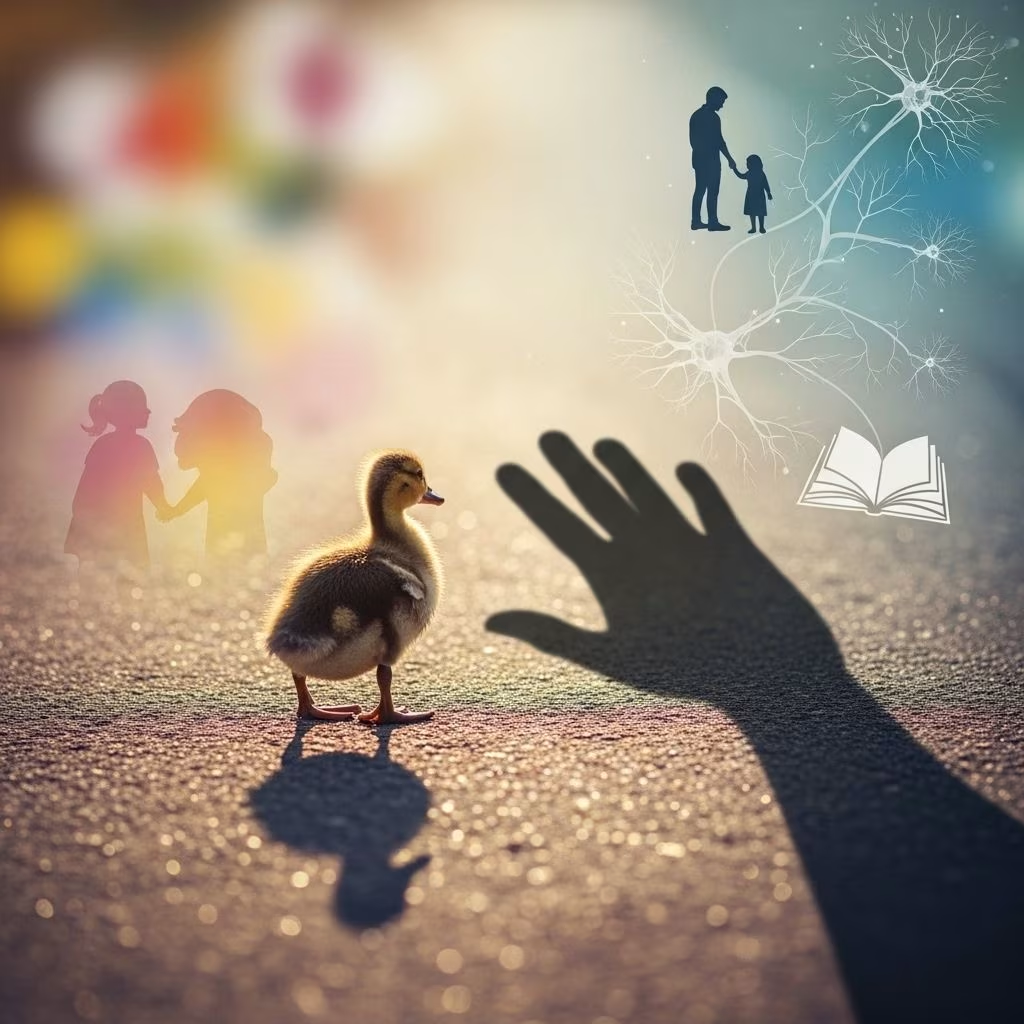
Imprinting in Psychology: How Early Experiences Shape Attachment and Behavior
Imprinting is a fundamental concept in psychology and ethology, describing a rapid and lasting form of learning that takes place during a distinct period early in life. This process, often associated with strong emotional bonds and behavioral patterns, has significant implications for developmental psychology, animal behavior, and how early experiences influence later relationships and habits.
What Is Imprinting?
In psychology and biology, imprinting is a phenomenon where an organism develops a strong connection or learns key characteristics about a person, object, or environment during a sensitive or critical period in early development. This connection, especially in animals, often dictates later behaviors, choices, and social attachments. Once formed, such behaviors are usually difficult or impossible to reverse.
- Imprinting is phase-specific learning, meaning it happens in a certain stage of development—usually soon after birth or hatching.
- It involves a critical period where the young organism is particularly receptive to certain stimuli.
- It results in long-term attachments or behavioral patterns essential for survival, social development, and reproduction.
The most commonly recognized type is when newly hatched animals, like ducklings, follow the first moving object they see—often their mother.
Key Characteristics of Imprinting
- Rapid learning: Imprinting occurs quickly within a narrow window of sensitivity.
- Irreversibility: Once imprinted, the behavior or bond tends to be long-lasting and resistant to change.
- Specificity: The process is usually targeted toward a particular individual or object.
- Biological necessity: In many species, imprinting promotes survival by ensuring proximity to caregivers or guidance in mate selection.
The History of Imprinting Research
While the concept can be traced back to early philosophical debates about memory, Konrad Lorenz, an Austrian zoologist, was instrumental in clarifying and demonstrating the mechanisms of imprinting in the 20th century. His studies laid the groundwork for our present understanding.
Konrad Lorenz and the Classic Goose Experiments
- Lorenz separated goose eggs into two groups. The first group hatched with their biological mother; the second hatched in an incubator and saw Lorenz first.
- The geese in the second group imprinted on Lorenz, following him everywhere as if he were their mother.
This research supported the idea that imprinting happens during a critical period and can have life-long repercussions on social and sexual behaviors.
Further Contributions and Theoretical Roots
- Lorenz coined the term imprinting to capture this instinct-driven learning process in young animals.
- Psychoanalysts like Freud speculated on how early experience could create permanent behavioral templates in the brain.
- Lorenz’s theory influenced how psychologists think about human attachment.
Types of Imprinting
Imprinting manifests in several primary forms, each with unique features and effects:
1. Filial Imprinting
- The most widely studied and recognized form.
- Common in birds (ducks, geese) and mammals (wolves), where the young form attachments and learn social cues from the caregiver—typically their mother.
- Filial imprinting ensures that the offspring remain close to their source of care, protection, and learning, crucial for survival.
Example: When goslings imprint on the first moving figure they see, they will follow it as if it were their parent—even if it is a human or another animal.
2. Sexual Imprinting
- Relates to mate selection later in life.
- Juveniles learn the traits of a suitable mate based on early social experiences, typically by observing parents or siblings.
- Serves an adaptive purpose, helping animals avoid inbreeding while still choosing genetically and socially appropriate partners.
Example: Animals prefer mates that resemble, but are not too genetically close to, their parents. This bias is thought to be influenced by early exposure to parental traits.
3. Limbic Imprinting
- Specifically involves the limbic system of the brain—key to memory, emotions, and behavior.
- Pertains primarily to mammals, including humans.
- Early emotional experiences—especially those around birth—are stored in deep memory, shaping later emotional regulation and reactions, even if they are not consciously remembered.
Example: The circumstances surrounding birth (e.g., trauma, calm, pain, comfort) may have a lasting, often unconscious, impact on a person’s emotional patterns in adulthood.
| Type of Imprinting | Key Features | Common Examples |
|---|---|---|
| Filial Imprinting | Attachment to first seen caregiver; ensures proximity and protection | Ducklings following their mother |
| Sexual Imprinting | Development of mate preference based on early exposure to parental traits | Birds choosing mates similar to parents |
| Limbic Imprinting | Emotional patterns formed by experiences around birth | Lasting effects on stress and relationships in humans |
When Does Imprinting Occur?
Imprinting occurs during an organism’s critical period—a biologically determined phase shortly after birth or hatching when the animal is most sensitive to environmental stimuli.
- For many birds, this window may be just a few hours long.
- For mammals, attachment-related imprinting can take place over several months.
Missing this opportunity can result in an absence or distortion of normal attachment and learning.
Imprinting in Human Development
Imprinting is most evident and easiest to study in animals, but psychological research suggests parallels in human emotional attachment and relationship formation:
- Babies show a strong, instinctive preference for caregivers, usually the mother, which shapes emotional security and future social relationships.
- Consistent, nurturing care during early months and years forms the foundation for emotional development, secure attachment, and healthy interpersonal functioning later in life.
- Disruptions or trauma during this period—such as prolonged separation from primary caregivers—can result in lasting difficulties in trust, self-regulation, and relationship building.
Some theorists suggest that limbic imprinting may even play a role in shaping personality traits, stress response, and emotional habits.
Examples of Imprinting
- Ducks and Geese: Follow the first moving object seen after hatching (often mother, but sometimes humans or other animals in experiments).
- Wolves: Learn complex social skills and pack behavior through filial imprinting with parents and pack members.
- Mate Choice in Birds: Avian imprinting guides future mate preferences to avoid close inbreeding, while retaining beneficial familial traits.
- Humans: Babies forming emotional attachments to caregivers, which influence later trust, attachment styles, and relationship patterns.
- Limbic System Effects: Birth experiences (soothing or traumatic) impacting future emotional resilience and stress management.
Why Is Imprinting Important?
Imprinting serves multiple crucial functions for both animals and humans:
- Ensures Survival: Immediate attachment to a caregiver guarantees protection, guidance, and food.
- Supports Learning: Early exposure to social and environmental cues builds foundational skills for life.
- Guides Reproduction: Sexual imprinting prevents inbreeding and reinforces selection of genetically suitable mates.
- Shapes Emotional Health: Early emotional experiences create a template for future stress response, emotional regulation, and social interaction.
Imprinting vs. Other Forms of Learning
While imprinting is a form of learning, it differs notably from other methods such as conditioning, habituation, and observational learning:
- Speed: Imprinting is rapid, typically requiring only a single exposure.
- Critical Period: Occurs during a short, specific developmental window.
- Irreversibility: Behaviors and emotional attachments acquired via imprinting are hard to alter, compared to habits or conditioned reflexes.
Contemporary Perspectives and Controversies
Although initially described as largely irreversible and strictly rooted in early life, some studies suggest a degree of flexibility—especially in humans, where later experiences can reshape or even override early imprints in certain contexts. However, critical periods for attachment and the impact of early relationships remain central in attachment theory and developmental psychology.
Frequently Asked Questions (FAQs)
Q: What is the critical period for imprinting, and why does it matter?
A: The critical period is a biologically determined window in early development when imprinting must occur. Missing this period means the typical attachment or learned behavior may not develop, potentially leading to lifelong social or emotional deficits.
Q: Is imprinting unique to birds and animals, or does it happen in humans too?
A: Imprinting is most vividly seen in birds and other animals but has strong parallels in humans, especially in the formation of early bonds between infants and caregivers during critical periods. This shapes later emotional and social functioning.
Q: Can people change or undo the effects of imprinting?
A: Classically, imprinting is considered largely irreversible. However, humans may sometimes compensate for or alter early imprints through therapy, continued new experiences, or supportive relationships, especially when intervention occurs early.
Q: How is imprinting different from attachment?
A: While closely related, imprinting refers specifically to the rapid, critical-period formation of a bond, typically in animals. Attachment, in humans, is a broader concept referring to the deep, enduring emotional bond that forms between a child and caregiver, usually over a longer time.
Q: What are consequences of disrupted or negative imprinting?
A: Disrupted, inconsistent, or traumatic early experiences may lead to difficulties in emotional regulation, trust, relationship forming, and overall psychological health later in life.
Summary Table: Key Insights Into Imprinting
| Aspect | Description |
|---|---|
| Definition | Rapid, irreversible learning during a critical period leading to lasting behavioral changes |
| Main Types | Filial (attachment to caregiver), Sexual (mate preference), Limbic (emotional memory) |
| Key Researcher | Konrad Lorenz |
| Significance | Drives social bonding, survival, reproductive behavior, and emotional health |
| Occurrence in Humans | Shapes early attachment, emotional habits, and future relationship patterns |
Key Takeaways
- Imprinting is a critical process in the behavioral and emotional development of many species, including humans.
- It highlights the lifelong impact of early experiences and the importance of sensitive caregiving during formative periods.
- Although some flexibility exists, especially in humans, early imprints frequently set the stage for future health, well-being, and relationship patterns.
- Understanding imprinting provides valuable insights for parenting, therapy, animal behavior research, and developmental psychology.
References
- https://en.wikipedia.org/wiki/Imprinting_(psychology)
- https://www.biologyonline.com/dictionary/imprinting
- https://www.betterhelp.com/advice/general/understanding-imprinting-psychology/
- https://study.com/academy/lesson/imprinting-in-psychology-definition-lesson-quiz.html
- https://newristics.com/heuristics-biases/imprinting
- https://www.youtube.com/watch?v=00JczViiaaU
- https://www.simplypsychology.org/konrad-lorenz.html
- https://www.ebsco.com/research-starters/psychology/imprinting


