


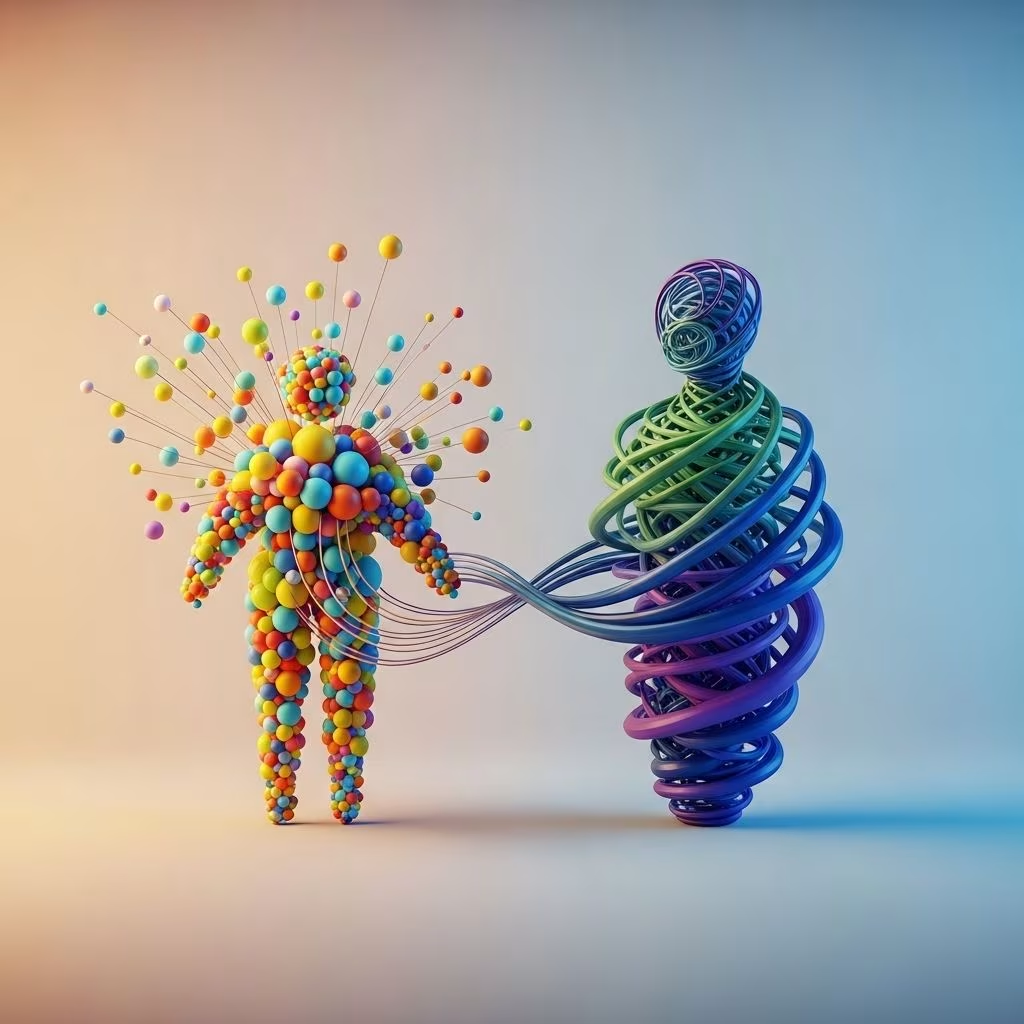
Questions about whether you are an introvert or an extrovert are common, but the concepts behind these terms are far richer than simple labels. By understanding the ways people gain energy, interact with the world, and prefer to socialize, you can better understand yourself—and others. In this article, we’ll explore the defining characteristics, differences, and nuances of introverts, extroverts, and ambiverts. We’ll cover the key traits, debunk myths, and offer ways to identify where you fall on the personality spectrum.
What Is an Introvert?
Introverts are individuals who generally feel most energized by spending time alone or in small, quiet settings. The concept was popularized by psychologist Carl Jung in the early 20th century, who described introverts as people who are “inward-turning” and find energy in their own inner world of thoughts and reflections.
- Prefer solitude or small gatherings
- Often thoughtful and reserved
- Recharge by spending time alone
- May find socializing draining after extended periods
- Tend to process ideas internally before sharing
Introverts are not necessarily shy or socially anxious; many enjoy social activities in moderation, especially with close friends. They just need alone time to recharge their mental energy and often enjoy solitary activities such as reading, writing, or exploring creative hobbies.
Signs You Might Be an Introvert
- Enjoy time alone and need it to recharge
- Have a small, tight-knit group of friends
- Prefer deep, meaningful conversations over small talk
- Find large groups or parties draining
- Process emotions and thoughts internally
- Value privacy and personal space
- Learn and reflect well through observation
What Is an Extrovert?
Extroverts, also spelled extraverts, are energized by interactions with others and the external world. First described by Jung alongside introversion, extroversion is characterized by sociability, enthusiasm, and a preference for group activities.
- Thrive on social interaction and lively environments
- Often talkative, expressive, and outgoing
- Get energy from being around others, new experiences, and group activities
- Process their thoughts and emotions externally—thinking out loud
- Are quick to take action and make decisions
Extroverts are often described as “people persons” who enjoy teamwork, group discussions, and the excitement of new situations. They may find alone time less stimulating or may feel restless if isolated for too long.
Signs You Might Be an Extrovert
- Feel energized and happier after socializing
- Enjoy working and playing in groups
- Comfortable being the center of attention
- Like lively, bustling environments
- Quick to share opinions and feelings
- Often spontaneous and action-oriented
- Prefer verbal communication to written communication
Key Differences Between Introverts and Extroverts
The distinction between introversion and extroversion is most evident in how people derive energy, interact with others, and process information. Importantly, these personality traits exist on a spectrum—most people are not purely introvert or extrovert, but fall somewhere in between.
| Trait | Introvert | Extrovert |
|---|---|---|
| Energy Source | Alone time, solitude | Being with others, social contact |
| Communication | Preference for listening, writing | Preference for speaking, thinking out loud |
| Social Preference | Small groups or one-on-one | Large groups, parties, new faces |
| Decision Making | Reflective, deliberate | Spontaneous, decisive |
| Reaction to Stimulation | Prefer low-stimulation environments | Enjoy high-stimulation environments |
| Work Style | Independent, focus on one task | Collaborative, multitasking |
| Risk-Taking | Cautious, measured | More likely to take risks |
| Processing | Internal, reflective | External, immediate feedback |
Misconceptions About Introverts and Extroverts
Myths about these personality types often lead to misunderstanding and unfair stereotypes.
- Introverts are not always shy. Shyness relates to social anxiety, while introversion is about energy and preference for low-stimulation environments.
- Extroverts aren’t always outgoing. Extroverts may enjoy socializing, but some can also experience social anxiety or be reserved in unfamiliar settings.
- Introverts can be leaders too. Leadership depends on many factors, and introverts often excel thanks to their thoughtfulness and ability to listen.
- No type is “better” than the other. Both bring valuable strengths to teams, families, and friendships.
It’s crucial to remember that introversion and extroversion are preferences, not abilities, and there is no right or wrong way to be.
What Is an Ambivert?
Many people don’t fit neatly into the categories of introvert or extrovert. Ambiverts demonstrate a blend of both sets of characteristics, adapting their behavior depending on the situation.
- Can feel energized by both solitude and social interaction
- Enjoy a balance of alone time and group activities
- Tend to be flexible and adaptable in varied situations
- Switch between introverted and extroverted behavior based on mood, context, or needs
Ambiversion may be the most common personality orientation, as many people demonstrate elements of both introversion and extroversion, depending on context and internal state.
Why Understanding Your Personality Type Matters
- Self-awareness: Knowing your type helps you respect your needs and make choices that fit your energy patterns.
- Better relationships: Understanding other people’s preferences helps foster empathy and effective communication.
- Work and productivity: Introverts may prefer quiet offices or remote work, while extroverts thrive in collaborative settings.
- Mental health: Awareness of your comfort zones and limits allows you to manage stress and avoid burnout.
Recognizing these traits can help you choose activities, jobs, and social dynamics that support your well-being and allow you to thrive.
Frequently Asked Questions (FAQs)
Q: Can introverts be outgoing or socially confident?
A: Yes. Being introverted doesn’t mean lacking social skills or confidence. Many introverts are friendly, articulate, and comfortable in public, but they still need solitude to recharge.
Q: Can extroverts enjoy alone time?
A: Absolutely. Extroverts may need solitude occasionally but typically don’t need as much of it to recharge as introverts.
Q: What determines if someone is an introvert, extrovert, or ambivert?
A: Genetics, upbringing, environment, and life experiences all play a role. Personality exists on a spectrum and most people exhibit a combination of traits.
Q: Is it possible to change from being introverted to extroverted (or vice versa)?
A: While core personality traits are fairly consistent over time, people can adapt and learn behaviors from the other end of the spectrum as needed for work or relationships.
Q: Do introverts and extroverts learn or work differently?
A: Yes. Introverts may prefer learning by reading and reflecting, while extroverts thrive in interactive, group-based settings. Both can succeed equally, but their paths to success may differ.
Tips for Thriving as an Introvert or Extrovert
- Introverts:
- Schedule regular alone time after social events
- Choose activities and work environments that allow for focus and quiet
- Communicate your needs to loved ones to avoid overwhelm
- Extroverts:
- Balance busy social calendars with short periods of downtime
- Engage in group activities and open discussions at work or home
- Be aware of others’ need for space
- Ambiverts:
- Notice what energizes you in different contexts and plan accordingly
- Embrace flexibility and use your adaptability to your advantage
- Set boundaries when you are stretched too far in either direction
Conclusion
Introversion, extroversion, and ambiversion are broad lenses for understanding human behavior, but no one is defined solely by these characteristics. Embracing your personality type and those of others can contribute to healthier relationships, better work habits, and greater self-acceptance. Regardless of where you fall on the spectrum, your unique way of experiencing the world offers valuable strengths worth celebrating.
References
- https://www.simplypsychology.org/introvert-extrovert.html
- https://www.goodrx.com/well-being/relationships/introvert-extrovert-key-differences
- https://www.choosingtherapy.com/introvert-vs-extrovert/
- https://en.wikipedia.org/wiki/Extraversion_and_introversion
- https://www.16personalities.com/articles/energy-introverted-vs-extraverted
- https://www.medparkhospital.com/en-US/lifestyles/introvert-vs-extrovert
- https://www.crystalknows.com/resource/introvert-vs-extrovert
- https://health.clevelandclinic.org/introvert-vs-extrovert


