


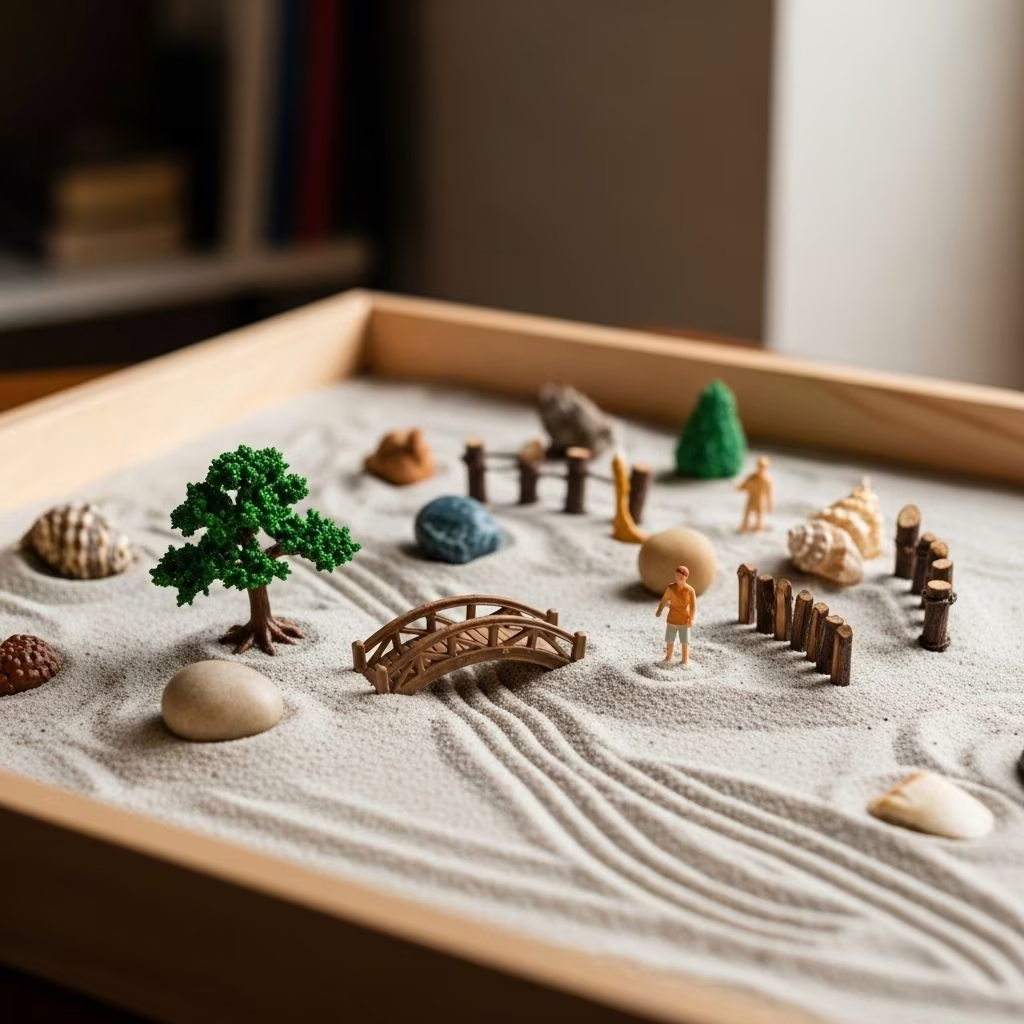
Sand tray therapy is a unique, hands-on form of psychotherapy that harnesses creative expression to help individuals, both children and adults, process emotions, heal psychological wounds, and communicate inner experiences. By allowing clients to build stories and worlds using miniature figures and sand, this expressive method creates both a safe space for nonverbal communication and a powerful avenue for personal growth. This article explores the essential aspects of sand tray therapy, including its methods, benefits, target populations, research behind its effectiveness, and frequently asked questions.
What Is Sand Tray Therapy?
Sand tray therapy is a form of expressive therapy in which individuals use a tray filled with sand and a collection of miniature figurines (such as people, animals, trees, buildings, and fantasy objects) to create scenes or stories that represent aspects of their internal world, feelings, or life experiences. The process is rooted in the idea that building these miniature worlds can help make the unconscious conscious, facilitate emotional healing, and give voice to experiences that might be difficult to articulate verbally.
- Also known as sandplay therapy or sand tray therapy.
- Can involve the use of dry sand, wet sand, or a combination.
- May be used on its own or as a complement to talk therapy.
Clients can express themselves by selecting, arranging, and manipulating figurines in the sand, supported by a trained therapist who provides a safe and nonjudgmental environment for exploration and reflection.
How Does Sand Tray Therapy Work?
The core process involves hands-on creation, allowing the client to visually and physically manifest their inner thoughts, memories, and feelings. This nonverbal approach can be especially effective for individuals who find traditional talk therapy challenging or overwhelming, such as children, trauma survivors, or people dealing with complex emotions.
- The therapist provides a shallow tray filled with sand.
- Clients have access to a diverse selection of miniatures representing real and imaginary elements (e.g., people, houses, animals, natural features).
- The client is encouraged to arrange these figures in the sand, constructing a scene or story that reflects their feelings, experiences, or aspects of their psychological landscape.
- The therapist may observe silently, facilitate by asking gentle questions, or simply offer support, depending on the approach.
This method allows feelings and inner conflicts to emerge in a tangible way, while the act of building, moving, and changing the scene helps foster insight, catharsis, and problem-solving.
Types of Approaches
- Directive Sand Tray Therapy: The therapist guides the session with specific themes or instructions, helping the client focus on certain issues or memories.
- Nondirective Sand Tray Therapy (typically called “sandplay”): The client leads the creation, choosing figures and stories freely, while the therapist provides a safe, open space for exploration. Interpretation often occurs after the creation is complete, if at all.
History and Theoretical Foundations
Sand tray therapy has roots in pioneering work by Dora Kalff and Margaret Lowenfeld, who developed the approach by building upon Carl Jung‘s analytical psychology. Their work emphasized the importance of play, symbolization, and the unconscious, positioning sand tray as a bridge between inner and outer experiences.
- Kalff blended Jungian ideas with Lowenfeld’s “World Technique,” emphasizing symbol creation and a holistic, client-centered perspective.
- Sand tray therapy continues to evolve, drawing upon techniques from humanistic, psychodynamic, cognitive-behavioral, and systemic traditions.
Who Can Benefit from Sand Tray Therapy?
Sand tray therapy is a flexible approach appropriate for a wide array of ages and psychological needs. Though especially popular with children, it has also demonstrated value for adolescents and adults facing varied challenges.
- Children: Struggling to verbalize emotions or experiences (e.g., trauma, grief, anxiety, behavioral issues, learning difficulties).
- Teens: Navigating identity, stress, peer relationships, or mental health challenges like depression and ADHD.
- Adults: Processing trauma, bereavement, addiction, relationship challenges, or personal growth.
- Families and Groups: Used for building communication, resolving conflict, and strengthening bonds.
- People with developmental challenges: Effective for individuals on the autism spectrum or with communication impairments.
Sand tray therapy is particularly appropriate for:
- Those who have experienced abuse, trauma, or neglect
- Individuals with anxiety, depression, or low self-esteem
- People coping with loss, grief, or major life transitions
- Clients facing learning or developmental disabilities
Benefits of Sand Tray Therapy
Research and clinical practice highlight a broad range of benefits for those who engage in sand tray therapy. These include:
- Reduction of anxiety and traumatic stress symptoms
- Increased resilience and self-esteem
- Nonverbal expression of feelings, helpful when words are insufficient
- Processing grief and loss in a gentle manner
- Enhanced creativity and imaginative play
- Sensory, calming, and grounding effects
- Effective in individual, group, and family settings
- Accessible to all ages and cultures
- Empowers clients to become “active agents” in their healing
Sand tray therapy can also support anger management, facilitate decision-making, and improve communication and emotional awareness.
Evidence and Effectiveness of Sand Tray Therapy
Over the past decades, multiple studies have assessed sand tray therapy’s impact across populations and mental health conditions, producing a growing evidence base:
- A 2017 study found sand tray therapy helps children who experience sexual trauma revisit and process memories safely, fostering empowerment and control.
- A 2021 study demonstrated that sand tray interventions minimize distress and boost self-expression in children with ADHD.
- Research from 2020 showed significant symptom reduction in adults with generalized anxiety disorder after a series of sand tray sessions.
- Overviews of numerous studies indicate improvements in self-esteem, resilience, and reductions in anxiety for both children and adults experiencing trauma, disabilities, or language barriers.
- Additional research highlights sand tray therapy’s role in helping cancer survivors, supporting substance abuse recovery, and facilitating healing in autistic individuals.
Overall, sand tray therapy is backed by evidence for its effectiveness with trauma, anxiety, behavioral challenges, bereavement, and more.
Sand Tray Therapy vs. Traditional Talk Therapy
| Sand Tray Therapy | Traditional Talk Therapy |
|---|---|
| Nonverbal, uses play and creative tools | Primarily verbal communication |
| Accessible for young children and those with speech/language barriers | Requires ability and willingness to articulate feelings |
| Engages sensory experience (touch, sight) | Focus on cognitive and emotional dialogue |
| Builds worlds/symbols to externalize inner experience | Discusses thoughts, beliefs, and emotions directly |
| Can stimulate unconscious processing and symbolic understanding | Primarily conscious awareness and insight |
What Does a Sand Tray Therapy Session Look Like?
The structure of sand tray therapy sessions may differ based on age, clinical needs, and the therapist’s style, but typically includes the following steps:
- Introduction and Orientation: The therapist explains the tools and process, ensuring the client feels comfortable and safe.
- Creation: The client selects miniatures and arranges them in the sand, building a scene or world.
- Observation: The therapist observes quietly or provides gentle support as the client constructs their story or scene.
- Discussion and Reflection: The client (if comfortable) discusses their creation. The therapist may ask open-ended questions or offer observations, facilitating deeper exploration.
- Closure: The scene may be dismantled by the client, or photographed for therapeutic progress over time.
Sessions are typically conducted in a quiet, private setting with a dedicated tray (usually blue or neutral in color), an assortment of miniatures representing a wide range of themes, and a supportive, nonjudgmental therapeutic relationship.
Common Techniques in Sand Tray Therapy
Sand tray therapy utilizes various techniques to draw out expression and facilitate insight. Some of the most common include:
- Thematic Prompting: The therapist provides a theme (e.g., “show me your family” or “create a safe place”) to guide the session.
- Free Play: The client creates any scene they like, with the therapist observing and reflecting nonjudgmentally.
- Symbolic Representation: Miniatures serve as metaphors or symbols for aspects of the client’s life, feelings, or relational patterns.
- Storytelling: Clients narrate the story of their sand creation, promoting narrative processing and integration.
- Role Reversal or Role Play: The client gives voice to selected figures, enhancing empathy, perspective-taking, and emotional processing.
Who Provides Sand Tray Therapy?
Sand tray therapy is conducted by licensed mental health professionals with specialized training in expressive or play therapy modalities. These may include psychologists, counselors, clinical social workers, play therapists, and occupational therapists with additional expertise in sand tray or sandplay techniques.
Potential Challenges and Considerations
- Not all clients are comfortable with nonverbal, creative approaches.
- The therapist-client relationship must be based on trust and respect.
- Cultural sensitivity is essential when working with symbols and figures.
- Requires space and resources (dedicated sand tray, large collection of miniatures).
Frequently Asked Questions (FAQs)
Q: Is sand tray therapy only for children?
A: No. While sand tray therapy is especially popular with children, it is used effectively for teens and adults as well, particularly when verbal expression is difficult or trauma is present.
Q: Can sand tray therapy be used alongside other therapies?
A: Yes. Sand tray therapy often complements talk therapy, cognitive-behavioral therapy, play therapy, and family or group counseling, providing an alternative means to access and address deep-seated emotions or experiences.
Q: Is sand tray therapy evidence-based?
A: Yes. Studies demonstrate that sand tray therapy is effective in reducing trauma, anxiety, behavioral issues, and improving self-esteem and emotional resilience in both children and adults.
Q: How many sessions are typically required?
A: The number of sessions varies depending on individual needs and goals. Some clients benefit from a few sessions, while others may attend over several months as part of a comprehensive treatment plan.
Q: What if I can’t express my feelings in words?
A: Sand tray therapy is ideal for those who struggle to verbalize emotions. The process allows clients to “show” rather than “tell,” using symbols and scenes to communicate complex inner experiences.
How to Get Started with Sand Tray Therapy
If you are interested in sand tray therapy, consider the following steps:
- Look for therapists with formal training in sand tray or play therapy.
- Discuss your goals and expectations with a prospective therapist to ensure a good fit.
- Be open to the process, even if it feels unfamiliar or “child-like” at first— the benefits often emerge through engagement and play.
Key Takeaways
- Sand tray therapy is a creative, evidence-based approach effective for a wide range of ages and psychological challenges.
- It offers a safe, nonverbal way for clients to process experiences, express emotions, and foster healing.
- Backed by research, sand tray therapy demonstrates positive impacts on trauma recovery, anxiety reduction, self-esteem, and emotional resilience.
- The flexibility and adaptability of sand tray therapy make it a valuable addition to the mental health field, supporting healing and growth for children, teens, and adults alike.
References
- https://www.healthline.com/health/mental-health/sand-tray-therapy
- https://www.medicalnewstoday.com/articles/sand-tray-therapy-definition-uses-and-techniques
- https://www.goodtherapy.org/learn-about-therapy/types/sand-tray-sand-play-therapy
- https://psychcentral.com/health/sand-tray-therapy
- https://www.platfformwellbeing.com/blog/what-is-sand-tray-therapy-and-how-does-it-work/
- https://www.psychologytoday.com/us/therapy-types/sandplay-therapy
- https://agentsofchangeprep.com/blog/what-is-sand-tray-therapy/


