


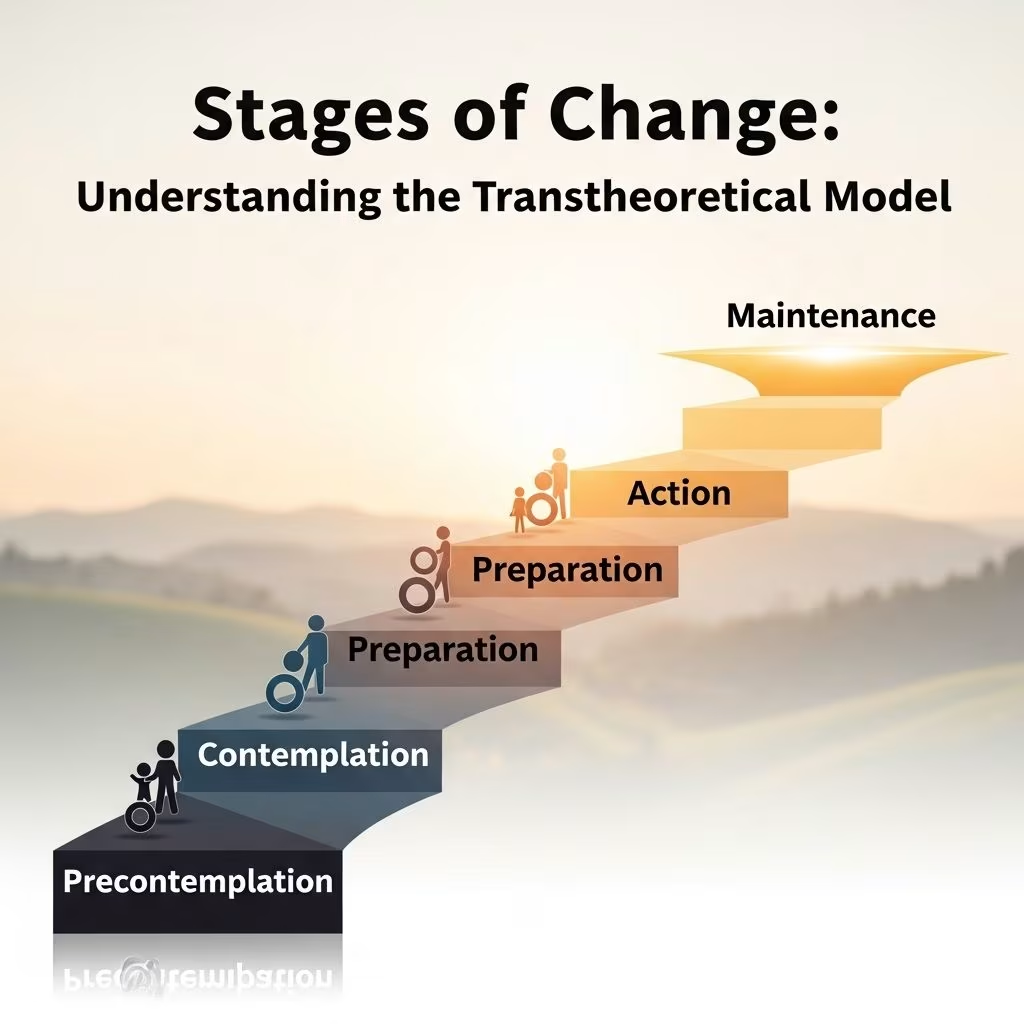
The Stages of Change: Understanding the Transtheoretical Model
Human behavior rarely changes overnight. Whether quitting smoking, embracing a healthier lifestyle, or breaking unhelpful habits, transformation is usually a gradual process. The Stages of Change Model, formally known as the Transtheoretical Model (TTM), offers a roadmap for how people modify problematic behaviors and commit to lasting change. Developed by psychologists Carlo C. DiClemente and James O. Prochaska in the late 1970s, the model suggests that individuals progress through a series of stages in their journey toward healthier habits.1,2
What Is the Transtheoretical Model?
The Transtheoretical Model (TTM) provides a framework for understanding an individual’s readiness and motivation to change. Originally designed for smoking cessation, it is now widely used in mental health counseling, addiction recovery, health promotion, and personal development.2,3
- Emphasizes that change is a process, not a single event
- Recognizes that relapse is a normal part of the journey
- Encourages customized interventions based on the individual’s current stage
The Six Stages of Change
The model identifies six stages that people transition through on their path to behavioral change. Understanding each stage can help individuals and professionals tailor their approach and support effective progress.2,6
1. Precontemplation
In the precontemplation stage, individuals “are not even considering change”. They may be unaware that their behavior is problematic or may be demoralized by past failed attempts. People in this stage often do not intend to take action in the foreseeable future (usually within the next six months).1,2,3
- May feel avoidance, denial, or resistance to discussing change
- Often defend their current behavior or underestimate its negative impacts
- Typical thoughts: “I don’t need to change,” “It’s not a problem,” or “Change is impossible for me”
Key strategies: Gentle feedback, increasing awareness of risks, and helping individuals see how their behavior affects themselves and others can be useful. Encouragement without pressure is crucial.
2. Contemplation
The contemplation stage is marked by ambivalence. Individuals have become aware that a problem exists and are seriously thinking about overcoming it but have not yet committed to action. They intend to change in the next six months but may still weigh the pros and cons.1,2,3
- Acknowledge the need for change yet feel anxious or uncertain
- Can remain in this stage for months or even years
- Typical thoughts: “Maybe I should change, but it will be hard,” or “What if I try and fail?”
Key strategies: Motivational interviewing, discussing both benefits of change and costs of staying the same, addressing fears, and helping set small, attainable goals.
3. Preparation
During the preparation stage (or determination), individuals are ready to take action soon—often within the next month. They may have already taken small steps, such as researching strategies or talking to friends and family about making a change.1,2,3
- Develop action plans and set a start date
- Gather resources and support systems
- Typical thoughts: “I’m ready to do this,” or “What can I do to increase my chances of success?”
Key strategies: Encourage concrete planning, setting achievable targets, and identifying potential roadblocks with solutions.
4. Action
The action stage involves actively changing behaviors and adopting new, healthier habits. This stage typically lasts up to six months, during which the individual is most visible in their efforts to change.2,3
- Make observable changes: quitting smoking, starting exercise, or changing diet
- May seek additional support, reward progress, and confront setbacks
- Typical thoughts: “I am doing this,” or “I must keep going, even when it’s hard”
Key strategies: Reinforcement, praise, social support, and reminders of progress and goals increase the likelihood of perseverance.
5. Maintenance
In the maintenance stage, the focus is on sustaining the newly adopted behavior and preventing relapse. Individuals have successfully changed their behavior for at least six months and are working to solidify these gains.1,2,3
- Develop coping strategies to deal with temptations or high-risk situations
- Remain vigilant, as old habits may occasionally resurface
- Typical thoughts: “I’ve kept this up for a while, but I need to stay alert,” or “This is part of who I am now”
Key strategies: Ongoing encouragement, peer support, and celebrating milestones help maintain positive changes.
6. Termination
In the termination stage, individuals have no desire to return to their old behaviors and are confident they will not relapse. Not everyone will reach this stage; many maintain changes for years, but remain vigilant to avoid setbacks.2
- Zero temptation to return to previous habits
- Behavior change feels completely ingrained
- Typical thoughts: “I can’t imagine going back,” or “I have truly changed”
Key strategies: Continued self-monitoring and support if desired, but little intervention is usually needed.
Relapse: A Possible Part of the Journey
Relapse, or temporarily slipping back into old behaviors, is not considered a formal stage in the TTM, but is a common part of the change process. Many people cycle through the stages multiple times before achieving lasting change.2,3
- Normalizes setbacks as learning opportunities rather than failures
- Encourages reflection on triggers, patterns, and new strategies
- Promotes re-engagement in the process of change
Processes of Change: How People Move Forward
Progress through the stages is supported by processes of change—the specific activities and strategies people use to move from one stage to the next.2 These include:
- Consciousness-raising: Learning new information related to the behavior and its effects.
- Dramatic relief: Experiencing and expressing emotional responses about potential change.
- Self-reevaluation: Exploring how the behavior conflicts or aligns with personal values.
- Environmental reevaluation: Becoming aware of how behavior impacts others.
- Social liberation: Recognizing changes in social norms supporting healthy behaviors.
- Self-liberation: Building belief in the ability to change and committing to action.
- Helping relationships: Seeking encouragement and assistance.
- Counterconditioning: Replacing unhealthy behaviors with healthier alternatives.
- Reinforcement management: Using rewards to reinforce new behaviors.
- Stimulus control: Managing environmental cues and triggers to promote healthy choices.
Key Elements Influencing Change
For effective, lasting transformation, several psychological elements are crucial in supporting an individual’s journey:
- Decisional balance: Weighing the advantages and disadvantages of changing versus not changing.
- Self-efficacy: Building confidence in one’s ability to change, even when encountering roadblocks or temptations.
- Customization of intervention: Adapting support and recommendations to match the individual’s current stage.
| Stage | Description | Focus | Common Strategies |
|---|---|---|---|
| Precontemplation | No intention to change; unaware or resistant | Increase awareness | Gentle feedback, education |
| Contemplation | Recognizes problem, ambivalent | Resolve ambivalence | Motivational interviewing, discuss pros and cons |
| Preparation | Ready to change, planning | Create action plan | Goal setting, identify resources |
| Action | Making observable change | Implement new behaviors | Support, reinforcement |
| Maintenance | Sustaining change, preventing relapse | Long-term commitment | Coping strategies, ongoing support |
| Termination | No temptation to return to old habits | Complete confidence in change | Celebrate success, minimal intervention |
Applications of the Stages of Change Model
The Transtheoretical Model has broad utility across various contexts due to its stagewise perspective:
- Addiction treatment (smoking, alcohol, drugs)
- Health promotion (exercise, diet, preventive care)
- Chronic disease management
- Mental health interventions (anxiety, depression, stress)
- Behavioral coaching and life counseling
Professionals use the model to assess client readiness, tailor interventions, and maintain realistic expectations about the pace and nature of change.1,2,3
Challenges and Limitations
- Nonlinearity: Individuals may move back and forth through the stages before solidifying change.
- Stage definitions can be subjective, and not all people will fit neatly into a given stage at a particular time.
- Some critique that labeling change by stages may not improve predictive outcomes over simpler models, though matching interventions to stage often increases effectiveness.2
Frequently Asked Questions (FAQs)
Q: What behaviors can the Stages of Change be used for?
A: The model is useful for understanding change related to addictions (like smoking or alcohol), health behaviors (such as exercise or healthy eating), mental health, and many other personal goals.
Q: How long does it take to move through the stages?
A: There is no fixed timeline. Some people progress quickly, while others may spend months or years in certain stages, or cycle through stages more than once.
Q: Is relapse a failure?
A: No, relapse is a common and expected part of the change process. It is an opportunity to identify what led to the setback and make new plans to re-engage with change.
Q: Do everyone reach the termination stage?
A: Not always. Many individuals remain in the maintenance stage for extended periods; for some, ongoing vigilance is needed to prevent relapse.
Q: How can someone support a friend or loved one at any stage?
A: Offer unconditional support, avoid judgment, match the support to their readiness, and encourage professional help if needed.
Key Takeaways
- The Stages of Change Model shows that lasting change is a process, not a one-time event.
- Each stage requires specific strategies and types of support.
- Understanding where you or someone else is in the process is vital for realistic progress and self-compassion.
No matter where you find yourself or those around you, recognizing and honoring each stage of change can facilitate healthier outcomes, deeper self-awareness, and more effective personal growth.
References
- https://study.com/learn/lesson/5-stages-of-change-model-overview-steps-examples.html
- https://en.wikipedia.org/wiki/Transtheoretical_model
- https://online.yu.edu/wurzweiler/blog/prochaska-and-diclementes-stages-of-change-model-for-social-workers
- https://www.ncbi.nlm.nih.gov/books/NBK556005/
- https://www.relias.com/blog/the-stages-of-change-model-and-how-to-implement-it
- https://www.psychologytoday.com/us/blog/understanding-addiction/202110/understanding-the-process-change
- https://positivepsychology.com/stages-of-change-worksheets/
- https://pubmed.ncbi.nlm.nih.gov/10170434/


