


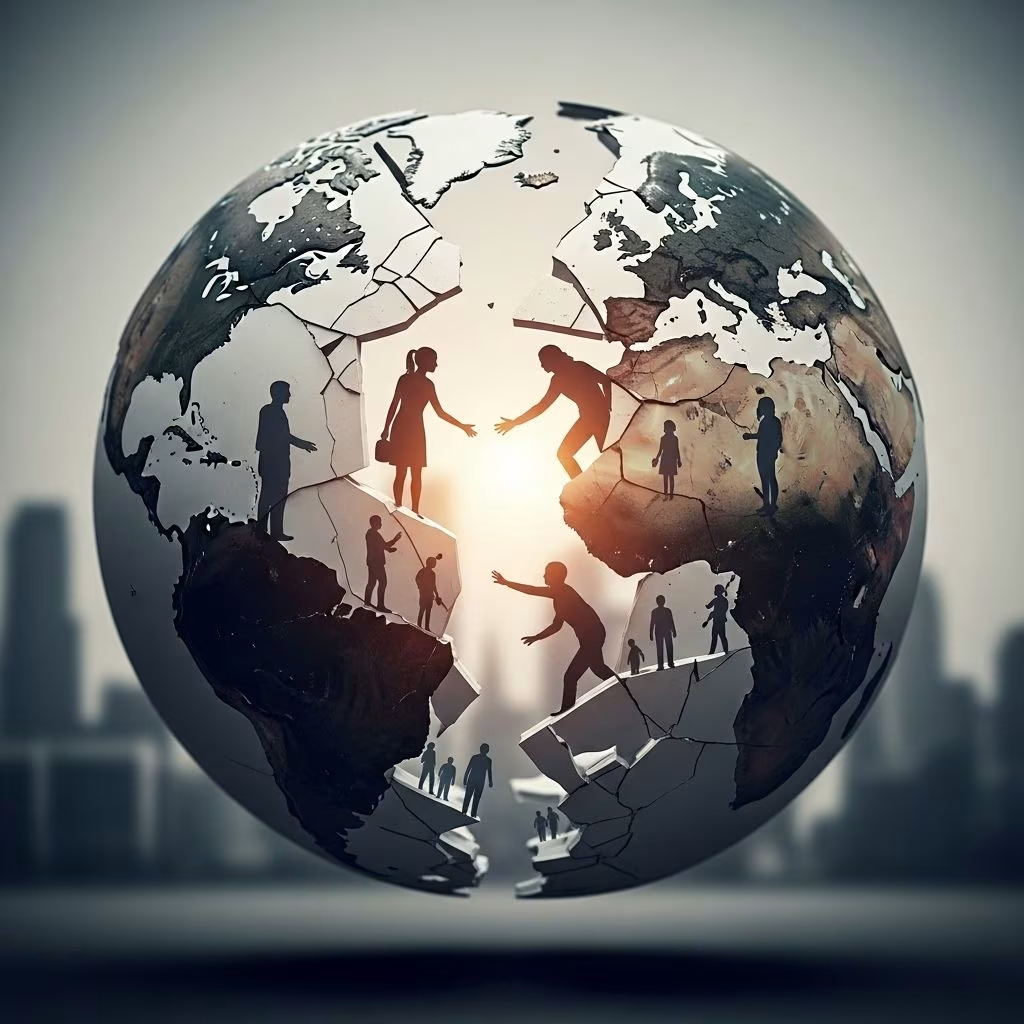
Prejudice is a deeply rooted social and psychological phenomenon that can have far-reaching consequences for individuals and society at large. It shapes perceptions, influences behaviors, and often leads to discrimination, undermining the principles of equality and fairness. This comprehensive overview explains what prejudice is, how it develops, the various forms it takes, its impacts, and evidence-based strategies to combat and reduce prejudice and bias in everyday life.
What Is Prejudice?
Prejudice is defined as a preconceived opinion or feeling, often negative and not based on actual experience or objective evidence, directed toward an individual or group because of perceived characteristics such as race, gender, religion, or age. Prejudices are typically learned and perpetuated through socialization, cultural influences, and personal experiences.
- Cognitive Component: Beliefs or thoughts about a group, often based on stereotypes.
- Affective Component: Emotional responses, such as dislike or fear.
- Behavioral Component: Inclinations to act in certain ways, which can result in discrimination.
Prejudice can be conscious (explicit) or unconscious (implicit). Explicit prejudice is easy to identify and report, while implicit prejudices often operate below awareness, influencing actions without deliberate intention.
Prejudice, Stereotypes, and Discrimination
| Concept | Definition | Example |
|---|---|---|
| Stereotypes | Oversimplified and generalized beliefs about a group based on limited information. | Believing all elderly people are frail. |
| Prejudice | Unjustified negative (or positive) attitudes and emotions toward a group or individual. | Disliking someone because they belong to a particular ethnicity. |
| Discrimination | Behavior that treats people unequally based on their group membership. | Refusing to hire someone due to their race or gender. |
Stereotypes often provide the cognitive framework for prejudice but may or may not lead directly to discriminatory behaviors. Prejudice provides the emotional charge, and discrimination is the behavioral outcome.
Causes of Prejudice
Prejudice develops through a complex interplay of psychological and social factors. Some major causes include:
- Socialization: Family, peers, media, and cultural norms teach prejudiced attitudes and stereotypes, especially from a young age.
- Categorization: The human brain’s tendency to organize individuals into groups leads to an “us vs. them” mentality, often resulting in bias.
- Competition and Threat: Groups viewed as competitors for resources or power are more likely to be targets of prejudice.
- Familiarity and Exposure: Limited exposure to diverse groups increases the likelihood of relying on stereotypes, often fostering fear or mistrust.
- Implicit Bias: Unconscious associations and automatic preferences shape how people perceive and interact with others, frequently contrary to their stated values.
Research consistently finds that everyone possesses some form of bias, even if they strive for fairness. These biases, especially when implicit, influence perceptions and actions often without conscious intention.
The Role of Implicit Bias
Implicit biases are attitudes or stereotypes that affect understanding, actions, and decisions in an unconscious manner. These can be identified and measured using tools such as the Implicit Association Test (IAT). While explicit prejudice may be on the decline, implicit bias remains widely prevalent and is more challenging to address because people may not be aware of its effects on their behavior.
Types of Prejudice
Prejudice can appear in countless forms, depending on the group or characteristic involved. Some common types include:
- Racial Prejudice: Negative attitudes toward individuals or groups because of their race or ethnicity.
- Gender Prejudice: Bias against people based on gender, often resulting in sexism or the belief that one gender is superior to another.
- Religious Prejudice: Hostility towards individuals because of their religious beliefs or practices.
- Ageism: Discrimination and stereotypes based on age, targeting both young and old.
- Sexual Orientation Prejudice: Negative attitudes directed at people because of their sexual orientation (homophobia, heterosexism).
- Disability Prejudice: Bias and negative treatment of individuals with physical, mental, or developmental disabilities.
Examples of Prejudice and Discrimination
Prejudice can manifest in a wide variety of contexts and sometimes leads to active discrimination:
- Workplace bias: Qualified candidates are overlooked due to their race or gender.
- Healthcare disparities: Unequal access to medical care or treatment based on ethnicity or income.
- Social exclusion: Individuals are isolated or mistreated because of their religion, disability, or sexual orientation.
- Education: Underrepresentation and stereotyping of certain groups (e.g., minorities, women in STEM).
- Legal system: Disproportionate sentences or treatment based on race in the criminal justice system.
Effects of Prejudice
The impacts of prejudice can be devastating, affecting both targets and perpetrators.
- Emotional Distress: Recipients of prejudice often experience anxiety, depression, or low self-esteem.
- Social Harm: Prejudice erodes social cohesion, leading to division and distrust between groups.
- Economic Inequality: Discrimination can inhibit access to jobs, education, and resources.
- Physical Health Effects: Chronic stress from prejudice may cause health problems, including hypertension and decreased immune function.
- Legal and Systemic Issues: Biases contribute to inequities in law enforcement, sentencing, and civil rights protections.
How to Reduce Prejudice
Reducing prejudice requires intentional effort, education, and social change. The following strategies have been shown to be effective in decreasing prejudice and bias:
- Individual Reflection: Examine personal attitudes and behaviors for signs of bias or stereotypes. Self-awareness is key.
- Perspective-Taking: Try to view situations from the vantage point of others, fostering empathy and understanding.
- Exposure and Contact: Increase opportunities for positive interactions with diverse groups, which can decrease fear and misinformation.
- Education and Training: Seek out resources on cultural competency, anti-bias training, and inclusive practices.
- Speaking Out: Challenge discriminatory language and behavior in social and professional settings.
- Mindfulness: Practice awareness of thoughts and reactions; meditation and focused breathing can help disrupt automatic biased responses.
- Conscious Stereotype Change: If you recognize a response to a person rooted in stereotypes, consciously adjust your viewpoint.
- Community Engagement: Attend events or participate in groups that encourage diversity and inclusion.
Strategies to Address Implicit Bias
- Pause and reflect before making decisions, especially those involving people from diverse backgrounds.
- Focus on seeing people as individuals rather than representatives of a group.
- Increase exposure to diverse perspectives through reading, discussion, or participation in multicultural activities.
- Use mindfulness techniques to become more aware of automatic assumptions.
Frequently Asked Questions (FAQs)
What is the difference between prejudice and discrimination?
Prejudice is an internal attitude or feeling about a group, while discrimination is the external behavior that results from those attitudes. For instance, holding negative beliefs about a minority group is prejudice, but refusing to hire someone from that group is discrimination.
Are stereotypes always negative?
Not all stereotypes are negative, but they are always oversimplified and generalized. Even positive stereotypes (e.g., “Asians are good at math”) can be harmful by limiting individual potential and perpetuating rigid expectations.
How do implicit biases differ from explicit biases?
Implicit biases are unconscious, automatic associations that influence attitudes and behaviors, whereas explicit biases are conscious and deliberate. Explicit prejudice is easier to recognize and control, while implicit bias requires self-reflection and intentional change.
Can prejudice be unlearned?
Yes. Research shows that with targeted interventions such as education, exposure, and intentional reflection, implicit and explicit prejudices can be reduced over time.
Does everyone have biases?
Everyone has some degree of bias, due to the brain’s natural tendency to categorize. The key is to recognize these biases and actively work to counteract them.
Summary Table: Key Stats and Concepts
| Concept | Explanation | Reduction Strategies |
|---|---|---|
| Prejudice | Unjustified negative feeling or attitude toward a group | Reflection, education, community engagement |
| Implicit Bias | Unconscious prejudice and automatic stereotyping | Mindfulness, exposure, perspective-taking |
| Discrimination | Acts of treating people unequally based on group membership | Speaking out, legal protections, policy reforms |
| Stereotypes | Generalized beliefs about a group | Conscious stereotype change, seeking diverse viewpoints |
Conclusion: Building a Society Beyond Prejudice
Prejudice is not just a personal failing or an occasional error; it is a widespread and persistent social issue. Its effects are felt across domains as diverse as employment, education, law, and healthcare, making its reduction a critical component of social progress. Tackling prejudice demands self-awareness, empathy, deliberate exposure to diversity, and advocacy for inclusive policies. By understanding the roots and mechanisms of bias, individuals and communities can actively work to build a more fair and compassionate society.
References
- https://thedecisionlab.com/reference-guide/psychology/prejudice
- https://www.ebsco.com/research-starters/psychology/prejudice-reduction-research
- https://www.simplypsychology.org/prejudice.html
- https://www.youtube.com/watch?v=6Hr2XpBc_B4
- https://ocfcpacourts.us/wp-content/uploads/2022/02/1.-How-Does-Implicit-Bias-Influence-Behavior.-Explanations-and-Impacts-of-Unconscious-Bias.-new.pdf
- https://www.britannica.com/topic/prejudice
- https://ejournal.ump.ac.id/rissej/article/view/130
- https://developdiverse.com/deib_dictionary/prejudice/


