


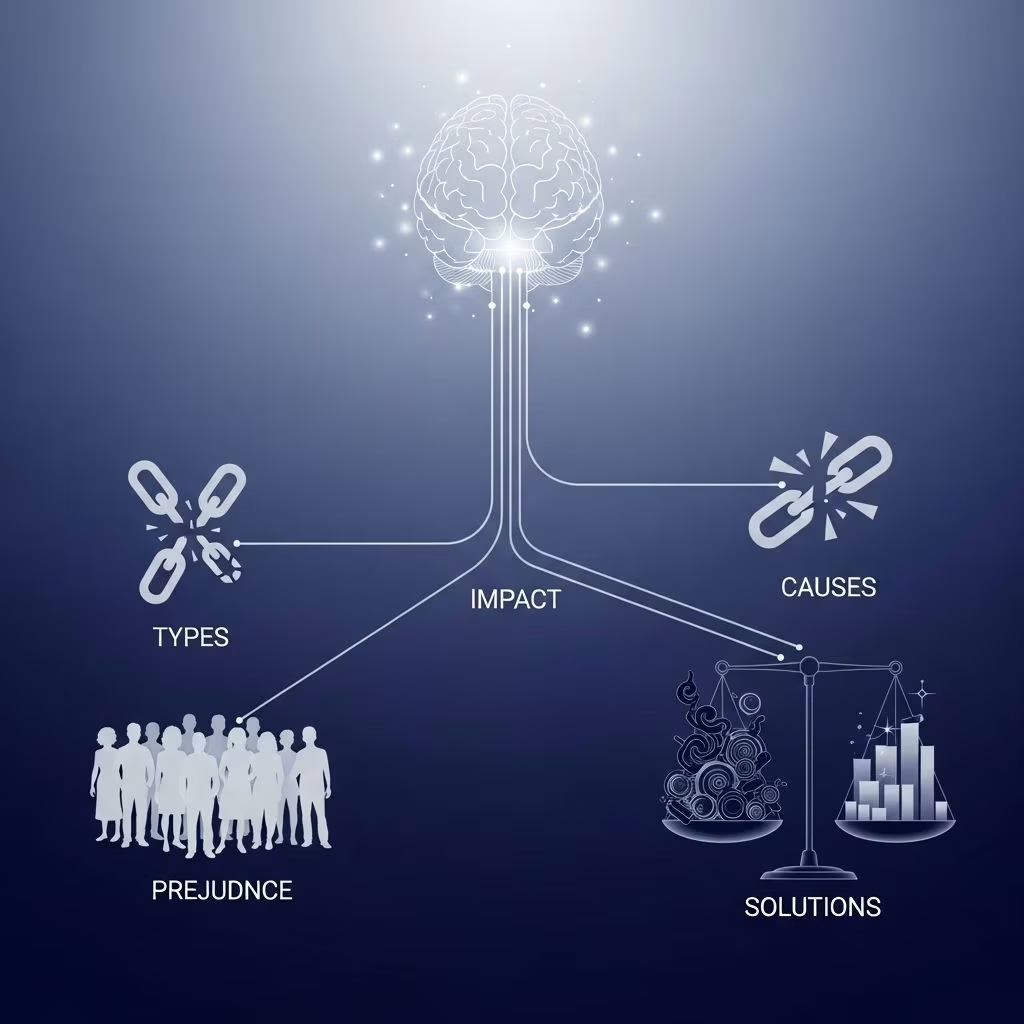
Prejudice is a pervasive issue that affects individuals and societies worldwide. It not only informs the way we think and feel about others but also deeply influences our behaviors, policies, and social dynamics. To create a more inclusive and just world, it’s essential to understand what prejudice is, how it develops, the different types it takes, its far-reaching impacts, and strategies for promoting change.
What Is Prejudice?
Prejudice is an unjustified or incorrect attitude (usually negative) toward an individual based solely on the individual’s membership of a social group. That attitude can be based on factors like race, ethnicity, religion, gender, sexual orientation, age, or disability. The word itself comes from the Latin prejudicium, meaning “pre-judgment.” In psychology, prejudice typically refers to pre-conceived opinions that are not rooted in actual experience or rational argument.
- Affective (Emotional) Component: The feelings or emotions attributed to a group.
- Cognitive Component: The beliefs or thoughts (often stereotypes) associated with a group.
- Behavioral Component: The tendencies to act in a certain way toward members of that group.
Signs and Expressions of Prejudice
Prejudice can be expressed in several ways, both consciously and unconsciously (explicit and implicit):
- Negative judgments about someone’s character, capabilities, or worth based on group identity.
- Hostile or dismissive emotional reactions to people in certain groups.
- Unfair treatment (discrimination), such as exclusion from opportunities or resources.
- Differential application of rules or expectations.
- Stereotype-based assumptions, language, or humor.
Prejudice vs. Discrimination vs. Stereotypes
| Term | Definition | Example |
|---|---|---|
| Stereotype | Generalized belief about a group (cognitive) | “All elderly people are bad drivers.” |
| Prejudice | Negative or positive attitude about a group (affective) | Feeling uncomfortable around elderly drivers. |
| Discrimination | Actions or behaviors based on prejudice | Refusing to allow an elderly person to join a driving club. |
Prejudice is the feeling or attitude, stereotypes are oversimplified ideas or beliefs, and discrimination is the behavior that emerges from these attitudes and beliefs.
How Prejudice Develops
Prejudice does not arise in a vacuum. Several psychological, social, and cultural forces combine to shape and perpetuate these attitudes:
- Social Learning: Children and adults acquire prejudiced attitudes from family, peers, media, and culture through observation and reinforcement.
- Grouping and Categorization: The human brain naturally categorizes people into in-groups (us) and out-groups (them), which can foster favoritism and bias.
- Stereotyping: Stereotypes simplify social reality but can distort perception, leading to misjudgment and unfairness.
- Intergroup Competition: Perceived competition for resources can heighten prejudice, as individuals may devalue rival groups.
- Ignorance and Fear: Lack of exposure and understanding to different groups can breed suspicion, misinformation, and negative assumptions.
- Cognitive Biases: Confirmation bias, the tendency to seek evidence that supports our existing beliefs, can reinforce prejudiced attitudes.
Key Theories on Prejudice Formation
- Social Identity Theory: Suggests that people enhance their self-esteem by identifying with certain groups, which can foster in-group favoritism and out-group hostility.
- Realistic Conflict Theory: Argues that competition over scarce resources leads to intergroup hostility and prejudice.
- Scapegoat Theory: Proposes that frustration and insecurity can lead to projecting blame onto less powerful groups.
- Authoritarian Personality Theory: Attributes prejudice to deep-set personality traits rooted in upbringing and worldview, particularly among those who value order and dominance.
Types of Prejudice
Prejudice can be based on a wide variety of personal or group characteristics. Some of the most common forms include:
- Racial Prejudice: Negative attitudes or beliefs about people based on perceived racial differences.
- Sexism: Prejudice or discrimination based on a person’s sex or gender.
- Ageism: Bias against people because of their age, particularly towards the young or old.
- Religious Prejudice: Hostility or bias based on religious beliefs or affiliations.
- Sexual Orientation Prejudice: Negative attitudes toward individuals based on their sexual orientation (homophobia, transphobia).
- Disability Prejudice: Discrimination or derogatory attitudes toward people with physical or mental disabilities.
- Classism: Negative beliefs about individuals based on their social or economic class.
Other less discussed forms include discrimination based on language, appearance, or political affiliation.
Examples of Prejudice
- Refusing to hire someone solely on the basis of their ethnicity or gender, regardless of qualifications.
- A landlord declining to rent to a person because of their religion.
- Assuming women are less competent in leadership roles.
- Not providing accessible facilities or opportunities for people with disabilities.
- Believing younger or older individuals are not capable of performing certain jobs.
- Mistreating or excluding classmates, coworkers, or neighbors based on their sexual orientation.
Implicit vs. Explicit Prejudice
Prejudice is not always overt or intentional. It can be explicit (conscious and openly expressed) or implicit (unconscious and automatic):
- Explicit Prejudice: Conscious negative attitudes, which the individual is aware of and can openly express.
- Implicit Prejudice: Unconscious biases that subtly influence judgment and behavior, often contrary to personal or social values.
Implicit prejudice can persist even among people who are committed to egalitarian beliefs. Tools like the Implicit Association Test (IAT) are used in psychological research to uncover unrecognized prejudices.
The Impact of Prejudice
Prejudice has profound and far-reaching effects at both individual and societal levels.
Effects on Individuals
- Psychological Distress: Victims of prejudice may experience anxiety, depression, low self-esteem, and a sense of alienation.
- Reduced Opportunities: Housing, education, healthcare, and career advancements can be significantly limited due to biased treatment.
- Health Disparities: Prejudice and discrimination are associated with chronic stress, which can negatively affect physical health.
Effects on Society
- Social Division: Groups may become isolated, leading to mistrust and weakened social cohesion.
- Inequality: Systemic prejudice results in unequal outcomes in employment, housing, education, and justice.
- Perpetuation of Stereotypes: Ongoing prejudice sustains harmful stereotypes and cyclical disadvantage.
- Economic Costs: Discrimination reduces productivity, innovation, and the social benefits of diversity.
Prejudice in Everyday Life: Case Studies
- Employment: Studies show identical résumés are evaluated differently based solely on the perceived race or gender of the applicant.
- Healthcare: Implicit bias among medical professionals can contribute to disparities in treatment for minorities and women.
- Legal System: Research demonstrates that implicit and explicit biases can impact verdicts, policing, sentencing, and jury selection, often to the detriment of marginalized groups.
- Education: Teachers’ expectations based on stereotypes can affect student performance and self-belief.
How to Reduce Prejudice
While prejudice is widespread, it is not immutable. Both individuals and communities can take proactive steps to challenge and change prejudiced attitudes.
Strategies for Individuals
- Self-Reflection: Regularly examine your own biases and assumptions.
- Seek Out Diversity: Engage meaningfully with people from different backgrounds to challenge stereotypes and broaden perspectives.
- Practice Perspective-Taking: Intentionally put yourself in others’ shoes to cultivate empathy and understanding.
- Confront and Interrupt Bias: Speak up when you witness prejudice or discrimination, even if it feels uncomfortable.
- Mindfulness Practices: Techniques like meditation and focused breathing can help raise awareness of automatic thoughts and reactions.
Strategies for Communities and Organizations
- Education and Training: Implement bias and diversity training in workplaces, schools, and public sectors.
- Promote Inclusive Policies: Develop institutional policies that reduce systemic barriers and advance equity.
- Encourage Cross-Group Interaction: Create opportunities for positive, cooperative engagement between diverse groups.
- Challenge Stereotype-Driven Narratives: Promote diverse role models and counter examples through media, education, and public discourse.
Frequently Asked Questions (FAQs)
Q: What is the difference between prejudice and discrimination?
A: Prejudice refers to negative attitudes or feelings toward a group, while discrimination involves acting on those prejudices by treating members of that group unfairly.
Q: Why does prejudice exist?
A: Prejudice exists as a result of socialization, cognitive processes like categorization, intergroup competition, cultural narratives, and unexamined biases learned from family, media, and institutions.
Q: How can someone recognize their own hidden biases?
A: Tools like the Implicit Association Test (IAT), as well as mindful reflection, feedback from diverse peers, and exposure to counter-stereotypical information, can help make hidden biases conscious.
Q: Are all stereotypes and prejudices negative?
A: While many are negative or harmful, some stereotypes are seemingly positive (e.g., “Asians are good at math”) but can still lead to pressure, marginalization, or unfair expectations.
Q: Is it possible to be completely free from prejudice?
A: Due to the way the human mind categorizes and processes information, some bias is inevitable. However, individuals can strive for awareness and take steps to reduce the impact of their biases on behavior and decision-making.
Key Takeaways
- Prejudice is a learned, unjustified, and negative attitude toward members of a social group.
- It manifests through stereotypes (beliefs), prejudice (attitudes), and discrimination (behaviors).
- Prejudice harms individuals and society by perpetuating inequality, exclusion, and conflict.
- It can be explicit (conscious) or implicit (unconscious).
- Individual self-reflection, diverse community engagement, and systemic change are crucial for reducing prejudice and building more equitable societies.
References
- https://thedecisionlab.com/reference-guide/psychology/prejudice
- https://www.ebsco.com/research-starters/psychology/prejudice-reduction-research
- https://www.simplypsychology.org/prejudice.html
- https://www.youtube.com/watch?v=6Hr2XpBc_B4
- https://ocfcpacourts.us/wp-content/uploads/2022/02/1.-How-Does-Implicit-Bias-Influence-Behavior.-Explanations-and-Impacts-of-Unconscious-Bias.-new.pdf
- https://www.britannica.com/topic/prejudice
- https://ejournal.ump.ac.id/rissej/article/view/130


