


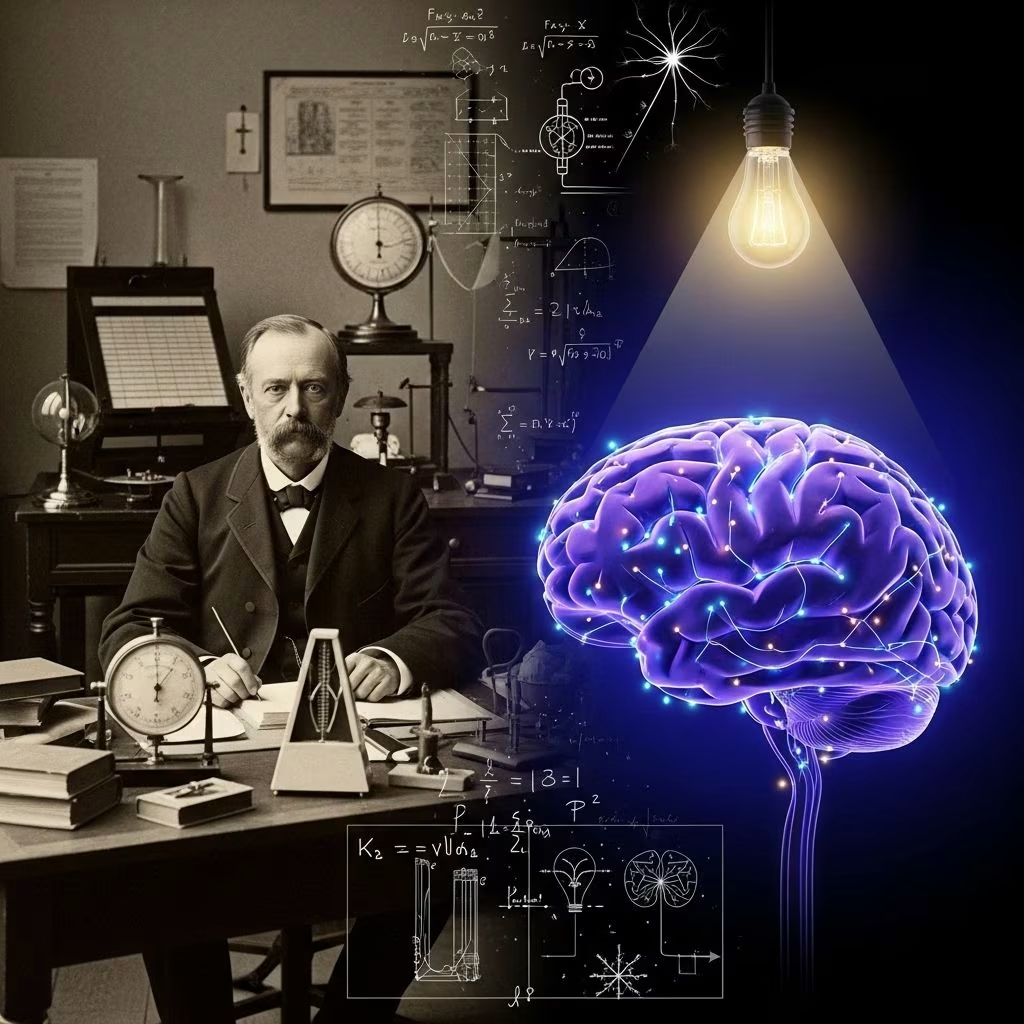
Wilhelm Wundt and the Birth of Experimental Psychology
Wilhelm Wundt (1832–1920) stands as a pivotal figure in the annals of psychology, known globally as the father of experimental psychology. His pioneering work at the University of Leipzig not only established the first dedicated psychology laboratory but also marked psychology as an independent scientific discipline, distinct from philosophy and physiology.
Why Wilhelm Wundt is Considered the Father of Psychology
Wundt’s legacy rests on several foundational achievements:
- First Psychology Laboratory: Founded in 1879 at Leipzig, this lab was the first to focus exclusively on psychological research, becoming the birthplace of scientific psychology.
- Experimental Approach: He transformed psychology into a discipline rooted in controlled experimentation and quantifiable analysis.
- Academic Influence: Wundt authored thousands of pages and mentored a generation of psychologists who disseminated his methods globally.
- Scientific Distinction: He defined psychology as separate from philosophy and biology, claiming the title psychologist for himself first.
Early Life and Academic Path
Wundt was born in Baden, Germany, and originally trained as a physician. His fascination with human consciousness led him to teach physiology and philosophy before fully dedicating himself to psychology. At Leipzig, he transitioned his interests toward experimental studies, seeking to understand the nature of sensations, perceptions, and conscious experience.
Founding the First Psychology Laboratory
In 1879, Wundt established the Laboratory of Experimental Psychology at the University of Leipzig, Germany. This milestone formalized psychology as a distinct empirical science. The lab’s resources included custom-built apparatuses—such as tachistoscopes, chronoscopes, pendulums, and sensory mapping devices—designed for investigating mental processes. Wundt’s laboratory rapidly attracted students and researchers worldwide, eager to participate in groundbreaking studies.
Key Features of the Leipzig Lab
- Exclusive Focus: First laboratory devoted solely to psychological research, free from ties to philosophy or physiology departments.
- Specialized Equipment: Wundt oversaw the development of scientific instruments for measuring reaction times, sensory responses, and perception.
- Graduate Research: The lab was filled with aspiring scholars assigned tasks and experiments under Wundt’s direction.
- International Reputation: Students from Europe, America, and Asia traveled to Leipzig, spreading experimental methods globally.
| Aspect | Description |
|---|---|
| Year Founded | 1879 |
| Location | University of Leipzig, Germany |
| Key Instruments | Tachistoscope, Chronoscope, Pendulum, Electrical devices |
| Main Goals | Scientific study of consciousness, sensation, mental chronometry (reaction time) |
| Notable Students | G. Stanley Hall, James McKeen Cattell, Emil Kraepelin |
Wundt’s New Approach: Introspection and Experimental Method
Wundt’s primary research method was introspection, or the detailed internal observation of one’s own conscious experience in response to stimuli. The idea was to break down consciousness into elemental parts, much like a chemist analyzes compounds. These procedures were strictly controlled—participants were trained to provide precise, unbiased descriptions.
- Sensation and Perception: Experiments explored how individuals perceive and interpret sensory input.
- Mental Chronometry: Researchers studied reaction times to understand mental processing speed.
- Consciousness Elements: Wundt believed the mind was composed of basic elements that could be identified and cataloged.
Impact and Criticism of Introspection
- Scientific Contribution: Introspection helped establish psychology as a field distinct from subjective philosophy.
- Limitations: Critics noted the subjective nature of introspective reports, leading later psychologists to adopt more objective behaviorist methods.
Global Spread and Influence
The Leipzig Model’s Worldwide Impact
Within years, Wundt’s experimental approach gained international traction. His students and disciples established psychology labs in major educational centers:
- First U.S. Lab: G. Stanley Hall—a student of Wundt—founded America’s first psychology laboratory at Johns Hopkins University in 1883.
- First Journal: Hall also created the American Journal of Psychology in 1887, further promoting the scientific study of mind.
- APA Foundation: In 1892, Hall established the American Psychological Association (APA), now one of the largest professional groups in the field.
- Spread to Other Countries: Students from Liverpool, Vienna, Russia, the United States, and Japan trained in Wundt’s lab and carried experimental psychology home.
Prominent Students and Their Legacy
Wundt’s impact was multiplied through his students, who themselves became leading psychologists:
- G. Stanley Hall:
- Founded the first American lab.
- Created the first U.S. psychology journal and the APA.
- Pioneered developmental and educational psychology; wrote extensively on child development.
- James McKeen Cattell:
- The first U.S. professor of psychology in 1888.
- Advanced mental testing and measurement of individual differences.
- Promoted eugenics (later controversial) and rigorous scientific publishing.
- Emil Kraepelin:
- Noted for foundational work in clinical psychology and psychiatry.
Table: Wundt’s Graduate Influence
| Name | Contribution | Legacy |
|---|---|---|
| G. Stanley Hall | Lab founder, journal creator, APA founder | Developmental psych, institutional builder |
| James McKeen Cattell | Individual difference measurement, first professor | Mental testing, publishing |
| Emil Kraepelin | Clinical psychology, psychiatry | Disease classification, diagnostic systems |
Scientific Output and Academic Publishing
Wundt was a prolific author, producing an estimated 53,000 pages of original work over his lifetime. His writings spanned physiology, ethics, linguistics, logic, vision, and history, but his most lasting contributions were in psychology. He established two foundational academic journals:
- Philosophische Studien (Philosophic Studies, 1883–1903)
- Psychologische Studien (Psychological Studies, 1905–1917)
These published the early research from Leipzig and defined experimental psychology’s methods and aspirations.
Legacy: Establishing Psychology as a Scientific Discipline
Wundt’s core accomplishment was making psychology a science. Previously, the mind was primarily studied philosophically or medically. By advocating rigorous experimentation, quantitative measurement, and replication, Wundt ensured psychology’s place in academia and research.
- Standardization: Wundt shaped how research was conducted and published, facilitating replication and critique.
- Professionalization: His efforts contributed to the rise of university departments dedicated solely to psychology.
A Continuing Influence
Historians regularly rank Wundt among the field’s most influential figures—even ahead of William James and Sigmund Freud. Although later theorists such as behaviorists moved away from introspection, Wundt’s experimental model remains the backbone of modern research methods.
Frequently Asked Questions (FAQs)
Q: Who is widely considered the founder of the first psychology laboratory?
A: Wilhelm Wundt is recognized as the founder, who established the first formal psychology lab at Leipzig in 1879.
Q: What methods did Wundt use in his research?
A: Wundt’s primary method was introspection, involving detailed self-reports of conscious experience in controlled conditions, alongside experimental measurement of sensation and reaction times.
Q: Who were Wundt’s most famous students?
A: Notable students include G. Stanley Hall (who founded the first American lab and the APA), James McKeen Cattell (pioneered mental testing), and Emil Kraepelin (advanced clinical psychology).
Q: How did Wundt’s lab impact psychology worldwide?
A: The Leipzig model was copied globally, with dozens of labs established in Europe, the Americas, and Asia, spreading experimental methods and fostering international collaboration.
Q: How did Wundt distinguish psychology from philosophy?
A: Wundt insisted on empirical research, systematic observation, and quantification of data—as opposed to speculative reflection—making psychology a science.
Conclusion: Wundt’s Enduring Legacy
Wilhelm Wundt’s transformative work forever altered the landscape of psychological science. Through his research, teaching, and institution-building, he shifted psychology from a philosophical curiosity to a rigorous, global discipline. Modern psychology owes its structure, status, and empirical foundation to Wundt’s revolutionary approach and the first psychology lab at Leipzig.


