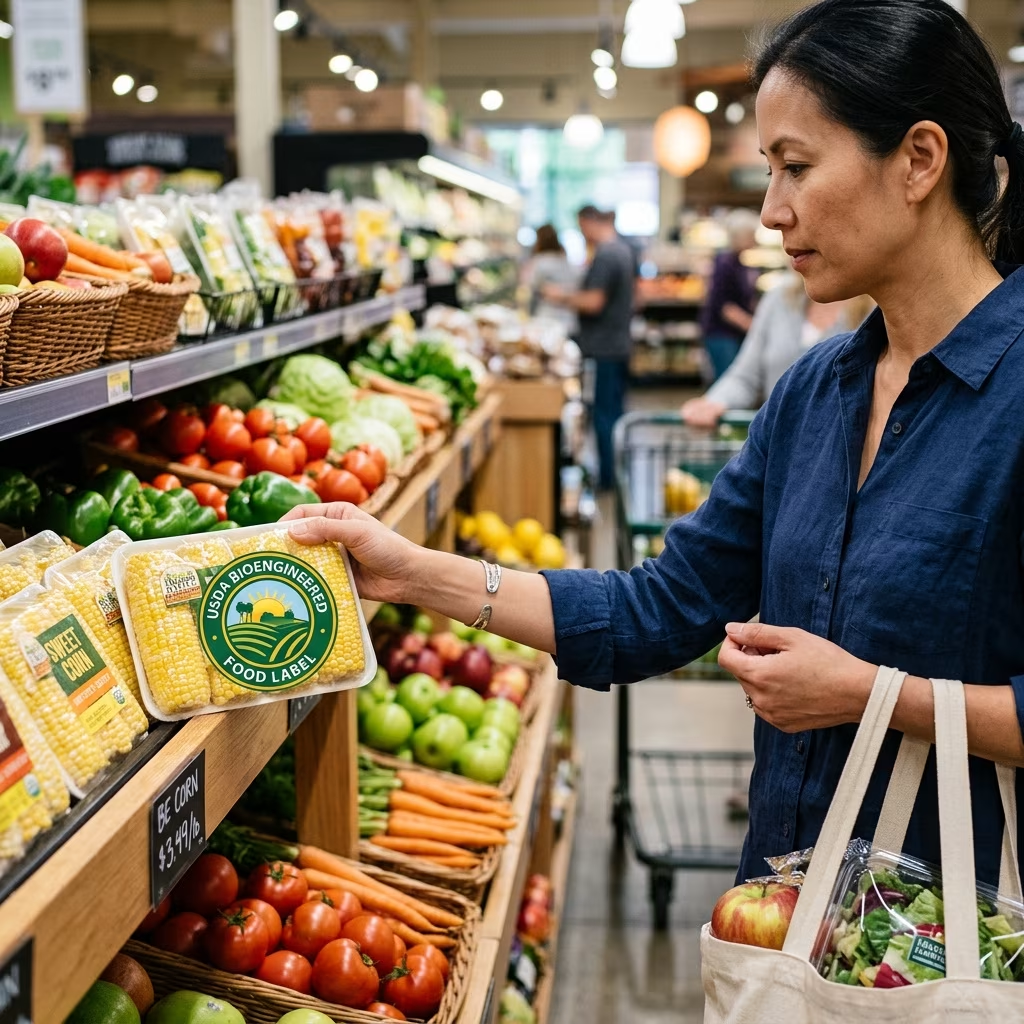
The traditional GMO label is disappearing from U.S. grocery shelves, replaced by a new term: “bioengineered”. As of January 2022, a national standard is in full effect, set by the U.S. Department of Agriculture (USDA), changing how Americans learn about genetically modified ingredients in their food. This guide helps explain the new ‘bioengineered’ food label, why it has been introduced, what products it covers, which foods are excluded, and what it all means for shoppers concerned about food transparency.
Why Did the USDA Change GMO Labeling?
For several years, terms like GMO (genetically modified organisms) and genetically engineered appeared on food packaging in a variety of ways—sometimes driven by state laws or voluntary marketing claims. This led to a patchwork of inconsistent labeling, making it confusing for consumers and burdensome for food producers.
To solve this, the USDA established the National Bioengineered Food Disclosure Standard. The goal: to create a single, nationwide standard for disclosing genetically modified content in food and to bring clarity and uniformity to food labels across the country. This national rule supersedes previous state-specific laws, such as the pioneering Vermont GMO labeling law, which are now preempted by federal regulations.
- New label: The term “bioengineered” replaces GMO and related language on packaging.
- Standardization: This new federal rule aims to simplify grocery shopping and compliance for companies.
- Effective date: The new rules require full compliance from January 1, 2022, although rulemaking and development began in 2020.
What Does ‘Bioengineered’ Mean?
Under the USDA definition, a bioengineered food contains genetic material that has been modified through certain laboratory techniques not found in nature, and for which the modification could not be obtained through conventional breeding or found in nature. Only a specific list of foods and ingredients falls under this definition.
Key characteristics of the standard:
- The USDA maintains a list of commonly bioengineered foods that are widely available as GMOs in the U.S.
- Foods must be labeled as “bioengineered” if any of these ingredients are present—unless the amount is below the threshold for unintended presence.
- The language ‘GMO,’ ‘genetically engineered,’ and similar terms are no longer permitted on packaging under the new law for the purpose of compliance, although third-party seals (like ‘Non-GMO Project Verified’) and organic certifications remain.
How Will ‘Bioengineered’ Be Shown on Labels?
Bioengineered disclosure can now appear in several ways on the package:
- A round green symbol or seal featuring the words *bioengineered* or *derived from bioengineering*
- Text stating “Contains a bioengineered food ingredient” or similar language
- A QR code or phone number linking to more information
These options are designed to offer flexibility for manufacturers, especially small companies. Some advocacy groups express concern that digital disclosures, such as QR codes, require technology not all consumers possess and may not fulfill the goal of transparency.
Which Foods Are Most Likely to Have the Label?
Not all foods on store shelves contain GMOs, and only some are affected by the new disclosure requirements. The USDA’s list of bioengineered foods covers a select group of crops and fish that have been genetically altered and are commercially available in the U.S.:
- Corn
- Soybeans
- Canola
- Alfalfa
- Sugar beets
- Papaya (Hawaiian)
- Summer squash
- Papaya
- Arctic apple (non-browning variety)
- Pink pineapple
- Genetically engineered salmon
Products containing ingredients derived from these foods—such as cornstarch, soybean oil, canola oil, and sugar—may be subject to disclosure if the modified DNA is detectable in the final product and above the 5% threshold for unavoidable presence.
Who Must Comply? Who Is Exempt?
The USDA Bioengineered Food Disclosure Standard applies to:
- All food manufacturers and importers selling packaged products in the U.S.
- Retailers packaging bulk food items for sale under store brands or as prepared foods.
- Dietary supplement manufacturers.
Exemptions include:
- Restaurants and foodservice providers (cafeterias, delis, catering services)
- Food companies with fewer than 20 employees or annual sales below $2.5 million
- Foods where the main ingredient is meat, poultry, or eggs, or when one of these is the second ingredient after broth, stock, or water
- Products with less than 5% unintended bioengineered content per ingredient
- Highly refined ingredients where no detectable modified DNA remains (e.g., some cooking oils or sugars from genetically engineered crops)
- Certified organic foods, which are never allowed to contain GMOs by law
Table: Foods Covered vs. Foods Exempt
| Covered by Bioengineered Disclosure | Exempt or Not Covered |
|---|---|
| Packaged foods from listed bioengineered crops with detectable modified DNA | Products with main ingredient as meat, poultry, or eggs; small businesses under threshold; most restaurant foods |
| Bulk packaged foods prepared by retailers | Highly refined ingredients with undetectable modified DNA |
| Dietary supplements with qualifying bioengineered ingredients | Certified USDA Organic products |
How Effective Is the New Label at Informing Consumers?
Critics and advocates remain divided about whether the bioengineered label truly delivers the transparency consumers want:
- Proponents argue that a clear federal standard ends confusion and is more efficient for both shoppers and companies.
- Critics (including several consumer and organic advocacy organizations) note several shortcomings:
- The term “bioengineered” is unfamiliar to most consumers, potentially decreasing awareness and understanding of what’s in their food.
- The new rule prohibits use of well-known phrases like “GMO” or “genetically engineered,” which shoppers recognize.
- Digital disclosures (QR codes/phone numbers) may be inaccessible or inconvenient for some shoppers.
- Highly refined ingredients and foods with undetectable GMO-derived DNA are exempted—even if made from GMO crops.
- Gene-edited foods (such as CRISPR and RNAi) may not require disclosure under current definitions, despite being engineered.
What About ‘Non-GMO’ and ‘Organic’ Labels?
Amid the changes, official third-party certifications and federal organic standards remain important tools for consumers:
- The USDA Organic seal guarantees no genetic engineering or GMO-derived ingredients are present in any certified organic food.
- The ‘Non-GMO Project Verified’ label is still permitted and communicates that a product has undergone screening and verification for non-GMO status.
- Organic marketers are allowed to include “not genetically engineered” or “non-GMO” text on package, provided their product carries the USDA Organic seal.
For shoppers determined to avoid GMOs completely, choosing foods labeled organic remains the most reliable method.
Common Questions About Bioengineered Food Labeling
Q: What does ‘bioengineered’ mean on my food?
A: ‘Bioengineered’ means the food contains genetic material that has been intentionally altered in a way not possible through conventional breeding. The label is required by law for certain foods containing detectable bioengineered ingredients.
Q: Does the bioengineered label mean my food is unsafe?
A: According to the FDA and USDA, bioengineered foods that have completed regulatory review are not considered less safe than their conventional counterparts. The label is a matter of transparency, not a safety warning.
Q: Are foods labeled organic or ‘Non-GMO’ affected by the new rule?
A: No. USDA certified organic products may use ‘non-GMO’ or similar claims and are not allowed to contain GMO ingredients. Non-GMO Project Verified and other third-party certification seals are still valid.
Q: Why don’t all foods with GMOs have to be labeled?
A: The rule covers only foods with detectable bioengineered DNA above a 5% per-ingredient threshold. Highly refined products—like oils or sweeteners—may escape the requirement if the genetic material is undetectable. Also, foods where meat or eggs are the primary or one of the first ingredients are exempted.
Q: How can I know if a restaurant meal contains bioengineered ingredients?
A: Restaurants and foodservice establishments are not required to disclose bioengineered content under the USDA rule. If this is a concern, you may wish to ask staff directly or seek out establishments specializing in organic or non-GMO foods.
Q: Why did the label change from ‘GMO’ to ‘bioengineered’?
A: The shift was motivated by legislative compromise to create national consistency and to move away from terms—like GMO and genetically engineered—that had become controversial or carried marketing implications. ‘Bioengineered’ was chosen as a technical term for regulatory clarity, but it is less familiar to most consumers.
What Should Shoppers Do Now?
- Read labels carefully: Look for bioengineered disclosures, particularly on snacks, sweetened beverages, cereals, and packaged foods containing corn, soy, canola, or sugar beet-derived ingredients.
- Use technology if needed: If a QR code or website is provided for disclosure, follow it for more information—but be aware of the potential for information gaps.
- Choose organic or certified non-GMO products if complete avoidance of GMOs is a priority. These labels maintain stricter verifications and remain unaffected.
- Stay informed: Advocacy groups and regulatory bodies continue to monitor and debate the effectiveness and fairness of the current law, and future updates are possible as the market and science evolve.
Key Takeaways
- The USDA’s new national ‘bioengineered’ labeling standard for foods with GMOs is now required, providing greater uniformity on grocery shelves.
- The label only applies to certain foods where modified DNA is present and detectable, exempting many highly processed or animal-based products.
- Terms like ‘GMO’ and ‘genetically engineered’ are no longer allowed on compliant labels, but organic and non-GMO verification programs continue to play a role.
- Consumer groups and organic advocates remain concerned about the sufficiency of the rule’s definitions, scope, and digital disclosure methods.
Frequently Asked Questions (FAQs)
Q: Can companies still use ‘Non-GMO Project Verified’ labels?
A: Yes. The USDA rule does not restrict third-party certifications, so brands may use ‘Non-GMO Project Verified’ or similar seals, as long as they comply with those programs’ standards and do not misrepresent their status.
Q: What if a food contains less than 5% bioengineered material?
A: If the presence of bioengineered content is unintentional and below 5% for any given ingredient, it is exempted from mandatory bioengineered disclosure under the USDA standard. This is more lenient than some international standards (like the EU), which require labeling at lower thresholds.
Q: Does gene editing (CRISPR) require a label?
A: Current USDA rules generally exclude gene-edited foods (such as those using CRISPR or RNAi) unless the modification results in detectable, non-naturally occurring DNA sequences. This is an area of ongoing debate and review.
Q: How do I make sure to completely avoid GMOs?
A: The surest method is buying only USDA certified organic foods, as they are strictly prohibited from containing genetically engineered ingredients at any stage. Non-GMO Project Verified products are another option for additional oversight and assurance.
References
- https://www.food-safety.com/articles/7490-new-usda-labeling-for-genetically-modified-foods-goes-into-effect
- https://www.bevsource.com/news/what-you-need-know-about-new-usda-gmo-labeling-legislation
- https://ota.com/gmo-labeling
- https://nationalaglawcenter.org/congress-finalizes-mandatory-gmo-labeling-law-2/
- https://www.ams.usda.gov/rules-regulations/be
- https://www.ams.usda.gov/rules-regulations/be/bioengineered-foods-list
- https://www.nongmoproject.org/blog/what-is-bioengineered-food/
- https://www.federalregister.gov/documents/2023/11/29/2023-26059/national-bioengineered-food-disclosure-standard-list-of-bioengineered-foods