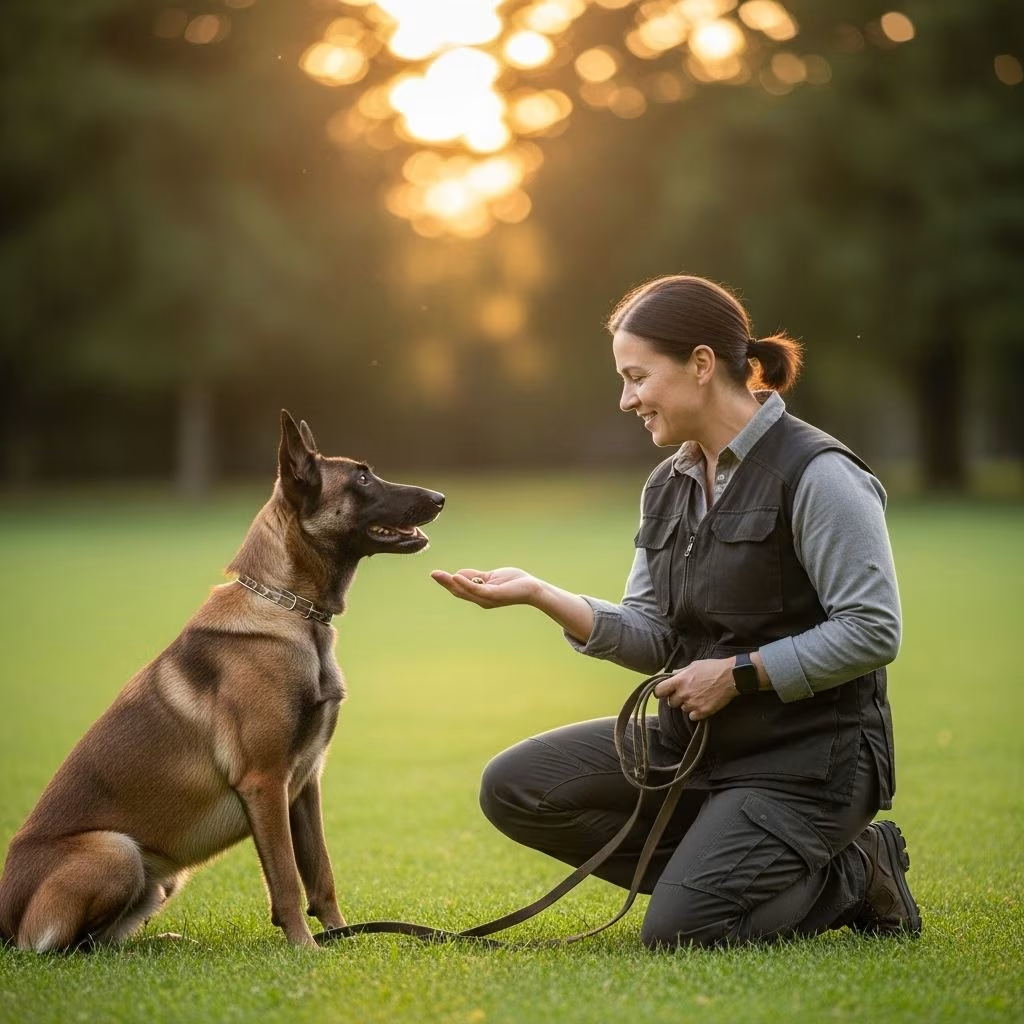
7 Essential Insights from the Dog Trainer Behind the Movie Max
Max, the Warner Brothers/MGM film, captivated audiences with its compelling story of a military Belgian Malinois and his journey healing after his handler’s tragic death. But behind the powerful performance was not one dog—but a team of five expertly trained Belgian Malinois. In this exclusive interview, Mark Forbes, the head dog trainer for Max, provides a detailed look at how the canine stars were prepared for Hollywood and offers invaluable advice for pet owners.
Contents
- The Dogs Behind Max: Unique Backgrounds, Shared Stardom
- Preparing Non-Actor Dogs for the Silver Screen
- Secrets of Training for Film
- Building Bonds On and Off Screen
- Movie Training Techniques vs. Real-Life Training
- Practical Training Tips for Pet Owners
- Frequently Asked Questions from Dog Owners Inspired by Max
The Dogs Behind Max: Unique Backgrounds, Shared Stardom
Contrary to what many moviegoers might expect, the character Max was portrayed by five different Belgian Malinois, each selected for specific skills and attributes:
- Carlos: The lead dog and the face of Max, Carlos was selected from a breeder in the southern United States and had prior experience competing in agility events. His photogenic features and uniquely expressive face made him ideal for central scenes.
- Pax: Hailing from Salt Lake City, Pax was a fully trained narcotics-detecting dog who previously worked with a private contractor.
- Dude: A beloved pet of one of the trainers, Dude contributed to scenes requiring a calm and social presence.
- Jagger: Sourced from a breeder in New Mexico, Jagger added to the ensemble with his specialized skills.
- Pilot: Coming from Ohio, Pilot rounded out the team, enabling the filmmakers to depict a range of canine behaviors.
None of these dogs had prior film experience. According to Forbes, “Belgian Malinois need a job to do”—a critical factor influencing their selection and training for the movie’s demanding role.
Preparing Non-Actor Dogs for the Silver Screen
Turning experienced working and agility dogs into movie stars is no easy feat. The preparation process began with:
- Extended Bonding Time: Trainers fostered strong relationships between the dogs and the human cast, especially Josh Wiggins, who played the film’s young protagonist.
- Targeted Skill Training: Each dog’s background was leveraged—Pax’s detection skills for nose work, Carlos’s agility for active scenes, and Jagger’s calm demeanor for challenging stunts.
- Addressing the Need to Match Appearance: To ensure continuity, groomers sometimes had to dye the dogs’ coats to match Carlos’s distinctive markings, as some of the doubles lacked his uniquely unmasked face.
Preparation included sixteen weeks of intense work, with ongoing practice long before and throughout the filming schedule. Trainers, led by Forbes, emphasized positive reinforcement, consistency, and patience to achieve the right on-camera performance.
Secrets of Training for Film
Dog training for cinema diverges significantly from standard pet training. Forbes explains:
- Precision and Repeatability: Dogs must perform identical actions on multiple takes, requiring extreme focus, clarity in command delivery, and thorough rehearsal.
- Use of Multiple Dogs: To manage dog fatigue and leverage specialized talents, each dog performs specific tasks suited to its strengths; for fight scenes, a female Malinois was used as males are not permitted to fight on set.
- Training with Actors: The cast received hands-on guidance to interact believably with their canine co-stars. Josh Wiggins notably handled real training tasks in several scenes, giving authenticity to the on-screen bond.
- Unscripted Brilliance: Some of Max’s most memorable expressions—such as a tilt of the head conveying uncertainty or respect—were spontaneous, reflecting the individual personality of Carlos. This “actor’s intuition” added depth to the film’s star.
Building Bonds On and Off Screen
The visible connection between Max and his human companion is more than cinematic illusion—it’s founded on significant time spent bonding off camera. Key strategies included:
- Structured Play and Training Sessions: Frequent, positive interactions with trainers and actors built mutual trust and affection.
- Real Training on Film: Crucial scenes where Josh’s character teaches Max were unscripted; the human actor was genuinely training the dog, making the relationship authentic to viewers.
- Daily Routines: Head trainer Mark Forbes took the dogs home with him, integrating training into daily life for ongoing socialization and consistency.
Forbes’s philosophy emphasized understanding canine motivation, patience, and the necessity of time—there are no “overnight” bonds in real life or on set.
Movie Training Techniques vs. Real-Life Training
| Film Training | Home Training (Pet Owners) |
|---|---|
| Highly specialized actions and cues | Basic obedience and manners |
| Multiple handlers, controlled environment | Single handler (owner), natural distractions |
| Focus on repeatable, reliable performance | Emphasis on consistency and relationship building |
| Short, frequent sessions with rewards | Adapted to owner schedule; patience required |
| Scenes tailored to dog’s abilities | Goals tailored to household needs and dog’s personality |
While film dogs require rigorous, targeted rehearsal for specific stunts, everyday pet training also thrives when grounded in consistency, positive reinforcement, and patience. Forbes cautions pet owners: “Don’t expect movie-star obedience overnight—but every dog can learn and progress with patience and time.”
Practical Training Tips for Pet Owners
- Channel Energy into Productive Activities: Belgian Malinois, like many working breeds, need a job—agility, nose work, or obedience training can prevent boredom and problem behaviors.
- Build Relationships, Not Just Rules: Take time to bond outside training; play, affection, and gentle socialization are vital.
- Gradual Socialization: Expose your dog to different people, places, and experiences in a controlled, positive way from an early age.
- Clarity and Consistency: Use clear commands and reward good behavior every time to reinforce learning.
- Patience Above All: Progress may be slow, but every dog is capable of learning with the right motivation.
Forbes emphasizes that while Belgian Malinois excel with experienced handlers, the same principles—consistency, respect, and engagement—apply to all household dogs.
Frequently Asked Questions from Dog Owners Inspired by Max
Q: Can Belgian Malinois make good family pets?
A: Yes, but they require an owner experienced with active, intelligent breeds. Without adequate exercise or mental engagement, they can become restless or develop undesirable behaviors. Early socialization and consistent training are crucial.
Q: How do trainers safely handle potentially aggressive or stressed dogs on set?
A: Safety is paramount. Scenes involving aggression or PTSD symptoms rely on careful choreography, professional handlers, and trained doubles. Positive reinforcement, breaks, and a controlled environment limit stress—no scene ever risks the well-being of the animal.
Q: What kind of career can a former movie dog expect?
A: Dogs like Carlos may continue their public appearances or demonstrations, but most trainers ensure that their canine stars retire to a loving home once their work is done. Mark Forbes, for instance, brings dogs into his home as permanent family members post-filming.
Q: Did the real-life stories influence the making of Max?
A: Yes—real-life instances of military dogs loyally mourning lost handlers inspired pivotal scenes (such as a dog lying at a handler’s casket) and shaped the film’s emotional authenticity.
Q: What’s the biggest lesson for pet owners from the movie?
A: Training is less about strict obedience and more about understanding your dog’s needs—engagement, activity, patience, and partnership lead to lasting, positive bonds both on and off the screen.
Conclusion: Beyond the Silver Screen
Max offers more than entertainment. It’s a tribute to the intelligence, loyalty, and potential of working dogs—and a reminder that every pet, with patience and respect, can become a true companion. Mark Forbes’s expertise highlights that dog training is not a magic trick but an ongoing commitment—whether backstage in Hollywood or at home.
So the next time you marvel at a hero dog on film, recall the dedication, skill, and heart behind the camera—and know that, with effort, your own dog can achieve their best, too.
References
- https://www.akc.org/expert-advice/news/10751-7-questions-with-the-dog-trainer-from-the-movie-max/
- https://www.owensboroliving.com/features/max-the-movie-star/
- https://moviemom.com/interview-boaz-yakin-and-josh-wiggins-of-max/
- https://www.patriciamcconnell.com/theotherendoftheleash/the-movie-max-concerns-about-breed-popularity/
- https://www.akc.org/expert-advice/lifestyle/10789-learn-the-real-life-stories-behind-the-movie-max/
- https://www.akc.org/expert-advice/news/movie-dog-training-tips/
- https://www.youtube.com/watch?v=ZKY5HeOYdhQ
- https://www.youtube.com/watch?v=eUF8Z8PhOwA
- https://www.youtube.com/watch?v=8MTiay7MHy4
- https://www.youtube.com/watch?v=klox1KjmOYY