


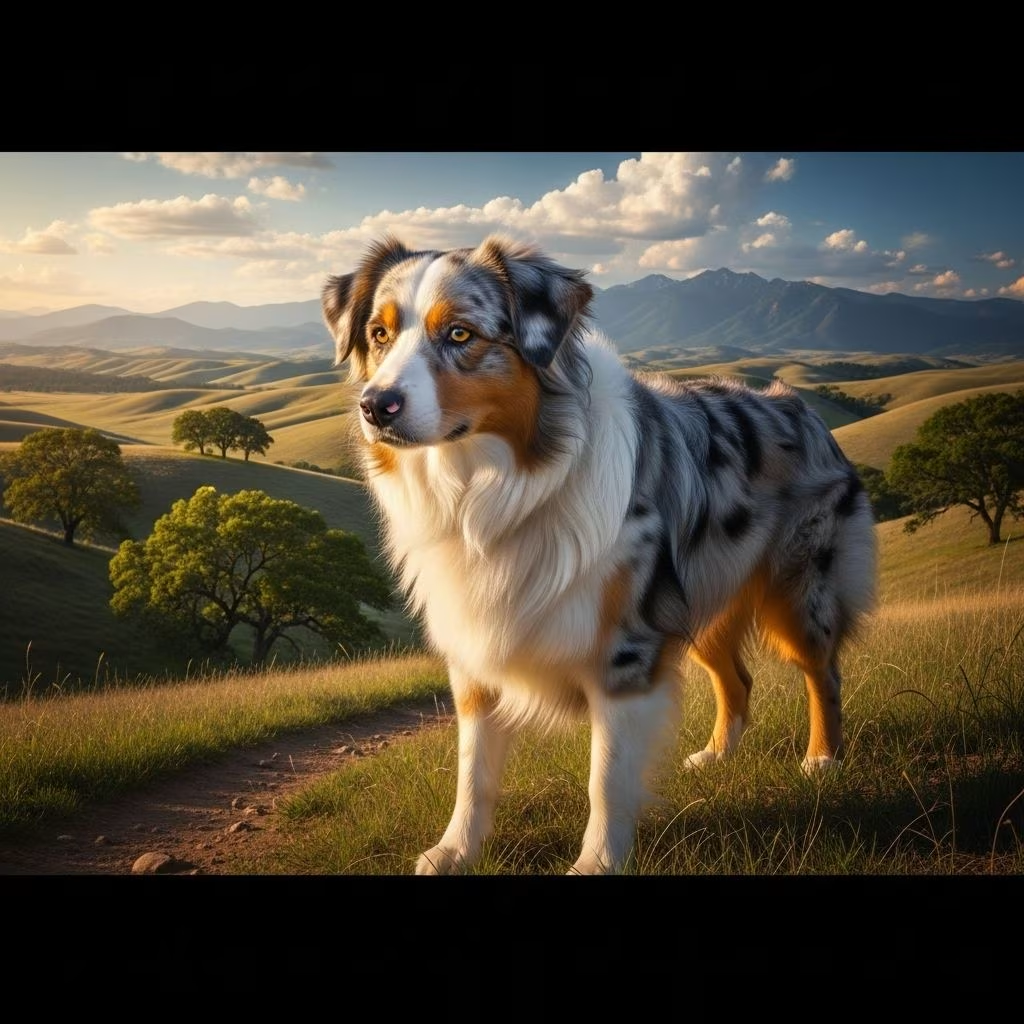
Australian Shepherd History: The Making of an American Icon
The Australian Shepherd, affectionately known as the “Aussie,” is a breed whose history is as colorful and complex as its famed merle coat. Despite its name, this energetic, intelligent herder was not born in Australia but rather shaped by a confluence of global migrations, American ingenuity, and the demands of the Western frontier. Let’s uncover the story behind the breed—starting with its earliest roots and tracing its evolution into the popular companion and working dog it is today.
Earliest Roots: From Spain to the New World
The tale of the Australian Shepherd begins not in the Outback, but in the adobe missions of early Spanish colonists. When the Conquistadors arrived in the Americas in the 1500s, they brought along hardy Churra sheep to feed their settlements, as well as Spanish herding dogs to tend the flocks.
- Initial Herders: The earliest dogs described were wolf-like, larger than modern Aussies, and served more as guardians than herders.
- Spanish Sheepdogs: Closer ancestral ties may lie with the Carea Leonés, a smaller, agile herder from Spain’s León region, known for merle coats and blue eyes—traits strikingly similar to those of the Australian Shepherd.
- Generic Sheepdogs: Over centuries, these dogs interbred, creating a generic type of sheepdog that spread across New Mexico, California, and beyond.
While there’s no direct evidence that Carea-type dogs arrived with the Spanish, their resemblance to the Aussie is intriguing and suggests a possible, if distant, kinship.
Basque Influence: Myth or Reality?
A persistent legend holds that Basque shepherds from the Pyrenees brought their “little blue dogs” first to Australia, then to America, giving rise to the breed’s name. However, historians have largely debunked this romantic notion.
- Basque Migration Patterns: Basque herders did migrate to the American West, but rarely brought dogs from Europe. Those who did were not necessarily experienced shepherds in their homeland.
- Name Confusion: The Australian Shepherd moniker likely arose from American observers noting dogs arriving with Australian sheep, not from any Basque origin.
Thus, while Basque herders played a role in the American sheep industry, their direct influence on the Australian Shepherd’s genetics appears minimal.
The Great Sheep Drives and the Rise of the Western Herding Dog
The mid-1800s marked a turning point for sheep and herding dogs in America. The California Gold Rush (1848–1855) and the aftermath of the Civil War created a massive demand for meat and wool, prompting large-scale sheep drives from the Midwest and East to the Western states.
- Sheep Imports: The Merino sheep, prized for their fine wool, were imported from Spain to Germany, then to Australia, and finally to the American West.
- Shepherding Culture: These migrations were accompanied by herding dogs—both British-derived Collies and smaller, merle-colored dogs, sometimes called “English Shepherds.”
- Name Game: As these dogs began to appear alongside sheep arriving from Australia, the “Australian Shepherd” label stuck, even though the breed was truly American by heritage.
These imported dogs were not a formal breed but a mixed type, blending British herding instincts with the rugged demands of the American West.
Genetic Evidence: Unraveling the Aussie’s Ancestry
Modern genetic studies have shed light on the true origins of the Australian Shepherd. A landmark 2017 study published in Cell Reports analyzed canine DNA to map breed relationships.
- UK Rural Clade: The Australian Shepherd falls into the UK Rural clade, alongside Collies, Shetland Sheepdogs, and Border Collies, pointing to a predominantly British genetic heritage.
- Shared Traits: Aussies share the MDR1 gene mutation (causing sensitivity to ivermectin) and Collie eye anomaly with their British cousins.
- Distinct Breed: Despite its misleading name, the Australian Shepherd is an American breed, developed through selective breeding for herding ability, temperament, and appearance.
These findings confirm that while the breed’s ancestors may have passed through Spain and Australia, its formative development happened in the United States, influenced by British herding stock.
Breed Development and Recognition
The Australian Shepherd as we know it began to take shape in the American West, where ranchers appreciated its intelligence, stamina, and versatility.
- Informal Beginnings: For decades, Aussies were bred for work rather than pedigree, resulting in dogs with a wide range of colors, sizes, and temperaments.
- Standardization: The breed standard began to coalesce in the early 20th century, with the establishment of breed clubs and formal registries.
- AKC Recognition: Despite its popularity, the Australian Shepherd was only recognized by the American Kennel Club (AKC) as its 135th breed in the 20th century.
The Aussie in American Culture
Far from remaining a working dog, the Australian Shepherd became a fixture of American pop culture, particularly in the West.
- Rodeos and Shows: Aussies dazzled audiences with their agility and trick-performing abilities at rodeos, horse shows, and in Hollywood films.
- Popularity Boom: The breed’s popularity soared post-WWII, coinciding with the rise of Western riding and the romanticized cowboy lifestyle.
- Versatile Performer: Beyond herding, Aussies now excel in obedience, agility, search and rescue, and as therapy dogs.
Australian Shepherd Names and Nicknames
Over the years, these dogs have been called by many names, reflecting both their origins and their adaptability.
| Common Name | Description |
|---|---|
| Spanish Shepherd | Reflecting early Spanish roots, though misleading for the breed’s true origin |
| Pastor Dog | Meaning “shepherd dog” in Spanish |
| Bob-Tail | Many Aussies are born with naturally short or absent tails |
| New Mexican Shepherd | From early prominence in New Mexico |
| California Shepherd | From popularity in California during the Gold Rush |
A Breed Apart: Unique Traits of the Australian Shepherd
- Coat and Color: Aussies are famous for their striking merle coats, but also come in solid black, red, and blue merle, with or without white and copper markings.
- Eyes: Their eyes can be brown, blue, amber, or a combination, often with marbled or “ghost eye” effects.
- Size and Temperament: Medium-sized, energetic, and intelligent, Aussies are highly trainable but require ample exercise and mental stimulation.
Frequently Asked Questions (FAQs)
Are Australian Shepherds from Australia?
No, the breed was developed in the United States. The name comes from the association with sheep imported from Australia, not from the breed’s origin.
What breeds contributed to the Australian Shepherd?
Genetic evidence shows Australian Shepherds are closely related to British herding dogs, such as Collies and Border Collies. Spanish herding dogs may have played a minor role in their very early development.
Why are some Australian Shepherds born without tails?
The natural bobtail is a common trait in the breed, likely inherited from British herding stock. Some Aussies are born with short tails, while others have full-length tails.
Are Australian Shepherds good family dogs?
Aussies are loyal, energetic, and intelligent, making them excellent companions for active families who can meet their exercise and training needs.
What is the average lifespan of an Australian Shepherd?
Australian Shepherds typically live 12–15 years, depending on genetics and care.
Do all Australian Shepherds have blue eyes?
No, eye color varies—brown, blue, amber, and heterochromatic (two different colors) eyes are all common in the breed.
Conclusion
The Australian Shepherd’s journey—from the missions of New Spain, through the sheep drives of the American West, to the ranches and rodeos of modern America—is a testament to the breed’s adaptability, intelligence, and enduring appeal. Misunderstood origins and a misleading name only add to its mystique, but genetic and historical research has clarified that the true home of the Aussie is, and always was, the United States. Today, the Australian Shepherd stands as a symbol of American ingenuity, a beloved working partner, and a cherished family companion—truly, a breed apart.
References
- https://www.akc.org/expert-advice/dog-breeds/australian-shepherd-history/
- https://www.akc.org/dog-breeds/australian-shepherd/
- https://www.akc.org/sports/herding/articles/aussie-history/
- https://www.akc.org/expert-advice/dog-breeds/miniature-american-shepherd-history/
- https://www.akc.org/expert-advice/dog-breeds/fun-facts-australian-shepherd/
- https://akc.tv/breed?id=758


