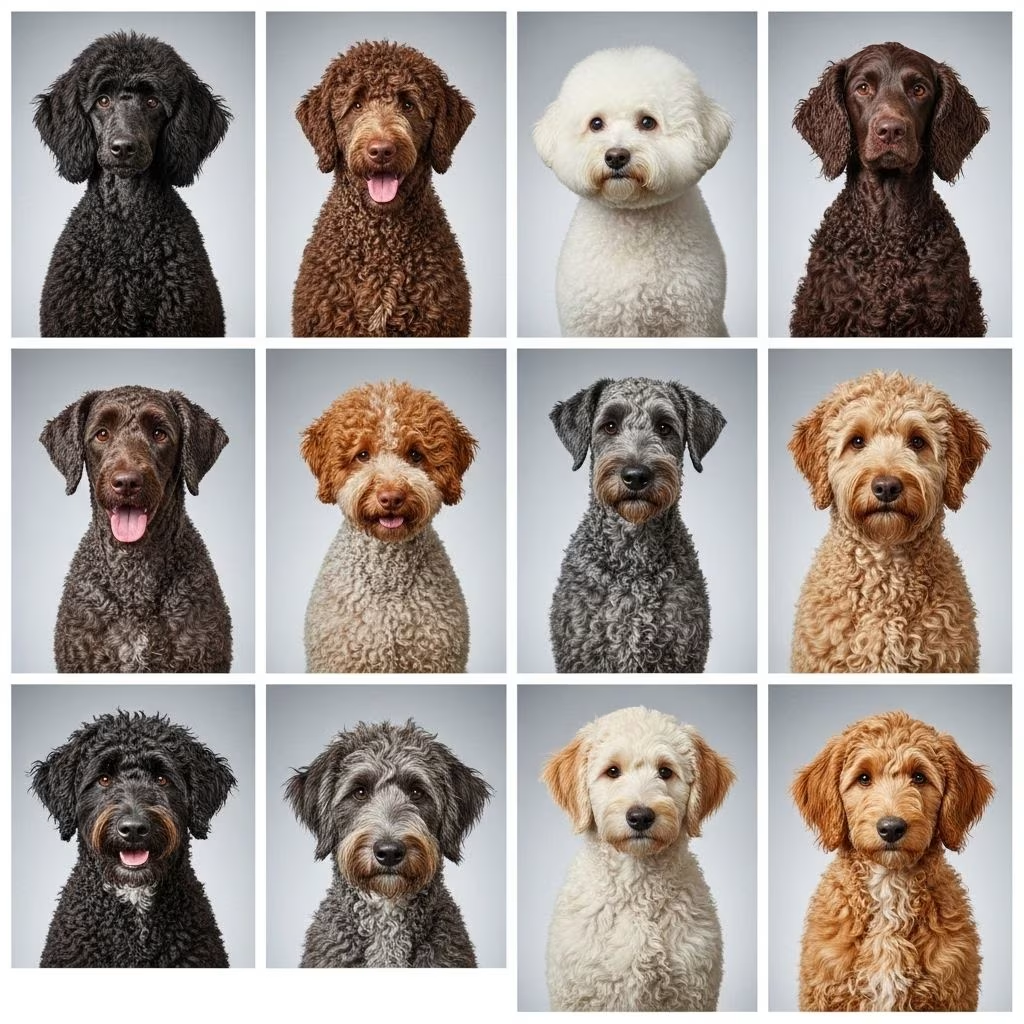
The Story of the Bichon Frise: A Journey Through Time
The Bichon Frise is more than a bundle of white curls and sunny disposition—it is a breed with a rich, international history spanning centuries, continents, royal households, perilous times, and heartwarming comebacks. This article explores the captivating evolution of the Bichon Frise, from its ancient Mediterranean roots to its contemporary stardom in the dog show world.
Early Origins: Mediterranean Beginnings
The roots of the Bichon Frise trace back to the Mediterranean region, where it is believed to have descended from the Barbet or Water Spaniel. From this ancestor, the group known as “Barbichon”—later shortened to “Bichon”—emerged, with four main subtypes:
- Bichon Maltais
- Bichon Bolognais
- Bichon Havanais
- Bichon Teneriffe
These cheerful dogs prospered as seafarers’ companions and often exchanged hands as valuable barter items when sailors traveled between ports.
Rise in Europe: From Trade to Royalty
Sailors, especially from Spain and Italy, are credited with carrying these affable dogs across the Mediterranean and into European ports. Spanish seamen are believed to have introduced the Bichon Teneriffe to the Canary Islands, where the breed further flourished. In the 14th century, French sailors rediscovered the breed on Tenerife and brought it to continental Europe, igniting its popularity among European nobility.
| Period | Key Events | Notable Figures |
|---|---|---|
| 14th Century | Bichons arrive in France from Tenerife | French Seafarers |
| Renaissance (16th Century) | Bichons adored by Italian and French courts | Francis I, Henry III |
| 19th Century | Bichon’s popularity wanes, becomes common street dog | Organ grinders, circus performers |
During the Renaissance, Bichons were particularly celebrated in France under Francis I (1515–1547) and Henry III (1574–1589). These dogs—often pampered and adorned—became symbols of luxury. Henry III’s court was known for lavish displays and devotion to the breed, even carrying Bichons in baskets suspended by silk ribbons.
Bichons in Art and Culture
The Bichon’s presence wasn’t just limited to noble courts. They became favorites throughout Spain, with the Infantas lavishing them with attention. Notable artists such as Francisco Goya often immortalized Bichons in their celebrated paintings, affirming the breed’s esteemed status in Spanish culture.
From Nobility to the Streets: Survival Amid Hardship
Interest in the Bichon declined after the reign of Napoleon III, relegating many to a more humble existence. By the late 19th century, Bichons were commonly found wandering the streets, performing tricks at fairs, accompanying organ grinders, leading the blind, or entertaining as circus dogs. Their affable nature, cleverness, and resilience ensured their survival—even amid the hardships and uncertainties brought on by periods of societal change and war.
Recognition and Naming: The Birth of the Modern Bichon Frise
A pivotal moment in Bichon history arrived in the early 20th century. On March 5, 1933, the Societé Centrale Canine of France adopted the official standard for the breed, and the name Bichon a Poil Frisé (Curly-haired Bichon) was proposed. The term “Frisé” directly refers to the dog’s unmistakable soft, curly coat. By October 18, 1934, the breed was officially admitted into the French Kennel Club’s stud book.
Bichon Frise and the Challenges of the 20th Century
The two World Wars and the ensuing years brought scarcity and hardship to Europe’s dog population, including the Bichons. Many dogs became strays—but thanks to the perseverance of French and Belgian breed enthusiasts, who gathered surviving dogs from the streets, the breed endured. Recognition in France was paralleled by efforts to stabilize important breed traits, including their signature size and expressive faces.
The Bichon Frise Comes to America
The journey of the Bichon Frise to the United States began in 1956, when Helene and Francois Picault of Dieppe, France, arrived with six Bichons. They sought to establish the breed in the new world, a mission made possible by their successful rearing of the first American Bichon litter.
- 1956: The Picaults relocate to the U.S. with six Bichons.
- First American Bichon litter is born.
- The breed gains a small but passionate following among American fanciers.
This nucleus of dedicated breeders and owners began organizing, and in 1964, the Bichon Frise Club of America was officially founded in San Diego, California. These early clubs played an essential role in advocating for the breed’s standard, recognition, and refined presentation.
American Kennel Club Recognition
- 1971: Bichon Frise accepted into the Miscellaneous Class by the American Kennel Club (AKC).
- 1972: Admitted to registration in the AKC Stud Book.
- 1973: Achieves full breed recognition and becomes eligible to compete in the Non-Sporting Group at AKC-sanctioned events.
Since these milestones, the Bichon Frise has firmly established itself as a standout in American dog shows, admired for both its elegant show appearance and vivacious charm.
Bichon Frise in the Show Ring: Royalty on Parade
With the breed’s refined traits stabilized, the Bichon Frise was soon recognized for its charisma and skill in the show ring. Since their AKC debut, Bichons frequently graced winners’ podiums, capturing the attention and admiration of judges, handlers, and spectators alike.
The Legacy of “JR”: A Champion for the Breed
One of the most celebrated Bichons in history, “JR”, became a household name when he was crowned the Best in Show at the AKC National Championship in 2001—the event’s first such winner. Mere months later, “JR” captivated the nation by earning Best in Show at the Westminster Kennel Club Dog Show, becoming the first Bichon to claim victory in this storied event. Judge Dorothy Macdonald described him as “as close to perfection as you can get.” “JR” often delighted crowds with a peculiar two-pawed salute, a gesture believed to be a nod to the breed’s days as rollicking street performers.
Enduring Traits: Why the Bichon Frise Endures
The Bichon Frise’s enduring popularity is anchored by its winning combination of:
- Happy-go-lucky disposition: Bichons are renowned for their joyful, mischievous, and affectionate nature.
- Non-shedding, hypoallergenic coat: Their curly coats offer companionship to many with allergies.
- Intelligence and trainability: Centuries of working alongside both street entertainers and royalty have made them highly adaptive.
- Size and adaptability: Their compact size and friendly temperament make them ideal urban companions.
Modern Appeal: The Companion Extraordinaire
Today, the Bichon Frise continues to enchant with its combination of playful energy, good health, and robust social skills. The breed’s effortless charm and adaptability ensure it fits comfortably at home with families, singles, seniors, and children. They excel not only as show dogs but—as throughout history—as joyful companions and performers, always eager for affection and applause.
Quick Facts: Timelines and Transformation
- Ancient times: Descended from the Barbet, developing into several related breeds around the Mediterranean.
- 1300s: Traveled with Italian sailors, introduced to Canary Islands.
- 16th century: Rose to prominence in royal courts of France and Spain.
- 19th century: Popularity waned; many Bichons became performers and street dogs.
- 1933: Official breed standard adopted in France; “Bichon a Poil Frisé” becomes the standard name.
- 1956: Introduced in the U.S.; first American litter born.
- 1971–1973: Achieves full AKC recognition.
- 2001: “JR” wins AKC and Westminster Best in Show titles.
Frequently Asked Questions (FAQs)
Q: Where did the Bichon Frise originate?
A: The Bichon Frise originated in the Mediterranean region, descending from the Barbet or Water Spaniel and later thriving in the courts of Europe.
Q: What roles did the Bichon Frise play throughout history?
A: Bichons have filled many roles, from noble companions in royal courts to street performers, therapy dogs, and beloved pets worldwide.
Q: When was the Bichon Frise officially recognized by the American Kennel Club?
A: The breed was accepted into the Miscellaneous Class in 1971 and achieved full recognition in the Non-Sporting Group in April 1973.
Q: What is unique about the temperament of the Bichon Frise?
A: The Bichon Frise is known for its cheerful, affectionate, and playful temperament, making it a wonderful family companion.
Q: Why is the Bichon Frise associated with hypoallergenic qualities?
A: Their signature curly coat sheds very little, making them a good choice for many allergy sufferers seeking a companion dog.
References
- https://www.akc.org/expert-advice/dog-breeds/bichon-frise-history/
- https://www.akc.org/dog-breeds/bichon-frise/
- https://www.akc.org/expert-advice/lifestyle/fun-facts-bichon-frise/
- https://bichon.org/about-bichons/history/
- https://bichonfrisedog.com/bichon-frise-history/
- https://www.akc.org/expert-advice/dog-breeds/bichon-frise/
- https://www.preludebichons.com/breed-history
- https://www.ukcdogs.com/bichon-frise
- https://bichon.org