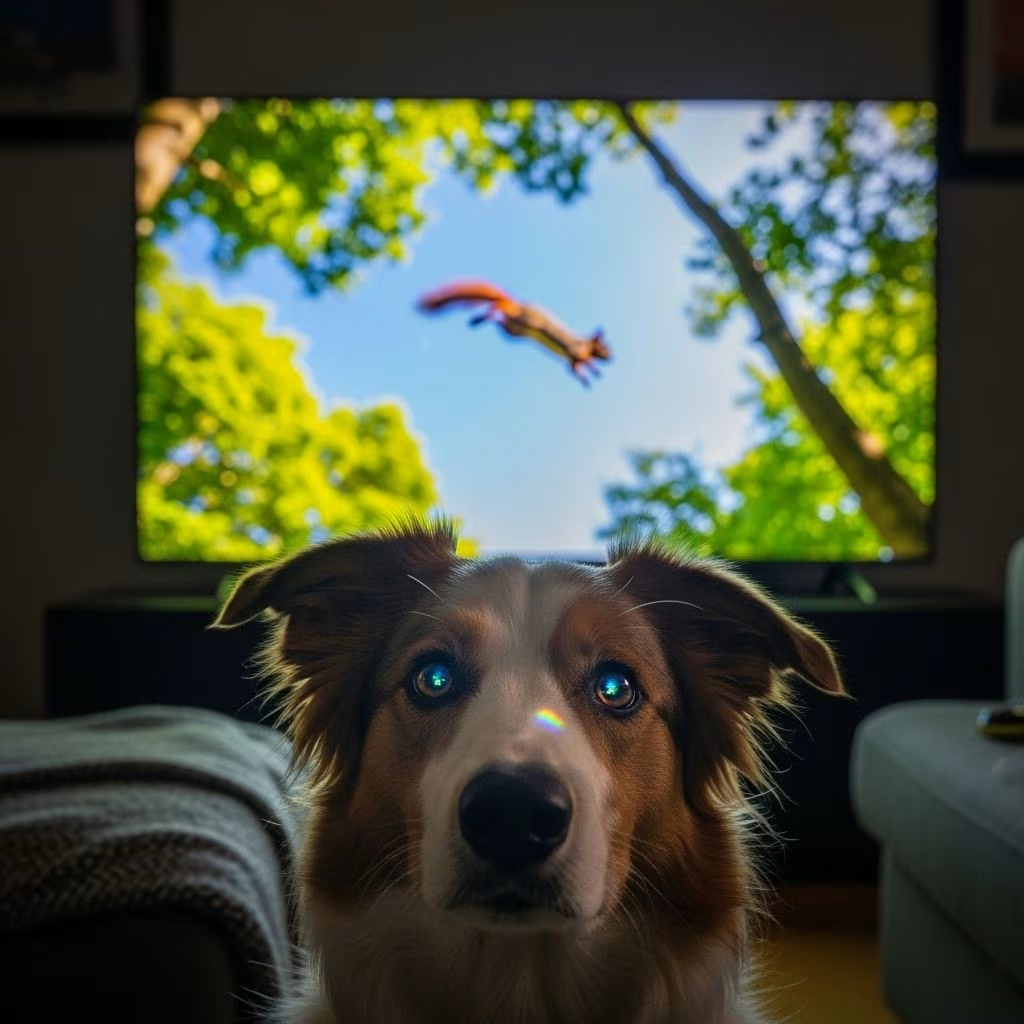
Dog owners frequently notice their pets glancing at, barking towards, or even intently watching the television. This behavior raises an intriguing question: can dogs actually see and enjoy TV like humans? Recent research and veterinary insights reveal that while dogs do respond to images and sounds from screens, their experience is markedly different from ours. This article unpacks the science behind canine vision, explores why certain programs capture a dog’s interest, and examines how advancements in television technology enhance a dog’s viewing experience.
Can Dogs Really See TV?
Yes, dogs can see television, and many display genuine interest in what’s happening on screen. However, dogs’ eyes and sensory perceptions differ significantly from those of humans, so when a dog appears to be watching TV, they are experiencing it in a distinctly canine way.
- Visual differences: Dogs have lower visual acuity compared to humans, which means images on TV may appear less sharp to them.
- Color perception: Canines are limited in the range of colors they perceive, affecting how vibrant or interesting certain content appears.
- Motion sensitivity: Dogs are notably sensitive to movement, making action and rapid changes more captivating than static images.
- Sound attraction: Audio cues from the television, such as barking or animal noises, can strongly attract a dog’s attention.
Some dogs will sit close to the screen, tilt their heads, or bark when they see or hear something engaging. Others may lose interest quickly—generally, dogs are more likely to remain attentive to content that aligns with their unique sensory strengths.
How Dogs See the World: Vision and Color Differences
Understanding how dogs perceive the world—and by extension the TV screen—starts with canine eye anatomy and function.
Visual Acuity
Dogs’ vision is generally less sharp than human vision. Whereas a typical person has 20/20 vision, dogs average around 20/75. This means an object a person sees clearly at 75 feet would only appear sharp to a dog from 20 feet away. As a result, dogs often position themselves closer to the TV to compensate for blurry images.
Color Perception (Dichromatic Vision)
Canines have dichromatic vision, possessing only two types of color-processing cells, or cones, in their retinas (humans have three). The two cones allow them to see:
- Shades of blue
- Shades of yellow
- Some greens (though not as vibrantly as humans)
What can’t dogs see well? Reds and oranges are difficult for dogs to distinguish; these colors often appear as muted browns or greys. Therefore, the color composition of television content directly affects a dog’s level of interest. For example, a blue Frisbee in green grass with a yellow ball may stand out vividly, while a red toy would look dull.
Heightened Motion Detection
Dogs rely more on motion cues than static details. Their eyes contain a higher proportion of rod cells, boosting their sensitivity to movement and low-light conditions. This trait is evolutionarily advantageous for spotting prey or threats, and it also explains why dogs are quickly drawn to moving objects (like spinning balls or running animals) on the TV screen.
The Technical Side: Flicker Fusion Frequency and Refresh Rates
Another critical difference between canine and human TV perception is the way dogs process images on screens. This is measured by something called flicker fusion frequency—the rate at which the eye perceives individual still images as continuous motion.
- Humans generally see continuous motion at refresh rates above 55 hertz (Hz).
- Dogs, however, need a higher rate, up to about 75 Hz, to perceive the same seamless motion.
As a result, older TVs with lower refresh rates appeared to flicker to most dogs, making the viewing experience less appealing. Today’s modern LED and high-definition screens boast faster refresh rates, providing a smoother, more engaging picture for dogs and humans alike.
Why Do Some Dogs Watch TV Closely?
Because their vision is less acute and they are sensitive to flicker, dogs may sit closer to the TV than people do. This position enhances their ability to interpret shapes, movement, and specific color signals on the screen.
What Attracts Dogs to Television?
Dogs are primarily drawn to two elements on TV:
- Movement: Rapid changes, bouncing balls, running animals, and animated scenes are eye-catching for canines.
- Sound: Audio, especially familiar noises like barking, whining, doorbells, or other animal sounds, can elicit strong reactions—sometimes even barking at the TV or inquisitively tilting their heads.
Studies reveal that dogs can differentiate images of other dogs from those of people or other animals. For instance, a 2013 study in Animal Cognition demonstrated that dogs could use visual cues alone to identify dog figures on screens among various animals and humans.
| Stimulus on TV | Dog’s Likely Reaction |
|---|---|
| Other Dogs | High interest: staring, barking, moving closer |
| Animals in Motion | Chasing, pawing at screen, intense focus |
| Dog-Specific Sounds | Barking back, tilting head, alertness |
| Bright Colors (Blue/Yellow) | Some visual engagement if color stands out |
| Still or Red Objects | Less interest, may ignore or lose focus |
Are There TV Shows Made for Dogs?
Recognizing dogs’ unique viewing preferences, dog-specific programs have emerged. For example, DogTV is tailored for canine audiences. It features scientifically designed content with the following characteristics:
- High frame rates to eliminate flickering and ensure smooth motion
- Color palettes enhanced with yellows, blues, and greens
- Soothing audio and soundscapes designed to relax or engage dogs
DogTV aims to keep dogs mentally stimulated, reduce anxiety, and even help with acclimation to distracting or stressful sounds, especially while owners are away from home.
Does TV Watching Affect Dog Behavior?
Though dogs may react dramatically to TV—wagging tails, barking, chasing the screen, or relaxing nearby—most experts agree that television isn’t a replacement for human interaction, physical exercise, or real-world stimulation. However, for many pets, background TV or music can offer comfort, reduce boredom, and help ease feelings of loneliness, particularly in dogs prone to separation anxiety.
- Bonding opportunity: Watching TV together can increase feeling of companionship between dogs and their owners.
- No long-term harm: There is no evidence that watching TV harms dogs’ eyesight or health.
- Cannot replace exercise: Dogs still require regular physical activity, social interaction, and play.
Why Does My Dog React to TV Differently Than Others?
Variation in dogs’ responses to television can be attributed to:
- Breed differences: Sighthounds, for instance, rely more on vision and may be more engaged with moving images.
- Individual personality: Some dogs are naturally curious or reactive, while others are more passive and disinterested in screens.
- Experience and exposure: Dogs who’ve grown up in homes with frequent screen time may display greater interest in television than those unfamiliar with it.
- Hearing and vision changes: Age or health-related sensory decline can affect attention and responses to audio-visual stimuli.
Frequently Asked Questions
Do dogs recognize other dogs on TV?
Yes, research shows that dogs can recognize onscreen images of their kind, often responding to dogs, animals, or familiar objects with alertness or excitement.
Why does my dog bark at certain TV shows?
Dogs often react to animal sounds like barking, whining, or doorbells—common in commercials or pet-centric programming—which can trigger vocal or playful responses.
Are there specific TV shows made especially for dogs?
Yes. Channels such as DogTV are designed specifically for canine viewers, optimizing color, sound, and frame rates to enhance engagement and comfort.
Can TV be used to keep my dog company when I’m away?
While TV and audio can provide comfort and a sense of company, they should supplement, not replace, physical activity, enrichment, and human interaction.
Do dogs actually enjoy TV shows, or do they just react to sound and movement?
Most dogs are drawn to movement and certain sounds, rather than “enjoying” the program in the human sense. Their responses stem mainly from instinct and sensory cues, rather than storylines or emotional content.
Key Takeaways: Dogs and Television
- Dogs can see and respond to television, but their visual experience is shaped by their dichromatic vision, lower acuity, and heightened sensitivity to movement and sound.
- Modern TV technology with high refresh rates provides a smoother, more enjoyable viewing experience for dogs.
- Canine engagement with TV varies widely; some dogs are fascinated by screens, while others ignore them altogether.
- Specially designed dog programming can maximize a dog’s interest and may help soothe anxiety or reduce boredom.
- Watching TV does not harm dogs, but it also doesn’t substitute for active play, exercise, and human companionship.
References and Further Reading
- PetMD: What Do Dogs See When They Watch TV?
- RSPCA Queensland: Do Dogs Really Watch TV?
- Chewy: Can Dogs See TV? Is This Normal?
- Dogster: Do Dogs Like to Watch TV?
References
- https://www.chewy.com/education/dog/training-and-behavior/can-dogs-see-tv
- https://www.petmd.com/dog/general-health/can-dogs-see-tv
- https://www.rspcaqld.org.au/blog/fact-check/do-dogs-really-watch-tv
- https://www.dogster.com/lifestyle/do-dogs-like-to-watch-tv
- https://www.petmd.com/dog/general-health/what-colors-can-dogs-see
- https://colaskitchen.com/blog-posts/how-dogs-see
- https://www.sciencedaily.com/releases/2024/01/240118170558.htm