Coton de Tulear: An Exotic Journey from Madagascar’s Wilds to Royal Repute
The Coton de Tulear, with its cottony coat and lively personality, is a breed steeped in legend, survival, and surprising nobility. Known as the \”Royal Dog of Madagascar,\” the Coton’s narrative weaves together shipwrecks, natural adaptation, and royal favor, rendering it one of the canine world’s most fascinating histories.
A Breed Cloaked in Mystery: Ancestry and Arrival
The true origins of the Coton de Tulear remain an alluring enigma. While definitive evidence is hard to pinpoint, experts believe this breed descends from the Mediterranean’s small white companion dogs—the ancestors of today’s Bichon family—brought across oceans and centuries by sailors, traders, and possibly aristocracy.
- Bichon Family Roots: The Coton shares lineage with dogs like the Bichon Frise, Maltese, Havanese, and Bolognese. All are thought to have descended from ancient curly-coated Barbet dogs and the diminutive, refined “table dogs” cherished by Roman nobles.
- Possible Arrival Routes:
- The breed’s ancestors may have reached Madagascar courtesy of European sailors—French, Portuguese, or possibly pirates—whose voyages connected the Mediterranean to the Indian Ocean.
- Legends mention shipwrecks near Madagascar’s Tulear coast, with resilient little dogs paddling ashore, their airy coats buoying their survival amid sharks and pounding surf.
- Some posit the dogs were intentionally brought as gifts or pest-controllers (ratters) for island settlements and colonial ships.
Regardless of the tale, all agree the ancestors of the modern Coton de Tulear eventually established themselves on Madagascar’s southwestern shores, where they adapted to wild existence.
Madagascar’s Wild Dogs: Survival, Adaptation, and Evolution
After their arrival, the early Coton de Tulears did not remain pampered pets. Instead, they faced the unique challenges of Madagascar’s remote, demanding environments. These little dogs—once accustomed to laps and bedrooms—became feral survivors in the rainforest, coastal scrub, and rugged terrain.
- Resourcefulness: Cotons foraged and hunted for food, with wild boar sometimes on the menu. Their keen intelligence, agile build, and pack mentality were honed out of sheer necessity.
- Survival Traits:
- A light, cotton-soft coat proved valuable for natural “air conditioning,” ideal for Madagascar’s tropical climate.
- Pack behavior increased the odds of survival; even to this day, Cotons instinctively form hierarchical packs, usually led by a dominant female.
- Inherent alertness and adaptability became trademarks of the breed.
- Unique Genetics: Interbreeding with local dog populations and possibly extinct wild dogs introduced the color-dilution genes and behavioral traits that set Cotons apart from their continental relatives. Their puppies often displayed color patches that faded to white as they matured.
- Distinct Females and Males: Unlike many old breeds, Cotons remain sexually dimorphic—females are daintier, males more robust and masculine in appearance.
Pack Legends and Cleverness
Local lore abounds with tales of Coton packs using strategy to survive. One Malagasy legend recounts a group of Cotons outsmarting crocodiles by using a decoy-barking tactic to allow the pack to cross a river safely. Such anecdotes highlight the breed’s intelligence and strong survival instincts.
From Street Dogs to Royalty: The Coton’s Malagasy Nobility
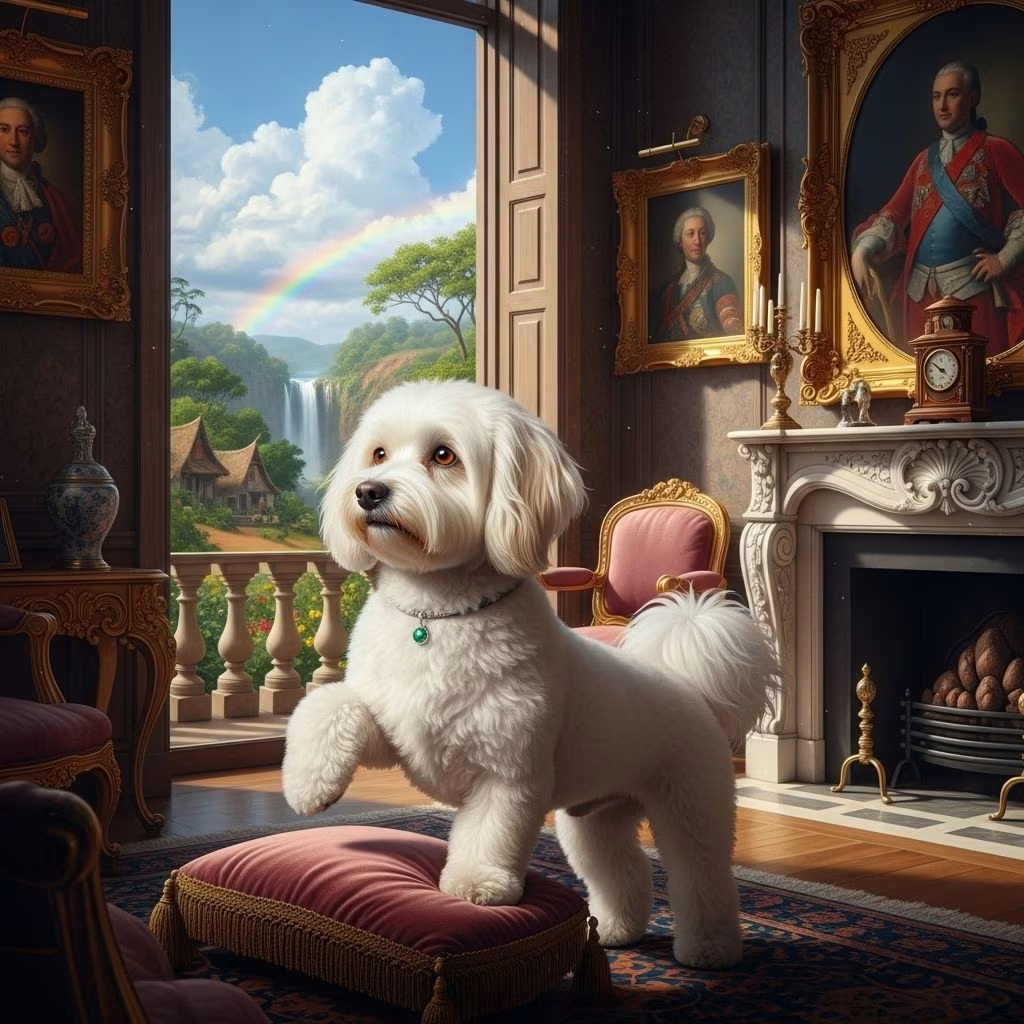
Despite—or perhaps because of—their wild origins, Cotons eventually captured the admiration of Madagascar’s ruling classes. Historical tradition holds that the Merina, the island’s noble tribe, were particularly enamored with the Coton’s charm, vigor, and unique vocalizations. Over time, the breed was restricted to the nobility, landowners, and privileged colonials, solidifying its status as the \”Royal Dog of Madagascar\”.
- Exclusive Ownership: The breed was protected and ownership was often prohibited for ordinary Malagasy people—a further mark of its prestige.
- Symbol of Status: Gifting or owning a Coton was a mark of favor and power in high society, both on the island and among colonial elites.
Even with this privileged place, the breed retained much of its resilience and intelligence forged during years surviving in the wild.
Modern Era: The Coton’s Journey Beyond Madagascar
The 20th century brought profound change for the Coton de Tulear, catalyzing its transformation from a local curiosity to an internationally beloved companion. The breed’s journey into the wider world tracks closely with Madagascar’s colonial history and subsequent interactions with France and Europe.
- First Export and Recognition:
- In the 1950s, as ties between Madagascar and Europe deepened, Cotons began appearing in France.
- The Societe Canine de Madagascar (Malagasy Kennel Club), founded in 1966, began formally registering the breed. The first official breed records date to 1968, and by 1971 the Federation Cynologique Internationale (FCI) had recognized the Coton de Tulear, establishing a breed standard.
- Early standards debated coloration; while the Malagasy standard accepted some color markings, the European version became stricter, favoring a primarily white coat.
- Spread to the United States and Canada:
- By the late 20th century, Cotons had reached North America, capturing hearts with their affectionate, clownish demeanor and hypoallergenic coats.
- The American Kennel Club and other canine organizations soon followed in embracing the breed, further increasing its global profile.
Unique Characteristics and Personality of the Coton de Tulear
While the Coton de Tulear’s history is shaped by challenge and adventure, the breed never lost its gentleness, playfulness, or social grace. Today’s Coton embodies both the spirit of a survivor and the heart of a companion animal.
| Trait | Description |
|---|---|
| Size | Small; typically 9 – 11 inches at the shoulder, 8 – 15 pounds |
| Coat | Long, soft, cotton-like hair; white or white with light grey/champagne markings (especially in puppies) |
| Lifespan | Average 14-17 years; renowned for longevity and robust health |
| Temperament | Affectionate, intelligent, sociable, lively |
| Unique Traits | Distinctive vocalizations, clown-like playfulness, strong sense of family, pack instincts |
| Other | Low-shedding, considered hypoallergenic by many |
- Vocalization: Cotons are noted for quirky vocal behaviors—chirps, grumbles, and even “talking”—a holdover from their wild days when communication within the pack was essential.
- Family Affection: Deeply attached to their owners, Cotons thrive on human interaction, making them exceptional companion dogs for families, singles, and seniors alike.
- Adaptability: Whether living in a city apartment or country estate, Cotons adjust readily, so long as they are near their people.
- Playfulness and Intelligence: Eager to learn, the breed enjoys games, training, and clowning—tendencies that trace back to both their survival in the wild and their courtly reputations.
Legends, Anecdotes, and Cultural Tales
The Coton de Tulear’s story is as much myth as history, inspiring anecdotes across Malagasy and global cultures:
- The Shipwreck Tale: The iconic story of Cotons surviving a shipwreck and paddling through shark-infested waters rests at the heart of the breed’s lore, suggesting pluck and fortitude as core traits.
- The Crocodile Diversion: Breeders in Madagascar tell of Cotons outwitting crocodiles with ruse and teamwork while crossing a river—a symbol of cleverness and unity.
- The Royal Edict: It’s said that at the height of their island fame, Cotons could not be owned by commoners, but only by royalty or those with a special license—a testament to their revered status.
From Wild to Worldly: The Legacy of the Coton de Tulear
Today, the Coton stands as a living emblem of Madagascar’s rich biodiversity and enduring traditions. It is a breed that straddles worlds—the wild rainforests of Africa, the stately homes of European and American elites, and the loving hearths of dog owners everywhere.
- Recognition and Preservation: Widely recognized by the American Kennel Club, Fédération Cynologique Internationale, and other breed organizations, stewards of the breed work to preserve its unique traits and storied history.
- Continued Popularity: The Coton’s gentle disposition, low allergen coat, and adaptability keep its reputation strong as a family-oriented, joyful companion for the modern world.
- Symbolic Importance: For Madagascar, the Coton de Tulear is more than just a pet—it is a living symbol of national pride, endurance, and heritage.
Frequently Asked Questions (FAQs)
Q: What makes the Coton de Tulear different from other Bichon-type breeds?
A: The Coton is uniquely recognized for its wild Madagascan origin, cottony coat, and pronounced pack behavior. Its adaptability and vocal range also set it apart from its Bichon relatives.
Q: Do Coton de Tulears shed?
A: Cotons are considered low-shedding and hypoallergenic, though regular grooming is essential to maintain their soft, tangle-free coats.
Q: Are Cotons good family dogs?
A: Yes, they are affectionate, engaging, and typically gentle with children and other pets, making them excellent companions for families of all shapes and sizes.
Q: How much exercise does a Coton de Tulear need?
A: Moderate daily exercise—games, walks, or playtime—satisfy the breed’s need for activity and mental stimulation.
Q: What health issues do they face?
A: Cotons are generally robust, but like all breeds they can be prone to genetic conditions. Responsible breeders screen for hereditary issues to ensure healthy puppies.
Q: Why is the breed called \”Coton de Tulear\”?
A: \”Coton\” refers to the breed’s soft, cotton-like coat while \”Tulear\” points to the southwestern Madagascar port city near where the breed was established.
A Living Legend
The Coton de Tulear has traversed oceans, survived in the wild, and charmed royals and dog lovers around the world. Its history is a blend of adventure, intelligence, and unflagging spirit—testament to a breed that remains as captivating and resilient as Madagascar itself.
References
- https://americancotonclub.com/history.htm
- https://www.akc.org/expert-advice/dog-breeds/coton-de-tulear-history-madagascars-feral-fluffy-dogs/
- https://www.usactc.org/coton/breed-information/
- https://www.petmd.com/dog/breeds/coton-de-tulear
- https://www.akc.org/dog-breeds/coton-de-tulear/
- https://siccaro.com/blogs/news/everything-about-the-coton-de-tulear-and-why-its-so-loved
- https://northamericancotonassociation.com/history-of-the-coton-de-tulear/
- https://malagasycotonclub.org/coton-history/past-history/