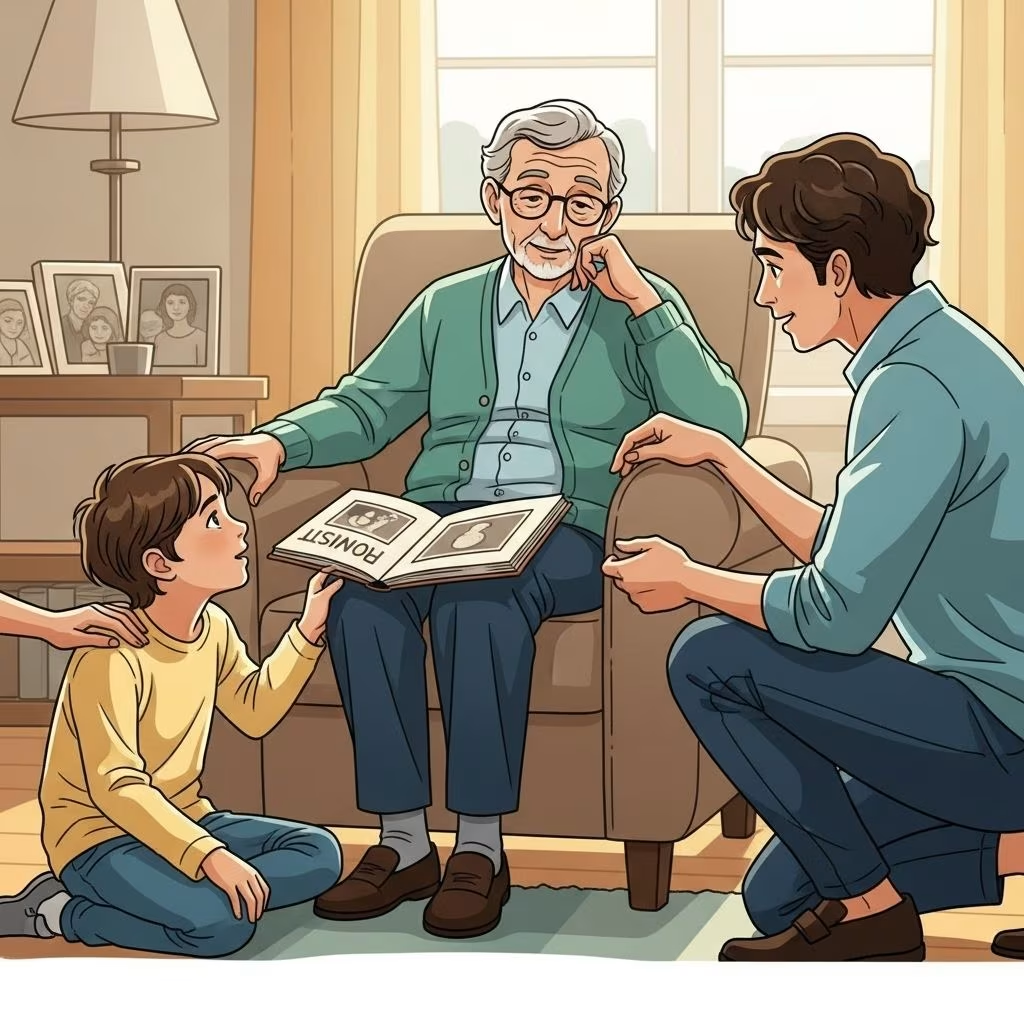
Helping Children Understand When Grandparents Have Dementia or Alzheimer’s
When a beloved grandparent is diagnosed with dementia or Alzheimer’s disease, families face a wave of emotions. Children, especially, may find the changes in their grandparent’s behavior, memory, or personality confusing and frightening. Open, age-appropriate conversations and practical strategies can help kids navigate these shifts, fostering empathy and resilience within the family.
Why It’s Important to Talk to Kids About Dementia
A diagnosis of dementia or Alzheimer’s is life-changing for everyone involved. Children are often deeply connected to their grandparents and may notice subtle changes before adults realize something is wrong. Honest, straightforward discussions help reduce anxiety, correct misconceptions, and empower children to maintain loving relationships with their grandparents.
- Kids sense changes. Children are perceptive and may notice memory lapses, mood swings, or unusual behavior, even if adults try to shield them.
- Addressing confusion and fear. Unexplained changes can be frightening. Providing truthful explanations can prevent fear and guilt.
- Fostering empathy and trust. Open communication models healthy coping skills and emotional intelligence.
Signs Your Child Has Noticed Something Is Wrong
Even young children can pick up on the subtle changes in a grandparent with dementia:
- Expressing confusion after a visit, such as, “Why doesn’t Grandma remember my name?”
- Talking about feeling sad, scared, or uncomfortable during interactions.
- Imitating behaviors they’ve seen, like repeating questions or getting frustrated easily.
Recognizing these signs allows parents to address worries early and offer reassurance.
How to Explain Dementia or Alzheimer’s to Children of Different Ages
Children process information based on their age and developmental stage. Adjust your approach to suit their level of understanding:
Preschoolers (Ages 3–5)
- Use simple language: “Grandpa’s brain is sick, and that makes it hard for him to remember things.”
- Reassure them: “You didn’t do anything wrong—Grandpa still loves you very much.”
- Stick to routines to provide comfort.
Elementary (Ages 6–12)
- Offer basic explanations: “Grandma has a disease called dementia. It makes it hard for her brain to remember things and sometimes act differently.”
- Answer questions honestly, but avoid overwhelming details.
- Encourage them to share their feelings and ask questions often.
Teens
- Share more details about dementia, brain health, and memory loss if they’re curious.
- Acknowledge their grief or embarrassment; these are normal feelings.
- Discuss ways to help and still connect, like looking through photo albums together or telling stories from the past.
Common Questions Children May Ask
- “Why can’t Grandpa remember my name anymore?”
- “Will Grandma ever get better?”
- “Can I catch dementia too?”
- “Why does Grandpa act so angry now?”
- “Is it my fault when Grandma gets upset?”
Answering honestly and calmly is crucial. For example: “Alzheimer’s is a sickness that happens in some older people. You’re safe, and it isn’t anyone’s fault.”
Practical Advice for Talking to Kids About Dementia
- Start conversations early. Don’t wait for a crisis before explaining what’s happening.
- Be patient. Kids may ask the same questions repeatedly as they process the changes.
- Normalize emotions. Let children know it’s okay to feel sad, angry, confused, or even embarrassed by their grandparent’s behavior.
- Maintain routines and connections. Keeping familiar routines with grandparents helps kids feel safe and connected.
- Involve them in care, if appropriate. Simple activities like drawing a picture for Grandma or helping set the table can be meaningful.
What Should Children Know About Dementia?
| Key Point | Explanation for Children |
|---|---|
| Dementia is a disease | It’s not anyone’s fault, not caused by something the child or grandparent did. |
| It affects memory and thinking | Grandparents may forget names, dates, or even people they love. |
| It’s not contagious | Nobody can “catch” dementia like they catch a cold. |
| Emotions may change | Grandparents might seem sad, confused, or angry, but it’s from the disease, not their feelings toward the grandchild. |
| Loving relationships can remain | Even if a grandparent forgets names or faces, the love doesn’t disappear. |
Helping Children Cope with Changes
Children need space to process the reality that their grandparent is changing. Supportive steps include:
- Encourage open dialogue. Invite kids to talk about their experiences and feelings.
- Use creative outlets. Drawing, writing, or storytelling helps children express complex emotions.
- Share good memories. Reminisce about fun times with the grandparent, reinforcing positive connections.
- Model empathy and patience. Children learn coping behaviors from observing adults.
How to Foster Connection Despite Cognitive Changes
Dementia can alter the way grandparents interact, but relationships remain possible. Consider the following:
- Choose familiar, simple activities: puzzles, crafts, listening to music, or looking at photo albums.
- Use short sentences and gentle reminders. Speak slowly and clearly without talking down to them.
- Accept if the grandparent doesn’t respond as expected; focus on the comfort of being together.
- Celebrate small moments of recognition or affection.
Addressing Challenging Situations
No two dementia journeys are alike, but common challenges may include:
- Embarrassing moments, such as a grandparent forgetting a child’s name or acting out in public.
- Frustration if a child feels ignored or unloved due to memory loss.
- Emotional outbursts or confusion during family gatherings.
When these situations arise:
- Remind the child it’s the disease causing the behavior, not the grandparent’s choice or feelings.
- Give the child a break if they feel overwhelmed.
- Encourage family discussions after challenging moments to clear up confusion.
When Children Experience Grief or Loss
Long before a grandparent with dementia passes away, children may grieve the loss of the person they once knew. This “ambiguous loss” requires sensitive support.
- Reassure children their feelings are valid—grief for changes, not just death, is real.
- Encourage mourning rituals, such as making a scrapbook or lighting a candle, to honor ongoing connections.
- Seek professional counseling or support groups if grief is prolonged or overwhelming.
Supporting Kids as Caregivers and Helpers
Depending on age and family structure, children may want—or need—to participate in their grandparent’s care. This can be positive but sometimes overwhelming.
- Assign age-appropriate tasks: handing a cup of water, chatting, or keeping company.
- Monitor their emotional health: watch for stress, sadness, or reluctance to visit.
- Ensure care roles do not interfere with school, friendships, or play.
- Praise their helpfulness and empathy, reinforcing that even small gestures matter.
Books and Resources for Children
- Picture books: Seek age-suitable storybooks that show characters experiencing dementia in the family.
- Activity guides: Many organizations offer downloadable resources and activities geared for kids.
- Support groups: Look for family or siblings’ support groups, in-person or online, to normalize their experience.
Tips for Parents and Guardians
- Be a role model for patience and compassion in your interactions with the affected grandparent.
- Clarify that it is OK for children to ask questions and share all feelings—including frustration or anger.
- Balance honesty with reassurance—avoid frightening details.
- Allow children to step back if interactions are upsetting; visits do not have to be long or frequent.
- Stay alert for changes in your child’s mood or behavior that may signal distress.
Frequently Asked Questions (FAQs)
Q: How much should I tell my child about the diagnosis?
A: Tell them as much as is developmentally appropriate, staying honest but gentle. It’s usually best to name dementia or Alzheimer’s and explain the basics, then invite follow-up questions.
Q: Could my child develop dementia or Alzheimer’s from spending time with their grandparent?
A: No. Dementia and Alzheimer’s are not contagious and do not spread through contact or care.
Q: My child feels sad after visits. What should I do?
A: Encourage them to talk about their feelings. Consider drawing, writing stories, or sharing memories as ways to express and process their emotions. If sadness persists, consider outside support.
Q: Should I stop taking my child to visit, since it’s upsetting?
A: Occasional breaks are fine, but maintaining a sense of connection is important. Adjust the length or structure of visits to maximize comfort. Let your child help decide what feels best.
Q: How can siblings work together to support each other?
A: Foster teamwork by assigning small collaborative activities during visits. Don’t let one child bear the emotional or practical load alone—normalize talking about their feelings together.
Key Takeaways for Families
- Children can thrive through difficult family changes when given honest information and emotional support.
- Ongoing communication, routines, and shared memories foster resilience and maintain precious connections.
- Parents and guardians play a pivotal role in modeling empathy and helping children adapt to their grandparent’s evolving needs.
Further Resources
- Alzheimer’s Association: Family resources for kids and teens
- Local libraries and support groups for families coping with dementia
- Online discussion boards for children and teenagers with caregiving roles
References
- https://academic.oup.com/innovateage/article/doi/10.1093/geroni/igae096/7848665
- https://pmc.ncbi.nlm.nih.gov/articles/PMC8369917/
- https://www.alzheimersblog.org/2020/11/23/supporting-native-american-elders-living-with-dementia/
- https://pmc.ncbi.nlm.nih.gov/articles/PMC10524180/
- https://www.countrymeadows.com/blog/its-grandparents-day-help-kids-connect-to-seniors-with-memory-loss
- https://www.lidementia.org/multi-gen-living/
- https://alz-journals.onlinelibrary.wiley.com/doi/10.1002/alz.13437
- https://www.jstor.org/stable/23086366
- https://www.alz.org/blog/2023/qanda-with-marynn-taylor-the-only-thing-that-matters-is-love