The merle pattern is one of the most fascinating and visually striking coat variations seen in the dog world. Renowned for its unique splotches and potential to produce captivating blue or odd-colored eyes, merle is both loved for its beauty and noted for the health and ethical considerations it presents in canine breeding. This article offers an in-depth look at the genetics behind the merle pattern, its occurrence across breeds, associated health issues, and guidance for responsible breeding.
What is the Merle Pattern in Dogs?
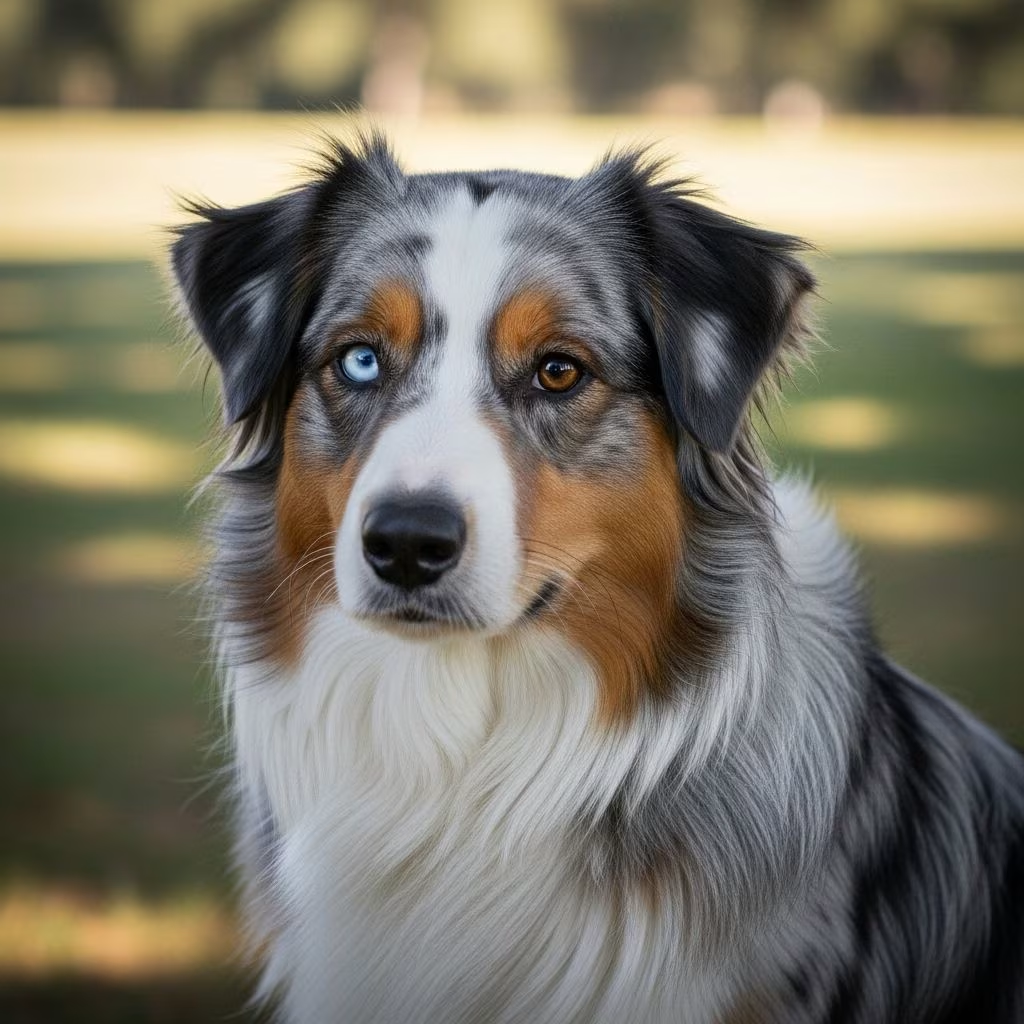
The merle pattern refers to a genetic mutation that creates a mosaic or mottled effect with irregular patches of diluted color amid a solid or piebald coat. These patches can lead to coats that appear as blue merle (black with gray patches) or red merle (brown/liver with tan patches), among other variations. Merle can also influence the color of a dog’s eyes and skin, resulting in blue, partially blue, or odd-colored eyes, and mottled pigmentation on the nose and paw pads.
- Blue Merle: Black base color with grayish patches.
- Red Merle: Brown/liver base color with tan patches (often incorrectly called “red,” which is genetically distinct from brown).
- Brindle and Sable Merle: Less common, and not usually accepted in breed standards.
The extent and visibility of the merle pattern can vary dramatically among dogs, often creating a uniquely beautiful mosaic of color.
The Science Behind Merle: Genetics and Inheritance
Merle is caused by a specific mutation in the PMEL gene (also known as SILV), with the genetic locus referred to as the M locus. The underlying genetics are complex:
- Inheritance: Merle is an autosomal, incompletely dominant trait. When a dog inherits one copy of the merle allele (heterozygous), it displays the merle phenotype.
- Genetic Outcomes in Breeding:
- Breeding a non-merle to a merle: About 50% of puppies will be merle, and the remainder will be non-merle.
- Breeding two merle dogs: Typically results in 25% non-merle, 50% merle, and 25% “double merle” (dogs homozygous for merle).
- Double Merle: Dogs that inherit two copies of the merle gene often exhibit extensively whitened coats and are at significantly increased risk of serious hearing and vision defects.
- Cryptic Merle: Dogs that have the merle genotype but little or no visible merling, especially common in dogs with red/recessive red coats.
- Testing: DNA tests are available to detect the merle allele length, which is crucial for responsible breeding purposes.
The mutation causes disruption early in the dog’s developmental cycle, affecting pigmentation in multiple body tissues. This randomness leads to a wide spectrum of merle appearance.
Table: Genetic Outcomes of Merle Breeding
| Parental Genotypes | % Non-Merle Puppies | % Merle Puppies | % Double Merle Puppies |
|---|---|---|---|
| Non-Merle x Non-Merle | 100% | 0% | 0% |
| Non-Merle x Merle | 50% | 50% | 0% |
| Merle x Merle | 25% | 50% | 25% |
The History of Merle: An Ancient Mutation
Research suggests that the merle gene mutation is ancient, existing well before the creation of modern dog breeds. Studies analyzing the DNA of dogs from various breeds indicate that the same gene is responsible for merle across all breeds where it is found. This finding refutes the idea that merle emerged independently in different breeds or was introduced more recently via crossbreeding. Instead, merle was likely present during the early domestication of dogs and has been selectively maintained or bred out in different lineages.
Breeds Known for Merle Pattern
The merle pattern occurs in several recognized breeds, where it is either accepted as a standard or, in some cases, is disallowed due to health considerations. Common merle dog breeds include:
- Australian Shepherd
- Miniature American Shepherd
- Collie
- Shetland Sheepdog
- Dachshund
- Cardigan Welsh Corgi
- Pyrenean Shepherd
- Great Dane
- Mudi
- Catahoula Leopard Dog
- Border Collie
- Chihuahua
- Pomeranian
Breed standards for the merle pattern are set by kennel and breed clubs, such as the American Kennel Club (AKC). In some breeds (e.g., Australian Shepherd and Collie), merle is a highly prized and recognized coat pattern. In others, such as the Cocker Spaniel, there has been significant debate about the authenticity and advisability of the pattern.
Health Issues Associated with the Merle Gene
While merle dogs are often considered highly attractive, the genetic trait comes with notable health risks, particularly when two merle dogs are bred together to produce “double merles.” Health impacts associated with the merle gene include:
- Hearing Impairment: Dogs homozygous for the merle gene (double merles) have a significantly increased risk of partial or complete deafness.
- Vision Defects: Double merles are prone to abnormal eye development and may be partially or totally blind.
- Other Health Problems: Pigment-associated anomalies such as microphthalmia (abnormally small eyes), colobomas (holes in eye structures), and increased susceptibility to sunburn or skin cancer on unpigmented areas.
- Impact on Non-Merles: Heterozygous (regular) merles can also experience low-moderate pigment-related issues, but the rates are noticeably lower than in double merles.
Because of these well-documented risks, knowledgeable breeders avoid mating two merle-patterned dogs. Modern veterinary genetics provides tools (DNA testing) for breeders to identify the merle status of their dogs and prevent unintentional double merle litters.
Responsible Breeding Practices for Merle Dogs
Responsible breeding revolves around producing healthy puppies and maintaining breed integrity. In the context of merle, breeders are encouraged to follow these best practices:
- Never breed two merle dogs together.
- Use DNA testing to confirm the presence and type of merle alleles in parent dogs.
- Be aware of “cryptic merle” dogs, whose merle status is not visually obvious, but who can still pass the gene to offspring.
- Consult breed standards and club guidelines to ensure merle is an accepted pattern in your breed.
- Provide transparency to puppy buyers regarding the genetics and potential health risks of merle-patterned puppies.
Education of both breeders and new dog owners is key to minimizing health risks and preserving the unique appeal of merle coats within responsible guidelines.
DNA Testing for Merle: How and Why
With the emergence of affordable genetic testing, breeders can now proactively determine the merle status of their dogs. DNA tests for the M locus/PMEL gene are widely available through veterinary genetics laboratories and offer highly reliable results.
- Helps prevent double merle breedings by confirming the presence of merle or cryptic merle alleles.
- Enables informed breeding decisions that align with health and breed standards.
- Aids identification of “atypical” or “phantom” merle carriers that may not visually display merling, reducing accidental health risks in puppies.
Protocols for collecting DNA are simple (often requiring just a cheek swab) and results can influence breeding selections in meaningful ways.
Frequently Asked Questions (FAQs) About Merle in Dogs
What does the merle pattern look like?
Merle creates a coat with randomly placed lighter and darker patches of color, often accompanied by blue or odd-colored eyes. The pattern’s expression varies from bold, dramatic splashes to very subtle or cryptic appearances.
Is it safe to breed two merle dogs?
No. Breeding two merles poses serious health risks for the puppies, most notably a high likelihood of deafness and blindness. Best practices dictate pairing a merle only with a non-merle.
Why do merle dogs often have blue or odd-colored eyes?
The merle gene impacts pigmentation, sometimes causing one or both eyes (or parts of the iris) to be blue, regardless of the dog’s base color or breed.
Is merle the same as dapple in Dachshunds?
Yes, in Dachshunds the term “dapple” is used for the merle pattern. The underlying genetics and health considerations are the same.
What is a “cryptic merle”?
A “cryptic” or “phantom” merle carries the merle allele but displays little or no coat pattern. This makes DNA testing especially important to avoid surprise double merle breedings.
Do all breeds accept merle in their standards?
No. While merle is accepted in some breeds, like the Australian Shepherd and Collie, it is disallowed or controversial in others. Always check relevant breed standards before selecting for merle.
Key Takeaways on Merle in Dogs
- The merle coat pattern is caused by a mutation in the PMEL gene affecting pigment distribution.
- Merle is inherited as an incompletely dominant trait; breeding two merles poses serious health risks.
- Numerous breeds feature merle patterns, but standards and acceptability vary.
- DNA testing enables responsible breeding, helps prevent health problems, and maintains breed standards.
With its ancient origins and captivating appearance, the merle coat continues to be one of the most unique—and complex—patterns in the dog world. Understanding its genetics and the ethical responsibilities of breeding is crucial for the ongoing health and integrity of merle-bearing breeds.
References
- https://www.akc.org/expert-advice/dog-breeding/merle-in-dogs/
- https://www.purinaproclub.com/pro-resources/learning-hub/breeding/merle-great-danes-coat-color-genetics
- https://americanspanielclub.org/about-the-breed/merle-color-in-cocker-spaniels/
- https://pmc.ncbi.nlm.nih.gov/articles/PMC7349775/
- https://vgl.ucdavis.edu/test/merle
- https://www.ashgi.org/understanding-merle-and-the-science-behind-it
- https://bulldogclubofamerica.org/wp-content/uploads/2019/10/Bulldog-Color-Dilemna.pdf
- https://en.wikipedia.org/wiki/Merle_(dog_coat)
- https://embarkvet.com/resources/embark-introduces-merle-coat-color-testing/