


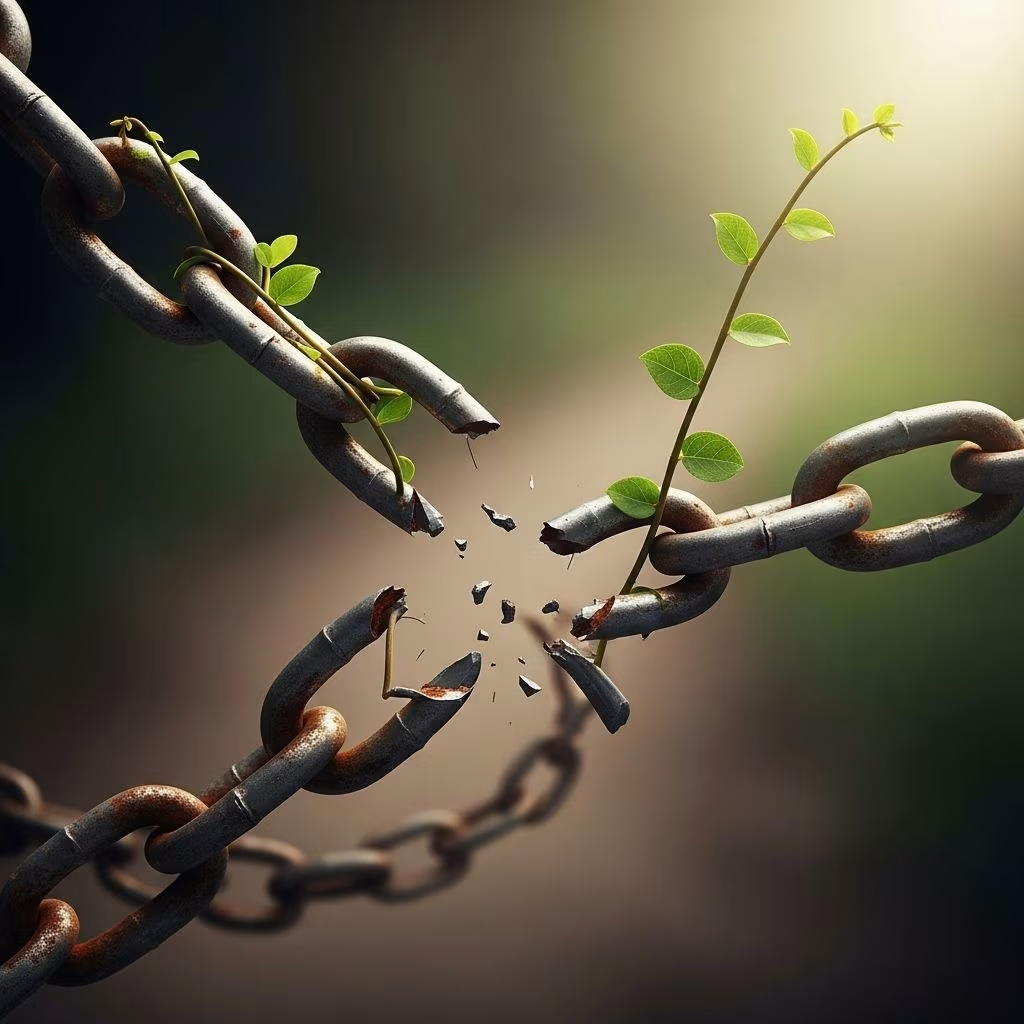
13 Proven Ways to Stop Attracting Unhealthy Relationships
Do you find yourself repeatedly attracting toxic, unhealthy relationships despite your best intentions? You’re not alone. Many people fall into the same patterns, ending up with partners who are bad for their emotional or mental well-being. However, the cycle can be broken. By understanding your patterns and transforming your approach to love, you can start drawing in relationships that foster growth, respect, and happiness.
Understanding Unhealthy Relationship Patterns
Before you can break the cycle, it’s essential to understand what unhealthy relationships look like. Common signs include:
- Toxic communication: Sarcasm, criticism, contempt, and frequent arguments.
- Controlling behaviors: Obsessive monitoring, jealousy, or needing to know your whereabouts at all times.
- Lack of support or trust: Feeling unsupported, competition over achievements, constant suspicion, and mistrust.
- Manipulation and gaslighting: Emotional manipulation such as love-bombing, guilt-tripping, and denial of your experiences.
- Neglecting self-care: Sacrificing your interests, neglecting your health, or losing your sense of identity.
If you recognize these patterns in your relationships, it’s time to make a change. Below are 13 actionable steps—rooted in psychology and relationship expertise—to help you stop attracting unhealthy partners and start building stronger, more satisfying connections.
1. Recognize Your Patterns
The first step toward change is awareness. Take a close look at your past relationships and ask yourself:
- Do your partners share similar toxic traits (e.g., jealousy, emotional unavailability, controlling behavior)?
- Are you neglecting your own needs or minimizing your feelings to avoid conflict?
- Do you find yourself staying in hope things will change, even when red flags are obvious?
This honest reflection will help you pinpoint the patterns you want to break.
2. Understand the Root Causes
Our relationship choices are often influenced by formative experiences. Examine your past to identify what’s driving your attraction to unhealthy partners:
- Childhood experiences: Parental neglect, lack of affection, or criticism can shape adult attachment styles.
- Self-worth issues: Low self-esteem may unconsciously drive you to accept less than you deserve.
- Trauma bonding: Past abuse or trauma can create dysfunctional attachments where emotional highs and lows feel like “love”.
3. Challenge and Change Your Beliefs About Love
Consider your core beliefs about relationships. Do you think love must be turbulent or come with drama? Healthy love should not be exhausting or based on sacrificing your needs.
- Healthy love is supportive, respectful, and secure.
- You are deserving of love that brings peace—not chaos—to your life.
4. Heal From the Past
Unprocessed emotional wounds perpetuate negative patterns. Healing might include:
- Seeing a therapist to process old hurts and develop healthier attachment styles.
- Practicing self-forgiveness and letting go of blame, whether self-directed or toward others.
- Engaging in self-care—prioritize activities that restore your sense of self.
5. Set Clear Boundaries and Enforce Them Early
Boundaries are essential to safe, respectful relationships. Decide what behaviors are unacceptable, and practice enforcing your limits early on:
- Be explicit about your deal-breakers (e.g., dishonesty, disrespect, aggression).
- Communicate your boundaries calmly and clearly.
- Be prepared to leave if someone crosses your boundaries—no matter how much you like them.
6. Stop Trying to Rescue or Fix Others
Many people are drawn to partners they believe they can “save” or “heal.” This pattern rarely leads to healthy love. Instead:
- Aim to date equals—partners who don’t require “fixing.”
- Let go of the fantasy that love alone can change someone.
7. Notice and Address Red Flags Instantly
Pay attention to warning signs in the early stages of any relationship. Red flags may include:
- Frequent jealousy or possessiveness
- Attempts to isolate you from friends/family
- Controlling behaviors (such as dictating your actions or outfits)
- Toxic communication or emotional manipulation
If a red flag appears, do not ignore it or hope it will go away. Prioritize your emotional safety above all else.
8. Take Time to Know Yourself
Develop a deep understanding of who you are, outside the context of a relationship. Focus on:
- Your core values, interests, and long-term goals
- The qualities you truly want (and don’t want) in a partner
- Pursuing passions and building an independent, fulfilling life
9. Practice Self-Respect and Self-Love
You cannot attract a loving, respectful partner if you don’t treat yourself with love and respect. Practice:
- Affirming your worth daily
- Refraining from negative self-talk
- Surrounding yourself with people who uplift you
10. Be Patient—Avoid Rushing Into Relationships
Compulsive dating or serial relationships often reinforces unhealthy cycles. Slow down and give yourself time to genuinely get to know potential partners before committing.
- Space allows you to observe how someone behaves over time (especially under stress or disappointment).
- Use early dating to assess compatibility and shared values—not just chemistry.
11. Learn to Communicate Effectively
Healthy relationships thrive on open, honest communication. Practice:
- Expressing your needs, feelings, and concerns assertively and with respect
- Listening with empathy and validating your partner’s experiences
- Avoiding sarcasm, contempt, and defensiveness
12. Be Willing to Walk Away
The fear of being alone can keep people trapped in unhealthy partnerships. To break the cycle, cultivate the inner strength to walk away when your boundaries are repeatedly violated or when the relationship is negatively affecting your well-being.
- Your happiness and peace of mind must come first.
- Ending toxic relationships frees you to attract healthier connections in the future.
13. Surround Yourself With Positive Examples of Healthy Love
Who you interact with influences your ability to build healthy bonds. Seek out relationships and communities where love is mutual, honest, and respectful. This might mean:
- Modeling your approach on couples with strong, supportive dynamics
- Spending time with friends who affirm your growth and aspirations
- Letting go of connections that reinforce negative beliefs about love
Table: Healthy vs. Unhealthy Relationship Patterns
| Healthy Relationship | Unhealthy Relationship |
|---|---|
| Mutual respect and trust | Jealousy, mistrust, and control |
| Healthy communication (active listening, honesty) | Sarcasm, criticism, and frequent arguments |
| Encouragement and support for personal growth | Competition and resentment |
| Clear, respected boundaries | Boundary violations and emotional manipulation |
| Sharing time together and apart for balanced independence | Isolation or excessive dependence |
Frequently Asked Questions (FAQs)
Q: Why do I keep attracting toxic or unhealthy partners?
A: Often, repeated attraction to toxic partners stems from unresolved patterns or beliefs developed during childhood, low self-esteem, or unhealed trauma. By understanding these roots and consciously working to heal them, you can change your relationship results.
Q: How can I recognize red flags early in a relationship?
A: Common red flags include controlling behaviors, lack of respect for your boundaries, repeated dishonesty, jealousy, emotional unavailability, and poor communication. Pay attention to your intuition and how you feel around the person—if you feel anxious, unsafe, or diminished, these are signs to heed.
Q: Can two people change an unhealthy relationship into a healthy one?
A: Yes, but only if both partners are willing to acknowledge unhealthy patterns, take accountability, and actively work towards healthier dynamics (e.g., through communication skills, therapy, setting boundaries, and mutual respect).
Q: What does a healthy relationship feel like?
A: A healthy relationship brings feelings of safety, joy, trust, and encouragement. Both partners support each other’s growth and happiness without resorting to manipulation, guilt, or control. You can be yourself without walking on eggshells.
Q: Is it okay to be single while working on myself?
A: Absolutely. Taking time alone to heal, reflect, and build your self-worth enhances your ability to attract healthier, more fulfilling relationships in the future.
Quick Recap: Transforming Your Relationship Pattern
- Reflect on your relationship history to spot unhealthy patterns.
- Identify and address root causes, such as childhood experiences or low self-esteem.
- Challenge internalized beliefs about what love “should” feel like.
- Set clear boundaries and stick to them, especially at the start of new relationships.
- Never ignore red flags or minimize your own needs.
- Prioritize your self-respect and personal happiness above all else.
By following these 13 steps, you set yourself up to attract healthier, happier, and more rewarding relationships. Breaking the cycle takes courage and vigilance, but the rewards are well worth the effort.
References
- https://www.missionaustralia.com.au/stories/safe-homes/how-to-spot-an-unhealthy-relationship
- https://www.healthline.com/health/toxic-relationship
- https://abbymedcalf.com/why-people-chase-toxic-relationships-and-unavailable-partners/
- https://www.lovepanky.com/love-couch/broken-heart/types-of-toxic-relationships
- https://www.lovepanky.com/love-couch/broken-heart/love-hate-relationship-can-it-work
- https://lovepanky15.rssing.com/chan-14866688/latest.php
- https://www.armyresilience.army.mil/sharp/pages/healthy-relationships.html
- https://www.chconline.org/resourcelibrary/characteristics-of-healthy-unhealthy-relationships/
- https://www.soberrecovery.com/forums/friends-family-alcoholics/429762-18-emotions-you-shouldn-t-feel-healthy-relationship.html
- https://www.youtube.com/watch?v=lv2q7LWSl8s


