


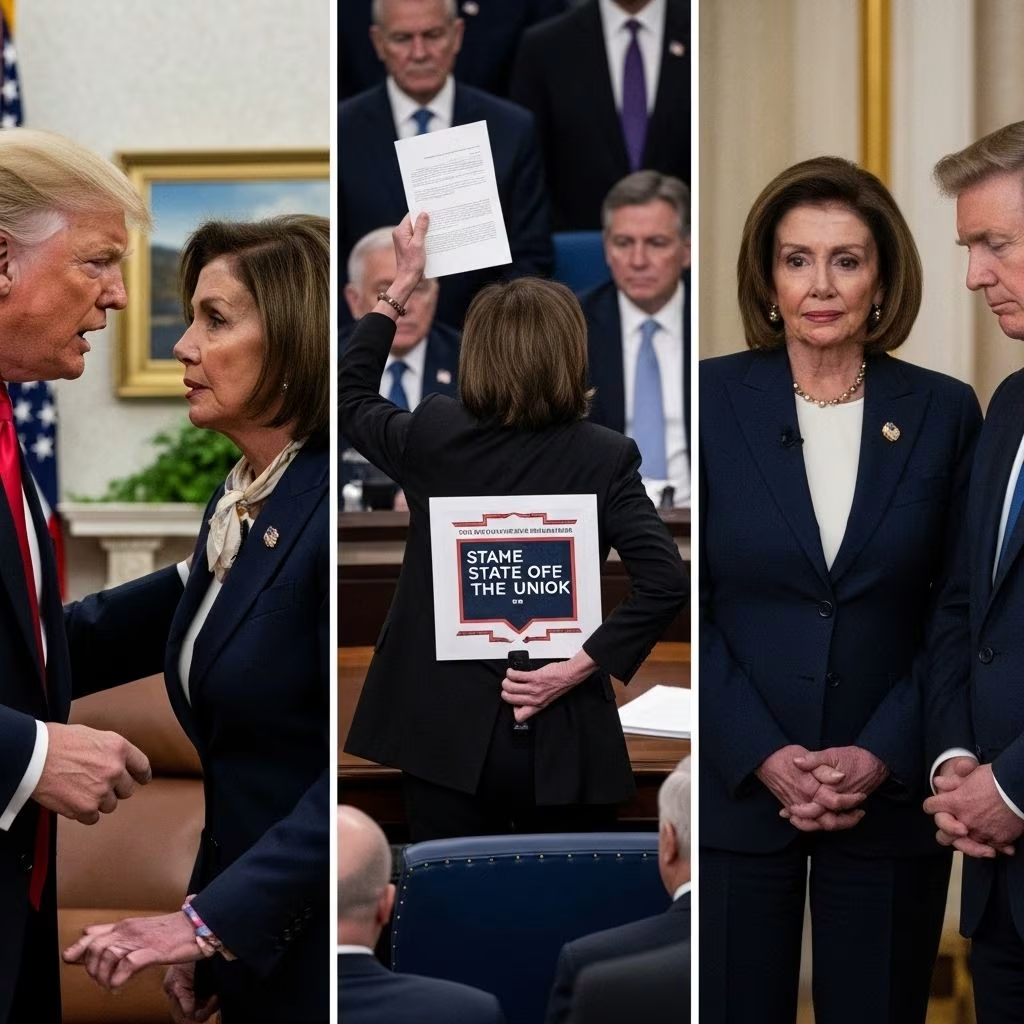
Three Photos of Donald Trump & Nancy Pelosi That Define Their Tumultuous Relationship
Donald Trump and Nancy Pelosi are two towering figures in recent American political history. Their complex relationship—marked by showdowns, cutting remarks, and rare public exchanges—has been encapsulated in a handful of images that speak volumes about the state of U.S. leadership and the mounting political divide during their overlapping years in power.
This article explores three defining photos that distill the essence of their dynamic: from combative showdowns in the halls of government to viral moments that became instant symbols of resistance and authority. Beyond the surface-level drama, these images reveal deeper truths about power, partisanship, and the state of American democracy during the Trump administration.
The First Photo: Nancy Pelosi Stands Up in the White House
One of the most iconic images in the Trump-Pelosi history is that of Pelosi standing and pointing across the table at President Trump during an October 2019 meeting at the White House. Representatives from both major parties had gathered to discuss the withdrawal of United States troops from northern Syria. As tensions escalated, an official White House photographer captured this singular moment: Pelosi, the House Speaker, rising to confront the president, while Trump was seated across the table, flanked by generals and advisors.
- Symbolism: Pelosi’s stance projected defiance, resolve, and the willingness to challenge authority—even when doing so literally drew the attention of the room.
- Media Impact: After the photo’s release, the image quickly went viral, with supporters lauding Pelosi’s “standing up to Trump” moment, while critics claimed it showed a breakdown in decorum and bipartisanship.
- Pelosi’s Perspective: Pelosi herself embraced the image, making it her profile photo on social media—the move reframed a stand-off into a statement of leadership in a divided government.
This episode was a crystallization of their relationship: one defined by open confrontation and moments when the House Speaker became an emboldened symbol of resistance to the President.
The Story Behind the Photo
The White House released the photograph initially as a way to show Democrats storming out of a meeting, but Pelosi reclaimed it as an emblem of holding her ground. In recounting the incident, reporters and aides highlighted how Pelosi expressed concerns about national security while Trump labeled her a “third-rate politician,” prompting Democrats to walk out in protest. This moment solidified perceptions of Pelosi as a chief adversary and foil to President Trump’s approach to governance.
The Second Photo: The “Clap Back” at the State of the Union
Another unforgettable image is from the February 2019 State of the Union Address. The composition: President Trump delivering remarks at the podium, while Pelosi, seated behind him as Speaker of the House, delivers a now infamous slow, pointed clap as Trump calls for an end to “revenge politics.”
- The “Pelosi Clap”: The gesture was immediately dissected as both a sarcastic acknowledgment and a public rebuke, spurring memes and global shares on social media platforms.
- What It Represented: For many, the moment encapsulated the performative aspect of modern political opposition, with subtle gestures weaponized for maximum political effect.
- Pelosi’s Explanation: In later interviews, Pelosi described the clap as “completely unintentional” but admitted it was intended to be “in the spirit of encouraging the president to rise to the occasion.”
The subtext was unmistakable: the relationship between Trump and Pelosi was defined not by camaraderie or compromise but by sharp, often public exchanges—sometimes needing only a look or a gesture to convey the deep divide.
Context: Government Shutdown & The Fight Over the Wall
The clap became iconic against the backdrop of a prolonged government shutdown, the longest in U.S. history, lasting from December 22, 2018, into early 2019. The shutdown centered on the President’s demands for border wall funding and Pelosi’s refusal to allocate that money, setting up a political standoff that left many federal workers without pay.
| Event | Pelosi’s Role | Trump’s Stance |
|---|---|---|
| 2018-2019 Government Shutdown | Refused to approve wall funding, pushed to reopen government | Insisted on wall funding as condition to reopen government |
| State of the Union Invitation | Rescinded invitation due to shutdown | Insisted on delivering address; later relented |
Pelosi used her institutional power to halt the President’s legislative agenda, positioning herself as a central figure in the “resistance.” Conversely, Trump targeted Pelosi in public, calling her a “Radical Democrat” and dismissing her leadership as a political ploy.
The Third Photo: The Impeachment Signature
The third photo that defined the Trump-Pelosi relationship arrived during another climactic moment: Pelosi’s public signing of the articles of impeachment against President Trump in January 2020. Cameras captured her sitting at a desk, surrounded by House managers, using multiple pens to sign her name—each pen a souvenir to mark the historic significance.
- Historic Firsts: Trump became the third U.S. president to be impeached, and Pelosi, the first woman to sign such articles.
- Media Repercussions: Critics claimed the signing was a partisan spectacle; supporters viewed it as a solemn defense of constitutional checks and balances.
- Larger Meaning: The image summed up a period of high-stakes governance, where the legislative branch exercised its authority to challenge the executive power.
Pelosi emphasized the gravity of the moment, describing it as a “serious and solemn undertaking.” Trump, on the other hand, derided the move as yet another “witch hunt” and an illegitimate political attack.
Aftermath: Political and Personal Fallout
Following impeachment, the animosity between the two figures only deepened. Trump’s public comments about Pelosi became increasingly confrontational. According to multiple reports, Trump’s rhetoric often shifted from grudging respect for Pelosi’s tactical skills to overt personal attacks. Pelosi, meanwhile, doubled down on questioning Trump’s fitness for office and his adherence to democratic norms.
Between the Lines: Subtle Exchanges and Political Theater
While the three primary photos reveal moments of explicit conflict or symbolism, numerous smaller interactions also defined the relationship:
- Letters and Official Correspondence: Pelosi wielded her power not just in meetings or public appearances, but also through formal communications—such as the letter rescinding Trump’s State of the Union invitation amidst the shutdown.
- Barbed Comments and Media Exchanges: Both leaders employed media strategically; Trump relied on social media for direct attacks, while Pelosi often used press conferences to question his motives and highlight her party’s alternative agenda.
- Unexpected Moments: Trump, known for off-the-cuff remarks, once bizarrely commented to colleagues about Pelosi’s perceived attractiveness and their age difference, drawing family members into the fray and highlighting the occasionally personal nature of their feud.
Media, Memes, and Political Symbolism
Photos of Trump and Pelosi, especially the three outlined here, became not just news but cultural moments, spawning memes, protest posters, and new vocabulary for political gestures. The “Pelosi Clap,” Pelosi standing in the White House, and her impeachment signing—these images circulated far beyond political news cycles, shaping public perceptions and serving as shorthand for larger political struggles.
Long-Term Impact on Political Leadership
The visual documentation of Trump and Pelosi’s clashes illustrates fundamental shifts in American governance:
- Shifting Power Dynamics: The dynamic revealed the limits and possibilities of legislative checks on the executive, especially during heightened polarization.
- Unprecedented Visibility: The spread of these images online increased transparency, but also amplified divisions, encouraging supporters on both sides to dig in.
- Historic Firsts: Pelosi’s tenure marked a series of firsts for women in leadership, while Trump’s presidency broke with established protocols.
This new chapter of American political history was, in part, written by the moments frozen in these three photographs—each reflecting the striking personalities and high stakes of their era.
Frequently Asked Questions (FAQ)
Q: Why do photos of political leaders like Trump and Pelosi go viral?
A: Photographs capture pivotal, symbolic moments that visually represent broader narratives in politics—such as opposition, defiance, or unity. In Trump and Pelosi’s case, images went viral both because of their symbolic value and the high visibility of their public rivalry.
Q: Did Trump and Pelosi ever work together on legislation?
A: While both were involved in negotiations during major legislative debates—such as COVID-19 stimulus packages or federal spending—their interactions were most frequently marked by conflict rather than cooperation.
Q: What lasting effect did their rivalry have on the U.S. government?
A: The Trump-Pelosi relationship exemplified the increasing partisanship of modern American politics and demonstrated the real impact leadership rivalries can have on legislative outcomes, public opinion, and the tone of public discourse.
Q: What do these iconic photos tell us about women in American politics?
A: Pelosi’s presence in these historic images—as the first female Speaker and a principal antagonist to the sitting president—highlighted the growing role of women in power and the changing face of political leadership in the U.S.
Key Takeaways
- The Trump-Pelosi rivalry was defined as much by powerful, symbolic moments as by legislative battles.
- Photographs of their interactions served as touchstones for supporters and critics alike, amplifying their messages far beyond Washington.
- Their adversarial relationship was emblematic of a broader partisan divide—and a new visual era in American political history.


