


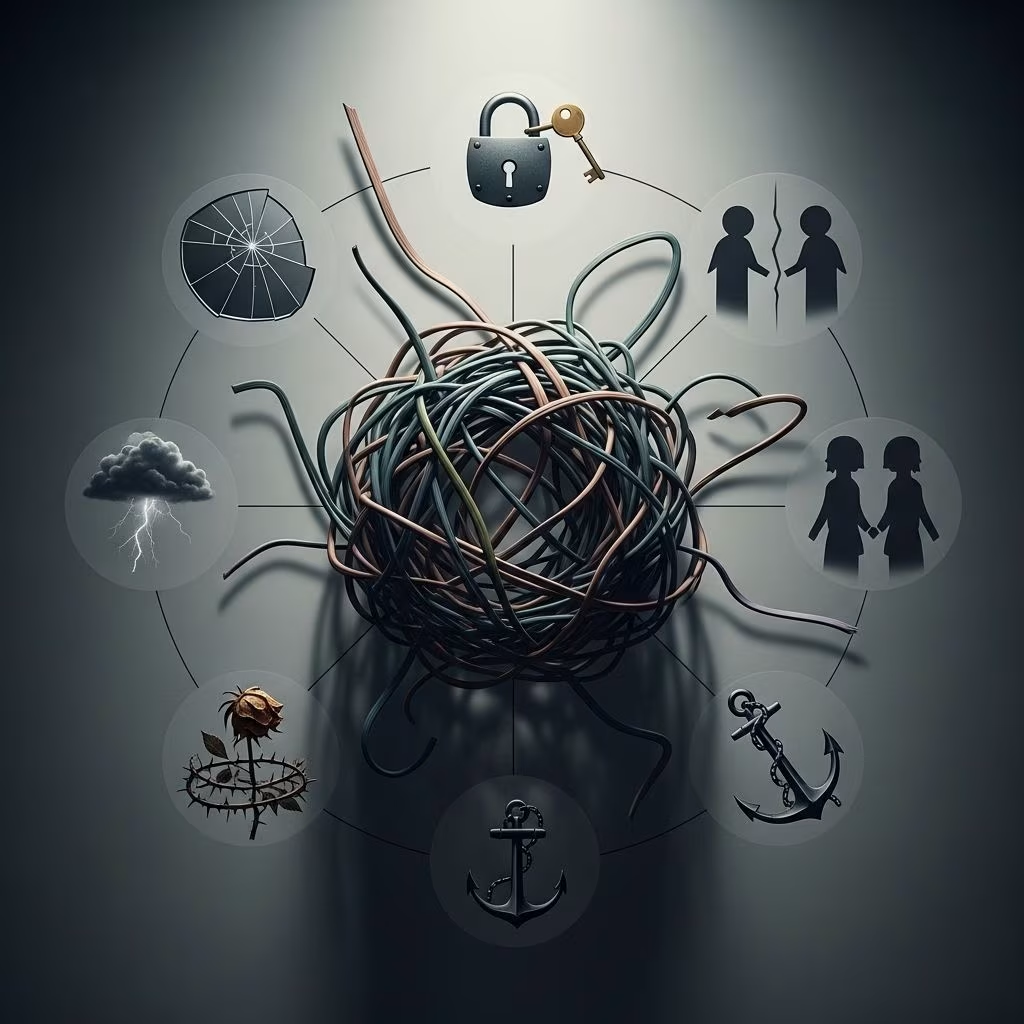
6 Recurring Patterns in Dysfunctional Relationships
Most people will experience moments of frustration, jealousy, or conflict in any relationship. But dysfunctional relationships are marked by negative patterns so deeply entrenched that positivity and growth become nearly impossible. Understanding these unhealthy cycles is not only key to identifying dysfunction in your own life, but also to breaking free from its emotional grip. Dysfunction can manifest in romantic, family, friendship, or even workplace relationships. Here’s a closer look at the six most persistent behaviors that keep a relationship locked in dysfunction, and how they undermine happiness and trust.
The Fine Line Between Normal Problems and Dysfunction
It’s important to note that not every disagreement or moment of selfishness is evidence of dysfunction. Even healthy relationships have their rough patches—what sets dysfunction apart is when damaging behaviors are constant, overwhelming, and shape the day-to-day dynamic between two people Instead of working together or growing through difficulty, dysfunctional partners end up reinforcing each other’s worst instincts, creating a cycle that becomes difficult to escape.
- Dysfunction breeds more dysfunction: Negative patterns reinforce and accelerate themselves, making change even harder as time goes on.
- Not always rooted in “bad” people: Individuals in dysfunctional relationships don’t have to be inherently toxic; it’s often the particular chemistry or history between them that causes unhealthy patterns.
- Applies to more than romance: Friendships, parent-child bonds, and professional relationships can be just as susceptible to these cycles.
1. They Lie (To Everyone—Including Themselves)
Lying becomes a hallmark of dysfunctional relationships. It’s not just exaggerations or omissions, but an everyday habit that erodes trust on all sides.
- Lies to each other: Partners regularly hide truths to avoid confrontation or controversy. These can be small “white lies” or significant secrets that mask real problems.
- Lies to outsiders: The couple, or one partner, might misrepresent their relationship to family and friends, pretending all is well when it’s not in order to protect their image or avoid concern.
- Lies to themselves: Perhaps most dangerously, people in dysfunctional relationships convince themselves that their situation is normal, even as it causes pain or instability.
Compulsive dishonesty is a natural outgrowth of fear—fear of conflict, judgment, or the end of the relationship. Yet, the more lies are told, the more toxic the atmosphere becomes.
2. They Self-Sabotage
People who would otherwise be logical, accomplished, or emotionally strong might find themselves acting against their own happiness when they are stuck in a dysfunctional dynamic. This can look like:
- Starting unnecessary arguments when things are calm or improving.
- Pushing boundaries or testing each other’s patience just to see what will happen.
- Making poor decisions together or enabling negative habits, such as financial irresponsibility or escalating unhealthy coping mechanisms.
Dysfunctional relationships can be inherently self-destructive; there is an unspoken belief that things “should” eventually collapse, so there is unconscious (or sometimes conscious) effort to hasten chaos when comfort feels unfamiliar or threatening.
3. They Create Drama From Small Issues
In a healthy relationship, partners show the judgement to let minor issues slide and address only what truly matters. Dysfunctional couples do the opposite: every slight, miscommunication, or delay turns into a major crisis.
- Nonverbal cues (such as a change in tone or body language) are taken as personal affronts.
- Small mistakes are blown out of proportion, often leading to accusations and emotionally charged reactions.
- Every misunderstanding becomes an opportunity for melodrama, rather than a chance to clarify intentions and rebuild trust.
This cycle creates a perpetual state of defensiveness and anticipation, where both parties expect the worst and prepare for constant emotional upheaval.
4. They Refuse to Compromise
Healthy relationships require compromise—sometimes you watch a movie you don’t like, other times you go out of your way for your partner’s needs or family. In dysfunction, compromise is seen as a defeat; neither party is willing to bend, even on small matters. Instead, partners adopt a rigid, all-or-nothing mentality.
- Unwillingness to meet in the middle: No one wants to step outside their comfort zone, even if it would lead to a more harmonious outcome.
- Selfish patterns: Each person acts with their own interests in mind, ignoring opportunities for mutual benefit.
- Persistent standoffs: The lack of flexibility derails even simple daily decisions, fostering resentment and emotional exhaustion.
This attitude ensures that problems persist and creates a feedback loop where both individuals feel unheard and undervalued.
5. They Leave Issues Unresolved
In functional relationships, problems are acknowledged and addressed—even if not immediately fixed. People in dysfunctional relationships, however, let issues linger until they become scars:
- They go to bed angry, leaving conflicts to fester overnight and beyond.
- Major disagreements are never truly settled, just put aside until the next argument reopens old wounds.
- Repetitive cycles: Fights and discussions repeat endlessly, with no new insight or growth—partners relitigate the same grievances over and over.
Whether because of pride, stubbornness, or a sense of hopelessness, none of the unresolved issues ever genuinely improve. The relationship becomes defined by gridlock—motion, but no progress.
6. They Keep Coming Back for More (Despite Everything)
One of the most difficult patterns to break is the compulsion to return to an unhealthy relationship despite years of pain or turmoil. Why does this cycle persist?
- Attachment to the familiar: Over time, even chaos feels safer than the unknown. Emotional dependencies can mirror addiction, where drama and instability become the norm.
- Fear of vulnerability: Constant conflict makes emotional openness seem dangerous. If you expect disappointment, then at least hurt is never a surprise.
- Responsibility avoidance: It’s often easier to blame circumstances or the other person than to examine what needs to change within yourself—or to admit, “I deserve better.”
- Trauma bonding: Intense ups and downs create neurological bonds, reinforcing the cycle with psychological rewards, however fleeting.
The result is a self-perpetuating relationship where neither party escapes—or wants to, despite being aware of the dysfunction.
Table: Dysfunctional vs. Functional Relationship Patterns
| Pattern | Dysfunctional Relationship | Functional Relationship |
|---|---|---|
| Communication | Lies, misrepresentation, withholding truth | Open, honest, transparent dialogue |
| Conflict resolution | Issues left unresolved, repeated arguments | Proactive, solutions-oriented discussions |
| Compromise | Stubbornness, selfishness | Willingness to meet halfway |
| Daily interactions | Chronic drama, volatility | Stability, supportiveness |
| Emotional climate | Distrust, anxiety, anger | Security, respect, kindness |
| Growth | Stagnation, repetitive cycles | Personal and mutual development |
Why Are Dysfunctional Patterns So Hard to Break?
Dysfunction is sticky. Despite misery or exhaustion, people remain in these relationships for a multitude of psychological and emotional reasons:
- Fear of being alone: The prospect of singlehood or unfamiliarity can seem more frightening than persisting in a failing relationship.
- Low self-worth: Years of conflict or put-downs can erode self-esteem, leading to a belief that this relationship is all you deserve.
- History and investment: The longer people remain, the harder it is to walk away because of the investment of time, energy, or shared experiences, even when those are largely negative.
- Past trauma and learned patterns: Dysfunctional behaviors may repeat patterns from childhood or prior relationships, becoming an unconscious script for “normal”.
Frequently Asked Questions (FAQs)
What causes functional relationships to become dysfunctional?
Functional relationships can deteriorate due to chronic stress, poor communication, unresolved resentments, or negative influences from external sources. If negative interactions consistently outweigh positive ones, dysfunction can develop and become the new norm.
Are dysfunctional relationships always abusive?
Not all dysfunctional relationships are physically or emotionally abusive, though manipulation, deception, and volatility are common. Many dysfunctional relationships feature recurring negative cycles without explicit abuse, but the emotional toll can still be significant.
Can a dysfunctional relationship be fixed?
Transformation is possible when both parties recognize the dysfunction, genuinely commit to change, and seek outside help if necessary (such as therapy or mediation). However, some relationships are too entrenched to change without major intervention.
Why do people stay in dysfunctional relationships?
Factors include fear of loneliness, financial dependence, low self-esteem, or trauma bonding. The known chaos can feel safer than facing the fears associated with leaving and starting over.
Can dysfunction exist in non-romantic relationships?
Yes. Dysfunctional patterns commonly arise in friendships, families, and even workplace dynamics—wherever recurring, entrenched negative interactions prevent growth and mutual respect.
Tips for Breaking Free from Dysfunctional Relationship Patterns
- Seek self-awareness: Recognize patterns and take ownership of your role in sustaining them.
- Set boundaries: Healthy limits are essential to disrupt unhealthy dynamics and protect your well-being.
- Communicate honestly: Break the lying cycle by voicing your needs, fears, and pain.
- Get support: Friends, counselors, or support groups offer new perspectives and resources.
- Be prepared to walk away: Sometimes, the healthiest choice is to leave a relationship that cannot be repaired.
While dysfunction can feel inescapable, recognizing these key patterns is the first step toward healing—and building relationships that are truly supportive, loving, and growth-oriented.
References
- https://www.bustle.com/articles/56748-6-things-people-in-dysfunctional-relationships-always-do
- https://www.yourtango.com/heartbreak/toxic-relationship-behaviors-most-couples-think-normal
- https://abbymedcalf.com/why-people-chase-toxic-relationships-and-unavailable-partners/
- https://www.bustle.com/articles/126572-too-many-people-stay-in-bad-relationships-new-survey-says-and-heres-why
- https://www.psychologytoday.com/us/blog/fixing-families/202408/relationships-3-coping-styles-6-dysfunctional-combinations
- https://markmanson.net/toxic-relationship-signs
- https://www.marriage.com/advice/relationship/end-a-dysfunctional-relationship-cycle/
- https://pmc.ncbi.nlm.nih.gov/articles/PMC6612234/


