


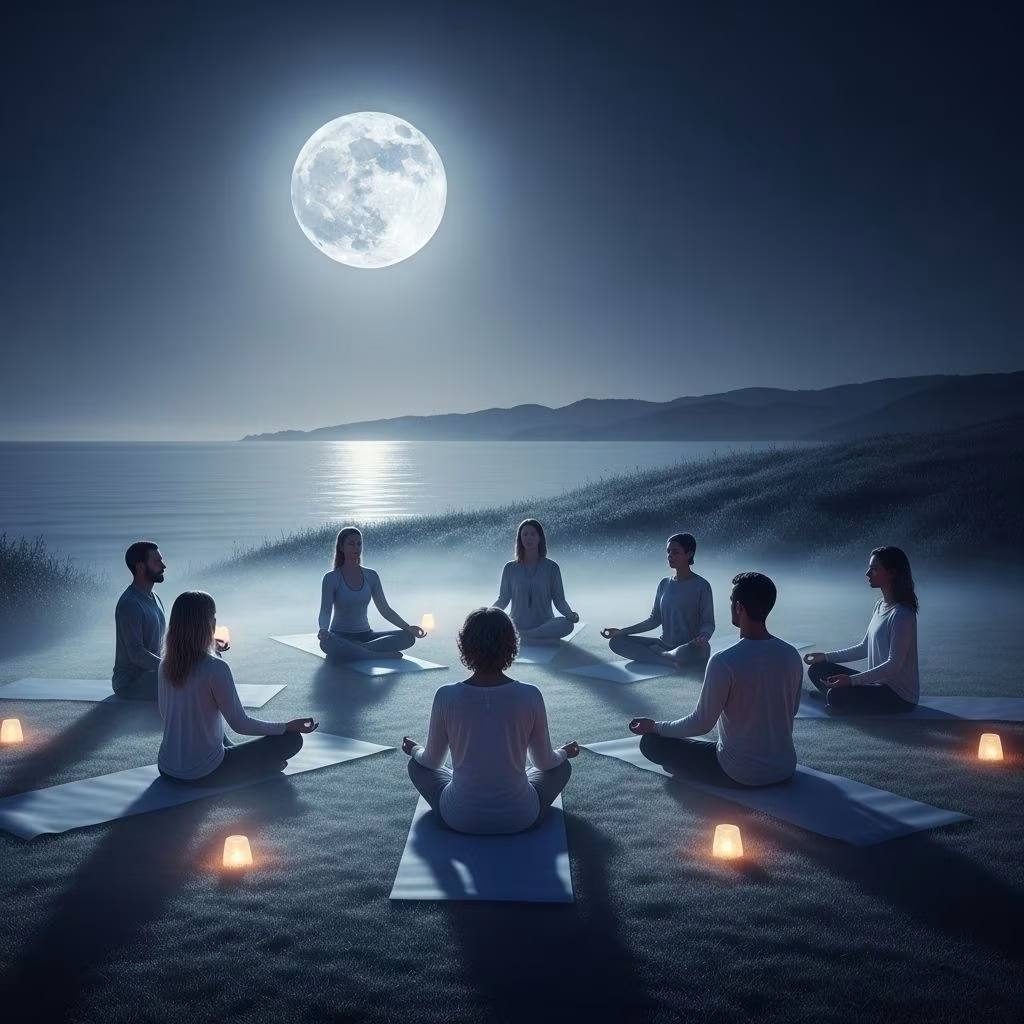
The full moon has captivated humanity for millennia, serving as a powerful symbol of completion, illumination, and transformation. During this lunar phase, emotions run high, energy peaks, and the veil between our conscious and subconscious minds grows thin. This makes the full moon an ideal time for deep meditation practices that can help you strengthen your most important relationships while simultaneously releasing accumulated stress and tension.
When the moon reaches its fullest expression in the night sky, it offers us a mirror to examine our own lives with clarity and honness. The heightened energy of this lunar phase creates an optimal environment for introspection, emotional release, and setting powerful intentions around connection and wellbeing. Whether you’re looking to deepen romantic partnerships, heal family dynamics, or simply cultivate a more peaceful relationship with yourself, full moon meditations provide a sacred container for this transformative work.
The following seven meditation practices are specifically designed to harness the potent energy of the full moon. Each technique addresses different aspects of relationship enhancement and stress reduction, giving you a comprehensive toolkit for lunar wellness work. These meditations range from quick five-minute practices to longer immersive experiences, ensuring there’s something suitable for every schedule and meditation experience level.
Understanding Full Moon Energy and Its Impact on Wellbeing
Before diving into specific meditation techniques, it’s essential to understand why the full moon holds such significance for emotional and relational work. The lunar cycle affects everything from ocean tides to human biology, with research suggesting that sleep patterns, mood fluctuations, and even hospital admissions can correlate with moon phases. The full moon represents the peak of the lunar cycle—a time when things that have been building come to fruition and hidden matters are brought into the light.
From an energetic perspective, the full moon illuminates what has been dwelling in shadow. This can manifest as suppressed emotions surfacing, relationship issues becoming impossible to ignore, or stress that’s been simmering finally reaching a boiling point. Rather than viewing this intensity as problematic, full moon meditations help you work with this amplified energy constructively. By creating intentional space for reflection and release during this time, you can transform potential overwhelm into profound healing and growth.
The full moon also represents completion and culmination, making it an excellent time to acknowledge what you’ve accomplished in your relationships and personal growth journey. Simultaneously, it’s a powerful moment for releasing patterns, behaviors, or dynamics that no longer serve your highest good. This dual nature of celebration and release makes full moon meditation particularly effective for both strengthening what works and clearing away what doesn’t.
Relationship Improving Meditation
This foundational practice focuses on enhancing the quality of your connections with others by first deepening your relationship with yourself. Begin by finding a comfortable seated position where you can see the moon, whether through a window or outside under the night sky. If the moon isn’t visible, you can light a white candle to represent lunar energy. Close your eyes and take several deep breaths, allowing your body to settle and your mind to quiet.
Bring to mind a relationship you wish to improve—this could be with a romantic partner, family member, friend, or colleague. Rather than immediately thinking about what you want from this person, first turn your attention inward. Ask yourself what qualities you bring to this relationship. Consider your patterns of communication, your emotional availability, and how you show up when challenges arise. Observe these aspects without judgment, simply witnessing your relational tendencies with compassion and honesty.
As you breathe deeply, visualize the full moon’s silvery light washing over you, illuminating both your strengths and areas for growth within this relationship. With each exhale, release any defensiveness or blame. With each inhale, draw in the moon’s wisdom and clarity. Now, expand your awareness to include the other person in this relationship. Visualize them bathed in the same moonlight, recognizing that they too have their own struggles, patterns, and tender places. Send them genuine compassion and understanding.
In this state of mutual illumination, ask the full moon to reveal one concrete action you can take to improve this relationship. This might be initiating a difficult conversation, offering a sincere apology, setting a healthier boundary, or simply being more present during your time together. Trust whatever arises, and commit to taking this action within the next lunar cycle. Spend a few more minutes breathing in this space of relational clarity before gently opening your eyes and journaling about your insights.
Trust Yourself Meditation
Self-trust forms the foundation of all healthy relationships and serves as a powerful antidote to stress and anxiety. When you trust yourself, you make decisions more easily, set boundaries more confidently, and navigate challenges with greater resilience. This meditation harnesses the full moon’s revealing light to strengthen your connection with your inner wisdom and rebuild trust in your own judgment.
Begin in a comfortable position with your spine straight and your body relaxed. Place one hand on your heart and one on your belly, feeling the rise and fall of your breath. With your eyes closed, imagine the full moon glowing brilliantly in the center of your chest, right beneath your heart hand. This internal moon represents your inner knowing—the part of you that always knows what’s true and right for you, even when external voices create confusion or doubt.
Reflect on times when you’ve doubted yourself, ignored your intuition, or allowed others to override your inner knowing. Without dwelling in regret, simply acknowledge these moments with compassion. Recognize that self-doubt often stems from past hurts, societal conditioning, or the very human fear of making mistakes. Breathe into these tender places, allowing the internal moonlight to soften any harshness you’re holding toward yourself.
Now, intentionally recall moments when you did trust yourself—times when you followed your gut instinct and it led you well, or instances when you honored your needs despite external pressure. Allow yourself to fully feel the rightness of those choices. Notice how trusting yourself feels in your body. Does it create a sense of groundedness, expansion, or calm certainty? Anchor into this feeling, letting it permeate every cell.
As you continue breathing with your hands on your heart and belly, repeat this affirmation silently or aloud: “I trust the wisdom that lives within me. I honor my intuition. I am worthy of my own confidence.” Visualize your internal moon growing brighter with each repetition, its light spreading throughout your entire body and radiating outward. Practice this meditation regularly during the full moon phase to systematically rebuild and strengthen your self-trust.
Stress Release Visualization
Stress accumulates in both body and mind, creating tension that can strain relationships and diminish quality of life. This visualization practice uses the full moon’s energy to identify where you’re holding stress and consciously release it. The practice combines body awareness, breath work, and guided imagery to create a comprehensive stress-relief experience.
Lie down in a comfortable position where you can fully relax. If possible, position yourself so moonlight falls across your body, or create a similar effect with soft lighting. Begin by scanning your body from head to toe, noticing where you’re holding tension. Common areas include the jaw, shoulders, lower back, and hips, but stress can lodge anywhere. As you identify each area of tension, breathe into it, acknowledging the stress without trying to change it yet.
Now, visualize the full moon hovering directly above you, emanating cool, soothing light. With each inhale, imagine drawing this healing moonlight down through the crown of your head. The light is liquidlike and intelligent, automatically flowing to wherever you’re holding stress. As the moonlight fills each tense area, visualize it dissolving the stress like water dissolving salt. The stress transforms into a dark mist that you exhale completely with each out-breath.
Work systematically through your entire body, allowing the moon’s light to penetrate deeper with each breath cycle. Pay special attention to your chest and solar plexus, where emotional stress often congregates. Imagine the moonlight washing through your heart space, your lungs, and your digestive organs, carrying away worry, anxiety, and overwhelm. Some areas may require several breath cycles before you feel a release—be patient and thorough.
Once you’ve moved through your entire body, visualize yourself surrounded by a cocoon of protective moonlight. Any remaining stress evaporates from your energy field, leaving you cleansed, calm, and renewed. Take a few moments to simply rest in this purified state before slowly returning to waking consciousness. Practice this visualization whenever stress begins to accumulate, and especially during the full moon when release work is most potent.
Loving-Kindness Moon Meditation
The Buddhist practice of loving-kindness meditation (metta) becomes even more powerful when combined with full moon energy. This practice systematically extends compassion and goodwill to yourself, loved ones, neutral people, difficult people, and ultimately all beings. When practiced during the full moon, it can significantly strengthen your capacity for empathy and connection while reducing stress rooted in conflict or judgment.
Sit comfortably with your spine straight and your body at ease. Begin by visualizing the full moon above you, radiating boundless love and acceptance. Bring your attention to your heart center and silently repeat these phrases: “May I be happy. May I be healthy. May I be safe. May I live with ease.” Allow these words to sink deeply into your consciousness, genuinely offering yourself kindness and care. Continue for several minutes, really feeling the wish for your own wellbeing.
Next, bring to mind someone you love easily—perhaps a dear friend, family member, or beloved pet. Visualize them clearly, then direct the loving-kindness phrases toward them: “May you be happy. May you be healthy. May you be safe. May you live with ease.” Imagine the full moon’s light connecting your heart to theirs, carrying your genuine wishes for their wellbeing. Notice how it feels to extend compassion outward.
Now comes the more challenging part. Bring to mind a neutral person—someone you encounter regularly but don’t have strong feelings about, like a grocery store clerk or mail carrier. Extend the same phrases to them, recognizing their fundamental humanity and desire for happiness. Then, if you feel ready, bring to mind someone you have difficulty with. Without condoning harmful behavior, attempt to extend basic goodwill to this person, recognizing that they too struggle and wish to be free from suffering.
Finally, expand your awareness to include all beings everywhere, visualizing the full moon illuminating the entire planet. Repeat: “May all beings be happy. May all beings be healthy. May all beings be safe. May all beings live with ease.” Rest in this spacious awareness of universal compassion before slowly returning to your immediate surroundings. This practice, repeated regularly during full moons, can dramatically shift how you relate to others and significantly reduce stress rooted in interpersonal conflict.
Emotional Release Breathwork
Full moons naturally bring emotions to the surface, making it an ideal time for intentional emotional release work. This breathwork practice combines conscious breathing patterns with movement and sound to help you process and release stuck emotions that may be creating stress or relationship difficulties. While simple in structure, this practice can facilitate profound emotional clearing.
Find a private space where you feel comfortable making noise and moving freely. Stand with your feet hip-width apart and your knees slightly bent. Begin with natural breathing, simply observing your breath without controlling it. Notice if you’re breathing shallowly or deeply, quickly or slowly. Many people hold tension in their breathing, which restricts emotional flow.
Now, begin breathing more deliberately through your mouth. Inhale deeply into your belly, allowing it to expand fully. Exhale with an audible sigh, releasing the breath completely. Repeat this several times, gradually increasing the intensity of both the inhale and exhale. As you breathe, begin to gently rock, sway, or shake your body, allowing spontaneous movement to arise. This helps mobilize stuck energy and emotion.
As you continue this active breathing, bring your awareness to any emotions present within you. Rather than analyzing or storytelling about these feelings, simply feel them in your body. Where do you notice sadness, anger, fear, or frustration? Breathe directly into these sensations, allowing them to intensify rather than suppressing them. If sounds want to emerge—sighs, groans, or even crying—let them come without censoring yourself.
Continue this process for 10-15 minutes, riding the waves of emotion and breath. You may experience releases that surprise you—tears about something you thought you’d processed, or anger about a situation you believed you’d accepted. Trust whatever arises and give it full permission to move through you. As you near the end of your practice, gradually slow your breathing and movement, allowing yourself to come to stillness. Stand or sit quietly for several minutes, noticing how you feel in the aftermath of this emotional release. Many people report feeling lighter, clearer, and more peaceful after this practice.
Gratitude and Abundance Full Moon Ritual
While the full moon is often associated with release, it’s equally important to celebrate and acknowledge what’s working well in your life and relationships. This gratitude practice helps you recognize abundance, strengthen positive relationship patterns, and reduce stress by shifting your focus from problems to blessings. The full moon’s illuminating energy helps you see clearly what deserves your appreciation.
Create a sacred space for this practice, perhaps setting up an altar with items that represent abundance in your life—photos of loved ones, symbols of accomplishments, or objects from meaningful experiences. Light candles and take a few moments to center yourself through deep breathing. Have a journal nearby for this practice, as writing amplifies the power of gratitude.
Begin by placing your hand on your heart and thinking about your relationships. Rather than focusing on what’s lacking or problematic, deliberately turn your attention to what’s beautiful and working. Think about recent moments of connection, kindness, or love you’ve experienced. These don’t need to be grand gestures—often it’s the small, tender moments that matter most. A friend’s encouraging text, your partner making your coffee just how you like it, or a colleague’s supportive words during a difficult meeting.
Write down at least ten specific things you’re grateful for in your relationships. Be detailed and concrete rather than generic. Instead of “I’m grateful for my partner,” write “I’m grateful for the way my partner kissed my forehead this morning when I was stressed.” Specificity helps you truly feel the gratitude rather than just intellectually acknowledging it. As you write each item, pause and let yourself fully feel the warmth of appreciation.
Expand your gratitude beyond relationships to other areas of your life—your health, home, work, creative expressions, or simple pleasures like morning coffee or sunset walks. Continue listing until you’ve filled at least two pages. Notice how this practice affects your energy and mood. Gratitude is scientifically proven to reduce stress, improve sleep, and enhance relationship satisfaction. Under the full moon’s amplifying energy, this practice becomes even more potent, helping you magnetize more of what you appreciate into your life.
Integration and Moonlight Journaling
The final practice ties all the previous meditations together through reflective journaling done in moonlight. Writing is a powerful tool for processing insights, tracking patterns, and integrating meditation experiences into lasting change. This practice helps you capture the wisdom that emerges during full moon meditation work and translate it into practical action.
Set aside 20-30 minutes for uninterrupted writing time. If possible, position yourself where you can see the moon or go outside with your journal. Light a candle if the moon isn’t visible. Begin by writing about your meditation experiences during this full moon cycle. What insights arose? What emotions surfaced? What surprised you? Write without censoring or editing yourself—this is for your eyes only, so you can be completely honest.
Next, respond to these reflection prompts: What relationship pattern am I ready to release? What relationship pattern do I want to strengthen? What does trusting myself look like in practical, daily terms? What stress am I holding that isn’t mine to carry? What boundary would reduce my stress? What am I grateful for that I usually take for granted? Let your writing flow without overthinking your responses. Sometimes the most profound insights come when you write quickly without your internal editor interfering.
As you write, you may notice recurring themes or realize connections you hadn’t seen before. Pay attention to any “aha” moments and mark them in your journal. These are often messages from your deeper wisdom trying to get your attention. Before concluding your journaling session, write down three specific, actionable commitments for the coming lunar cycle. These should be concrete behaviors that reflect the insights from your meditation work.
For example, if your meditations revealed that you’ve been people-pleasing at the expense of your own needs, your commitment might be: “I will practice saying ‘let me think about that’ instead of immediately agreeing when asked for favors.” If you discovered gratitude for a specific relationship, your commitment might be: “I will tell my sister once a week something specific I appreciate about her.” Writing these commitments during the full moon and then reviewing them at the new moon creates a powerful accountability structure for transformation.
Frequently Asked Questions
Q: How long should I meditate during a full moon?
A: Full moon meditation sessions can range from 5 minutes to an hour, depending on your schedule and experience level. Beginners might start with 10-15 minute practices and gradually extend as they become more comfortable. The key is consistency rather than duration—a brief daily practice throughout the full moon phase (typically 3 days before and after the exact full moon) is more beneficial than one long session.
Q: Do I need to meditate outside under the actual moonlight?
A: While meditating in direct moonlight can enhance the experience through both symbolic and energetic connection, it’s not essential. You can practice these meditations indoors while visualizing the moon or using a candle to represent lunar energy. The intention and focus you bring to the practice matters more than your physical location. If weather or circumstances prevent outdoor meditation, simply knowing the moon is full is sufficient to tap into its energy.
Q: What if I become emotional or overwhelmed during full moon meditation?
A: Emotional intensity during full moon meditation is common and actually indicates the practice is working. The full moon brings suppressed feelings to the surface for healing. If you feel overwhelmed, slow down your breathing, place your hand on your heart, and remind yourself that you’re safe. It’s okay to take breaks, open your eyes, or end the session early. Consider working with a therapist or experienced meditation teacher if strong emotions consistently arise, as this may indicate deeper healing work that needs support.
Q: Can full moon meditation really improve my relationships?
A: Yes, but it works indirectly. Full moon meditation doesn’t magically change other people’s behavior, but it profoundly shifts your own patterns, reactivity, and clarity. When you become more self-aware, trust yourself more deeply, release stored stress, and cultivate compassion, you naturally show up differently in relationships. This changed energy often catalyzes positive shifts in relationship dynamics. The practices help you identify and release patterns that create conflict while strengthening your capacity for connection.
Q: How often should I practice these meditations?
A: Ideally, engage with these practices during each full moon cycle (approximately once a month). You might choose one or two meditations to focus on during each full moon, or rotate through all seven over multiple lunar cycles. Many practitioners find that establishing a consistent full moon meditation ritual creates a rhythmic structure for ongoing self-reflection and growth. Between full moons, you can practice these meditations anytime you need stress relief or relationship support—they’re not exclusively for lunar events.
Q: What’s the best time of day for full moon meditation?
A: The most potent time is typically evening when the moon is visible, though you can practice anytime during the full moon phase. Some practitioners prefer meditating exactly at moonrise or when the moon reaches its peak in the sky, but this isn’t necessary. Choose a time when you can be undisturbed and fully present. If evening doesn’t work for your schedule, morning or afternoon meditation with the intention of connecting to full moon energy is equally valid.
References
- https://www.bustle.com/p/7-meditations-for-the-april-2019-full-moon-to-help-you-strengthen-relationships-reduce-stress-17039893
- https://www.thepsychicsoul.com/blog/libra-full-moon-2025-guided-meditation-angel-activation-rituals
- https://www.youtube.com/watch?v=doZomGdu3Ek
- https://soundsforthesouldj.com/schedule/april-2019-events/
- https://www.youtube.com/watch?v=nVXWlLdmg_Y
- https://www.evenstarwellbeing.com/double-libra-full-moon/
- https://astrologyquestionsandanswers.com/2019/04/
- https://insighttimer.com/brendamailer/guided-meditations/full-moon-guided-visualization


