


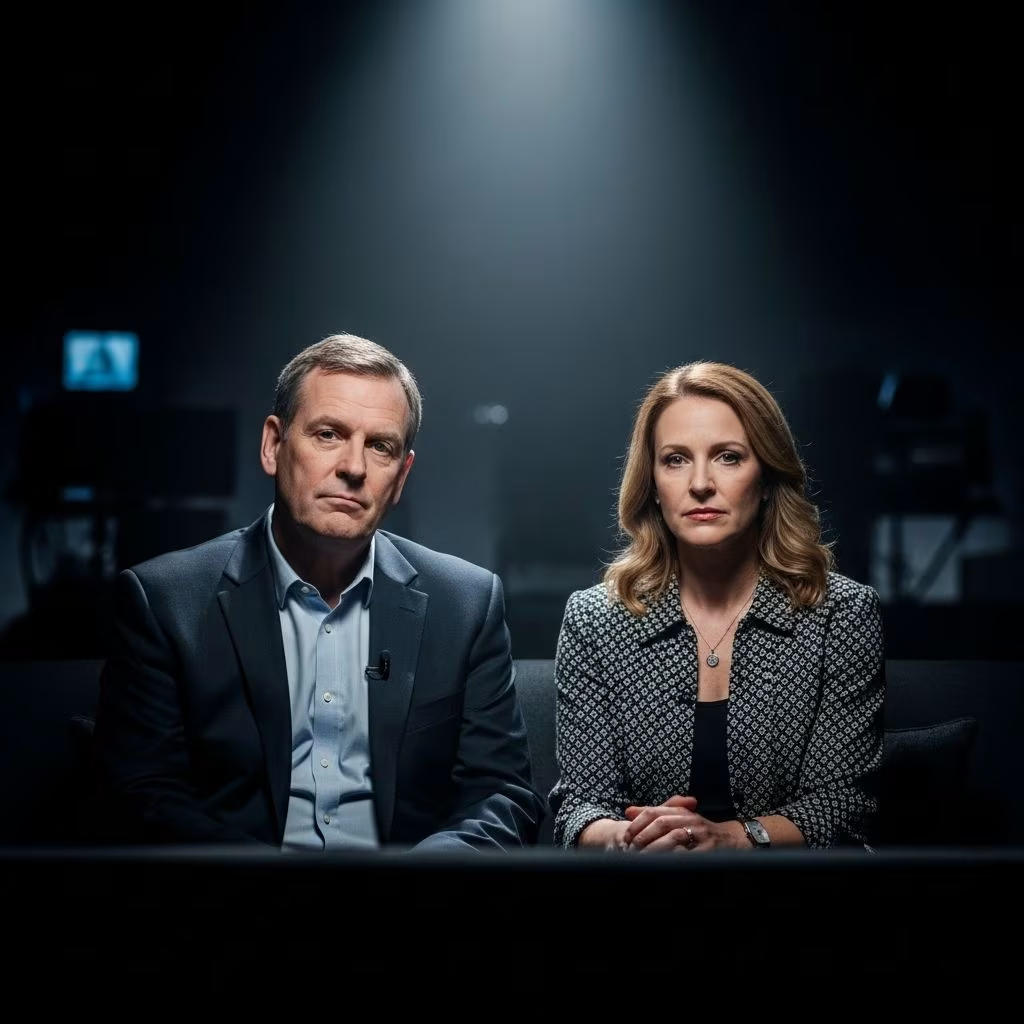
Barnaby Joyce & Vikki Campion: The Interview That Shook Australia
When former Deputy Prime Minister of Australia Barnaby Joyce and his partner Vikki Campion sat down for a paid interview on Channel Seven’s Sunday Night, they set in motion one of the most talked-about moments in contemporary Australian public life. The interview was raw, at times unfiltered, and remains a focal point for debates around privacy, political ethics, and the role of the media in covering personal scandal. This article unpacks the major themes, controversies, and personal stories that emerged from that iconic television moment—and considers its lasting repercussions for all involved.
The Affair That Sparked a National Debate
Barnaby Joyce was a towering figure in Australian politics—Deputy Prime Minister and leader of the National Party—when news broke that he had engaged in an extramarital relationship with his former media advisor, Vikki Campion. Both were prominent and high-profile within their own circles, making the revelation all the more shocking for the public and the media alike.
The scandal quickly became front-page news. Not only had Joyce’s personal choices called his public credibility into question, but Campion’s pregnancy added a deeply personal dimension to an already heated public debate. The fallout led to Joyce’s resignation from his leadership position and ignited discussions about what is, and isn’t, in the public interest when it comes to a politician’s private life.
- High-Profile Roles: Joyce was Australia’s Deputy Prime Minister, while Campion was an experienced political staffer.
- Media Frenzy: The affair was widely covered by national and international media, putting the couple and their families under intense scrutiny.
- Leadership Crisis: Joyce’s leadership became untenable, ultimately leading to his resignation.
Inside the Tell-All Interview
The couple’s interview with Channel Seven was as controversial as the affair itself.
Paid a reported $150,000 for their appearance, Joyce and Campion detailed the emotional and personal realities of their relationship. With raw honesty, they spoke about love, betrayal, family pain, and the relentless pressure of tabloid media coverage.
- Raw Confessions: Vikki and Barnaby recounted the difficulties of navigating their relationship amid public condemnation.
- Emotional Strain: Both acknowledged the pain their actions had caused to others, particularly Joyce’s estranged wife and daughters.
- Addressing Regret: Each expressed remorse for the impact on their respective families, with Barnaby repeatedly stating, “The fault is mine. I never intended for anyone to be hurt.”
The interview was both an attempt at public explanation and an exercise in self-defense, as the couple laid out the events as they recalled them and pushed back against negative portrayals in the press.
Key Excerpts from the Interview
- Vikki Campion reflected on the moment she learned she was pregnant, describing, “I was living with my brother. I said to him early on, ‘I might be having a baby.’”
- Barnaby Joyce, when asked about regrets, responded, “I never intended for anyone to be hurt and I’m sorry. But I’m an adult, too.”
- Both parents described the birth of their son Sebastian as “a blessing”, with Joyce observing, “You just look at Sebastian—two blue eyes staring up at you—and you think, boy, you caused some problems.”
Money, Media, and Ethics: The Price of Telling All
One of the most controversial elements of the Sunday Night interview was the reported payment to Joyce and Campion. Media outlets and the public debated whether it was ethical for politicians—or anyone involved in major news stories—to profit directly from selling their side of the story.
| Issue | Summary |
|---|---|
| Interview Fee | Estimated $150,000 paid to Joyce and Campion for exclusive rights. |
| Media Ethics | Public debate around whether it’s appropriate to offer payment for personal, potentially scandalous stories—especially those involving politicians. |
| Proceeds’ Purpose | The couple justified the payment by stating it was to provide for their son Sebastian, who had become central to the media circus. |
Joyce and Campion insisted that, of all the people profiting from tabloid stories about their lives, only their son hadn’t benefited—using this as a reason for accepting payment for the interview.
Ethical Questions Raised
- Should politicians ever be paid to share their personal stories?
- Does such payment incentivize scandal or exploitation, or does it redress media profit from personal pain?
- What is the line between public interest and public entertainment?
Family, Fallout, and Responsibility
The emotional toll of the Joyce-Campion affair was not lost on the Australian public. In the interview, both spoke at length about the ramifications for their families, particularly Barnaby Joyce’s estranged wife and daughters.
- Daughters’ Pain: Joyce directly apologized, noting that the affair had deeply hurt his daughters, who were already facing pressures of their own.
- Campion’s Struggles: Vikki Campion described her isolation, facing a hostile public and navigating her pregnancy far from the political staffers who once formed her professional support base.
- Parenthood: The birth of Sebastian is portrayed as a turning point—at once a source of joy and an enduring reminder of the collateral pain caused by their relationship’s public exposure.
Both participants repeatedly accepted responsibility, with Joyce stating, “The fault is mine.” Campion echoed this sense of accountability while advocating for more compassionate discourse around relationships and forgiveness.
Public Response and Political Consequences
The interview’s broadcast met a storm of public reaction. From morning radio shock jocks to newspaper columnists, opinions ranged from sympathy to derision.
- Media Spectacle: While some viewers acknowledged the courage it took to appear so publicly vulnerable, others criticized the event as a paid performance meant to salvage the reputation of a fallen politician.
- Political Career: The fallout from the affair and interview led to Joyce resigning as Deputy Prime Minister and as the leader of the Nationals, fundamentally altering his career trajectory.
- Support and Backlash: The couple received both hate mail and messages of support, reflecting deep community divisions over issues of morality, privacy, and forgiveness.
Notable Media Discussions
- Questions over whether public figures should be entitled to a private life.
- Debate about the responsibility of journalists in covering personal scandals.
- Dialogue on generational attitudes toward infidelity, forgiveness, and redemption in public life.
After the Headlines: Moving Forward
The Sunday Night interview did not mark an end to scrutiny for Joyce and Campion, but it did symbolize a kind of turning point—a moment when they seized control of their own narrative, if only briefly.
In the time since, the couple has sought to move forward, focusing on raising their son and, in Joyce’s case, returning to political life—albeit as a far more polarizing figure. Campion continues her work as a journalist, calling for more empathy and civility in public debate.
- Resilience: Both have emphasized the importance of moving on, forgiveness, and placing their child’s wellbeing at the center of decisions.
- Advocacy: Campion, in particular, has called for greater understanding for families caught in public controversy, stating that “every child deserves parents who are honest about their flaws and committed to their futures.”
- Ongoing Scrutiny: Despite the passage of time, the interview remains a touchstone for discussions about the power of the media, public interest versus private pain, and what we expect of our leaders—both in office and at home.
Frequently Asked Questions
Q: Why did Barnaby Joyce and Vikki Campion agree to a paid interview?
A: According to Joyce and Campion, they accepted payment for the interview because they felt others were profiting from their story anyway. They said the money would assist in providing for their son Sebastian, who had become the focus of immense media attention.
Q: How did the affair impact Barnaby Joyce’s political career?
A: The scandal and subsequent media coverage led to Barnaby Joyce resigning as Deputy Prime Minister and as leader of the National Party. His public standing took a significant hit, though he has since returned to politics in a reduced capacity.
Q: What was the public reaction to the interview?
A: Public reactions ranged widely, with some expressing support for the couple’s honesty and others condemning the decision to profit from private misery. The interview sparked widespread debate about media ethics and privacy.
Q: Has the couple remained together since the interview?
A: Yes, Barnaby Joyce and Vikki Campion have remained together and focused on raising their son Sebastian, despite ongoing public and media scrutiny.
Q: Did the interview change public attitudes towards politicians’ private lives?
A: While it did not fundamentally alter the Australian public’s expectation for integrity and privacy among its leaders, it has ignited ongoing discussions about boundaries, accountability, and the complex relationship between public and private life in modern politics.


