


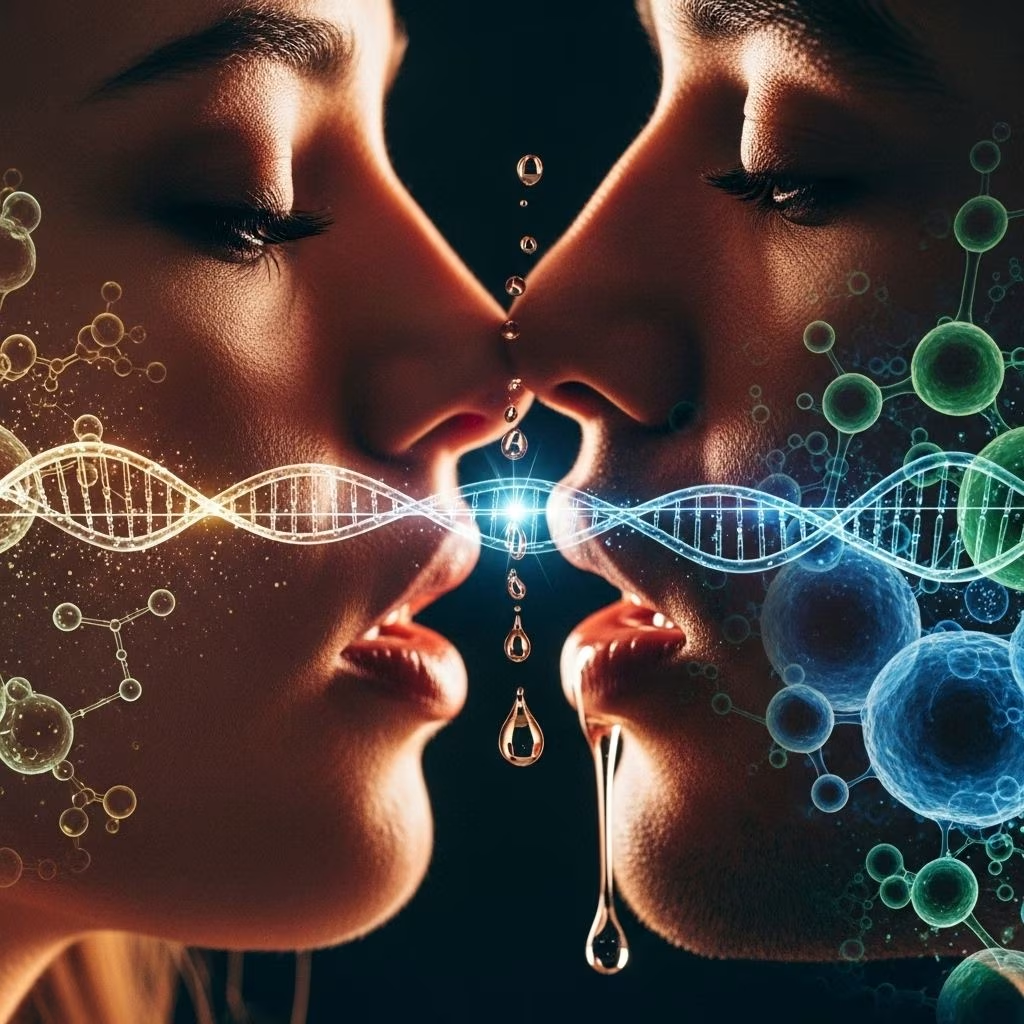
Can Saliva Reveal Relationship Chemistry?
Finding true chemistry in a relationship is something many people hope for—but what if the answer lies not only in your hearts, but in your spit? Recent research into the science of kissing and saliva testing is offering fascinating insights into how biological compatibility may shape our romantic connections.
The Science of Saliva
Saliva is far more than just the fluid that moistens our food. It’s a complex mixture containing water, electrolytes (like sodium and potassium), enzymes, hormones, antimicrobial agents, and even genetic information. This biological cocktail is secreted by glands in the mouth and serves a variety of crucial roles:
- Lubricating food and protecting oral tissues.
- Aiding digestion via enzymes like amylase.
- Maintaining oral hygiene through continuous cleansing and antibacterial properties.
- Facilitating taste—the molecules in food must be dissolved in saliva to be tasted.
But perhaps most intriguing— salivary components reflect not just oral but also overall physiological and genetic information, making it a potential window into health and even compatibility.
The Biology Behind the Kiss
Kissing has been part of human courting rituals for millennia. Far from being merely pleasurable, the act of kissing involves the exchange of millions of bacteria, enzymes, and chemical signals in saliva. Scientists have found that a single 10-second kiss can transmit as many as 80 million bacteria. On a biological level, this could serve as a primal test for partner suitability.
- Distribution of microbes: Each person has a unique microbiome—sharing or swapping them could expose immune system compatibility.
- Chemosignals and pheromones: Certain molecules in saliva may signal genetic fitness and hormonal status.
- Immediate and subconscious reactions: Sometimes, a person’s “taste” can provoke instant attraction or aversion.
Rom-coms may romanticize the “first kiss,” but its roots are deeply biological, possibly helping us subconsciously select someone with whom we’re most compatible.
Saliva and Attraction: Is There a Hidden Test?
Ever heard someone talk about whether they “feel a spark” with someone after the first kiss? Scientists suggest there may be more to this than metaphor. Researchers are now exploring if saliva-swapping during kissing could be nature’s way of running a chemistry test.
Here’s how the hidden “test” might work:
- Hormonal analysis: Saliva contains hormones like testosterone, estrogen, and cortisol, which fluctuate with stress, health, and reproductive status.
- Pheromone detection: While controversial in humans, some researchers believe that chemical cues in saliva play a subconscious role in attraction—a hypothesis supported strongly in the animal world.
- Genetic screening: Certain immune gene complexes, like the major histocompatibility complex (MHC), are believed to be detected by scent and taste; people might unconsciously prefer partners with differing MHC genes for healthier offspring.
Not all kisses are created equal—some leave you craving more, while others fall flat. The science suggests your brain might already be making decisions based on the information delivered by that kiss.
Hormones, Pheromones, and Genetic Matching
Kissing offers a biochemical window into another person. Important hormones found in saliva and exchanged through kissing include:
- Testosterone: Associated with libido and sexual attraction. Some studies propose testosterone may be transferred to women via men’s saliva, potentially increasing arousal and partner interest.
- Cortisol: Reflects stress levels, which can be inherently attractive or off-putting depending on context.
- Estrogen and other sex hormones: Give clues about reproductive health and compatibility.
Beyond hormones, chemosignals—possibly even pheromones—may factor into instant judgments about a partner’s suitability. Some individuals seem to possess a natural scent or taste that is more attractive to others, which might be correlated with genetic compatibility (notably MHC variation). This helps explain the phenomenon where someone simply “smells or tastes right.”
| Component | Biological Role | Relation to Attraction |
|---|---|---|
| Testosterone | Libido, aggression | May enhance sexual interest when detected |
| Cortisol | Stress response | High levels can signal anxiety, low levels calmness |
| Pheromones/chemosignals | Behavioral cues | Potentially influence attraction on a subconscious level |
| MHC markers | Immune system diversity | Preference for complementary genes |
| Microbial profile | Oral and systemic health | May indicate compatibility or risk |
Microbes, Microbiome, and Immunity
Remarkably, studies show that up to 80 million bacteria are swapped during 10 seconds of kissing. This microbial exchange helps partners synchronize their oral microbiota over time. But why is this important?
- Immune compatibility: Similar or compatible microbial profiles may enhance couple health and reduce disease transmission risks.
- Health screening: Subconsciously, individuals may assess the health of a potential partner based on taste and oral environment (salty, dry, sweet, bitter, etc.).
Some scientists speculate that this bacterial exchange could play a role in immune system calibration between partners, ultimately benefiting shared offspring.
Saliva in Modern Dating: Beyond Tradition
Kissing remains one of the most intimate acts in a modern first date, but the new science gives it an additional layer of intrigue. The concept of “chemistry” is popularly discussed in dating—now, we see it isn’t just metaphorical but potentially physiological.
- Online dating and real chemistry: People may match on paper, but until they meet and—perhaps—kiss, the full picture of compatibility may not be clear.
- The first kiss as a biological litmus test: You might enjoy talking for hours, but only after a kiss do some realize the spark, or its absence.
- Intuitive judgements: The “ick” or “wow” factor after a first kiss may be your body responding to dozens of subtle biological cues.
Potential for Saliva Chemistry Testing
The growing field of salivary diagnostics holds promise not only in medical testing for disease, but perhaps even in romance. While commercial “relationship chemistry tests” based on saliva are not yet available, the underlying science is rapidly advancing.
Possible future innovations include:
- Hormonal compatibility testing: Analyzing saliva for hormone levels that may affect romantic attraction or sexual synchronization.
- Genetic-match screening: Simple tests to check for immune system diversity (MHC compatibility), which is thought to play a role in partner preference.
- Pheromone analysis kits: For those curious about how they smell and taste to prospective partners.
- Microbiome profiling: Understanding how compatible your oral bacteria are with your partner’s—and what that means for long-term health.
These technologies are still in their infancy. Much like at-home DNA kits revolutionized genealogy and health, at-home saliva compatibility kits may someday add a new dimension to relationship science.
Advantages of Saliva-Based Testing
- Non-invasive and painless collection process.
- Rapid results, applicable almost anywhere.
- Reflects “bioavailable” levels of hormones, not just what’s circulating in the blood.
- May be safer for frequent or home-based monitoring.
Challenges and Limitations
- Saliva hormone levels are lower than blood—requires sensitive methods and careful handling.
- Many factors (diet, sleep, stress, oral hygiene) can influence results.
- The ethics of using biological data in relationships are complex.
Ethical Considerations
The very idea of using saliva to “test” compatibility raises intriguing ethical questions:
- Privacy: How should highly personal data be stored or shared?
- Informed consent: Both partners should be aware of any testing and implications.
- Potential for misuse: Could this science be used to manipulate or pressure people in relationships?
While the science is fascinating, relationship chemistry remains more than pure biology. Emotional, psychological, and cultural dimensions remain deeply intertwined with any chemical test.
Frequently Asked Questions (FAQs)
Q: Can a kiss truly predict relationship compatibility?
A: Scientific research suggests that kissing may subconsciously help individuals assess biological features such as immunity, health, and genetic fitness, although no kiss can fully predict compatibility on its own.
Q: What are the main biological elements exchanged during kissing?
A: Kissing typically involves the swap of saliva (containing enzymes, hormones, and immune proteins), bacteria, and unique chemical compounds that may signal health and genetic compatibility.
Q: Is saliva testing used for relationships today?
A: While saliva is widely used for medical diagnostics, relationship-based saliva testing is still experimental; commercial kits for romantic compatibility are not yet standard.
Q: What health factors can saliva reveal?
A: Saliva can indicate hormonal status, immune function, dental and overall health, infection, stress, and certain genetic predispositions.
Q: Could microbiome compatibility affect relationship satisfaction or longevity?
A: There is emerging research suggesting that compatibility in oral and gut microbiome may impact health and well-being in relationships, but more studies are needed to draw firm conclusions.
Summary Table: Kissing, Saliva & Relationship Chemistry
| Aspect | Biological Role | Potential Impact on Dating |
|---|---|---|
| Hormones in saliva | Reflect sex drive, mood, biological rhythms | May influence initial attraction and ongoing sexual chemistry |
| Pheromones and chemosignals | Subconscious cues about genetic makeup | Affects feelings of “natural” attraction or repulsion |
| Microbial exchange | Alters oral ecology, can boost mutual immunity | May play a subtle role in partnership health |
| Genetic markers (MHC) | Drive immune compatibility and reproductive potential | Influence long-term satisfaction and offspring fitness |
While the world of salivary science is still unlocking its secrets, one thing is clear: that spark you feel during a first kiss is more than just magic—it may be the result of thousands of years of biology working behind the scenes to help you find your match.
References
- https://pmc.ncbi.nlm.nih.gov/articles/PMC11610148/
- https://pmc.ncbi.nlm.nih.gov/articles/PMC3312700/
- https://www.nature.com/articles/s41368-022-00209-w
- https://en.wikipedia.org/wiki/Saliva_testing
- https://globalnews.ca/news/1678261/swapping-spit-and-testing-chemistry-how-kissing-germs-help-you-pick-your-partner/
- https://www.zrtlab.com/media/2125/the-science-of-saliva-testing.pdf
- https://nursing.jhu.edu/magazine/articles/2010/11/saliva-science/


