


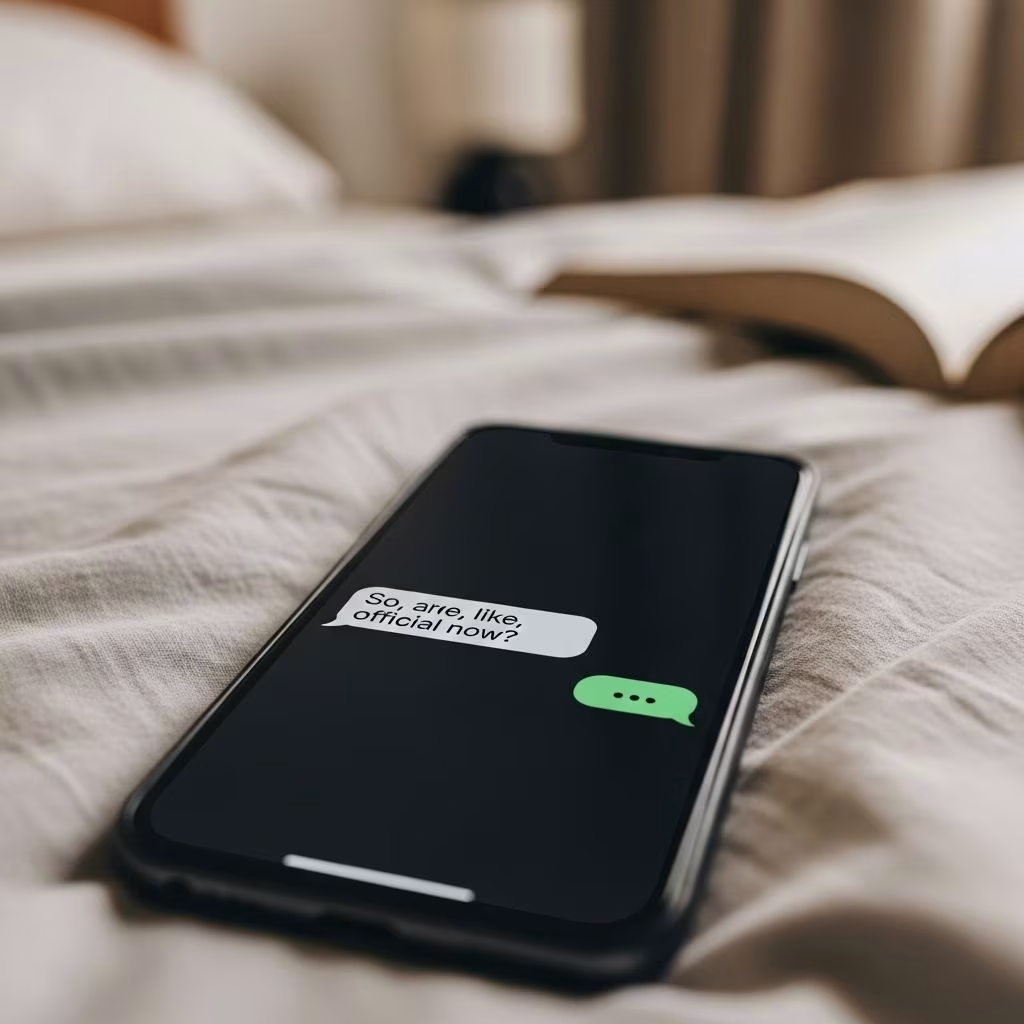
Can You Make a Relationship Official Over Text?
In an era when so much of our intimate communication unfolds on smartphones, deciding when and how to make a romantic relationship ‘official’ can raise novel questions. Is declaring your status over text acceptable, or does doing so undermine the significance of the moment? This article explores the nuances, draws on relationship experts’ insights, and offers guidance for navigating this rite of passage digitally.
Understanding the Digital Relationship Milestone
Today, it’s common for couples to initiate, nurture, and eventually define their relationships through digital channels. From the first flirty messages to sharing memes and personal milestones, texting has evolved into a central component of modern romance. As digital intimacy grows, so too do the questions about what—if anything—should still be reserved for in-person communication.
Going official—the moment when two people mutually agree to be exclusive or put a label on their relationship—was once reserved for deep, face-to-face conversations. But as our dependence on texting increases, the lines blur, prompting a vital question: Is it OK to make things official over text?
Why Couples Consider Going Official Over Text
- Comfort with texting: Many millennials and Gen Z daters simply feel more natural expressing themselves via text than in person.
- Distance and logistics: Long-distance couples or those with irregular schedules may find text the most practical way to connect.
- Reducing pressure: For those who experience anxiety in direct face-to-face conversations, texting can help manage nerves and enable clearer communication.
- Gradual progression: Digital talk often precedes in-person conversations, giving both partners time to process feelings before meeting up.
The Pros and Cons of Making It Official Over Text
| Pros | Cons |
|---|---|
| Low-pressure environment for honesty and vulnerability. | Texting can miss nuanced facial expressions and body language. |
| Convenient for long-distance or busy couples. | Easy to misinterpret tone, leading to confusion. |
| Provides a written record of mutual agreement. | Some may feel the moment loses its emotional depth and weight. |
| Helps those with social anxiety communicate openly. | May be seen as impersonal by those who value tradition. |
The Emotional Weight of ‘The Talk’: Is Text Enough?
For some, discussing exclusivity is one of the most important milestones in a relationship, best reserved for a face-to-face or at least a voice-to-voice context. However, for others—especially those more comfortable in the digital realm—texting feels just as genuine as in-person communication. The appropriateness of making it official over text depends on your personalities, mutual comfort, communication habits, and the existing level of emotional intimacy.
- If texting has always been your go-to communication method, broaching this topic digitally may feel more natural and less intimidating.
- If your relationship is built significantly on in-person interactions, a digital declaration may feel flat or anticlimactic.
- Consider your partner’s preferences; some people place sentimental value on face-to-face moments for significant declarations.
What Experts Say: Communication and Clarity Matter Most
Relationship and communication experts generally agree that how you make things official matters less than the clarity and sincerity of the exchange. It’s essential that both partners are on the same page regarding exclusivity and what labels mean for them.
- Ensure the conversation—whether by text or in person—includes clear, unambiguous language.
- Avoid being too vague or using coded language that could be misunderstood.
- If you go official by text, consider following up with an in-person conversation to reinforce the moment and check in emotionally.
Pro tip: If you’re anxious how your partner will receive the digital approach, try texting something like, “Can we talk about where we’re at?” as a gentle opener.
Texting Styles and Relationship Dynamics
Every couple develops a unique digital communication style—what linguists call a “fingerprint”—that shapes their relationship’s tone and emotional climate. Some couples love meme exchanges, inside jokes, and constant contact; others are reserved, sticking to essentials. Over time, your texting habits may evolve:
- Early days: Frequent, playful, and sometimes overanalyzed messages dominate.
- Growing intimacy: As trust builds, texting becomes more authentic, with fewer filters.
- Long-term relationships: Texting may shift toward practical logistics, while still providing “thinking of you” reassurance and supporting the relational bond.
The key is to recognize and embrace your couple’s authentic style, rather than worrying about external expectations.
Potential Pitfalls: Miscommunication and Emotional Nuance
Text-based communication inherently lacks nonverbal cues, which can heighten the risk of miscommunication at critical junctures like defining the relationship. Sarcasm, jokes, or attempts to soften potentially high-stakes questions can easily get lost in translation, fueling anxiety or misunderstanding.
- Be explicit and direct about your feelings and intentions for clarity.
- If the conversation feels awkward, acknowledge it—it may help your partner open up, too.
- Avoid emotionally complicated discussions if you suspect your partner may misinterpret tone or intent over text alone.
Alternatives and Hybrid Approaches
There’s no ‘one size fits all’—some couples find a hybrid approach works best. For example, you might initiate the conversation by text to gauge readiness, then move to a call or in-person discussion for the official exchange. This allows space for both processing and emotional connection.
- Text can serve as a stepping stone to the conversation, providing an opening for deeper discussion later.
- Some couples prefer to “test the waters” with playful messages asking about exclusivity or referring to each other as ‘boyfriend/girlfriend’ to see how it feels.
Personal Stories: How Real Couples Went Official Over Text
Many modern daters report making their relationships official over text and finding the experience meaningful and positive. Some say the written format allowed them to express feelings they might have otherwise stumbled over in person.
“It felt natural because we’d been texting every day. The conversation just flowed, and we both agreed. It was almost more romantic because it was so ‘us.’”
For others, however, going official by text felt anticlimactic, or they later followed up with a more substantial conversation in person to cement the milestone.
Best Practices: Making It Official Digitally
- Be thoughtful: Choose your timing and words with care. Avoid raising the topic during a heated conversation or in the middle of a stressful period for either person.
- Be explicit: Use unambiguous terms and phrases, leaving little room for confusion or misinterpretation. Examples include: “I’d like us to be exclusive—how do you feel about that?” or “Do we want to call each other boyfriend/girlfriend?”
- Invite input: Ensure your partner feels comfortable and has space to respond honestly.
- Address next steps: After agreeing over text, consider making plans to celebrate in person or discuss further.
What to Watch For: Signs It’s Not the Right Time
- Your partner avoids direct answers or seems uncomfortable with digital communication.
- You’re sending emotionally charged paragraphs while they reply with short, curt answers.
- You haven’t spent enough time together in real life to feel out if exclusivity is mutually desired.
If any of these apply, it may be better to hold off or choose a more personal approach.
Relationship Labels: Do They Mean the Same Over Text?
While a digital declaration can be every bit as valid as in-person agreement, the cultural weight of “the talk” still lingers. For people who grew up before smartphones, relationship milestones may seem more meaningful when marked by in-person rituals. Ultimately, it’s the shared understanding—not the medium—that cements your bond.
Frequently Asked Questions (FAQs)
Can texting cheapen the significance of defining the relationship?
Not necessarily. For many, texting is a primary mode of heartfelt communication. What matters is that both partners feel the moment is genuine and meaningful. If digital declarations fit your style, they can be every bit as authentic as their offline counterparts.
What if my partner feels uncomfortable making things official over text?
Respect their comfort zone. You can start the conversation by text and propose continuing it in person, or simply ask about their preferred communication method for big conversations.
Is it OK to revisit the topic in person after agreeing over text?
Absolutely. In fact, following up with an in-person talk or celebration often strengthens the connection and clarifies understanding, especially if the digital exchange was brief or informal.
How do I gauge if my partner is ready to talk labels?
Look for signs like increased emotional intimacy, regular communication, and mutual investment in each other’s lives. If your conversations are consistently meaningful and both of you seem interested in taking things further, it might be time to talk.
Key Takeaways
- Texting is a valid and increasingly common way to define relationships, especially among younger generations.
- Focus on clear, honest, mutual communication—the medium is less important than the message and shared understanding.
- Honor both partners’ comfort zones—when in doubt, discuss preferences before initiating ‘the talk.’
- Be intentional: Whether you go official over text or face-to-face, make the moment sincere and meaningful for both of you.


