


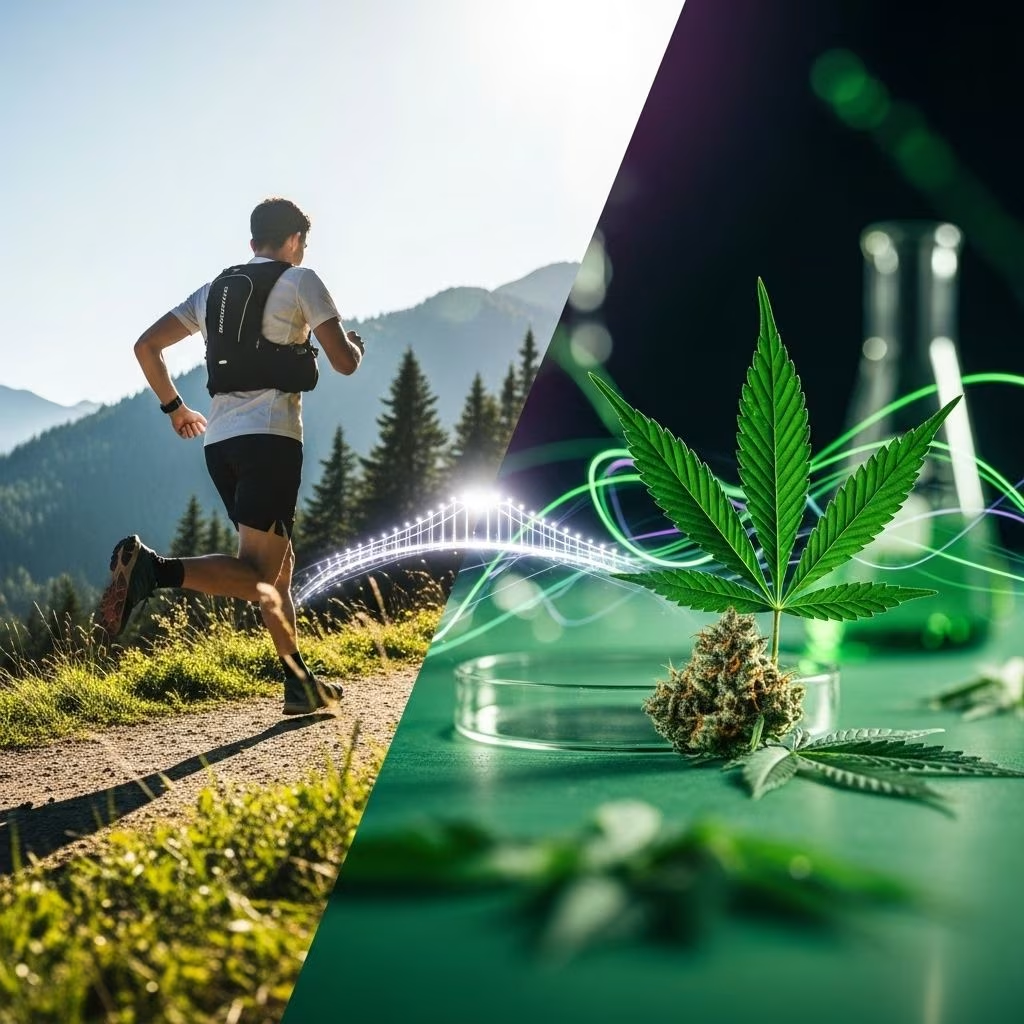
The Relationship Between Cannabis and Exercise
As the legalization of cannabis spreads and social acceptance rises, more fitness enthusiasts are asking whether marijuana can play a role in exercise routines. For decades, the interaction between cannabis—which contains active components like THC and CBD—and athletic performance was clouded by stigma and lack of research. Today, with scientific studies and self-reported experiences becoming more accessible, it’s time to take a nuanced look at how cannabis may impact exercise—from physiology, to performance, to recovery.
The Science: What Happens When You Mix Cannabis and Exercise?
Understanding how cannabis affects the body requires separating anecdotes from scientific fact. The main psychoactive component, THC (tetrahydrocannabinol), and its non-intoxicating cousin CBD (cannabidiol) interact differently with the body—particularly during physical activity.
- THC: Known for producing the ‘high,’ THC can induce changes in perception, increase heart rate, and may impair motor coordination.
- CBD: Lacks intoxicating effects, has anti-inflammatory and pain-modulating properties, and is widely marketed for recovery and relaxation.
Key Findings From Recent Research
- THC-containing cannabis has been shown to impair exercise performance during sustained intense effort. In a controlled study, THC increased heart rate during submaximal cycling and reduced mean power output during a 20-minute time trial, regardless of whether it was smoked or vaporized.
- CBD-dominant cannabis, with little or no THC, did not significantly impact physiological exercise responses or performance measures.
- Heart rate consistently rises during submaximal effort after THC inhalation, with increases of 14–18 beats per minute observed. The physiological explanation points to activation of the sympathetic nervous system.
- Other studies reinforce an ergolytic effect (performance inhibiting) of THC, showing decrements in maximal exercise time and work output after cannabis use.
- No significant changes in VO₂ max, maximal ventilation, or perceived exertion between cannabis and control, but overall exercise duration tends to be lower after THC use.
| Cannabis Type | Cardiovascular Effect | Performance Impact | Perceived Exertion |
|---|---|---|---|
| THC-dominant | Increases heart rate (tachycardia) | Reduces output & endurance | No significant change |
| CBD-dominant | No significant change | No significant impact | No significant change |
| Control (No cannabis) | Normal | Normal | Normal |
Common Myths vs. Realities: Cannabis and Physical Activity
Popular culture and testimonials have created myths about cannabis as a workout enhancer. Below are several commonly held beliefs and what research suggests:
- Myth: Cannabis increases exercise performance.
Reality: Studies indicate that THC reliably reduces performance in sustained high-output exercise, such as cycling time trials. - Myth: All cannabis products are equal for fitness.
Reality: Only THC-containing products consistently raise heart rate and impair performance. CBD alone appears to have little measurable impact on metrics like power output or fatigue. - Myth: Cannabis makes workouts feel more “in the zone.”
Reality: Anecdotally, some users report heightened enjoyment or altered perception, but studies found no significant difference in perceived exertion ratings between control and cannabis groups. - Myth: Cannabis can be used for recovery.
Reality: CBD’s reputed anti-inflammatory properties make it appealing for recovery, though robust clinical evidence in athlete populations remains limited.
How Cannabis Affects Athletic Performance
Cardiovascular Impact
The increase in heart rate seen after THC ingestion reflects stimulation of the sympathetic nervous system. This can signal a greater demand on the heart at lower exercise intensities, potentially leading to earlier onset of fatigue, impaired coordination, and reduced endurance—especially with high-intensity or sustained activities.
Neurological and Psychomotor Effects
- Psychoactive Properties: THC alters perception and reaction time, both of which can reduce skill-dependent performance and increase injury risk, particularly in sports requiring quick reflexes or coordination.
- Motivation and Enjoyment: Some users feel more relaxed or report a “runner’s high” when combining exercise and cannabis, likely a subjective rather than measurable effect.
Respiratory Considerations
- While cannabis smoking or vaporizing itself can irritate lungs, in controlled studies no significant differences were seen in VO₂ max or minute ventilation after short-term use. However, chronic respiratory effects require further long-term studies.
Recovery and Pain Management
- CBD in Recovery: Its anti-inflammatory and analgesic properties are being researched for post-exercise soreness management, with limited but promising early results, especially for athletes with chronic pain.
- THC and Pain Perception: May blunt discomfort during exercise, though reduced performance is still observed.
User Experiences: What Athletes and Everyday Exercisers Report
Despite clear evidence pointing towards reduced performance in clinical trials, many amateur and even professional athletes report positive experiences with cannabis, particularly for specific workout types or recovery. These subjective accounts can include:
- Enhanced focus or “mind-muscle connection” during low-intensity, repetitive activities like yoga, hiking, or long walks.
- Relief from pain or muscle tension, leading to a more enjoyable or prolonged workout session.
- Perceived reduction in exercise-related anxiety, which could help with motivation for those prone to pre-workout jitters.
- Smoother post-workout transition or improved sleep quality due to CBD or certain indica-dominant strains.
However, it is important to note these are individual experiences and may not be universally observed or scientifically validated.
Why Are Experiences So Varied?
- Strain Composition: THC-to-CBD ratio, presence of other cannabinoids, and terpene profiles vary.
- Method of Use: Smoking, vaporizing, consuming edibles, or using topicals all influence absorption, onset, and intensity.
- Individual Factors: Tolerance, metabolism, psychological makeup, and workout type all play critical roles in how cannabis is experienced.
Risks and Considerations: When Cannabis and Exercise Don’t Mix
Negative Effects on Performance
- Impaired Coordination and Motor Skills: Heightened risk in sports requiring balance, timing, or quick decision-making due to altered mental state.
- Reduced Endurance and Output: Empirical evidence shows a consistent downturn in peak power and stamina, particularly in vigorous activities.
- Potential for Cardiovascular Strain: Elevated heart rate places extra demand on the cardiovascular system, which could be problematic for those with underlying conditions.
- Lingering Cognitive Impairment: Skills like reaction time and judgment may remain impaired for hours—possibly up to 24 hours—after use.
Legal and Organizational Policies
- Many athletic organizations, including the World Anti-Doping Agency (WADA), prohibit or restrict cannabis use for athletes during competition.
- Student athletes may face penalties or bans for positive drug tests related to marijuana.
- Regulations may differ based on local and national laws; always check the latest guidelines if you are a competitive athlete.
When Might Cannabis Be Appropriate in a Fitness Context?
- Non-competitive, recreational activity: For those seeking a more enjoyable experience in relaxed settings where safety and legal risks are minimal.
- Pain management: Some individuals with chronic pain conditions may use CBD or medical marijuana as an adjunct for relief, under physician supervision.
- Recovery enhancement: CBD’s anti-inflammatory potential could be of interest to fitness enthusiasts looking to support post-workout recovery, though conclusive research in athletes is ongoing.
Frequently Asked Questions (FAQs)
Q: Does cannabis boost strength or muscle gains?
A: Scientific research does not support a direct increase in strength, muscle mass, or anabolic response from cannabis use. In fact, THC can reduce performance in strength and endurance tasks.
Q: Can CBD help with athletic recovery?
A: Early studies suggest CBD may offer anti-inflammatory and pain-relieving benefits, but robust, controlled research specific to exercise recovery is limited.
Q: What is the safest way to combine cannabis and exercise?
A: Start with low doses, avoid THC-heavy products before activities involving coordination, and consider your own tolerance. Never use cannabis in unsafe environments or before high-risk sports.
Q: How long after cannabis use does impairment last?
A: Effects on motor skill and judgment may persist up to 24 hours, even after the noticeable high fades.
Q: Is cannabis allowed in professional or college sports?
A: Cannabis remains banned or restricted by most major athletic organizations, including WADA and NCAA, and can result in disciplinary action for athletes testing positive.
Summary Table: Cannabis and Exercise
| Aspect | THC-Dominant Cannabis | CBD-Dominant Cannabis |
|---|---|---|
| Athletic Performance | Decreases endurance and power; higher heart rate | No significant effect noted in research |
| Pain Management | Might blunt perception temporarily | Potential mild benefits, especially post-exercise |
| Coordination | Impaired | No impairment |
| Legal Implications | Often prohibited in competition | Variable by product and jurisdiction |
Key Takeaways
- THC in cannabis impairs performance in intensive endurance or power activities and can increase heart rate, impair coordination, and reduce stamina.
- CBD does not affect performance and may play a role in inflammation and pain management, though evidence for major benefits is early and mixed.
- Real-world experience is highly individual, with some athletes reporting improved enjoyment or pain relief, while controlled studies suggest caution for competitive or skill-based sports.
- For most athletes, legal and safety concerns should take priority.
References
- https://journals.physiology.org/doi/abs/10.1152/japplphysiol.00757.2023
- https://pubmed.ncbi.nlm.nih.gov/38299223/
- https://www.gssiweb.org/sports-science-exchange/article/cannabis-and-exercise-performance-current-evidence
- https://pmc.ncbi.nlm.nih.gov/articles/PMC8566388/
- https://www.ncaa.org/news/2019/10/10/emerging-science-on-cannabis-marijuana-implications-for-student-athletes.aspx
- http://www.espn.com/special/s/drugsandsports/mari.html
- https://utahcanna.org/weed-workout/


