


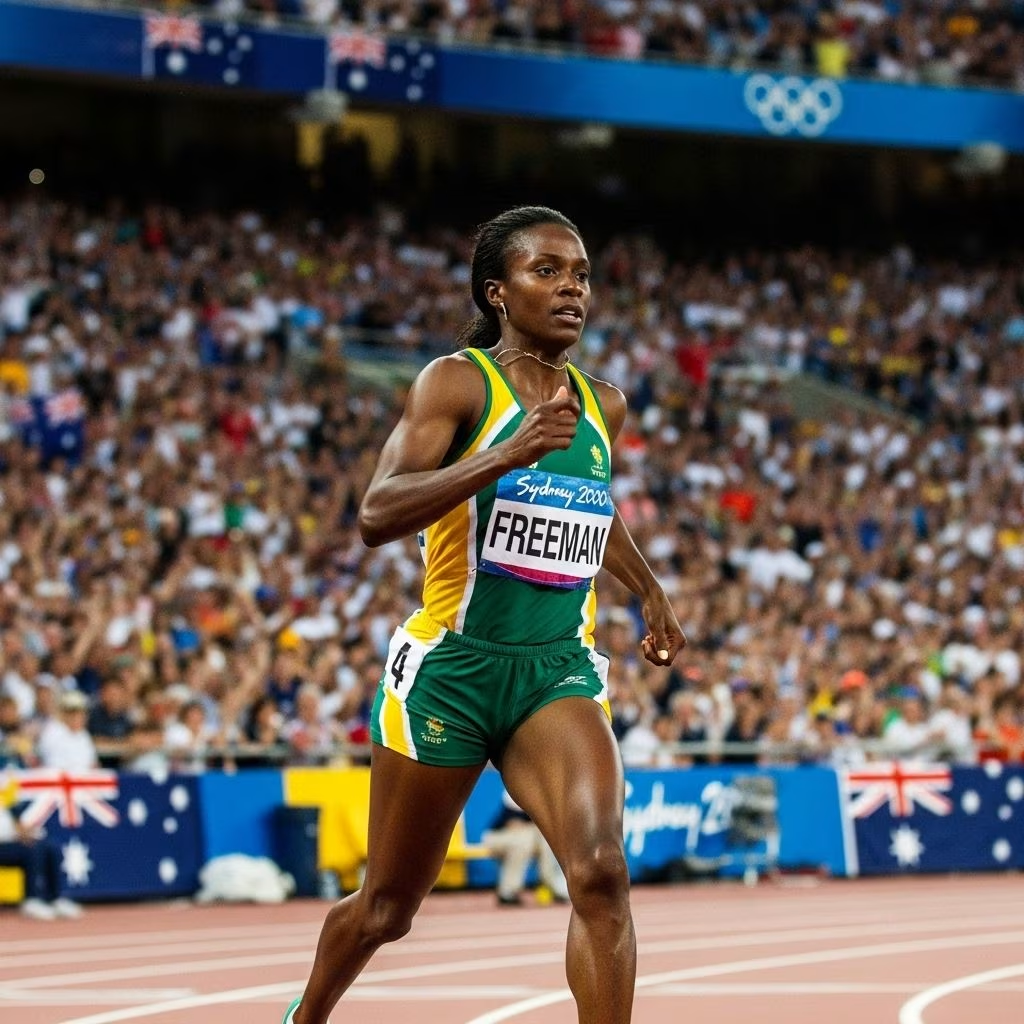
Cathy Freeman: The Spirit of a Nation and Her Legacy Beyond the Track
Cathy Freeman is not only a legendary Australian athlete but also a national symbol of triumph, reconciliation, and unwavering determination. Rising from the small town of Mackay, Queensland, to ignite the Olympic flame and win gold at the Sydney 2000 Olympics, her story transcends sport—mirroring Australia’s journey towards unity, respect, and recognition of its First Nations peoples.
Early Life and Family Roots
Catherine Astrid Salome Freeman was born on February 16, 1973, in Mackay, Queensland. Of Kuku-Yalanji and Birri-Gubba heritage, Cathy grew up recognizing both the beauty and the challenges faced by Indigenous Australians. Raised primarily by her mother, Cecelia, after her parents’ separation, Cathy’s resilience was shaped early by her family’s support and the wider significance of her achievements for her community.
- Heritage: Both her paternal and maternal roots connect with prominent North Queensland Indigenous groups.
- Childhood: Freeman developed her passion for running at a young age, winning her first race at eight years old.
- Family: Her close-knit relatives became her steadfast support system during triumphs and setbacks alike.
Racing to Inspiration: Breaking Barriers
Displaying outstanding athleticism, Freeman stormed onto the national stage in her teens. Her early aspirations were clear: she wanted to win Olympic gold, a dream she first voiced at 14. By 16, she had already accomplished more than most athletes dream of:
- 1990 Auckland Commonwealth Games: Freeman won gold in the 4x100m relay, becoming the first female Indigenous Australian Commonwealth Games gold medallist.
- 1992 Barcelona Olympics: She made history again as the first Aboriginal track and field athlete to represent Australia at the Olympics.
- 1994 Commonwealth Games in Victoria: Gold in both the 200m and 400m, plus a national record in the 200m (22.25 seconds).
Alongside these milestones, Freeman was awarded Young Australian of the Year in 1990, highlighting the cultural significance of her success at such a young age.
Rising on the World Stage
Freeman emerged as a dominant force in world athletics throughout the 1990s, quickly becoming a role model for Australians and the global track community.
| Year | Event | Achievement |
|---|---|---|
| 1996 | Atlanta Olympics | Silver medal in 400m, Commonwealth record (48.63s) |
| 1997 | World Championships | Gold in 400m |
| 1999 | World Championships | Gold in 400m after returning from injury |
Key moments:
- Freeman became the first Australian woman to run under 50 seconds for 400m.
- In 1996, she was the sixth fastest woman ever at the distance.
- Victories over French rival Marie-José Pérec established Freeman among the world’s greats.
Lighting Up the Millennium: 2000 Sydney Olympics
The 2000 Sydney Olympics remain the crowning chapter of Freeman’s athletic journey and a defining moment for Australian identity.
- Opening Ceremony: Freeman was chosen to light the Olympic cauldron, symbolizing both the nation’s Indigenous heritage and a new inclusive era.
- The 400m Final: On September 25, 2000, under immense public and media scrutiny, Freeman delivered under pressure, winning gold before 112,000 spectators and millions watching worldwide.
- Victory Lap: Wrapping herself in both the Aboriginal and Australian flags, she celebrated a personal and historic victory, becoming the first Australian Aboriginal to win an individual Olympic gold medal.
This moment was about more than sport—it was a celebration of resilience, national unity, and hope for reconciliation.
Bearing the Weight of Expectations
Cathy Freeman’s Olympic win was a study in mental strength and composure. The burden she carried extended well beyond sport:
- As a symbol of Indigenous pride, Freeman felt the hopes of her people for a more just, united nation.
- The Sydney games marked a transformative period for Australia, with Freeman’s performance fueling deeper conversations around race, opportunity, and equity.
- She later described the mixture of relief, exhaustion, and joy she felt after crossing the finish line first—a culmination of years of sacrifice.
Retirement: Shaping the Future
After her victory and the subsequent 2002 season, Freeman gradually stepped back from international competition, officially announcing her retirement in July 2003. She dedicated herself to family, education advocacy, and initiatives supporting Indigenous youth.
- Cathy Freeman Foundation (now Murrup): Founded in 2007, Freeman’s charity focuses on giving Indigenous children equal access to education and opportunity.
- Ambassadorship: She continues to serve as a mentor, role model, and face of social programs promoting diversity, physical activity, and reconciliation.
- Recognition: Accolades since retirement include the Laureus Sportswoman of the Year award and elevation to Legend status in the Sport Australia Hall of Fame.
Life Beyond the Track: Relationships and Personal Growth
Freeman’s journey has been marked by significant personal milestones and the challenges common to high-profile public figures.
- Family life: After her athletic career, Freeman focused on building her family, marrying James Murch in 2009 and welcoming a daughter, Ruby, in 2011.
- Relationships: A previous marriage to Nike executive Alexander Bodeker ended in divorce. Freeman has been candid about the pressures fame placed on her private life, emphasizing the importance of maintaining close relationships with her wider family.
Through personal challenges and growth, Freeman’s identity as a mother, daughter, and partner remains deeply intertwined with her sense of purpose and advocacy.
Cultural Significance & Legacy
Freeman’s triumph was not simply that of a champion sprinter, but of an Indigenous woman rewriting national narratives and influencing the broader social landscape:
- Symbol of Reconciliation: Her success and humble demeanor inspired connection and empathy within a nation grappling with its history of exclusion and inequality.
- Promoting Indigenous Voices: Freeman has continually used her platform to elevate other Indigenous Australians and encourage pride in cultural identity.
- Inspiring New Generations: Her foundation and mentoring encourage children to dream big and strive for excellence in all fields, not just sport.
- Honours: Freeman has earned the Order of Australia Medal, been named Australian of the Year (1998), and was included among the notable Australians to light the Olympic Flame.
Achievements at a Glance
| Competition | Event(s) | Medals |
|---|---|---|
| Olympic Games | 400m (Sydney 2000), 400m (Atlanta 1996) | Gold, Silver |
| Commonwealth Games | 4x100m Relay (1990), 200m & 400m (1994) | Gold (x4), Silver (x1) |
| World Championships | 400m (1997, 1999) | Gold (x2) |
Influence on Women’s Sport in Australia
Cathy Freeman stands as a trailblazer for women, breaking new ground for female athletes and laying the foundation for today’s sporting landscape.
- Her Olympic torch-lighting role honored a century of women’s Olympic participation.
- Freeman inspired not only Aboriginal girls but all Australian women to believe in greatness.
- She normalised elite female success on the world stage, encouraging policy and funding shifts for women’s sport.
Public Persona and Enduring Connection
Despite her fame, Freeman remains remarkably grounded and dedicated to making a difference. She continues to engage with the public, making media appearances, sharing her story in documentaries, and participating in community events across Australia. Cathy’s humility, authenticity, and focus on service underpin her lasting appeal.
Frequently Asked Questions (FAQs)
Q: What made Cathy Freeman’s Sydney 2000 victory so important?
A: Freeman’s victory was momentous not only because of her athletic achievement but also because it represented a pivotal step toward reconciliation for Australia, encapsulating national pride, hope, and healing.
Q: How has Cathy Freeman contributed to Indigenous communities after retiring?
A: Through the Cathy Freeman Foundation (now Murrup), she’s focused on improving the education and welfare of Indigenous children, advocating for equal opportunities and long-term social change.
Q: What is Cathy Freeman’s legacy in Australian sport?
A: Freeman’s legacy lies in her status as an Olympic champion, a role model for reconciliation, and a key figure in the advancement of both women’s and Indigenous sports in Australia.
Q: Is Cathy Freeman still involved in athletics?
A: While retired from competition, Freeman remains involved as a mentor, ambassador for social causes, and an inspiration to aspiring young athletes nationwide.
Q: How did Cathy Freeman handle pressure and expectation?
A: Freeman has spoken openly about feeling immense pressure but credits her discipline, sense of purpose, and support from her loved ones and community for her ability to perform under high stakes.
Final Reflections
Cathy Freeman’s journey exemplifies the transformative power of sport to bridge divides and create enduring change. Her achievements, both on and off the track, continue to inspire future leaders, athletes, and advocates who carry forward her vision for a more inclusive, equitable, and united Australia.
References
- https://commonwealthgames.com.au/athletes/cathy-freeman/
- https://sahof.org.au/hall-of-fame-member/cathy-freeman/
- https://en.wikipedia.org/wiki/Cathy_Freeman
- https://www.britannica.com/biography/Cathy-Freeman
- https://www.olympics.com.au/olympians/cathy-freeman/
- https://www.nma.gov.au/defining-moments/resources/cathy-freeman
- https://sportsmatik.com/sports-stars/cathy-freeman-2045
- https://www.ebsco.com/research-starters/women-s-studies-and-feminism/cathy-freeman


