


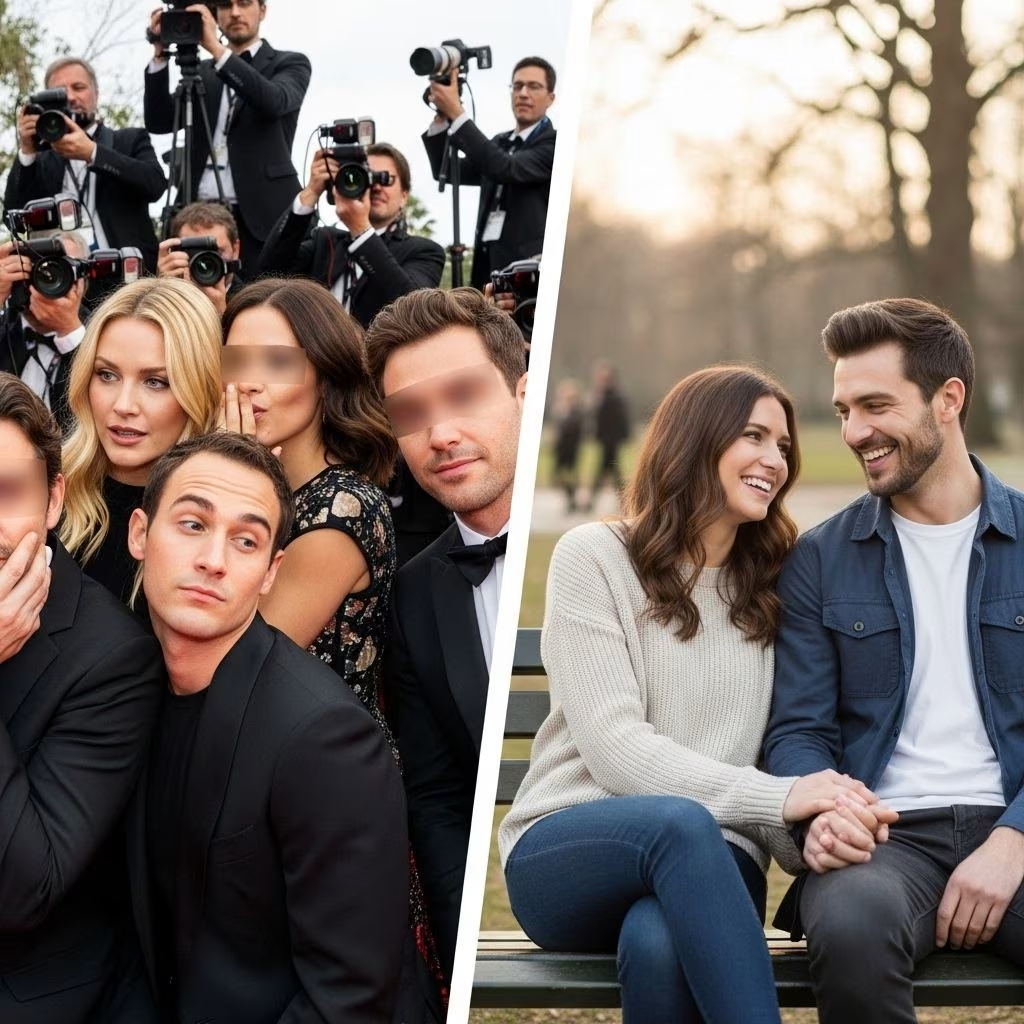
Celebrity Relationships: The Farce, Facts, and Fiction
Over the past century, the public’s fascination with celebrity relationships has grown into a cultural obsession—one fed by a steady diet of tabloid rumors, glossy magazine features, and carefully curated Instagram posts. But how much of what we’re shown is genuine, and how much is performance?
Celebrity couples are rarely just two people in love. They are often part of a broader media machine, a public relations apparatus designed to capture attention and generate headlines. In many cases, what we see as love stories are, in reality, strategic moves to promote films, albums, brands, or simply to amplify the star power of the individuals involved. As audiences, we hunger for these stories, and Hollywood is more than happy to feed us what we crave—whether it’s “real” or not.
The History of Celebrity Couples: Romance as Publicity
The modern phenomenon of the celebrity couple can be traced back to Hollywood’s Golden Age, when studio bosses realized that the romantic lives of their stars could be leveraged for publicity. The so-called “love story” became a powerful marketing tool: if two stars were rumored—or confirmed—to be dating, their films would draw bigger crowds. Iconic pairs like Elizabeth Taylor and Richard Burton, or Marilyn Monroe and Joe DiMaggio, not only captured the public imagination but also brought in millions at the box office.
- Studio Orchestrated Romances: During the 1930s–1950s, studios often orchestrated relationships between stars to promote upcoming movies, sometimes even arranging marriages.
- Press Agents & Paparazzi: As the industry grew, so did the role of press agents, who would plant stories in gossip columns and magazines to keep their clients relevant.
- Taboo to Trend: What was once a taboo topic—divorce, affairs, and breakups—became front-page news, fueling a cycle of speculation and celebrity worship.
The Rise of the Celebrity “Fauxmance”
In the 21st century, the line between authenticity and artifice has blurred even further. The term “fauxmance”—a fake romance—has entered the pop culture lexicon, describing relationships that are not only public but performative, crafted for marketing value rather than emotional connection.
Why Do Fauxmances Happen?
- Promotion: Many relationships coincide suspiciously with movie premieres, album launches, or fashion collaborations, leading fans and critics to question their legitimacy.
- Rehabbing Reputations: After a scandal, a star may suddenly be seen “dating” someone with a squeaky-clean image to shift the narrative.
- Brand Synergy: Celebrities pair off for mutual benefit, each bringing their own fanbase and media attention to the table.
This isn’t just a tabloid theory. Numerous Hollywood insiders, former publicists, and even stars themselves have admitted that some relationships are more about optics than affection.
Case Studies: Celebrities Who’ve Played the Game
The PR Power Couple: Jennifer Lopez & Ben Affleck (Bennifer 2.0)
When Jennifer Lopez and Ben Affleck reconnected after nearly two decades, the world watched with bated breath. Their reunion was covered in glossy spreads that seemed to mirror the same intensity as their first go-round in the early 2000s. Critics and fans alike speculated that this was a meticulously orchestrated PR move to rejuvenate both careers and overshadow Lopez’s breakup with Alex Rodriguez.
“There’s no doubt that getting back together with Affleck was a masterstroke in public relations,” one industry insider noted. “It gave both stars a huge platform for their new projects and personal brands.”
The “Rent-a-Boyfriend” Phenomenon: Pete Davidson
Comedian Pete Davidson—often jokingly called “Hollywood’s rent-a-boyfriend”—has a knack for dating the most talked-about women in showbiz. Each relationship generates a media frenzy, with paparazzi photos, viral tweets, and endless speculation about whether the romance is real or just a distraction.
For example, when Davidson began spending time with Kim Kardashian, the gossip reached a fever pitch. However, the relationship fizzled just as quickly, only to be replaced by another high-profile pairing.
| Celebrity Couple | Timing Coincidence | Suspected Motivation |
|---|---|---|
| Jennifer Lopez & Ben Affleck | Reunion after high-profile breakups | Rehabbing images, generating PR |
| Kim Kardashian & Pete Davidson | During Kardashian’s divorce | Distraction, publicity |
| Taylor Swift & Calvin Harris | During music collaborations | Mutual brand-building |
| Harry Styles & Taylor Swift | During album promotion | Media attention, marketing |
The Social Media Effect: Crafting the Narrative
Before the internet, control over the celebrity narrative was limited to press agents and magazine editors. Now, stars can speak directly to their fans—and shape their own stories—via Instagram, Twitter, and TikTok.
- Curated Reality: Every post, every hashtag, every “casual” beach snap is part of a carefully managed campaign.
- Fan Engagement: Liking a post, leaving a flirty comment, or sharing a cryptic message can spark weeks of speculation—even if there’s nothing behind it.
- Instant Feedback Loop: The reaction (or lack thereof) to a relationship announcement guides the next move, making social media both a weapon and a barometer for celebrity PR teams.
Why Do We Care? The Psychology Behind the Obsession
Why are we so fixated on who’s dating whom in Hollywood? Psychologists argue that celebrities serve as modern-day royalty, living lives that most of us can only imagine. Their romances give us a sense of escapism, connection, and sometimes even hope.
“Celebrities allow us to vicariously live through them,” notes cultural anthropologist Dr. Jane Smith. “Their relationships become a kind of communal drama that we all participate in—even if we know, deep down, that it’s all part of the act.”
Media outlets, gossip blogs, and social media platforms all play into this drama, feeding our hunger for more content, more drama, more insight.
The Risks: When the Farce Goes Too Far
While celebrity romances may seem harmless, there are real consequences when the line between fiction and reality becomes too blurry.
- Mental Health Impact: Stars who become part of a public performance can lose track of their own boundaries, leading to stress, anxiety, and burnout.
- Fan Disillusionment: When fans realize they’ve been played, it can lead to a backlash that damages both the celebrity’s reputation and their future projects.
- Exploitation: Some stars, especially younger ones, may be pressured by management or studios into participating in relationships they don’t want, purely for the sake of publicity.
We saw this in the early 2000s with Britney Spears and Justin Timberlake, whose breakup became tabloid fodder for years. In the era of social media, the scrutiny is even more intense, with every breakup and reconciliation dissected in real time.
How to Spot a Celebrity PR Relationship
Not all celebrity romances are manufactured, but some signs can help you spot a fauxmance:
- Strange Timing: Relationships that spark right before an album release, movie premiere, or scandal.
- Over-the-Top Public Displays: Couples who are always photographed together, often in high-profile locations.
- Vague Social Media Clues: Posts that feel like puzzles, teasing fans without clear answers.
- Quick Breakups: If the couple splits as soon as their project wraps or the buzz dies down, it’s worth questioning.
FAQs: Celebrity Relationships & the PR Machine
Q: Are most celebrity relationships just for publicity?
A: Not all, but a significant portion are at least partially orchestrated for PR purposes. Some are genuine, but even those are often amplified or managed for public consumption.
Q: Do celebrities ever admit their relationships are fake?
A: Rarely, but some industry insiders and former publicists have spoken out. Most fauxmances are never officially “outed,” as the mystery and speculation are part of the appeal.
Q: What’s the benefit for celebrities in having a fake relationship?
A: It keeps their names in the headlines, builds brands, and can distract from negative press. In some cases, it can even lead to lucrative sponsorship deals.
Q: How can fans tell if a relationship is real or not?
A: It’s nearly impossible to know for sure, but inconsistencies in their stories, overly choreographed appearances, and convenient timing are common red flags.
The Future of Celebrity Romance: What’s Next?
As audiences become savvier and social media becomes even more integral to celebrity culture, the spectacle of the celebrity romance is unlikely to fade. If anything, we may see more creative—and transparent—ways to monetize and market these relationships.
But as the entertainment industry changes, so does our appetite for authenticity. Younger audiences, in particular, crave real stories—flaws, messiness, and all. There may come a time when the traditional fauxmance becomes less effective, and stars who are open and honest about their lives, relationships, and struggles become the true “royalty” of Hollywood.
Conclusion: Loving the Spectacle, Questioning the Story
Celebrity relationships are, and always have been, as much about entertainment as they are about romance. They are stories we tell ourselves—about love, glamour, drama, and even disappointment. The next time you see a celebrity couple splashed across your feed, ask yourself: Is this real, or is it a performance?
In the end, the joke—and the truth—may be on all of us for caring so much.
References
- https://harpersbazaar.com.au/celebrity-pr-relationships/
- https://www.elitedaily.com/entertainment/taylor-swift-dating-history
- https://timesofindia.indiatimes.com/sports/nfl/news/after-months-of-silence-taylor-swift-and-blake-lively-may-have-reunited-with-travis-kelce-quietly-in-the-mix/articleshow/124491770.cms
- https://www.elitedaily.com/relationships


