


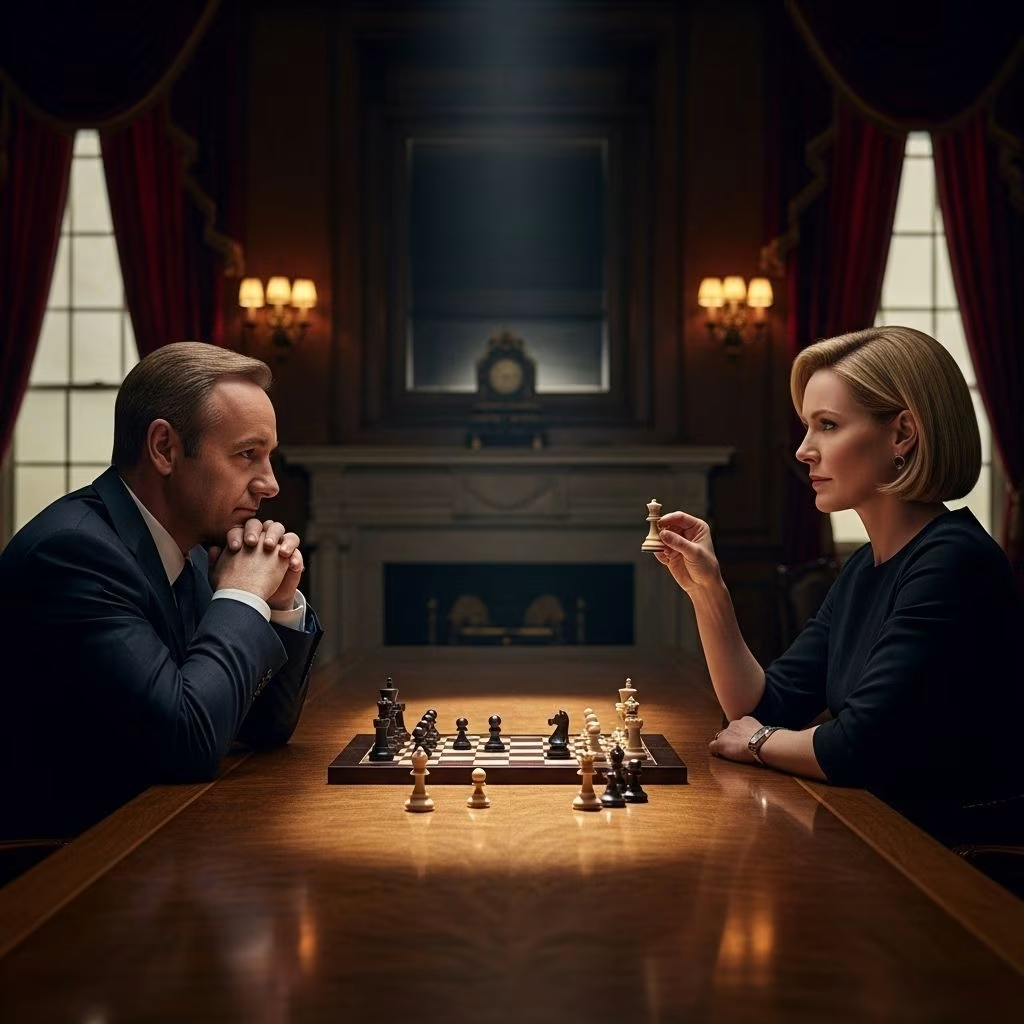
Redefining Modern Marriage: Claire & Francis Underwood
Television has always mirrored society, but few couples have provoked as much debate about the nature of marriage as Claire and Francis Underwood from Netflix’s “House of Cards.” Theirs is a partnership that defies convention, rooted in shared ambition rather than romantic love, and marked by a pragmatic tolerance of infidelity and immorality. While many might label their marriage as dysfunctional, a closer look reveals a surprisingly progressive—if morally ambiguous—model for the modern age.
A Partnership Over a Love Affair
Gone are the days when marriage was a simple division of labor—man at work, woman at home. Claire and Francis’ union is built on mutual respect and a shared drive for power and influence. Their marriage isn’t about love stories or candlelit dinners; it’s about advancing each other’s careers and ambitions. They support one another not out of romantic attachment, but because they recognize that their dreams are codependent. For the Underwoods, marriage is a business partnership in every sense, and love is a secondary concern.
Infidelity & the Turned Blind Eye
While many marriages buckle under the strain of infidelity, Claire and Francis handle it with a detached pragmatism. Francis’s affairs are met not with tears or tantrums, but with a cold calculation—Claire recognizes that his transgressions, while hurtful, serve his professional image and thus her own. She reciprocates in kind, spending a weekend with a former lover, which Francis acknowledges with little more than a broken rowing machine. Theirs is a relationship where fidelity is not expected, and betrayal is not a deal-breaker but a bargaining chip.
Power, Respect, and Devotion
The Underwoods’ bond is forged in the fires of ambition. They are each other’s greatest allies, cheerleading, scheming, and sometimes sacrificing for the other’s gain. If traditional marriages are built on love, the Underwoods’ is built on relentless support for one another’s goals. As the article notes, their relationship lacks monogamy but overflows with devotion to each other’s aspirations. They are the support system each cannot find elsewhere, willing to forfeit children, fidelity, and even some of their humanity to stay atop Washington’s political ladder.
Are the Underwoods Really Dysfunctional?
To call their marriage dysfunctional is to judge it by outdated standards. The article challenges readers to reconsider the definition of a successful relationship. In an era of high divorce rates and normalized infidelity, the Underwoods may simply be ahead of the curve. Their marriage is not about love or family, but about advancing their individual and shared goals. They have renegotiated the terms of partnership, removing traditional expectations and replacing them with a relentless push for success.
The New Generation-Y Standard
Claire and Francis represent a new archetype for marriage—one that resonates with a generation skeptical of traditional institutions. For millennials and Gen-Z, marriage is increasingly seen as a practical alliance, a partnership for mutual advancement rather than a romantic ideal. The Underwoods embody this ethos, demonstrating that emotional intimacy can be secondary to shared ambition and strategic support.
Key Features of the Underwood Marriage
| Traditional Marriage | Underwood Marriage |
|---|---|
| Based on love and emotional intimacy | Based on mutual ambition and political gain |
| Fidelity expected and valued | Fidelity optional; loyalty to ambition |
| Children as a primary goal | Children absent; career and power prioritized |
| Conflict over infidelity | Infidelity managed pragmatically |
| Partners as emotional supporters | Partners as professional allies |
Is It Progress or Perversion?
The article grapples with whether the Underwoods’ marriage is a sign of progress or a symptom of moral decay. On one hand, their partnership is egalitarian, with both parties equally invested in each other’s success. On the other hand, their willingness to overlook deceit and betrayal raises questions about the ethical boundaries of marriage. Yet, in a world where traditional marriages often falter, the Underwoods’ model offers a provocative alternative—one where emotional detachment is a strength, not a weakness.
The Role of Respect in the Underwood Dynamic
Respect is the cornerstone of Claire and Francis’ relationship, though it manifests differently than in traditional partnerships. They respect each other’s intelligence, ambition, and ruthlessness. This mutual admiration allows them to weather storms that would sink most marriages, from political scandals to personal betrayals. Their respect isn’t rooted in affection, but in a recognition of shared objectives and complementary skills.
Comparing Claire and Francis’ Marriage to Real-Life Trends
The article draws parallels between the Underwoods’ marriage and broader societal trends. As divorce rates rise and infidelity becomes more common, many couples are renegotiating the terms of their unions. The Underwoods’ willingness to prioritize career over family, and ambition over romance, reflects a growing cultural shift—one where marriage is increasingly seen as a strategic alliance rather than a lifelong love story.
Claire Underwood: A Modern Archetype
Tenacity and Independence
Claire stands out as a fiercely independent woman, unwilling to let her husband’s career dictate her own. She leverages her position to pursue her ambitions, whether in business, politics, or philanthropy. Her ruthlessness and tenacity make her a formidable partner and a compelling character in her own right.
Strategic Use of Deceit
Claire understands that in politics, truth is often negotiable. She lies when necessary, not out of malice, but pragmatism—believing that the ends justify the means. This willingness to bend the truth allows her to navigate the complexities of Washington with ruthless efficiency.
Opaque and Ambiguous
Claire maintains an air of mystery, keeping her personal life private and her past concealed. She understands that ambiguity is a source of power, especially in an age where privacy is scarce. By controlling her narrative, she commands respect and avoids vulnerability.
Network and Influence
Claire excels at building alliances, recognizing the value of a broad network. She cultivates relationships with friends and foes alike, always mindful that today’s adversary could be tomorrow’s ally.
Equality in Marriage
Claire insists on an equal partnership with Francis. She is not his possession, but his partner—each pursuing their own ambitions while supporting the other’s. This dynamic is a hallmark of their marriage and a reflection of changing gender roles in society.
FAQs
Q: Is Claire and Francis’ marriage based on love?
A: Their marriage is rooted in ambition, respect, and mutual support, not romantic love. Love, in the traditional sense, is secondary to their shared goals and partnership.
Q: Do they expect fidelity from each other?
A: Fidelity is not a priority. Both tolerate and even reciprocate infidelity, focusing instead on loyalty to each other’s ambitions.
Q: Is their marriage a good example for real life?
A: While their partnership is functional within their world, it challenges traditional values. Whether it’s a model or a cautionary tale depends on one’s perspective on marriage and ambition.
Q: How does Claire’s character influence the marriage?
A: Claire’s independence, ambition, and strategic mindset make her an equal player in the partnership. She is not a traditional “political wife” but an active participant in their shared quest for power.
Q: What does their marriage say about modern relationships?
A: Their relationship reflects a growing trend where marriage is seen as a strategic alliance for mutual advancement, rather than a romantic or familial institution.
Conclusion
Claire and Francis Underwood’s marriage is a complex, morally ambiguous, and utterly modern partnership. It challenges viewers to rethink what marriage can and should be—whether it’s a partnership of equals, a strategic alliance, or a pact between ambitious individuals. In a world where traditional institutions are increasingly questioned, the Underwoods offer a provocative, if unsettling, vision of what marriage might become.
References
- https://www.elitedaily.com/entertainment/house-cards-claire-francis-relationship-functional-highly-disfunctional
- https://www.elitedaily.com/entertainment/why-every-girl-should-strive-to-be-like-claire-underwood-from-house-of-cards
- https://www.elitedaily.com/entertainment/life-lessons-from-house-of-cards/993114
- https://www.elitedaily.com/entertainment/frank-boy-toy-house-cards/1961324


