


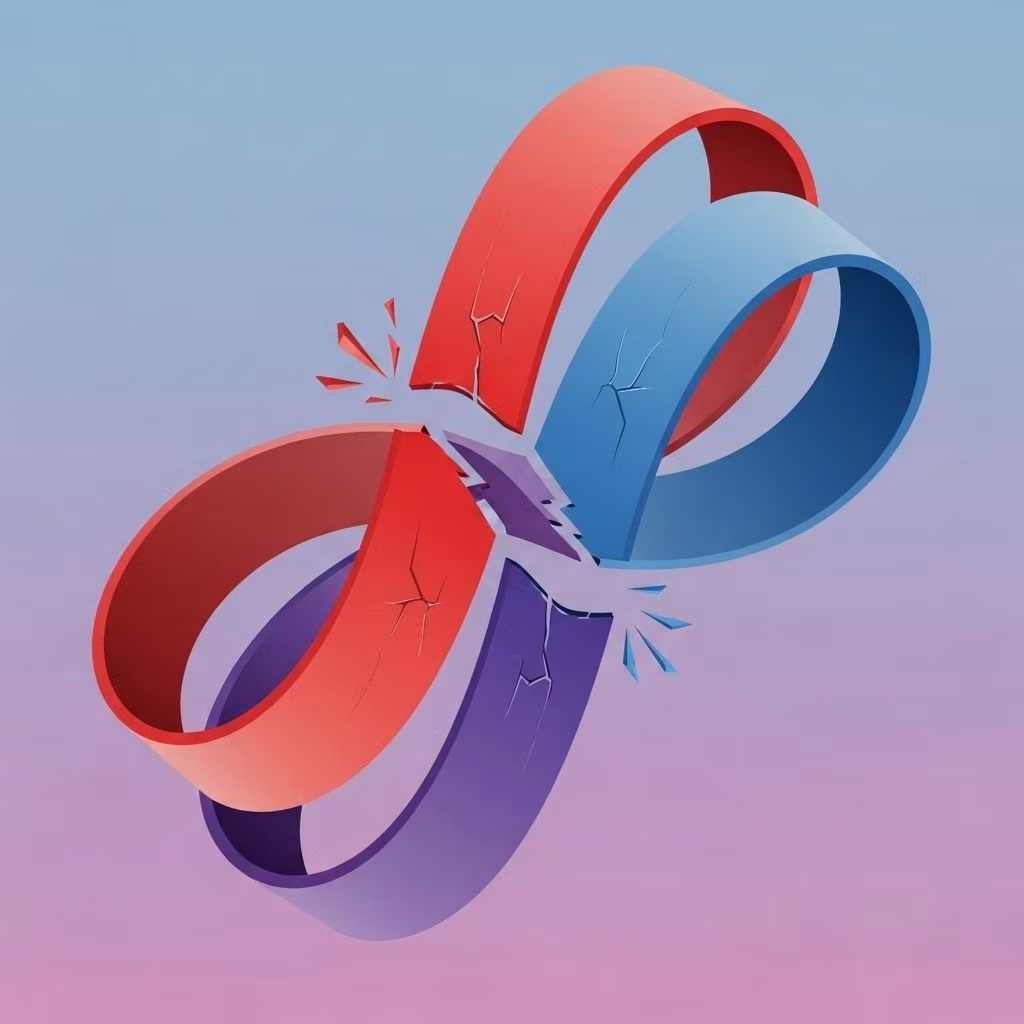
Cyclical Relationships: The On-Again, Off-Again Cycle
Cyclical relationships, also called on-again, off-again partnerships, are defined by their recurring pattern of breakups followed by reconciliation. It’s a relationship dynamic familiar to many—marked by unpredictability, emotional highs and lows, and a sense of never really moving forward.
These cycles are not an anomaly: nearly half of young adults report experiencing this pattern in their romantic lives, making it a common phenomenon across different age groups and backgrounds.
What Is a Cyclical Relationship?
A cyclical relationship involves repeated splits and reunions, with couples oscillating between being together and apart. Unlike new relationships after a breakup, cyclical partners have accumulated shared experiences and history, which often intensifies both the emotional bonds and the uncertainty.
- Breakups followed by reconciliation
- Emotional rollercoaster of highs and lows
- Often accompanied by lingering feelings and unresolved issues
- Can involve “sex with an ex” and blurred boundaries between breakup and reunion
Why Are Cyclical Relationships So Common?
The prevalence of cyclical relationships can be traced back to various psychological, developmental, and social factors.
- Learning and exploration: Especially during emerging adulthood, individuals are figuring out what they want in future relationships and partners.
- Less commitment: Dating and cohabiting couples tend to experience more frequent reconciliations than married couples, largely due to lower levels of investment.
- Emotional attachment: Shared history and emotional intimacy make breaking away more challenging.
- External stressors or miscommunication can prompt temporary splits, only to draw couples back together.
Stages and Patterns in Cyclical Relationships
Relationship cycles do not follow a linear path. Instead, couples in cyclical partnerships typically loop through various stages of connection, conflict, separation, and reunion—sometimes several times over.
The Five Stages of a Relationship (A Cyclical Model)
| Stage | Description | Key Challenges |
|---|---|---|
| 1. Merge | Initial infatuation, closeness, idealization | Overlooking differences, setting unrealistic expectations |
| 2. Doubt & Denial | Growing awareness of partner’s flaws, emerging insecurities | Managing disappointment, addressing fears |
| 3. Disillusionment | Conflicts escalate, fantasy fades | Coping with loss of idealism, considering breakup |
| 4. Decision | Partners evaluate, choose whether to stay or leave | Facing inflection points, making healthy choices |
| 5. Wholehearted Love | Deeper commitment, acceptance, mature partnership | Sustaining growth, risking another cycle |
Rather than progressing in a straight line, many couples find themselves looping through these stages multiple times, which is especially true for cyclical relationships.
Why Couples Repeat the Cycle
- Unresolved trauma or emotional distress keeps partners tethered even when the relationship is clearly unhealthy.
- Familiarity and comfort—the known is often less intimidating than the unknown.
- Hope for improvement: Many believe that after temporary separation, things will be better on reunion.
- Intimate self-disclosure is higher in cyclical relationships, making the emotional connection hard to replace even if relationship satisfaction is low.
Emotional and Psychological Impacts
Cyclical relationships are rarely benign. Research highlights several negative outcomes for those who remain stuck in the on-and-off pattern:
- Lower relationship satisfaction
- Higher levels of psychological distress, including anxiety and mood swings
- Decreased commitment and trust, destabilizing the partnership
- Worse communication, often dominated by hurt, resentment, or uncertainty
- Sometimes stronger emotional intimacy and self-disclosure, which paradoxically makes leaving harder
These outcomes may be particularly pronounced when the cycles of breakup and reunion are frequent or harsh, and when one partner is constantly blamed or disempowered, causing emotional harm.
Causes of Cyclical On-Again, Off-Again Relationships
While every relationship is unique, several core causes recur in cyclical partnerships:
- Conflict avoidance: Failure to address deep issues often leads to temporary separations rather than resolution.
- Fear of commitment or abandonment: Partners may push away to test emotional safety, only to pull back in.
- Communication breakdown: Couples may lack the skills or language to resolve tensions, defaulting to breakup as a solution.
- External stressors: Work, family, finances, or other pressures create environment for on-off cycles.
- Goal misalignment: Partners envision different futures, leading to repeated ruptures.
Psychological Factors Driving the Cycle
- Attachment style: Insecure or anxious attachment can lead to intense neediness, fear of loss, and destructive cycles of withdrawal and pursuit.
- Nostalgia and memory bias: After a breakup, people tend to remember the good times and minimize the bad, increasing the likelihood of reunion.
- Low self-esteem: Some remain because they doubt they deserve or could find a healthier relationship.
- Social pressure: Friends and media may reinforce reconciliation, making it seem normal or even romantic.
Are On-Again, Off-Again Relationships Toxic?
Cyclical relationships can be toxic, but are not inherently so. Toxicity arises when cycles cause emotional or psychological harm:
- Power imbalances—when one partner repeatedly controls the cycle
- Repeated emotional distress, unresolved hurt
- Poor communication and lack of trust, leading to further instability
- Patterns of manipulation or gaslighting
- Inability for either partner to grow or heal
It’s important to distinguish between temporarily rocky relationships that recover, and ongoing cyclical patterns that undermine wellbeing.
Distinctions Between Cyclical and Stable Relationships
Cyclical relationships differ from stable partnerships in key ways:
| Cyclical Relationship | Stable Relationship |
|---|---|
| Frequent breakups and reconciliations | Consistent commitment |
| Higher uncertainty | Clarity around future and boundaries |
| Emotional volatility | Emotional security |
| Often poor communication during crises | Healthy conflict resolution |
Breaking the Cycle: How to Create Lasting Change
- Open communication: Encourage honest, transparent conversations about needs, expectations, and boundaries.
- Identify patterns: Notice triggers for breakups and reunions—are they related to specific stressors, arguments, or unresolved issues?
- Self-reflection: Consider whether the relationship is serving your emotional health and long-term goals.
- Couples therapy: Professional guidance can help unpack recurring issues, strengthen communication, and clarify mutual desires.
- Set boundaries: Both partners must recognize when reconciliation is healthy and when it’s simply prolonging pain.
Personal Growth and Healing
The journey out of a cyclical relationship often begins with building self-awareness and emotional resilience. Focusing on individual needs, aspirations, and self-worth is essential to break out of repetitive, unhealthy patterns.
Frequently Asked Questions (FAQs)
Q: Are cyclical relationships normal?
A: Yes, especially during emerging adulthood. Nearly two-thirds of people have been in at least one relationship characterized by breakups and reconciliations.
Q: Are all cyclical relationships toxic?
A: Not all, but many cyclical relationships are marked by lower satisfaction and higher distress. Whether a cyclical relationship is toxic depends on its underlying causes and impact on wellbeing.
Q: How can partners end the on-again, off-again cycle?
A: Strategies include open communication, therapy, self-reflection, and establishing healthy boundaries. Breaking the cycle often involves deeper work on emotional patterns and relationship skills.
Q: Why do people return to ex-partners?
A: Common reasons are emotional familiarity, nostalgia, hope for change, and insecurity. Often, the emotional bond and history weigh more heavily than past conflicts.
Q: How do cyclical relationships differ from stable ones?
A: Cyclical relationships feature recurring breakdowns and reconciliations, while stable relationships have consistent commitment and healthier conflict resolution.
Key Takeaways
- Cyclical relationships are widespread and marked by repeated breakups and reunions.
- Most common in young adulthood due to factors such as exploration, low commitment, and emotional attachment.
- While not always toxic, these patterns often decrease happiness and increase distress.
- Awareness, communication, and professional support are crucial for breaking unhealthy cycles and building lasting partnerships.
References
- https://krex.k-state.edu/items/cb33c58f-56c2-46a4-a348-580652070c85
- https://www.mindbodygreen.com/articles/stages-of-a-relationship
- https://www.drdaveschramm.com/dr-daves-blog/relationshipchurningtheonagainoffagaincycle
- https://www.betterhelp.com/advice/relations/understanding-the-on-again-off-again-relationship/
- https://en.wikipedia.org/wiki/On-again,_off-again_relationship
- https://www.psychologytoday.com/us/blog/meet-catch-and-keep/201907/why-on-again-off-again-couples-are-so-common
- https://www.marriage.com/advice/relationship/push-pull-relationship-cycle/
- https://psychcentral.com/relationships/why-do-we-repeat-the-same-dysfunctional-relationship-patterns


