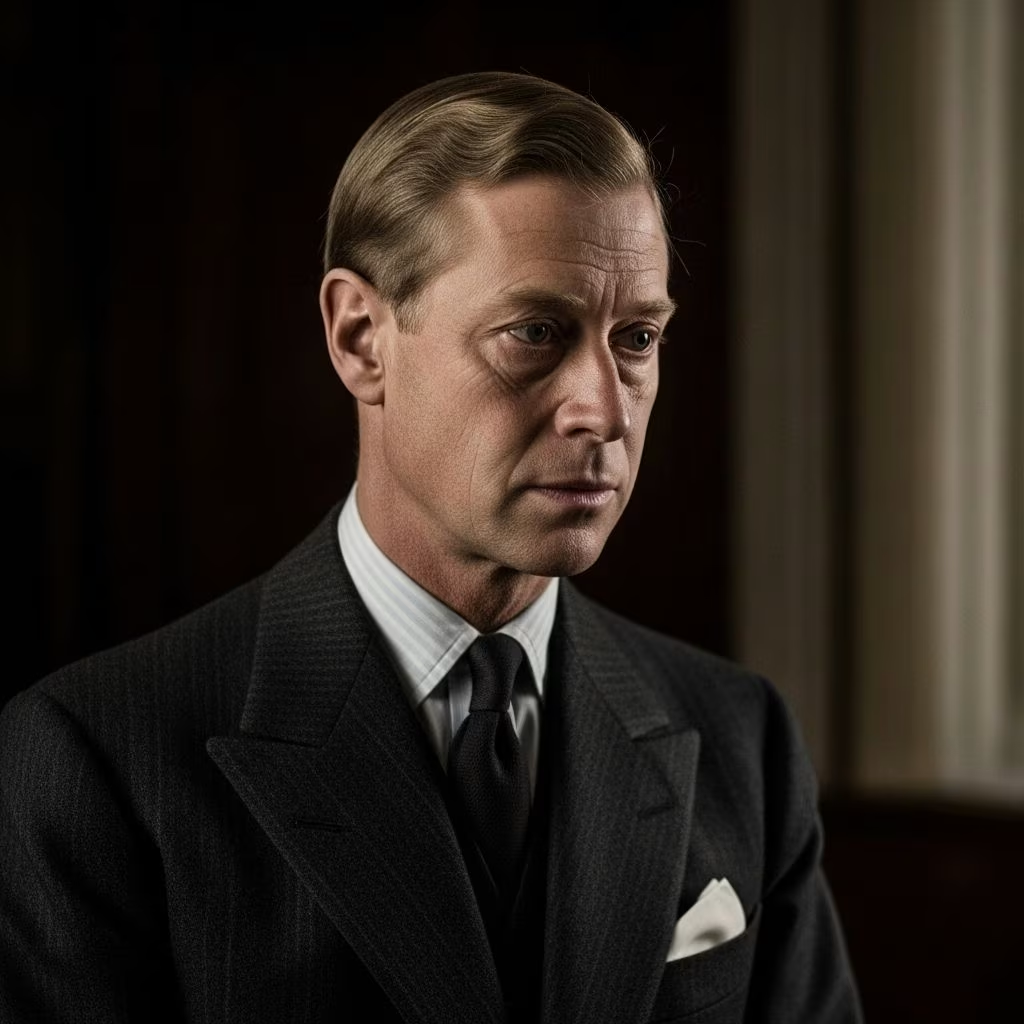
Did Ex-King Edward VIII Have Nazi Connections? A Historical Controversy Explored
The abdication of King Edward VIII in 1936 marked a turning point for the British monarchy. Becoming the Duke of Windsor, his subsequent actions, including an infamous trip to Nazi Germany and a series of damning documents known as the Marburg Files, have led historians and the public alike to question: Did the former king harbor Nazi sympathies? This article examines the mounting evidence, counterclaims, and the ongoing debate surrounding Edward’s legacy and his ties to Adolf Hitler’s regime.
The Abdication Crisis and Edward’s New Life
Edward VIII’s romantic relationship with Wallis Simpson, an American divorcée, forced his abdication after less than a year on the throne—an unprecedented move that shook the monarchy. Assuming the title Duke of Windsor, Edward and Wallis wed in France and began a life mostly outside of the United Kingdom, away from royal responsibilities but not from controversy.
The Move into Exile
- Edward’s marital choice prompted constitutional crisis and public scandal.
- After abdicating, he was assigned lower-profile diplomatic duties, including being made Governor of the Bahamas during World War II.
- His diminished official role did not diminish suspicions about his personal connections and sympathies.
The 1937 Visit to Nazi Germany
One year after his abdication, the Duke and Duchess of Windsor made a highly publicized visit to Germany, where they met with Adolf Hitler at his mountain retreat, the Berghof.
- The couple were photographed with senior Nazi officials and toured various sites, including SS training schools and facilities that would later become entwined with the horrors of the Holocaust.
- The trip was described by Hitler as an “unofficial State visit,” causing consternation in Britain and across the Allied world.
- Edward reportedly engaged in cordial conversations with Hitler; their meeting was widely interpreted as an endorsement or, at the very least, a troubling gesture of friendliness.
Though some contemporaries sought to dismiss the visit as diplomatic curiosity, later revelations would cast it in a much darker light.
The Marburg Files: The Revelation of Wartime Correspondence
The postwar uncovering of the Marburg Files fundamentally altered perceptions of Edward’s relationship with Nazi Germany. In 1945, US military forces discovered a trove of German government documents near Marburg, which included telegrams and correspondence implicating the Duke of Windsor in clandestine communications with Nazi officials.
What Did the Marburg Files Contain?
- Diplomatic correspondence revealing a Nazi plot, Operation Willi, aiming to convince Edward to support Germany or serve as a figurehead king if the Nazis deposed his brother, King George VI.
- Documents allegedly showing Edward provided military intelligence to the Germans regarding Allied plans after a plane crash in Belgium.
- Evidence that, during the Blitz, Edward suggested continuous German bombing could force Britain into peace negotiations—a proposition interpreted as a betrayal by many British officials.
- Suggestions that, in return for reinstating him and making Wallis Simpson queen, Edward offered the Nazis concessions, including the prospect of German forces moving freely across Europe and suppressing colonial uprisings for Britain’s benefit.
Suppression and Denial: The British Government’s Response
The explosive nature of the Marburg Files prompted fierce debate at the heart of British leadership. Official correspondence reveals:
- Winston Churchill, the British Prime Minister, immediately sought to suppress the files to protect the monarchy’s reputation.
- Churchill pleaded with US President Dwight Eisenhower not to release the files for at least a decade, warning they could severely damage public perceptions of the royal family and destabilize national morale.
- US intelligence initially considered the documents “tendentious and unreliable,” branding them Nazi propaganda, though this assessment did not prevent long-term questions from emerging.
- The files remained largely classified until 1957. When made public, Edward dismissed the content as “complete fabrications,” insisting he was the victim of smear tactics.
Operation Willi: The Nazi Plot to Reinstall Edward
Central to the saga is Operation Willi, an elaborate Nazi plan documented in the Marburg Files.
- German officials allegedly tried to convince the Duke that George VI and Churchill intended to assassinate him upon his departure for the Bahamas, where he was due to become Governor—a ruse designed to lure him back to neutral or German-held territory.
- The plan included either kidnapping the Duke or persuading him to aid a Nazi-brokered peace settlement.
- Allied intelligence reportedly intercepted some elements of the plot but could never fully verify Edward’s true motivations or willingness to collaborate.
Historians’ Interpretations
| Perspective | Summary |
|---|---|
| Pro-Nazi Sympathies | Some historians cite evidence that Edward harbored deep sympathy for German ambitions, seeing Nazism as a bulwark against communism and a means of maintaining order in Europe. |
| Political Naïveté | Others argue that Edward’s behavior was more a product of naiveté, misplaced trust, and social connections, rather than ideological commitment to Nazism. |
| Victim of Circumstance | Certain royal defenders insist Edward was manipulated by the Nazis and misrepresented by propaganda, emphasizing the lack of conclusive evidence that he accepted any terms offered by the Nazis. |
Connections within the Royal Family and High Society
The Marburg Files and additional historical research have implicated not only Edward but other European royals in secret overtures to Nazi Germany.
- Charles Edward, Duke of Coburg, a cousin of Edward, acted as a German intermediary and was described as “a Nazi who got away with it,” facilitating covert contacts between Hitler and influential members of Britain’s aristocracy.
- The network of private correspondence and influence ran deep, with some relatives leveraging their Anglo-German connections in hopes of brokering an alliance or understanding between the two nations.
Depiction in Culture: ‘The Crown’ and Public Imagination
Netflix’s acclaimed drama The Crown brought renewed attention to the Duke of Windsor’s controversial past. In season two, episode six—bluntly titled Vergangenheit (“past” in German)—the show dramatizes Queen Elizabeth II’s discovery of the Marburg Files and her deep dismay over her uncle’s correspondence with Nazi officials.
- Scenes portray the government’s alarm and Churchill’s urgency in containing the fallout from the revelations.
- The episode outlines Edward’s ban from confidential British documents and the erosion of trust within the royal household.
- These dramatizations reflect public fascination and unease about the royal family’s conduct during the Second World War.
Ongoing Secrecy and Speculation
Despite the release of much supporting material, the Royal Archives have kept key correspondence between royal family members and German relatives sealed, citing national security and diplomatic sensitivities.
- Continued censorship has led to persistent speculation about the true depth of pro-Nazi sentiment and clandestine negotiations within royal circles.
- Some historians and investigative journalists have combed through international archives to build a more comprehensive case, but many records likely to provide conclusive answers remain inaccessible.
The Lasting Impact on the Monarchy
The question of Edward VIII’s Nazi connections touches a nerve in British cultural memory and continues to influence perceptions of the royal family’s wartime legacy.
- Skeptics argue that the monarchy’s handling of the crisis—encompassing censorship, denials, and strategic appointments—undermined trust and moral authority during a time of national peril.
- Defenders emphasize that Edward’s abdication removed a potential source of instability and that, ultimately, his suspected sympathies were not allowed to dictate Britain’s wartime direction.
- The Duke of Windsor’s later life, spent in relative obscurity, contrasts poignantly with the power and responsibility he once held at the height of Empire.
Frequently Asked Questions (FAQs)
Q: What were the Marburg Files?
A: The Marburg Files were a cache of German government papers discovered in 1945, containing correspondence that implicated the former King Edward VIII (by then the Duke of Windsor) in secret negotiations and communications with the Nazis during World War II.
Q: Did Edward VIII actively support Hitler’s regime?
A: Evidence from the Marburg Files and other archives suggests Edward harbored pro-German sympathies and had personal rapport with Nazi officials. However, there is no conclusive proof he formally aided the Nazis or agreed to assume the throne with their backing.
Q: Was Edward’s wife, Wallis Simpson, also connected to Nazi circles?
A: Wallis Simpson, Duchess of Windsor, was not only present during the couple’s 1937 Germany visit but was also mentioned in intelligence reports as potentially passing information to German diplomats. The extent of her involvement remains contested among scholars.
Q: Why did the British government suppress information about Edward’s Nazi connections?
A: Leaders like Winston Churchill believed that publicizing the files would damage the national image, destabilize royal authority, and offer propaganda value to Britain’s enemies during and after the war.
Q: How has this history affected contemporary perceptions of the royal family?
A: The legacy of the Duke of Windsor’s Nazi connections continues to spark debate about transparency, accountability, and the role of the monarchy in British political life, especially as more historical records come to light.
Conclusion: An Unsettled Legacy
The story of King Edward VIII’s abdication and subsequent association with Nazi Germany remains a subject of enduring fascination—and controversy. While the Marburg Files exposed secret overtures and raised uncomfortable questions, they have not delivered a definitive verdict. The debate over Edward’s loyalty, character, and choices persists, underscoring the complexity of history at the intersection of power, personality, and ideology.
References
- https://allthatsinteresting.com/marburg-files
- https://www.open.edu/openlearn/history-the-arts/history/world-history/former-king-wanted-england-bombed-and-anglo-german-alliance-archives-reveal
- https://en.wikipedia.org/wiki/Marburg_Files
- https://www.youtube.com/watch?v=qR7RqNJxQBM
- https://www.youtube.com/watch?v=DIPkAozgclk