


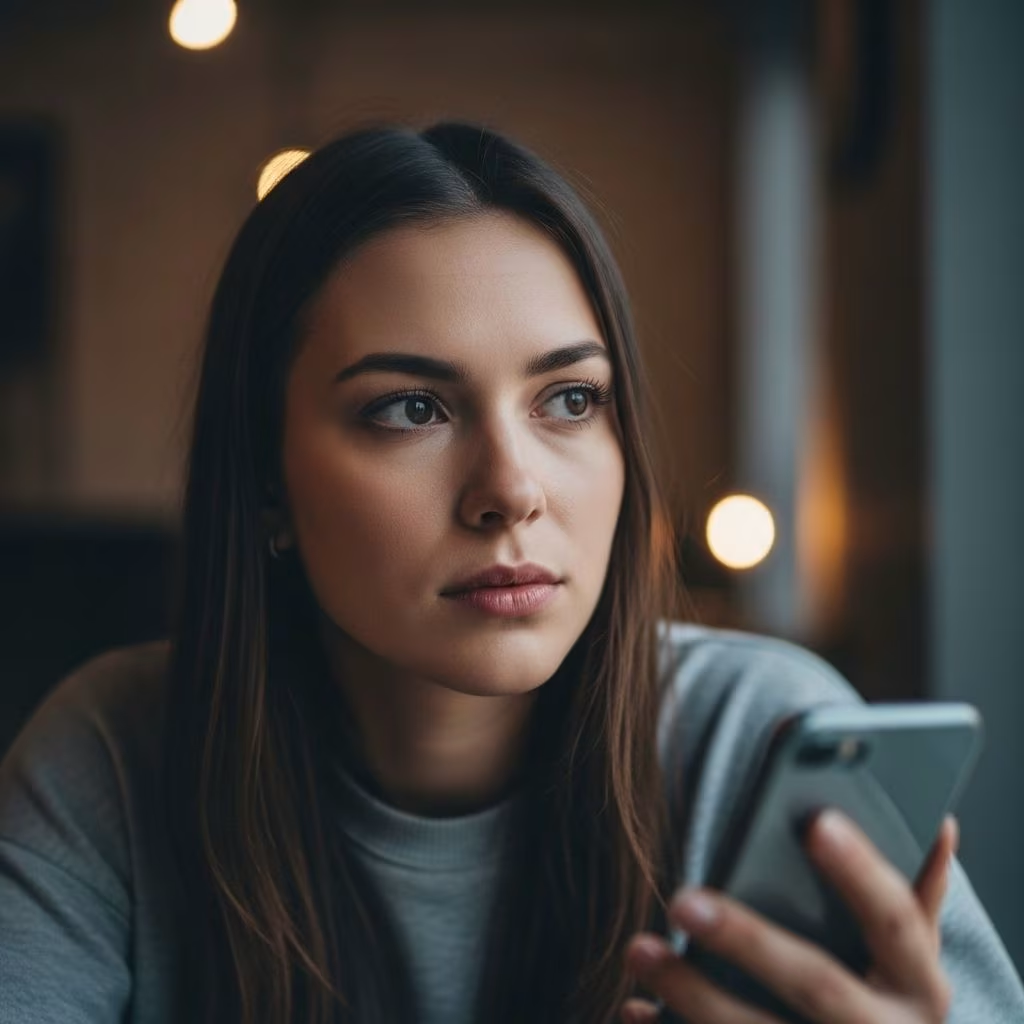
Does Not Posting About Your Relationship on Social Media Mean He’s Not Into You?
It’s a common and persistent idea across dozens of online articles: if your partner—especially a man—doesn’t post photos of you on social media, it must mean he’s not interested or invested in the relationship. This idea has taken root in the social media age, where public displays of affection (PDA) have gone digital, and the absence of such displays is often interpreted as a lack of commitment or even deception. But is there any real evidence for this claim, or is it just another pop psychology myth?
In reality, the relationship between social media posting habits and relationship quality is far more complex than “post equals love, silence equals indifference.” Many people, especially those who value privacy or authenticity, keep their romantic lives offline not because they lack interest, but because they don’t need or want external validation for something so personal.
Why Do People Expect Relationship Posts?
Social media has become a dominant force in modern life, shaping not just how we communicate, but also how we present—and perceive—romantic relationships. “Relationship goals” hashtags, “couple selfies,” and anniversary posts are ubiquitous, especially among younger generations. This trend has led to the expectation that “real” couples must show off their love online, and that a lack of such posts signals trouble.
The Pressure to Perform Online
A significant driver behind this expectation is the cultural pressure to perform happiness and success—not just for ourselves, but for our audience. Many people feel compelled to share their “highlight reel” online, including romantic milestones, as a way to affirm their status and happiness to friends, family, and even strangers. This can create a feedback loop: the more couples see others posting, the more they feel they should do the same.
But is this performative aspect healthy for relationships? Some experts argue that excessive sharing can actually mask insecurities or issues, rather than reflecting a strong, private bond. The desire for likes, comments, and public affirmation can sometimes be more about seeking validation from the crowd than celebrating a genuine connection with your partner.
The Fallacy of “No Posts Equals No Interest”
Articles that insist a man must post about you to prove his feelings are, at best, reductive. There are many reasons someone might choose not to share their relationship online:
- Privacy Preferences: Not everyone wants their personal life broadcast to the world. Some people value discretion and find oversharing uncomfortable or even risky.
- Authenticity Over Appearances: For some, real connection happens offline. They may prefer to express affection directly to their partner, rather than through a public post.
- Lack of Social Media Engagement: Not everyone is active on social media, or they may use it for specific purposes (work, hobbies, news) rather than personal life updates.
- Past Experiences: Negative experiences with oversharing or digital drama can make someone more cautious about what they post.
- Cultural or Generational Differences: Older generations, or people from cultures that value privacy, may be less likely to share personal details online.
In the author’s own experience, he didn’t post a single photo of his fiancée until a year and a half into their relationship—well after he knew he loved her. Their close friends and family knew about the relationship, and that was enough for them. The lack of online posting didn’t reflect a lack of love or commitment; it reflected their shared preference for privacy and authenticity.
When Posting Is Performative—Not Authentic
Ironically, couples who post constantly about their relationship may sometimes be compensating for deeper insecurities. Sexologist Nikki Goldstein notes that an obsession with sharing every romantic moment can be a sign that someone is seeking validation from others, rather than from their partner. The “likes” and comments become the goal, not the intimacy of the relationship itself.
Goldstein also points out that some people use social media to stake a public claim on their partner—essentially saying, “This person is mine,” sometimes to send a message to an ex or potential rivals. This territorial behavior isn’t about celebrating love; it’s about possession and image management.
The Real Meaning of Social Media Silence
Rather than seeing a lack of relationship posts as a red flag, it’s more helpful to consider what silence might actually mean. For many, it’s a sign of maturity, self-assurance, and respect for privacy. People who are secure in their relationship don’t need constant public affirmation to know how they feel.
Here’s a quick comparison of common perspectives:
| Posting Frequently | Posting Rarely or Never |
|---|---|
| May seek external validation | May value privacy and authenticity |
| Can indicate insecurity or territoriality | Often reflects confidence and discretion |
| Relationship may be more performance than reality | Relationship may be more about real-life connection |
How Couples Navigate Social Media Differently
Every couple finds their own balance. Some share occasional updates because documenting their life together feels natural; others never post, preferring to keep their bond private. There’s no universal “right” way, but open communication about expectations is key. If one partner craves public acknowledgment and the other avoids it, it’s important to talk openly about why—rather than assuming the worst.
When Does Social Media Silence Become a Problem?
There are, of course, exceptions. If someone is actively hiding your relationship—deleting tags, never mentioning you online, or presenting themselves as single—that may be a sign of deception or lack of commitment. Similarly, if your partner is highly active on social media but conspicuously excludes you, it’s worth a conversation about what that means for you both.
Social Media and Relationship Satisfaction
Ultimately, the quality of your relationship isn’t determined by your social media feed. Real connection happens in the daily, unglamorous moments away from the screen. If you’re happy together and communicating openly, whether or not you post about each other is just a personal preference.
What To Ask Yourself
- Are you and your partner on the same page about sharing your relationship online?
- Do you feel secure in your relationship, regardless of social media activity?
- Is your desire to post (or not post) driven by your feelings, or by external pressure?
- Have you talked openly about what social media means to each of you?
Frequently Asked Questions (FAQs)
Why doesn’t my partner post about me on social media?
There are many reasons, including a preference for privacy, discomfort with oversharing, or simply not being active on social media. It’s not necessarily a sign of disinterest.
Does not posting about your relationship mean it’s secret?
Not usually. Many people keep their relationships private but are open about them with friends and family. “Secret” would mean actively hiding the relationship from everyone, which is different.
Should I be worried if my partner posts about other things but not about us?
It depends on your partner’s overall habits and your mutual expectations. If they’re generally private, it’s likely not a concern. If they’re highly active but exclude you, it’s worth a conversation.
Are couples who post a lot happier?
Not necessarily. Some research suggests that excessive sharing can mask insecurity, while privacy often reflects confidence in the relationship.
How can we resolve different social media expectations?
Talk openly about what social media means to each of you, and try to find a compromise that respects both partners’ comfort levels.
Conclusion
In the end, the presence or absence of relationship posts on social media is about personal preference, not a universal measure of love or commitment. The healthiest relationships are built on trust, communication, and authentic connection—qualities that exist far beyond the confines of a social media feed. Instead of looking for validation online, focus on the real moments you share with your partner, and let your relationship speak for itself—whether or not the world sees it.


