


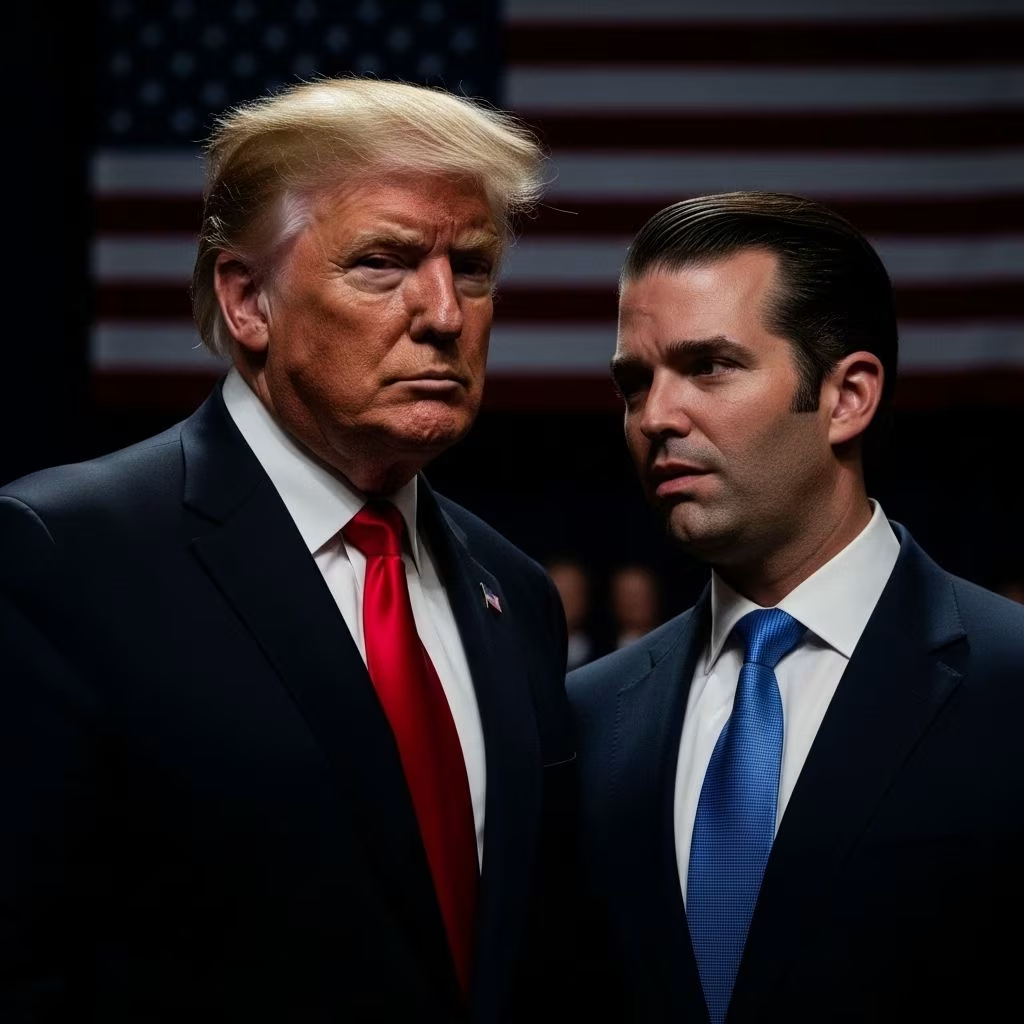
Donald Trump Jr. On His Relationship With His Father
Throughout the years, the public and media have dissected virtually every aspect of the Trump family dynamic. However, the relationship between Donald Trump Jr.—the eldest son of the former President—and his father, Donald Trump Sr., has often stood out for its complexity, distance, and sometimes surprising emotional undertones. In candid interviews and off-handed remarks, Donald Trump Jr. has painted a picture of a bond that toggles between reverence and longing, loyalty and distance, shaped by the unique realities of growing up as a Trump.
The Trump Family: High Expectations, Little Affection
From early childhood, Donald Trump Jr. experienced a household run by great expectations, where affection was measured and emotional connection often took a back seat to success. According to various reports and recollections, Donald Trump Sr. maintained a methodical distance from his children, focusing on business and public image above all else. This created an upbringing where praise was rare and approval hard-won.
Trump Jr. himself has acknowledged this publically, stating that their father believed in a clear principle: “Dads are not friends.” Instead, children were to be managed, guided, and above all, challenged to prove themselves. Emotional warmth, as a result, was infrequent.
- Tough Love: Donald Trump Sr. was known for a parenting style rooted in toughness and high standards, often withholding compliments and support to encourage his children to strive harder.
- Emotional Distance: Family moments, such as birthdays and graduations, were less likely to be met with hugs or encouraging words, and more likely just acknowledged as milestones in a larger narrative of expectation.
- Business Over Bonding: Business interests and public image frequently took priority over private, familial bonding, further shaping the emotional landscape for Donald Jr.
Growing Up Trump: Childhood and Early Lessons
Trump Jr.’s early years were marked by both privilege and pressure. While he was afforded the luxuries that come with being a member of the Trump dynasty, he, along with his siblings Ivanka and Eric, were also subjected to intense scrutiny—both at home and in public. Throughout interviews, Trump Jr. has spoken about limited interaction with his father during his formative years, a dynamic that made a lasting impression.
The closest parental figure during his upbringing was often his mother, Ivana Trump, who played a more engaged role in the day-to-day aspects of raising the children. While Donald Sr. emphasized achievement and status, Ivana focused on instilling discipline and manners. This duality reinforced the extremes of parental influence in Trump Jr.’s life, making the rare signs of fatherly approval that much more significant.
A Father in the Headlines: Public Persona vs. Private Reality
Donald Trump Sr.’s high-profile lifestyle meant that the Trump children grew accustomed to media scrutiny from a young age. For Donald Jr., this meant performing not only for his father but also for the cameras—a dual pressure that shaped his self-image. Rather than regular familial conversations, interactions were often relegated to public appearances or orchestrated moments, further cementing emotional distance.
| Aspect of Relationship | Public Perception | Private Reality |
|---|---|---|
| Emotional Support | Close-knit, supportive family | Largely distant, approval rarely vocalized |
| Interaction Frequency | Frequent interaction due to business ties | Donald Jr. has stated he rarely talked to or saw his father |
| Role in Business | Trusted business confidant | Often felt like an employee rather than a son |
Turning Points: Moments of Distance and Attempted Connection
One particularly telling revelation from Trump Jr. was that there were long periods during his youth when he barely spoke to his father. During a climactic period as a preteen, he was reportedly so at odds with his father’s approach that the two went a full year without speaking. This silent standoff reflected the impact of Donald Sr.’s tough-love parenting philosophy and left lasting marks on their relationship.
- Moving Out for College: After enrolling at boarding school—an experience he later described as both liberating and isolating—Trump Jr. constructed more personal boundaries and developed a self-reliant streak, seeing less of his father and learning to navigate life largely on his own terms.
- Many Missed Moments: Several anecdotes shared by Donald Jr. highlight important moments—sports games, personal achievements—where his father was either absent or emotionally unavailable.
- A Complex Homecoming: Despite the emotional chasm, Trump Jr. ultimately gravitated back toward his father, especially as business and political interests became intertwined.
Business Partners: Father, Son, and The Weight of Family Legacy
Despite early distance, professional life inevitably brought Donald Jr. and his father together. As he matured, Donald Jr. transitioned from familial outsider to trusted business partner, working his way to the highest echelons of the Trump Organization. Entrusted with significant responsibilities, he executed projects and appeared as a public figure, especially on “The Apprentice,” where his role was both as a judge and boardroom adviser.
Yet even as they worked side by side, the emotional gap continued—one characterized by hierarchy, expectation, and the ever-present pressure to prove himself in the public eye. During this period, Trump Jr. himself has said that he felt “like an employee” more than a son, with success measured in numbers rather than bond-building.
Key business highlights:
- Donald Jr. co-founded Titan Atlas Manufacturing in 2010, though the enterprise ultimately shuttered after two years amid financial and operational challenges.
- As his father’s presidential ambitions surged in 2015, Trump Jr. became one of Donald Trump’s most visible campaign surrogates, quickly adapting to his father’s combative style.
- He became more active in political fundraising and appeared at more than 70 campaign events during the 2018 midterms alone.
- Together with his brother Eric, he became a trustee of the Trump Organization when their father assumed the presidency.
From Political Surrogate to Outspoken Defender
With Donald Trump Sr.’s ascent to the presidency, the dynamic between father and son underwent another profound evolution. Trump Jr. emerged as his father’s most dogged public defender, espousing a style of engagement characterized by unconditional loyalty, aggressive rhetoric, and a willingness to engage in political combat—especially on social media platforms.
- Donald Jr.’s embrace of his father’s brashness often manifested in high-volume public defense, especially during periods of scrutiny such as the Russia investigation.
- His visibility brought both criticism and praise, but his actions consistently indicated a willingness to go to great lengths for his father’s reputation.
- Despite the outward show of unity, Trump Jr. continued to hint at the personal price of such unwavering loyalty, referencing the lack of private communication with his father even during periods of public collaboration.
Seeking Approval in the Public Eye
Trump Jr. has often described how his notion of approval and connection with his father became synonymous with professional achievement and public acknowledgment. In one memorable interview, he recounted the joy of receiving even the smallest sign of his father’s recognition—a nod, a compliment, an invitation to join an important meeting. These moments, as rare as they were, became the currency of connection between father and son.
Even in adulthood, the pursuit of approval remains a driving force. This was clear in Trump Jr.’s overt expressions of support during his father’s presidential campaign. Whether introducing his father at rallies or defending him on interviews and social media, his loyalty rarely wavered—even when their personal contact was limited.
Nevertheless, Trump Jr. has acknowledged that public acts of loyalty are not always reciprocated in private.
Sibling Dynamics and Support Systems
While the focus is often on the father-son relationship, it’s important to note the significance of sibling bonds within the Trump family. In several interviews, Trump Jr., Ivanka, and Eric have each acknowledged how the challenges of navigating their father’s high expectations and frequent absence brought the siblings closer together.
- Ivanka Trump described the three eldest siblings as a tight-knit group, molded by their parents’ demanding standards but also by necessity of mutual support.
- Eric Trump has shared that Don Jr. acted as a mentor to him, passing down family lessons and acting as a bridge between the siblings and their parents’ world.
- The collective experience of going through their parents’ divorce also served to strengthen their sibling ties.
Reflections: A Father, A Boss, A Figure Out of Reach
Ultimately, the portrait that emerges is of a father and son whose relationship is filtered through the competing pressures of legacy, expectation, and achievement. Donald Trump Jr. is committed to his father’s vision and fiercely protective of the family name, but he has also been open about the gaps in their emotional connection.
He has described experiencing his father more as a “figure to impress” or “boss to please” than a confidante. Even in emotional moments—such as sending birthday wishes to his father on social media—Trump Jr.’s tone has often reflected longing for warmth or closeness that’s seldom reciprocated, a dynamic that illustrates the paradox of being part of the world’s most scrutinized family.
Frequently Asked Questions (FAQs)
Q: How often does Donald Trump Jr. speak with his father?
A: Donald Trump Jr. has stated in interviews that, growing up, he rarely spoke to his father. Even after joining the family business and supporting his father’s political career, their personal communication has remained limited, often overshadowed by business and public duties.
Q: Was Donald Trump Sr. an affectionate parent?
A: Public accounts, including statements by Donald Trump Jr. himself, suggest that Donald Trump Sr. favored a tough-love approach, typically refraining from emotional displays and opting instead for high expectations and measured praise.
Q: How has their relationship influenced Donald Trump Jr.’s public persona?
A: Donald Trump Jr.’s combative, outspoken style in public and politics closely mirrors his father’s approach. He has credited his upbringing and desire for approval as foundational to his political and business persona.
Q: Did Donald Trump Jr. work closely with his father growing up?
A: While he was involved in the family business and appeared alongside his father in public settings like “The Apprentice,” he did not experience frequent, personal father-son bonding moments, often feeling like an employee as much as a son.
Q: Have the siblings supported each other amid their father’s expectations?
A: Yes. Both Ivanka and Eric Trump have spoken about the strong bond formed among the siblings as they coped together with the challenges and pressures of growing up under intense scrutiny and high standards.
References
- https://www.businessinsider.com/who-is-donald-trump-jr-bio-controversies-2017-7
- https://www.elitedaily.com/p/these-donald-trump-quotes-about-eric-make-me-wonder-about-their-relationship-8711719
- https://www.elitedaily.com/p/this-ivanka-trump-quote-about-don-jr-explains-so-much-about-the-trump-kids-8612642
- https://www.elitedaily.com/news/politics/donald-trump-jr-relationship-with-dad/1823126
- https://www.elitedaily.com/p/donald-trump-jrs-birthday-message-for-his-father-was-so-frantic-9401943


